
4G Core Network Essentials: Top Features and Benefits
2026-07-26
The shift to 4G has reshaped mobile connectivity, but the real magic lies in the core network—the invisible engine driving speed, reliability, and new services. From ultra-fast data to seamless VoLTE calls, the 4G core quietly powers every moment you're online. At IPLOOK, we've seen how the right core can transform a network—and we're here to unpack the top features and benefits that make it all possible.
Unpacking the Backbone of 4G: How the Evolved Packet Core Redefined Mobile Connectivity
Before the advent of 4G, mobile networks were fundamentally circuit-switched, designed primarily for voice calls with data as an afterthought. The Evolved Packet Core (EPC) completely overhauled this philosophy by introducing a flat, all-IP architecture. Unlike its predecessors that relied on separate domains for voice and data, the EPC unified everything under a single packet-based umbrella. This shift meant that every bit of information—whether a voice call, video stream, or instant message—traveled as IP packets, dramatically boosting efficiency and reducing latency. By stripping away the old hierarchical infrastructure, the EPC became the silent enabler of seamless connectivity, allowing data to flow more freely and paving the way for the real-time applications we now take for granted.
At the heart of the EPC’s transformation were a handful of specialized components that worked in concert to handle mobility, authentication, and routing without the bottlenecks of legacy systems. The Mobility Management Entity (MME) took over signaling and session management, while the Serving Gateway (SGW) and Packet Data Network Gateway (PGW) managed user data traffic. These elements were designed to operate independently of each other, giving operators the flexibility to scale resources up or down as demand fluctuated. This modular approach also made it possible to hand off sessions between cell towers without dropping a connection—a critical feature for maintaining voice calls and streaming services while on the move. The EPC’s ability to orchestrate these functions behind the scenes turned the concept of “always connected” into a practical reality, not just a marketing promise.
What truly set the EPC apart was its role in bridging the gap between different radio access technologies, creating a unified core that could support LTE, 3G, and even non-3GPP networks like Wi-Fi. This multi-access capability meant that a user could start a video call on a cellular network and seamlessly transition to a Wi-Fi hotspot without any interruption, because the EPC handled the session continuity. Moreover, by centralizing policy and charging rules, it allowed operators to implement smarter data plans and quality-of-service controls, ensuring that high-priority traffic like emergency services got the bandwidth they needed. In essence, the EPC didn’t just make 4G faster—it redefined mobile connectivity by making it smarter, more adaptable, and deeply integrated into an increasingly wireless world.
Always-On Data and Seamless Mobility: The All-IP Revolution
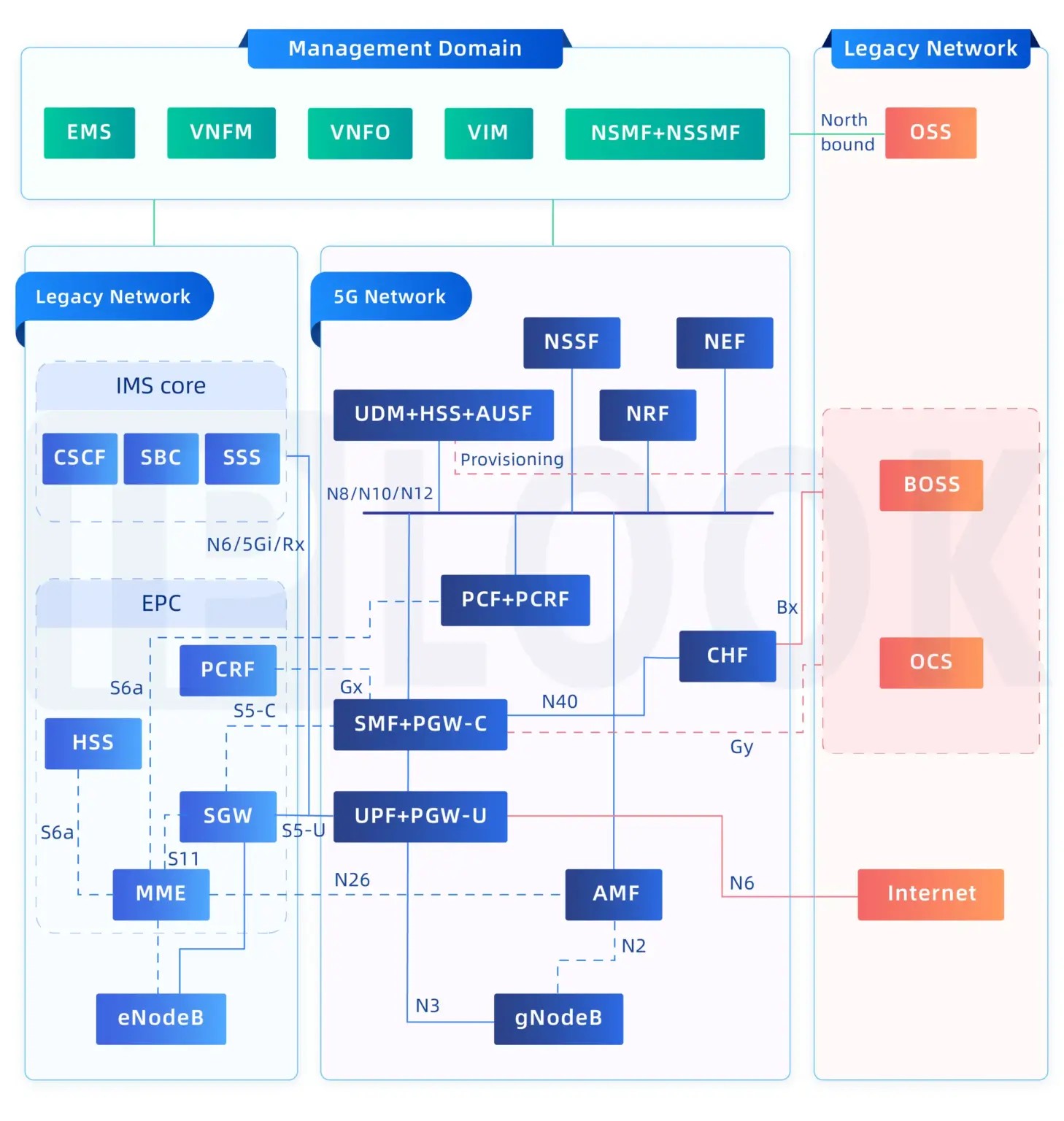
Gone are the days when a brief stroll out of Wi‑Fi range meant dropped video calls or frozen map directions. The shift to all‑IP networks fused voice, data, and multimedia into a single, unbroken stream that moves with you. Whether you’re threading through a subway tunnel or driving past cell towers, the handover happens in milliseconds—so quick you’ll never see a loading spinner. This isn’t just about convenience; it’s the bedrock for everything from real‑time drone telemetry to remote surgery consultations that cannot afford a glitch.
Behind the scenes, that seamlessness relies on an intricate choreography of protocols like SIP and DIAMETER, which quietly re‑route packets mid‑session without asking you to re‑authenticate. Operators now treat voice as just another data application, freeing up capacity and slashing the latency that older circuit‑switched networks introduced. The result is a connectivity fabric that feels invisible: your devices simply stay online, swapping between 5G, LTE, and trusted Wi‑Fi without a whisper of interruption. In this all‑IP landscape, the network finally bends to human movement instead of forcing us to stay put.
Smart Traffic Steering and Quality of Service That Adapts to User Needs
Modern networks are no longer static highways. They shift and breathe in response to the people using them—rerouting data not just based on congestion, but on what someone is actually trying to do. A video call, for instance, demands low jitter and steady throughput, so the network might steer that traffic through a path with fewer hops and more stable latency. Meanwhile, a background file sync can take a longer, cheaper route without anyone noticing. This isn't simple prioritization; it's dynamic, context-aware steering that continuously maps intent to action.
The real magic happens when the network begins to learn. It observes patterns—a morning surge of teleconferencing, an evening spike in streaming—and adjusts its behavior preemptively, often before a user feels any slowdown. Quality thresholds aren't set in stone either. They flex based on what the device can handle and what the subscription allows, but more importantly, they adapt to the human at the end. Someone reading a document on a tablet doesn't need the same responsiveness as a trader watching a live feed. The system gauges this in real time, sometimes even factoring in battery life or data cap concerns.
Underpinning all of this is a feedback loop that rarely gets explained: the network not only reacts to conditions but also subtly shapes demand. By offering slightly different experiences—say, a crisp video start versus an extra two seconds of buffering—it can nudge users toward behaviors that keep the overall service smooth without hard enforcement. Over time, the steering logic gets more nuanced, blending global efficiency with individual satisfaction in ways that feel almost intuitive. It's a departure from the old world of rigid service classes, and it quietly makes the internet feel a little more human.
Built-In Security and Simplified Roaming for a Trusted Experience
Modern connectivity demands more than just raw speed—it requires a foundation of trust. Our platform weaves security directly into the network fabric, ensuring that every packet, from initial handshake to final acknowledgment, is protected by robust encryption and continuous authentication. This isn’t an afterthought or a bolt-on feature; it’s an invisible layer that guards data without slowing users down, giving people the confidence to work, share, and explore freely.
Roaming between networks typically introduces friction—dropped sessions, re-authentication hurdles, and unpredictable performance. We’ve redesigned that experience to be fluid and nearly imperceptible. By intelligently pre-staging security contexts and employing seamless handoff protocols, devices transition between access points or even between different networks without missing a beat. Users stay connected to their applications and resources as if they never moved, all while the underlying security posture remains uncompromised.
Behind the simplicity lies a sophisticated orchestration engine that continuously evaluates device posture, location, and behavior. Suspicious anomalies trigger adaptive responses—such as step-up authentication or micro-segmentation—all without disrupting the legitimate user’s flow. The result is a trusted experience that feels effortless, encouraging productivity and mobility while keeping threats at bay. It’s security that works for you, never against you.
Energy-Efficient Design and Operational Agility Behind the Scenes
Behind every sustainable operation lies a quiet negotiation between resource consumption and performance. Our infrastructure is built to tread lightly, using adaptive power management that responds to real-time demand without sacrificing responsiveness. From intelligent cooling systems that calibrate to server load, to hardware chosen for longevity rather than headline specifications, the design philosophy centres on doing more with less—not as a tagline, but as an engineering discipline.
Agility isn’t about speed alone; it’s about moving intelligently when conditions shift. We’ve woven modularity into our backend architecture so that scaling up or pivoting under pressure becomes second nature. Failover protocols aren’t just dramatic safeguards—they’re routine rehearsals, ensuring that when unexpected surges hit, the system rebalances itself before anyone notices. This operational fluidity is what keeps digital services humming while energy footprints stay deliberately compact.
The real magic, if one can call it that, happens in the unglamorous corners: firmware tweaks that shave off milliseconds and milliwatts, thermal profiling that reroutes workloads to the coolest silicon, and a culture of questioning every default setting. Efficiency and agility here aren’t separate goals pursued by different teams; they’re entwined habits that evolve with each deployment, silently proving that high performance needn’t come with a heavy environmental cost.
Laying the Groundwork for 5G: A Future-Ready Core Network
The shift to 5G isn’t just about faster speeds—it demands a core network that can flex and adapt in ways previous generations never required. A future-ready core decouples hardware from software, embracing cloud-native principles so services can be spun up or scaled down without physical constraints. This agility means operators can launch new offerings in days rather than months, staying ahead of evolving enterprise demands.
Beyond virtualization, true groundwork involves weaving automation into the fabric of network operations. By embedding intelligence at every layer, the core becomes self-healing and self-optimizing, reducing manual intervention while boosting reliability. Such a design ensures that as 5G use cases multiply—from massive IoT to ultra-reliable low-latency communications—the network can dynamically allocate resources, maintaining consistent performance under wildly different workloads.
Crucially, this groundwork isn’t an isolated upgrade but a strategic platform for long-haul innovation. A well-architected core supports network slicing, edge computing, and seamless interworking with existing infrastructure, all while keeping security integral rather than bolted on. By laying the right foundations now, operators are not just preparing for 5G, they’re building a springboard for whatever comes next.
FAQ
The 4G core, often called the Evolved Packet Core (EPC), is essentially the brain of an LTE network. It handles everything from user authentication and session management to routing data between the internet and your device. Without it, the radio access part would be just a bunch of towers with no way to actually connect calls or deliver data.
Unlike the circuit-switched cores of 3G, the 4G core is fully packet-switched and IP-based from the ground up. It also flattens the hierarchy by combining some node functions and separating the control plane from the user plane, which makes the network more efficient and less prone to bottlenecks.
You'll find a handful of specialized elements: the MME handles signaling and mobility, the SGW and PGW route data packets and connect to external networks, the HSS keeps subscriber profiles, and the PCRF manages quality of service rules. Each piece plays a specific role in delivering a seamless mobile broadband experience.
It dramatically cuts down latency because data doesn't need to pass through old circuit-switched pathways, and the all-IP design supports much higher throughput. On the user side, this translates to snappier web browsing, smoother video streaming, and a more responsive connection for apps that rely on real-time data.
Initially, networks used CSFB to fall back to 2G/3G for calls, but the real game-changer is VoLTE, which runs voice as IP packets over LTE. The core works with the IMS layer to set up and prioritize those voice sessions, ensuring call quality stays high even alongside data traffic.
Carriers gain a more scalable and flexible network that's easier to maintain and upgrade. They can apply fine-grained QoS policies per subscriber or service, simplify roaming with standard interfaces, and reduce capital outlay by consolidating network functions. It's a much cleaner, software-centric architecture compared to legacy systems.
The EPC is absolutely capable of supporting large-scale IoT, and technologies like NB-IoT and LTE-M are specifically designed to work over it. The core's ability to manage signaling efficiently and its support for power-saving features allow millions of low-bandwidth devices to coexist without overwhelming the network.
It brought stronger mutual authentication between device and network, mandatory encryption for signaling traffic in many implementations, and better protection against IMSI catchers. While not perfect, the 4G core made it much harder for casual eavesdroppers and attackers to intercept or manipulate mobile communications.
Conclusion
The shift to 4G was far more than a speed upgrade—it rearchitected the core network itself. At its heart, the Evolved Packet Core (EPC) replaced circuit-switched legacy systems with a flat, all-IP architecture that treats voice as just another data application. This foundational change enabled always-on connectivity and seamless handovers across cell towers, Wi-Fi hotspots, and even different radio technologies without dropping a session. Behind the scenes, intelligent traffic steering dynamically prioritizes real-time services like video calls over background downloads, while policy-driven Quality of Service mechanisms ensure consistent user experiences even under heavy network load. The result is a network that adapts to what people actually do, rather than forcing them to adapt to its limitations.
Security and roaming, often painful afterthoughts in earlier generations, were built directly into the EPC’s design. Mutual authentication, encrypted signaling, and streamlined roaming interfaces meant subscribers could travel across borders and instantly attach to partner networks with the same trusted experience. Moreover, the 4G core was engineered with energy efficiency and operational agility in mind: virtualization-ready components and simplified management reduced power consumption and made network scaling far less cumbersome. Crucially, this architecture laid the concrete groundwork for 5G—many of its principles, from control/user plane separation to network slicing concepts, were prototyped here. The 4G core didn’t just deliver faster mobile broadband; it became the blueprint for everything that came next.
Contact Us
Contact Person: Shimmy
Email: [email protected]
Tel/WhatsApp: 85253392231
Website: https://www.iplook.com