
Air Circuit Breaker Manufacturer Tips for Ensuring Electrical Safety
2026-08-29
Electrical safety issues rarely announce themselves—until a breaker fails to trip or an arc flash occurs. Air circuit breakers are critical to preventing these dangers, but only if they’re correctly selected, installed, and maintained. That’s why Chang Song, an experienced air circuit breaker manufacturer, is sharing field-tested tips that go beyond generic advice. From checking contact erosion to verifying trip settings under load, this guide will help you uncover risks that standard inspections often miss. Keep reading to protect your people and equipment with confidence.
Rethinking Arc Quenching from the Inside Out
Traditional arc quenching leans on external fixes—arc chutes, vents, magnetic blowout coils—that react after a plasma channel has already formed. Rethinking the problem from the inside out starts with the moment of contact separation. What if the goal is not to manage a violent arc but to prevent the conditions that let it stabilize? That means looking hard at contact geometry, material outgassing, and the localized pressure field in the microseconds before current zero.
This interior view shifts design priorities. Shaping contact surfaces to anchor the arc footpoint early, for instance, limits the energy input before a full channel can establish itself. A small, precisely timed puff of cooling gas at the instant of separation can do more than a larger vent downstream. The result is quieter interruption, less thermal stress on surrounding components, and longer contact life—not because the arc is fought harder, but because it never gets the room to grow.
It feels counterintuitive at first: working deeper inside the interruption chamber lets you reduce the bulky external hardware. But when you stop treating the arc as an inevitable explosion and start treating it as a condition to be undermined at its origin, the whole design becomes leaner and more predictable.
Quality Gates That Catch What Drawings Miss
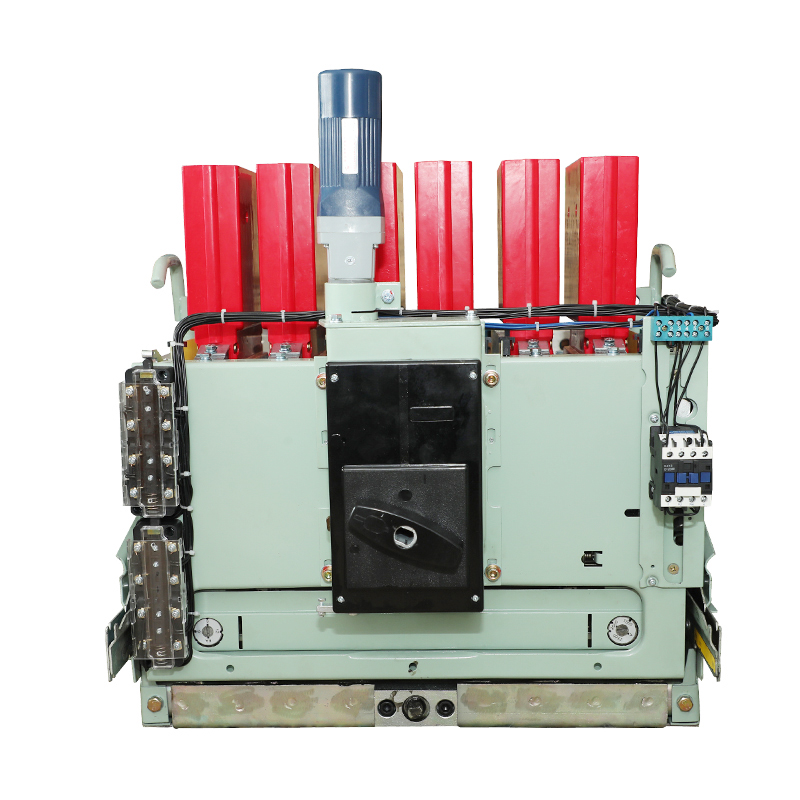
In any build, the drawing is a best-case statement of intent—dimensions, tolerances, surface callouts—but it never captures how parts flex under clamp pressure or how a supplier interprets a worn radius on a print. Quality gates that catch what drawings miss are placed at the moments where intent meets physical reality: incoming material checks, first-article inspection, pre-fit staging, and torque verification after assembly. Each gate targets a failure mode that no redline would flag on its own.
The most useful gates are not more paperwork; they force a comparison between nominal values and the part in your hand. A gate might require measuring runout after a bearing is seated, not just before, or checking for burrs on a threaded hole after coating. By sequencing these checks around irreversible steps—where rework cost jumps—teams catch drift while it is still an adjustment, not a line stoppage.
Matching the Breaker to the Air Around It
Circuit breakers respond to the air around them as much as to the current flowing through them. In a tightly packed enclosure on a warm day, the surrounding temperature can push a breaker past its calibration zone. A unit marked for 40°C may start tripping early at 55°C, not because it's defective, but because the hotter air can't pull heat away from the bimetallic strip or electronic trip unit fast enough. The fix usually means derating the breaker or adding ventilation before it surprises you.
Elevation changes the behavior too. At 2,500 meters, the air is roughly 25% thinner, which weakens both convective cooling and the insulation strength between contacts. A breaker that handles 480V at sea level might need a reduced voltage rating or lower continuous current at altitude. Checking the manufacturer's altitude correction table before finalizing a panel design avoids a breaker that quietly overheats or arcs when you least expect it.
Moisture and corrosive gases are another layer. Near the ocean or inside a wastewater plant, standard breakers can develop pitted contacts and high-resistance paths within a couple of years. Sealed breakers, conformal coatings, or enclosure purging become necessary, not optional. The choice isn't just about ampacity or interrupting rating; it's about whether the breaker can keep breathing the same air for a decade.
Installation Checks That Prevent Silent Failures
A dry-run pass catches most of the ugly surprises before anything gets copied to disk. It maps out the target directory, confirms write access, and checks that the existing binaries won't be locked by running processes. On Windows this often means probing for open file handles; on Linux it's about testing mount flags and inode limits. If the installer can't create a temp file in the destination, it stops right there instead of quietly unpacking half the payload and then disappearing.
Dependency resolution is another place where silent failures breed. Instead of assuming a required runtime is present, a good installer asks the system directly: query the package database, check the registry for specific GUIDs, or invoke a version command on the binary. When a mismatch turns up, the installer names the missing piece and the exact version it needs, rather than logging a cryptic code and moving on. This turns a would-be post-install crash into a pre-install dialogue.
Finally, post-install verification closes the loop. A checksum comparison against the source manifest confirms every file landed intact. Then a smoke test—launching the core executable with a --version flag or a minimal config—proves the binary can actually start under the current user context. If that smoke test fails, the installer rolls back the file changes and leaves the system untouched, instead of leaving a broken shortcut and a half-registered service.
Maintenance Windows Without Downtime Drama
Scheduled maintenance doesn't have to mean your users see an error page. Instead of announcing a jarring pause, you can route traffic to a friendly holding pattern or gracefully degrade features. The trick is designing your system so that a maintenance flag flips users into read-only mode, or queues their actions for later—without them ever feeling like the service just vanished.
Think of it like a restaurant closing the kitchen but still seating guests and serving drinks. Your API can keep answering with cached data, your checkout can switch to "We'll confirm your order shortly," and your dashboard can show a subtle banner instead of a blank screen. This way, the maintenance window becomes a quiet background task rather than a customer-facing crisis.
To pull this off, you need a clear separation between the read path and the write path. Keep reads alive from replicas or CDN caches, and hold writes in a durable queue until the primary database is back. Add a health-check endpoint that reports "maintenance mode" so load balancers stop sending write-heavy traffic. With a bit of planning, your next update can ship without a single support ticket asking 'Is the site down?'
Learning from Every Trip: Field Data as a Safety Tool
Every journey leaves behind a trail of information that most people overlook. The way a driver brakes on a sharp curve, the time a crew spends unloading at a busy dock, or the exact spot where a hiker loses the trail—these small details carry enormous weight when gathered and reviewed. Treating each trip as a source of raw safety data changes the conversation from "what went wrong" to "what can we learn before something does."
Field data is rarely clean. It arrives in fragments: a blurry photo of a cracked guardrail, a GPS track that wavers near a construction zone, a quick note typed into a phone after a close call. The value isn't in any single record but in the pattern they reveal over dozens of trips. A delivery company might notice that near-misses spike on rainy Tuesdays. A mountain guide might flag a particular ridge where clients consistently stumble. These insights only surface when ordinary trips are logged without judgment.
The real shift happens when this information feeds directly into daily decisions. Instead of waiting for an accident report, supervisors adjust routes, update checklists, or retrain staff based on what the last ten trips quietly showed them. Safety becomes less about enforcing rules and more about paying attention to the road as it actually is—messy, repetitive, and full of warnings for those willing to read them.
FAQ
Thermal scans and contact resistance measurements catch loose connections and pitted contacts before they turn into hot spots. I also recommend exercising the breaker manually at least twice a year, since mechanical parts can stiffen and slow down tripping.
Heat shortens insulation life and dust can clog arc chutes, so the breaker's current-carrying capacity drops. Instead of guessing, ask the manufacturer for a derating curve and add extra ventilation or filtered enclosures if temperatures exceed 40°C.
Match the long-time pickup to the actual load profile, not just the cable size, and give the short-time setting a slight delay so downstream breakers clear local faults first. After any load change, re-test the settings with primary injection to confirm the breaker behaves as expected.
Cleaning and inspecting arc chutes. Carbon deposits and copper splatter can build up after repeated interruptions, which weakens arc splitting and may cause a flashover. Remove the chutes carefully, blow them out with dry compressed air, and replace any cracked plates.
Only as a first line of defense. Self-diagnostics flag electronic faults, but they cannot see mechanical wear, loose bus connections, or degraded insulation. Combine those readings with visual inspection, contact wear indicators, and periodic insulation resistance tests.
Using undersized busbars, leaving insufficient clearance around the arc vents, or overtightening terminal bolts. All three can create hot spots or restrict venting during a fault. Follow the manufacturer's torque values and leave the recommended space for arc gas escape.
There is no universal hour count, but if the contact wear indicator passes the replacement line, the mechanism shows excessive play, or the breaker has interrupted several major faults, a rebuild is usually safer than repeated part swaps. Compare the cost of a factory refurbishment against downtime risk.
Conclusion
Manufacturers who take air circuit breaker safety seriously start long before the unit ships. Rethinking arc quenching from the inside out means moving beyond standard arc chute geometry—shaping splitter plates and venting paths so that hot ionized gases cool and deionize before they can restrike. It is the kind of refinement that never shows up on a general arrangement drawing, which is exactly why quality gates need to look past what drawings capture. Instead of relying solely on dimensional checks, leading factories add high-speed video of arc interruption tests, contact wear mapping, and thermal imaging of connection points. And because air is not just an insulator but a variable operating environment, matching the breaker to the air around it matters more than most specifications admit. Humidity, salt, dust, and altitude shift both dielectric strength and cooling performance, so a breaker certified for a clean bench test can behave very differently in a coastal plant or a high-desert substation.
Installation is where even a well-built breaker can pick up silent failure risks. Torque checks on bus joints, verifying that arc chutes are seated correctly, and confirming that shunt trips and auxiliary contacts actually move freely—these small steps catch problems that would otherwise surface only during a fault. Maintenance does not have to mean forced downtime drama. By designing breakers with drawout mechanisms, front-accessible contacts, and easily replaceable arc chutes and contacts, manufacturers help crews do targeted work inside short, planned windows instead of gambling on a surprise outage. Finally, every trip contains useful data. Smart breakers or add-on monitoring can record fault current magnitude, clearing time, and ambient conditions at the moment of interruption. Feeding that field data back into design reviews and customer maintenance plans turns a nuisance trip into a safety lesson, helping the next generation of breakers quench faster, fit their environment better, and fail less quietly.
Contact Us
Contact Person: Tonglun Chen
Email: [email protected]
Tel/WhatsApp: 8618906642555
Website: https://www.cncsele.com