
Air Compressor Manufacturer Reveals Key Innovations for Industrial Efficiency
2026-07-13
In the relentless pursuit of industrial efficiency, air compressor technology is stepping into the spotlight. A leading manufacturer has just unveiled a suite of innovations poised to slash energy consumption and boost productivity. At the heart of this transformation is Seize Air, whose latest breakthroughs challenge conventional thinking. Curious about what's driving this silent revolution?
Smart Air Compressors Adapt to Real-Time Demand
Modern air compressor systems have evolved far beyond simple on/off operation. Equipped with advanced sensors and variable-speed drives, they continuously monitor system pressure and flow requirements, adjusting motor speed in precise increments. This means the compressor only works as hard as necessary to meet the immediate demand, eliminating the wasteful full-load cycles typical of older fixed-speed units.
The intelligence behind these systems often extends to integrated controllers that analyze usage patterns over time. By learning peak and off-peak hours, a smart compressor can proactively alter its output or even enter a low-power standby state during predictable lulls. Such adaptability not only slashes energy consumption but also reduces mechanical wear, as the machine avoids constant starts and stops that stress vital components.
Additionally, real-time adaptation enables seamless coordination when multiple compressors are networked together. Instead of running all units at partial capacity, a master controller dynamically stages their operation, bringing additional machines online only when demand spikes and idling them when it drops. This sort of orchestrated response ensures a stable air supply while keeping operational costs firmly in check, often resulting in double-digit percentage savings on electricity.
Heat Recovery Systems Turn Waste into Worth
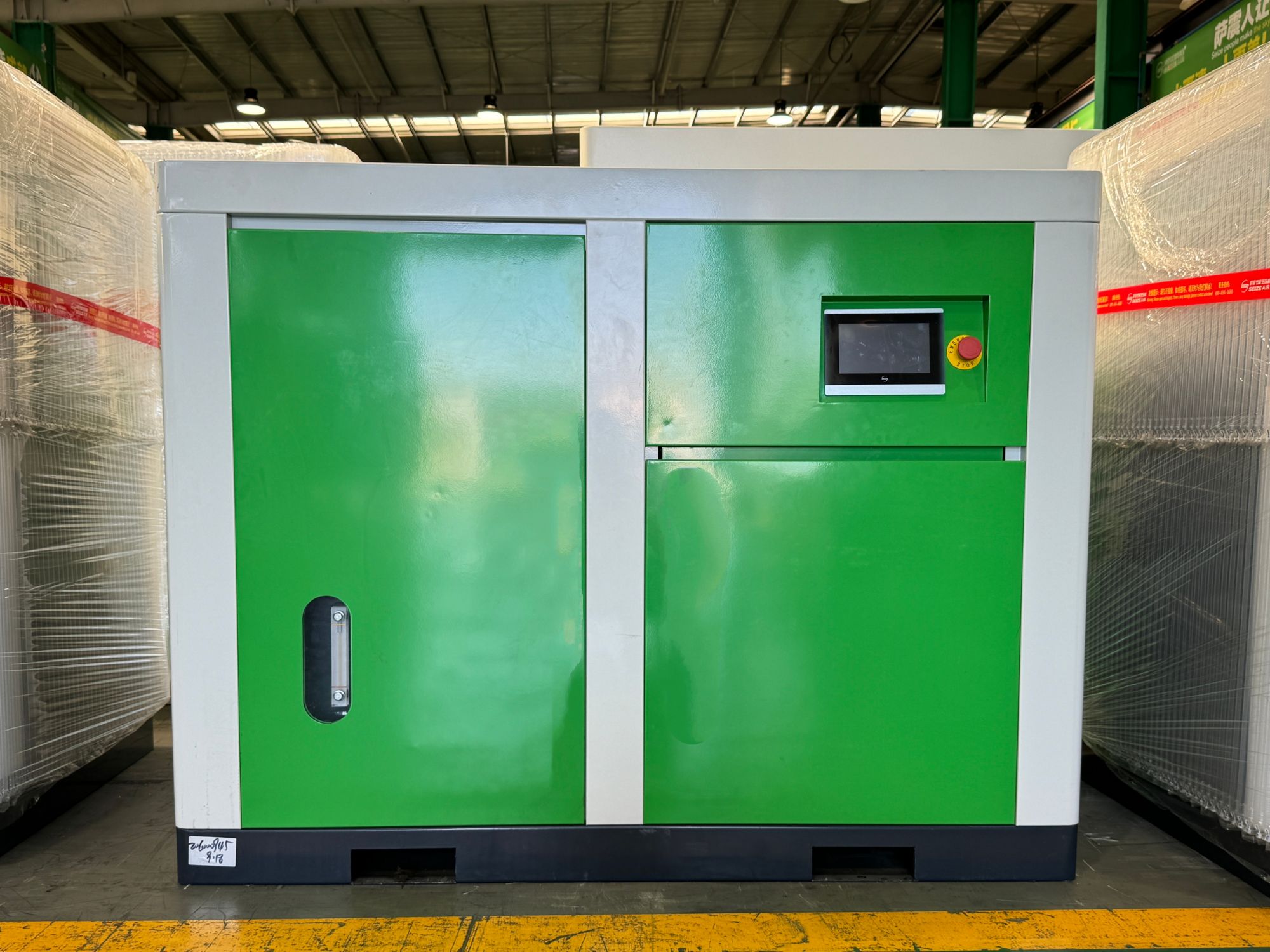
Factories, power plants, and even commercial buildings lose staggering amounts of thermal energy every day—heat that simply vanishes into the air or gets washed down the drain. Heat recovery systems step in to capture that otherwise wasted energy and put it to practical use. By intercepting hot exhaust gases, warm wastewater, or excess process heat, these systems can preheat incoming fresh water, warm up ventilation air, or even generate electricity. The result is a significant drop in fuel consumption and operating costs, all while shrinking the facility's carbon footprint.
What makes modern heat recovery so compelling is its adaptability across scales and industries. A neighborhood bakery might install a simple flue gas heat exchanger to reclaim warmth from its ovens and heat the shop floor, while a large chemical plant might deploy an organic Rankine cycle unit to turn low-grade waste heat into high-value electrical power. Advances in materials and heat exchanger design now allow recovery from streams as cool as 30°C, which was considered impractical just a decade ago. This means even data centers, with their vast arrays of servers, can repurpose expelled heat for district heating networks or greenhouses.
Beyond the direct economics, heat recovery transforms a linear resource flow into a circular one. Instead of treating heat as a disposable byproduct, companies begin to see it as a co-product—something with real, measurable value. This mindset shift often uncovers hidden synergies within a facility or across neighboring sites, leading to integrated energy cascades where nothing goes to waste. In an era of volatile energy prices and tightening emissions regulations, turning thermal losses into a reliable, on-site resource isn't just smart engineering; it's a strategic advantage that pays off year after year.
Digital Twins Cut Downtime Before It Starts
Instead of waiting for a machine to break, digital twins simulate wear patterns and performance degradation to give maintenance teams a head start. By mirroring real-world assets in a virtual environment, these models can now forecast issues weeks in advance, recommending specific interventions before a single bolt loosens or bearing overheats. It’s a shift from reactive fixes to forward-looking precision, where the factory floor runs on insight rather than alarms.
Plant managers are beginning to speak a new language around these tools—not “repair intervals” but “continuous health curves.” The twin constantly compares expected behavior with live sensor data, flagging anomalies that human operators might miss. When a pump starts vibrating at an unusual frequency, the system doesn’t just report it; it cross-references historical failure patterns and suggests adjusting the RPM or swapping a seal at the next line-down window.
The real payoff is in avoiding those small, cascading failures that quietly eat into production targets. One automotive supplier found that a twin-guided lubrication schedule on their presses cut unplanned stoppages by over forty percent in the first year, simply because the model understood how ambient temperature swings affected grease breakdown. That level of context-aware early warning turns maintenance from a cost center into a strategic advantage.
Oil-Free Tech Meets Ultra-Low Noise Standards
The integration of oil-free technology with demanding noise regulations is reshaping the landscape of quiet machinery. By eliminating oil from the compression or drivetrain system, a primary source of friction and vibration simply disappears. Without the churning, splashing, and shear of liquid lubricants, mechanical components can operate with a fundamental smoothness that drastically cuts airborne and structure–borne noise at the source.
Meeting ultra–low noise standards requires more than just a quiet pump or motor—it demands a holistic approach. Oil–free designs allow engineers to strip away bulky oil reservoirs and cooling jackets, freeing up space for advanced acoustic insulation and tuned vibration dampening. The result is a system that can whisper at levels below what sensitive environments like recording studios, medical suites, or library HVAC systems demand, often exceeding the strictest urban noise ordinances without additional enclosures.
Beyond the decibel readings, the combination delivers a cleaner, more predictable user experience. Without oil vapor or sticky residue, surrounding components stay pristine, maintaining that out–of–box quietness over years of service. The reduced mechanical complexity also means fewer parts can rattle or whine, giving engineers finer control over the sound signature—turning a once–noisy necessity into a background hum you might just forget is there.
AI-Driven Maintenance Predicts Failures Weeks Ahead
Imagine a factory floor where machines don't just break down unexpectedly—they give you a heads-up long before anything goes wrong. That's the reality of AI-driven maintenance. By sifting through real-time sensor data, vibration patterns, and temperature readings, smart algorithms spot the subtle signs of wear and tear that human eyes miss. They don't just flag problems; they tell you when a component might fail, sometimes weeks in advance, turning frantic emergency repairs into calm, planned interventions.
This isn't about replacing your maintenance team—it's about giving them a sixth sense. The system learns from historical breakdowns, adapts to new equipment quirks, and even factors in operating conditions like humidity or load cycles. A pump starting to show slight imbalance or a motor gradually overheating can trigger an alert with a confidence score and a recommended window for action. The result? Less downtime, lower costs, and no more scrambling when a critical asset goes dark.
What makes this approach stick is how naturally it slots into existing workflows. Instead of drowning in data, technicians get clear, prioritized notifications that fit their daily routines. Over time, the predictions become sharper, almost like having a veteran engineer who's seen it all whispering in your ear. It's proactive, not reactive—and that shift changes everything about how you manage reliability.
Compact Designs Pack More Power in Less Space
In an era where every square inch counts, manufacturers are rethinking internal layouts to extract maximum performance from minimal footprints. By stacking components vertically, integrating multi-functional modules, and employing advanced thermal management, today's compact devices rival their larger counterparts. This engineering approach doesn't just shrink dimensions—it often boosts efficiency, as shorter internal pathways reduce signal loss and power consumption.
The key lies in meticulous board design and custom enclosures that eliminate wasted gaps. Instead of standard off-the-shelf parts, engineers are using co-designed chips and high-density interconnects, allowing more transistors in less area. Cooling solutions have evolved too: heat pipes and vapor chambers now snake through tight spaces, while intelligent firmware dynamically adjusts performance to stay within thermal limits. The result is a device that feels dense, almost improbably capable for its size.
Consider a palm-sized industrial controller that handles complex automation tasks, or a compact audio amplifier delivering room-filling sound without a bulky chassis. These aren't compromises—they're deliberate exercises in doing more with less. Users benefit from portability and streamlined setups, while businesses save on materials and shipping. The philosophy extends beyond electronics: compact, efficient design is becoming a hallmark of thoughtful engineering, proving that power needn't come in a big box.
FAQ
They've rolled out variable speed drive technology that adjusts motor speed to match air demand, cutting energy use by up to 35%. Plus, smart sensors now predict maintenance needs, reducing downtime.
Lower energy consumption directly shrinks electricity bills. Predictive maintenance avoids costly breakdowns and extends equipment lifespan, so facilities see a payback in under two years.
Absolutely. New filtration systems remove contaminants down to 0.01 microns, and advanced cooling designs keep temperatures stable, ensuring consistent output even in harsh environments.
They come with IoT platforms that let managers monitor performance from a phone or tablet. Alerts for pressure drops or filter clogs enable proactive fixes without needing on-site checks.
Beyond energy efficiency, they use recyclable materials in production and offer heat recovery systems that repurpose waste heat for facility heating, lowering the overall carbon footprint.
Yes, they've designed retrofit kits for popular legacy models. It's a cost-effective way to upgrade without replacing the entire unit, and installation can be done during a scheduled maintenance window.
Their focus on modular design allows customization for specific applications. Combined with a 24/7 remote support team, they deliver a tailored solution that grows with the facility's needs.
Conclusion
A leading air compressor manufacturer is reshaping industrial operations with a suite of innovations that boost efficiency, cut costs, and support sustainability. By embedding smart controls, the latest compressors continuously adjust output to match fluctuations in demand, eliminating energy waste during low-load periods. This dynamic response is complemented by integrated heat recovery systems that capture and repurpose thermal energy from compression—previously lost as waste—to heat facilities or process water, turning a byproduct into a valuable resource. On the digital side, virtual replicas of physical compressors, known as digital twins, simulate performance under various conditions, allowing engineers to identify potential failures and schedule interventions before any actual downtime occurs. Meanwhile, AI-driven maintenance tools analyze operational data to forecast component wear weeks in advance, moving service from reactive to proactive and ensuring uninterrupted production.
The push for cleaner, quieter, and more compact equipment has also yielded significant advancements. Oil-free compression technology now achieves ultra-low noise levels while delivering high air purity, meeting stringent standards for sensitive industries like food, pharmaceutical, and electronics manufacturing. These models eliminate oil contamination risks and reduce environmental impact without sacrificing performance. At the same time, re-engineered components and space-saving designs pack higher power into smaller footprints, freeing up valuable floor space and enabling installation in constrained areas. Together, these innovations reflect a holistic approach to compressor engineering—where intelligence, energy recovery, and precision converge to deliver reliable, efficient, and future-ready solutions for diverse industrial needs.
Contact Us
Contact Person: Mia
Email: [email protected]
Tel/WhatsApp: +86 19821985894
Website: https://www.seize-air.com