
Best Cryogenic Ball Valve Supplier: Essential Qualities to Look For
2026-08-29
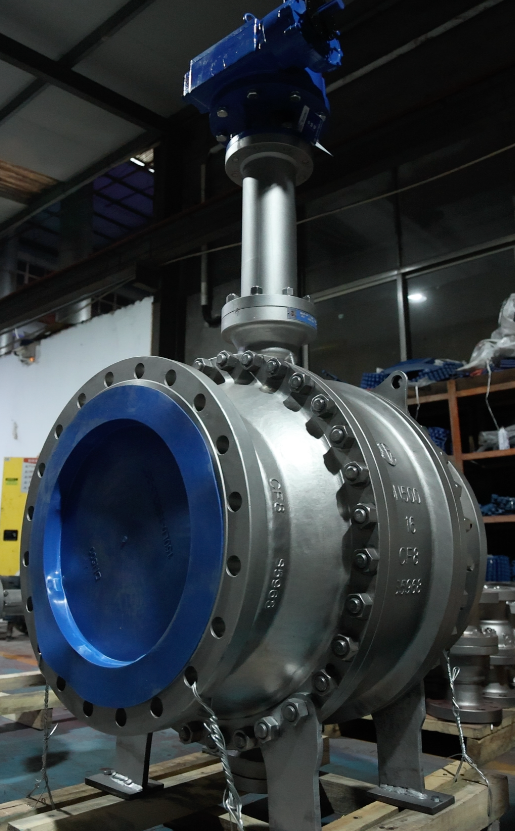
Finding a cryogenic ball valve supplier that can handle extreme temperatures without compromising performance is harder than it sounds. Many companies claim reliability, but only a few consistently deliver valves that stay tight and operational when the pressure drops and thermal shock sets in. Before you sign off on a purchase order, there are a handful of qualities you cannot afford to overlook—material selection, seat design, stem sealing, and testing protocols all play a decisive role. ZMV has spent years refining these details, but understanding what separates a dependable partner from a costly gamble puts you in a stronger position. Here is what to look for before you make your next move.
Why Material Choice Makes or Breaks a Cryogenic Valve
At cryogenic temperatures, many common metals lose their ductility and become dangerously brittle. Carbon steel, for instance, can shatter like glass below -50°C, making it a poor fit for LNG or liquid nitrogen service. Austenitic stainless steels such as 304L and 316L remain tough down to -196°C thanks to their face-centered cubic crystal structure, but even these require careful control of carbon content and welding heat input. A poorly selected base material may pass a room-temperature pressure test, then crack during the first cooldown cycle once the valve sees actual operating conditions.
Beyond simple toughness, thermal contraction mismatches between internal components can quietly destroy a valve. The body, stem, and trim all shrink at different rates as temperatures drop. A stem that contracts more than the body will pull away from its packing, creating a leak path at the bonnet. Some manufacturers dodge this by using Invar or nickel-based alloys for critical internals, but those materials drive up cost. The real skill lies in pairing materials whose expansion coefficients stay close enough across the entire operating range, so the valve remains tight without requiring excessive preload at ambient temperature.
Sealing materials present their own low-temperature trap. Standard PTFE, widely used in ambient valves, becomes glassy and loses its ability to recover after compression below about -100°C. Modified PTFE or PCTFE can push the limit lower, but for the coldest services, metal-to-metal seats or spring-energized polymer seals with metallic backups become necessary. Getting this wrong doesn't just cause minor leakage—a stuck seal can prevent the valve from closing at all during an emergency shutdown, turning a material oversight into a plant-level safety incident.
Sealing Technology That Survives the Freeze
Freeze-related seal failures rarely show up as sudden cracks. More often, the elastomer stiffens just enough that the lip no longer follows small shaft movements, and a slow weep begins at the edge of the contact band. Selecting a low-temperature compound helps, but it is the cold-state interference calculation that matters most. If the groove and lip dimensions are only checked at room temperature, the seal may look perfect on paper and still leak the first time the housing contracts.
Ice plays a more aggressive role than people expect. Water trapped near the seal face freezes into sharp crystals that wedge under the lip, breaking the oil film and leaving micro-channels behind after thawing. A small pumping feature or a carefully angled dust lip can push that moisture away before it reaches the primary sealing line. In repeated cold chamber runs, that kind of geometry change has kept seals dry well past the point where conventional designs turned into slow drips.
Testing Rigor: What Passed Specs Really Mean
A green test suite feels like proof, but it usually isn’t. Passing specs confirm that code satisfies the expectations someone bothered to write down, not that the system behaves correctly under real conditions. The gaps are where failures hide: untested branches, unmodeled inputs, and integration points that no single unit test touches.
Rigor means treating passed specs as a starting point, not a verdict. Teams that take results at face value often miss errors in error handling, concurrency, or data migration because those paths never made it into the specification. A more useful habit is to ask what the tests don’t cover and to probe those areas manually or with property-based checks.
Certifications That Aren't Just Paper
A framed certificate on the wall used to mean something. But in an era of weekend bootcamps and pay-to-play badges, it takes more than a printed name to signal real capability. The certifications that still carry weight are the ones tied to rigorous, hands-on evaluation—where you have to demonstrate judgment under pressure, not just recall a list of definitions. They ask you to break something and fix it, to design a solution from a blank page, to explain your reasoning to a human examiner who can spot a memorized script from across the room.
What separates these credentials from the rest isn't the prestige of the issuing body, but the cost of failure. When there's a real chance you won't pass, the credential stops being a souvenir and starts being evidence. It stops being about the hours you sat in a room and starts being about the number of times you rebuilt your approach because the first version didn't survive contact with reality.
That shift changes how you carry it, too. You don't point to it as proof you learned something once. You use it as a reminder that someone independent watched you work and said, yes—this person can actually do the thing. That's the difference between decoration and documentation.
Customization Without the Usual Runaround
Most customization services bury you in questionnaires, kickoff calls, and endless revision cycles before anything actually gets built. That's not how we work. From the first conversation, we focus on the handful of decisions that actually shape the outcome—layout preferences, brand voice, integration points—and leave the rest to sensible defaults. You won't be asked to approve a forty-page spec document or sit through weekly status meetings that could have been emails.
Our process is built around short, concrete feedback loops. You describe what you're trying to accomplish, we translate that into a working version within days, and then you point at the screen and tell us what to nudge. No naming conventions to memorize, no ticket queues to manage, no hidden handoffs between departments. If something feels off, you say so once and it gets fixed before the next check-in.
This also means you don't pay for the theater of customization—the kickoff decks, the alignment workshops, the change management summaries. You pay for a result that fits your actual workflow, not a generic template dressed up in your logo. And when you need to adjust course later, the same lightweight path applies: a quick note, a fresh build, a look at it together. That's the whole loop.
After-Sale Support You Can Actually Reach
Most after-sale support lines make you jump through hoops before you ever hear a human voice. We took a different route: when you call, a real person picks up—no phone trees, no "your call is important to us" recordings. If we miss you, we call back the same day, not three weeks later.
You also get a direct email address and a live chat that doesn't hand you off to a bot. Every ticket lands with a named support specialist who sticks with your case until it's actually fixed. If that person is out, someone else already knows your history—so you never have to repeat yourself.
What really sets this apart is follow-up. After we close a ticket, we check in a few days later to make sure the fix held. No surveys, no automated messages—just a quick note asking if everything's still working. That's the kind of after-sale support we'd want ourselves.
FAQ
Look for documented success in applications close to yours—LNG terminals, air separation units, or liquid nitrogen storage. A supplier with a history of solving leak issues at -196°C will understand thermal contraction and seat material behavior better than one that only claims general valve expertise.
At cryogenic temperatures, common carbon steel can become brittle and fail. You need suppliers who can provide full traceability for stainless steel or specialized alloys, along with test reports showing impact toughness at the lowest operating temperature. This isn't bureaucratic paperwork; it's proof the metal won't shatter when it gets cold.
Ask for cryogenic test procedures—do they cool the valve with liquid nitrogen and cycle it under pressure? A serious supplier will offer testing per standards like BS 6364 or ISO 28921, and they'll share data on seat leakage before and after thermal cycling. If they hesitate to discuss test setup, that's a red flag.
The extended bonnet keeps the stem packing away from the cold zone, preventing frost buildup and maintaining a reliable seal. A knowledgeable supplier will calculate the proper extension length based on your insulation thickness and operating temperature, rather than using a one-size-fits-all dimension.
Very. LNG, liquid oxygen, and liquid helium have different boiling points and material compatibility needs. A supplier who asks detailed questions about your fluid, pressure drops, and flow rates is more likely to recommend the right seat and seal materials—some plastics harden and lose sealing ability at cryogenic temperatures.
Look for a supplier that offers on-site installation guidance, maintenance training for your crew, and quick access to spare seat and seal kits. Cryogenic valves often need re-torquing after first cooldown; a good supplier will tell you that upfront and help you plan for it.
Yes. If they can modify port size, actuation method, or seat material based on your thermal cycling profile, they likely have engineering control over the whole valve. A supplier who only sells catalog items with no flexibility may not be able to address unusual cold-service challenges like rapid chill-down or high-cycle operation.
Watch for vague claims like suitable for low temperature without specifying a minimum rated temperature, lack of third-party test certificates, or an unwillingness to provide references from cryogenic installations. Also, if their technical team can't explain the difference between cold box and vacuum jacketed valve requirements, keep looking.
Conclusion
A supplier worth trusting in cryogenic service starts with metallurgy. Low temperatures turn ordinary carbon steel brittle, so the valve body and trim must use austenitic stainless grades that retain toughness at -196°C. The best shops don't just list CF8M—they can explain how they handle thermal contraction in the stem and body, and why extended bonnets are non-negotiable for keeping packing above freezing. Then comes sealing. A cryogenic ball valve is only as good as its seat and stem seal. Look for suppliers who use PCTFE or specialized PTFE blends for seats, pair them with live-loaded packing, and understand that a tiny leak at ambient temperature becomes a gusher when liquid nitrogen hits it. If they aren't discussing seal lip geometry and thermal cycling effects, they're selling you hope, not a valve.
The difference between catalog specs and real performance lives in testing. Ask whether the supplier actually chills each valve with liquid nitrogen and cycles it under pressure, or just relies on material certificates. Certifications matter only when they reflect this kind of hands-on verification—ISO 15848 fugitive emission ratings, PED compliance, and similar documents should be backed by test data you can request. Customization should not mean waiting six months for a non-standard stem extension or an extended bonnet. A capable partner keeps semitrailer loads of modular components ready and can adapt end connections, actuators, or packing materials without passing you to three different departments. Finally, after-sale support has to be real: you want a supplier whose engineers answer the phone when a valve starts weeping at 3 a.m., not a distributor who sends you a PDF and vanishes. These qualities separate a dependable cryogenic ball valve source from a transactional parts vendor.
Contact Us
Contact Person: Lucas Lin
Email: [email protected]
Tel/WhatsApp: +8613968913000 / +8613868610141
Website: https://www.zhengmaogroup.com