
Best HDPE Geomembrane for Durable Containment and Leak Protection
2026-10-12
When a liner fails, the real cost isn't the sheet—it's the contaminated soil, the halted operations, and the regulator on site. That's why choosing the best HDPE geomembrane for durable containment and leak protection isn't just about material specs; it's about sleeping at night. At WEN FENG STONE, we've seen how the right geomembrane turns a potential liability into a long-term asset. This guide breaks down what actually separates a reliable barrier from a risky one, so you can spec with confidence.
Why HDPE Geomembranes Outperform Traditional Clay and PVC Liners in Long-Term Containment
Clay liners have a well-known weakness that rarely shows up in short-term testing: they crack when they dry out, and their permeability shifts with moisture content. Even a well-compacted clay layer can develop preferential flow paths after repeated wet-dry cycles, letting leachate bypass the barrier altogether. PVC liners, on the other hand, start out flexible but lose plasticizers over time, becoming brittle and prone to stress cracking. In buried applications, that degradation often goes unnoticed until a leak is already spreading beneath the facility.
HDPE geomembranes take a different approach. The polymer is inherently chemical-resistant, so it doesn't rely on additives that can migrate out. Its permeability is orders of magnitude lower than compacted clay—typically around 1×10^-12 cm/s or better—and it stays that way for decades because the material doesn't swell or shrink with moisture changes. Thermal welding creates seams that are as strong as the parent sheet, eliminating the overlapping weak points common with PVC adhesives or clay lifts. This means the containment barrier remains continuous even when the ground settles unevenly or temperatures swing from freezing to hot.
Field performance backs this up. Landfills and mining ponds built with HDPE liners routinely pass leak detection surveys after 20 or 30 years of service, while clay-lined basins often need costly repairs within a decade due to root penetration, desiccation, or construction variability. PVC liners may work for decorative ponds or short-term covers, but for long-term containment of hazardous liquids, HDPE's combination of toughness, chemical stability, and weld integrity makes it the more reliable choice. The difference isn't theoretical—it shows up in lower monitoring costs and fewer environmental incidents over the life of the installation.
How Low Permeability in HDPE Stops Contaminant Migration Before It Starts
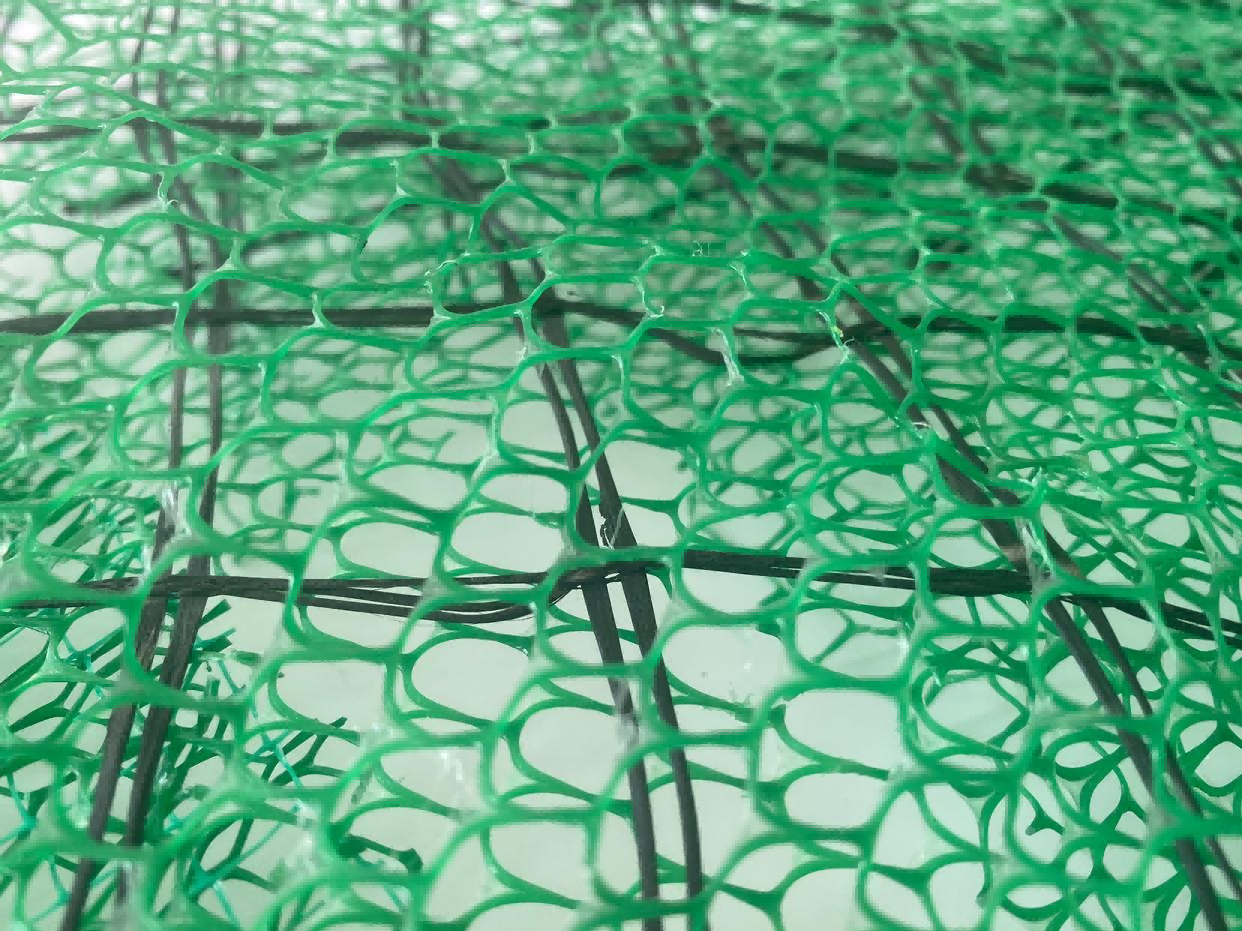
At the molecular level, high-density polyethylene consists of long, tightly packed chains with very little free volume between them. This dense arrangement leaves few pathways for dissolved chemicals, gases, or vapors to pass through. Unlike porous materials that merely slow fluid movement, HDPE presents a physical obstacle that contaminants encounter at the very first layer, before they can form a concentration gradient or reach surrounding soil.
The practical effect shows up in measured permeability values that are orders of magnitude lower than compacted clay or other liner materials. Even aggressive leachate containing organic solvents and heavy metals remains contained because the driving force for molecular diffusion is undercut by the material's resistance. In many cases, the rate of transmission is so slow that the liner's service life outlasts the active decomposition phase of the waste it holds.
This is not just a laboratory claim; field installations repeatedly demonstrate that well-welded HDPE seams and panels maintain their low permeability under sustained chemical contact and varying temperatures. The barrier function begins the moment the liner is placed, and contaminants never get the chance to start moving through it because the material does not offer them a viable path.
Stress Crack Resistance and Puncture Performance Beyond Just Thickness
Thickness often gets treated as a reliable proxy for toughness, but that shortcut can mislead. Two sheets with identical caliper can diverge sharply once they face sustained tensile loads or sharp impacts. The real difference lies in how the polymer is formulated and processed, not just how much material is there.
Stress crack resistance, for example, measures a material's ability to withstand slow crack growth under constant stress over time. Tests like ASTM D5397 expose this behavior, and results depend heavily on resin quality, molecular weight distribution, and manufacturing consistency. Micro-voids or residual stresses left during extrusion become initiation points, so a thinner sheet produced from a cleaner, well-controlled resin can outlast a thicker sheet riddled with processing flaws.
Puncture performance follows a similar logic. ASTM D4833 gives a single-point puncture value, but real-world punctures from angular rocks or construction loads involve multi-axial stress and energy absorption. A material with high elongation and balanced toughness spreads the force across a wider zone instead of failing locally. So judging puncture resistance purely by thickness ignores the role of polymer architecture, co-monomer placement, and additive packages that determine how the sheet deforms before breaking.
Field Welding Quality as the Make-or-Break Factor for Leak-Free HDPE Installations
No matter how carefully an HDPE pipeline is designed or how high the material grade, the joints are where most failures begin. Field welding introduces variables that shop fabrication never faces: wind, dust, temperature swings, uneven ground, and operator fatigue. A single bad fusion bead can remain hidden under backfill for years, then open up under pressure. Leak-free performance lives or dies by what happens between the heating plate and the pipe ends.
The most common culprit is a cold weld, where the melt zone never reaches proper temperature or the fusion pressure is released too early. It feels strong to the touch but lacks molecular entanglement across the interface. Another silent enemy is contamination—dirt, moisture, or pipe shavings trapped in the weld plane. Even a fingerprint can create a path for slow gas migration. That’s why experienced crews treat each joint like a surgical field, cleaning, facing, and aligning with almost obsessive care.
Documentation and destructive testing are the only real proof. Cutting coupons from every weld and bending them until failure reveals whether the fusion actually merged the two pipe walls. When contractors skip this step to save time, they’re gambling with the entire system’s lifespan. A leak-free HDPE installation isn’t built by good intentions; it’s built joint by joint, and every joint carries the weight of the whole project.
Matching HDPE Grade and Surface Texture to Your Specific Containment Environment
Selecting an HDPE grade for a containment area is rarely as simple as grabbing the stiffest sheet available. Pay attention to the stress crack resistance of the resin, especially if your environment cycles between wet and dry or exposes the liner to surfactants, mild acids, or repeated thermal swings. A high-molecular-weight, bimodal HDPE often holds up better under constant tensile stress than a standard pipe-grade material, even when both list similar densities. Match the melt flow index to your welding or forming process too—lower flow grades can be harder to extrude but resist sag and give you thicker, more consistent corner welds.
Surface texture matters just as much as the polymer backbone. A smooth, glossy finish is easier to inspect and decontaminate, but it can become slippery and shows scratches that hide bacteria. Textured or matte surfaces improve traction for foot traffic and reduce glare from inspection lighting, yet they demand higher pressure washing or mechanical scrubbing to lift embedded soils. In food or pharmaceutical containment, a lightly embossed pattern with rounded peaks often balances cleanability with slip resistance better than a deep, aggressive texture that traps residues. If you are containing aggressive solvents, pair the texture choice with an oxidative-induction-time test and verify the surface does not stress-whiten when flexed.
Life-Cycle Cost Reality of Durable HDPE Liners Versus Repeated Repair and Replacement
When a lining system fails early, the visible repair bill is only the beginning. Crews get pulled from scheduled work, bypass pumping becomes a scramble, and every unplanned shutdown chips away at operational confidence. Durable HDPE liners flip that pattern: the upfront premium buys a smooth, weld-free barrier that doesn't crack under thermal cycling or shrug off chemical attack. Instead of budgeting for a patch job every few seasons, owners see one installation stretch across decades, with maintenance limited to routine inspections rather than emergency callouts.
The hidden math is even starker in aggressive service. Repeated repairs on concrete or coated steel liners rarely restore original design strength; each patch introduces new seams, new weak points, and new chances for infiltration or exfiltration. HDPE's fused joints eliminate the typical leak paths, so the real cost per year of service drops sharply after year five. Compare that to a repair cycle where you're paying for scaffolding, surface prep, cure time, and lost capacity every time a blister or spall appears. The "cheaper" initial liner quietly becomes the most expensive asset on the site.
Long-term owners also face the cost of obsolescence. A liner that needs constant attention drags down the whole facility's reliability score, complicates environmental compliance, and makes future expansion riskier. Durable HDPE liners, by contrast, stay predictable. They don't rely on coatings that wear thin or mortar that spalls in freeze-thaw zones. When the life-cycle cost is tallied honestly—including downtime, labor, disposal of failed materials, and the administrative burden of repeated contracts—the HDPE option stops looking like a premium and starts looking like the only rational budget line.
FAQ
The difference usually comes down to resin purity, stress crack resistance, and consistent thickness across the roll. Premium HDPE liners are made from virgin high-density polyethylene with tight manufacturing tolerances, so you don't get thin spots that turn into leak paths. They also hold up better under continuous tension and chemical exposure, which is exactly what you want for a liner that has to stay intact for decades.
Thickness selection depends on the site conditions and what you're storing. For most industrial ponds and landfills, 60 mil (1.5 mm) is a common baseline, but if there's rocky subgrade or heavy equipment traffic, moving up to 80 mil (2.0 mm) gives you a wider safety margin. The extra thickness adds puncture resistance and extends the service life without dramatically increasing material cost.
Yes, as long as it's formulated with sufficient carbon black or other UV stabilizers. Standard black HDPE liner typically contains 2-3% carbon black, which blocks ultraviolet radiation and slows polymer breakdown. That said, for permanent exposed applications, you still want to check the manufacturer's weathering data and consider covering the liner with soil or ballast to minimize thermal cycling.
The biggest culprits are poor seam welding and inadequate subgrade preparation. If the soil underneath has sharp rocks or organic debris, the liner can be punctured during placement or under load. Seams that are overheated, underheated, or tested too quickly can look fine but fail later. Using experienced welders and performing air pressure or vacuum tests on every seam is non-negotiable if you want leak-free performance.
Textured surfaces increase friction between the liner and adjacent materials, so the geomembrane doesn't slide down steep slopes under its own weight or when covered with soil. This is especially important for landfill caps, leach pads, and reservoir side slopes where a smooth liner would need extra anchoring or bench cuts. The texture is applied during manufacturing without reducing the sheet's overall chemical resistance.
It can be, provided the specific product meets standards for drinking water contact, such as NSF/ANSI 61 certification. HDPE is inherently resistant to biological growth and does not leach plasticizers the way some flexible PVC liners do. For reservoirs and water treatment facilities, using a certified HDPE liner offers both containment security and low maintenance over the long haul.
HDPE becomes stiffer in freezing temperatures, which can make handling and welding more difficult. However, once installed, it retains its integrity down to very low temperatures as long as it isn't subjected to sharp impacts. In arctic projects, crews often pre-heat the liner and use specialized welding parameters to get reliable seams. The material itself won't crack just from cold weather if it's properly supported.
For critical containment facilities, a visual inspection every six to twelve months is reasonable, with more frequent checks after major storms or seismic events. Look for signs of stress cracking, uplift, or damage from animals and equipment. If the liner is covered, you may need to monitor leak detection systems or use electrical resistivity surveys to locate potential breaches before they become serious.
Conclusion
Selecting the best HDPE geomembrane means looking beyond a simple thickness spec. Modern high-density polyethylene liners consistently outperform traditional clay and PVC alternatives because their molecular structure delivers a combination of flexibility, chemical resistance, and long-term stability that compacted clay simply cannot match. The near-zero permeability of HDPE—typically on the order of 1E-13 to 1E-15 cm/sec—acts as a physical barrier that halts contaminant migration at the source, preventing leachate, acids, or hydrocarbons from ever reaching surrounding soil or groundwater. Equally important is how the material behaves under real-world strain. Stress crack resistance and multi-axial puncture performance are not just add-on features; they determine whether a liner survives sharp aggregate, differential settlement, or thermal cycling without developing micro-fractures that quietly compromise containment years later. Choosing an HDPE grade with proven ESCR values and a textured surface where slope stability matters is what separates a liner that merely meets a specification from one that actually endures.
Field welding quality often matters more than the raw sheet itself. Even the best HDPE resin becomes irrelevant if extrusion or fusion welds are rushed, contaminated, or not tested with vacuum boxes and air pressure before backfilling. A leak-free installation depends on certified welders, proper pre-heat and peel tests, and realistic weather windows—not just equipment brand names. Matching the HDPE grade and surface texture to the specific containment environment is equally critical: smooth surfaces work for low-friction covers, while single- or double-sided textured liners improve interface friction on steep slopes. Finally, the life-cycle cost argument is straightforward. Durable HDPE liners typically function effectively for decades with minimal intervention, whereas cheaper clay or PVC systems often require repeated patching, desiccation repairs, or full replacement after a few years. Upfront material savings are quickly erased by monitoring, downtime, and environmental liability, making a properly specified HDPE liner the lowest real cost over the project's lifetime.
Contact Us
Contact Person: Jennifer LEE
Email: [email protected]
Tel/WhatsApp: 8618553418999
Website: https://vip.e-baixing.com/wenfengshitong