Best Recloser Options for Modern Power Grid Reliability and Protection
2026-09-02
Modern power grid reliability and protection hinge on components that rarely make headlines—none more so than the recloser. It's the device that decides, in milliseconds, whether a tree branch on a line becomes a brief flicker or a full-blown outage. Yet not all reclosers are equal, and with distributed energy resources rewriting fault behavior, the old selection playbooks are failing. Here, we explore the best recloser options for today's grid reality, including how Deepwill is approaching the challenge differently.
Choosing the Right Recloser for Grid Resiliency Without Overcomplicating Protection
Reclosers often get loaded with features that promise better reliability, but many utilities find the extra settings and coordination logic create more confusion than resilience. The real question is not how many capabilities a recloser has, but whether its protection scheme remains easy to test, understand, and adjust under storm conditions.
Start by matching the recloser's interrupting rating and control curves to the actual fault current profile on the feeder, not a generic worst-case scenario. If your line mostly sees temporary faults from vegetation, a simple fast-then-slow curve set may outperform a complex adaptive scheme that no one remembers how to tune after a crew turnover.
Grid resiliency comes from reliable operation and fast restoration, not from every available automation option. Choose a recloser that supports manual or semi-automatic sectionalizing when communications fail, and keep the protection settings documented in plain language. That balance prevents protection from becoming the weak link in an otherwise robust grid.
How Smart Reclosers Cut Outage Minutes on Feeders with High Distributed Generation
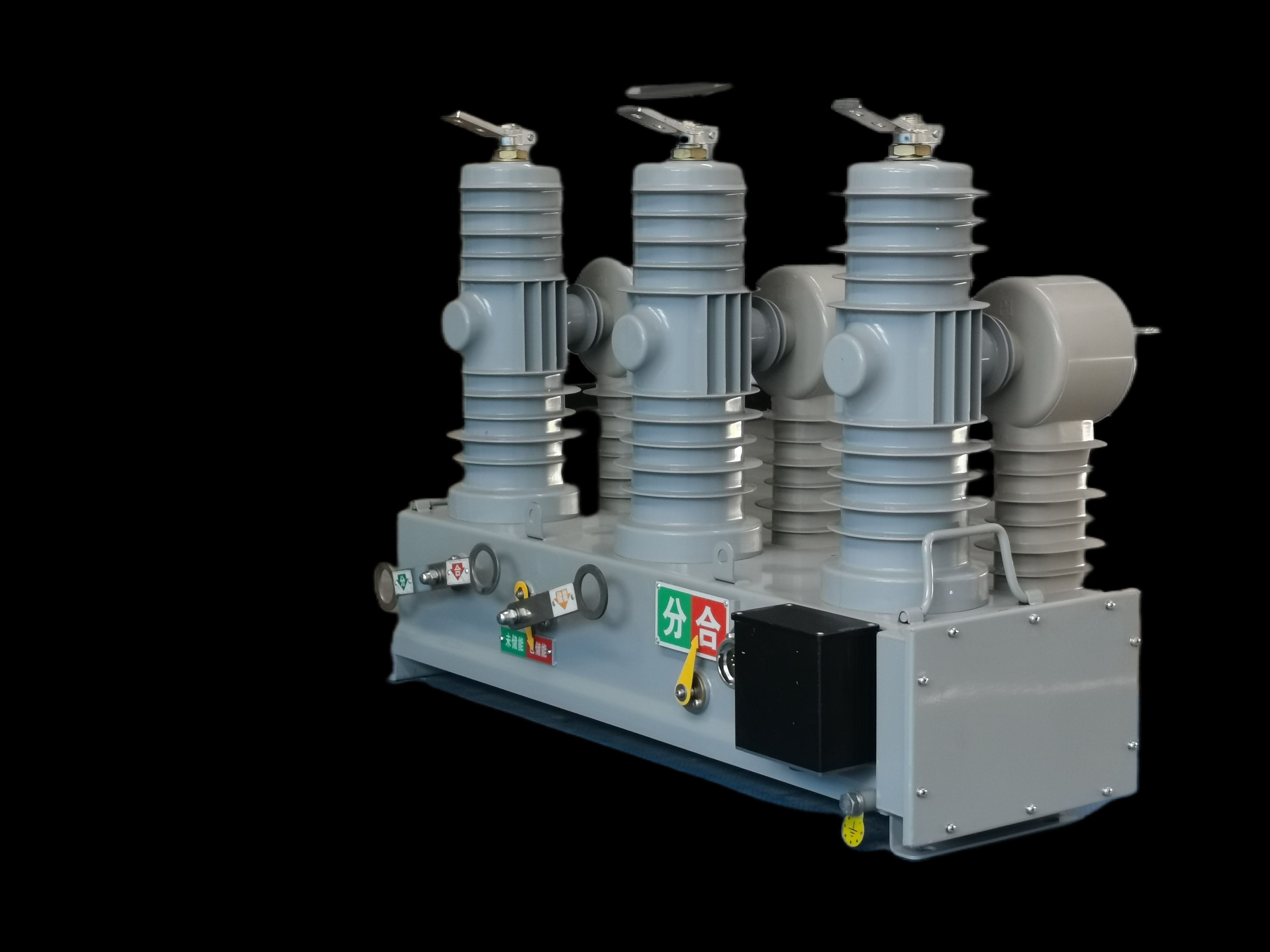
On feeders where rooftop solar and small wind systems push fault currents in unpredictable directions, traditional reclosing schemes often struggle. A smart recloser continuously samples voltage and current phasors from both line and distributed generation sides, using adaptive protection logic to distinguish a temporary branch slap from a permanent cable fault. That single distinction avoids unnecessary lockouts and keeps healthy segments energized while crews address the actual problem.
The real time savings come from automated sectionalizing. Instead of waiting for a dispatcher to interpret SCADA alarms and manually open switches, the recloser coordinates with nearby devices to isolate only the faulted span. In high-DG areas, this coordination must account for backfeed from inverters, which older electromechanical controls miss. Modern units communicate peer-to-peer over fiber or radio, sharing directional elements so that a fault behind a solar array doesn't trip the entire feeder.
Field data from utilities with heavy DG penetration shows outage minutes dropping by 30 to 50 percent after upgrading to these reclosers. The improvement isn't just from faster trip decisions; it's largely from reducing the number of customers affected per event. By keeping more of the feeder live during repairs, smart reclosers directly lower SAIDI and CAIDI without requiring expensive line rebuilds.
The Case for Upgrading to Single-Phase Reclosers on Long Rural Lines
Long rural feeders often run through rough terrain where a single tree branch or lightning strike can knock out power for dozens of customers. Older fuse-and-recloser setups frequently disconnect all three phases, leaving homes and farms dark until a crew can patrol miles of line. Upgrading to single-phase reclosers changes that by isolating only the faulted phase while keeping the other two phases energized. Customers on the healthy phases see no interruption, and the utility avoids a full feeder outage for what is usually a temporary fault.
Most faults on rural lines are momentary, yet traditional fuses blow and require manual replacement. A single-phase recloser can test the line and restore service automatically after a few seconds, which eliminates unnecessary truck rolls and cuts overtime costs. These devices also record fault data and event flags, giving line crews a much better idea of where to start looking instead of driving every mile of a long circuit. Over time, that adds up to fewer outage minutes, fewer damaged conductors, and a more practical maintenance strategy for aging rural infrastructure.
Recloser Coordination with Fuses and Sectionalizers: Getting It Right the First Time
Getting reclosers, fuses, and sectionalizers to work together without tripping over each other is a real challenge on distribution feeders. The classic mistake is treating each device in isolation: you set the recloser to clear faults quickly, but then a downstream fuse melts on a temporary fault that should have been cleared by an instantaneous trip. The key is to look at the whole protection scheme as one continuous chain, where the recloser's time-current curves must sit below the fuse's minimum melting curve for temporary faults, yet allow the sectionalizer to count operations and drop open before the recloser locks out on a permanent fault.
One approach that often gets overlooked is using delayed reclosing intervals to let fuses cool down after a momentary interruption. If the recloser trips and immediately recloses, the fuse element may still be hot enough to melt on inrush current, even though the fault has cleared. Adding a few extra cycles of dead time costs almost nothing in terms of customer outage but can prevent a lot of unnecessary fuse operations. Similarly, sectionalizer counting needs to be matched to the recloser's trip sequence; if the sectionalizer is set to open after three counts but the recloser only provides two fast trips before going to lockout, you will never get the coordination you designed.
Finally, field verification is where many good designs fall apart. Load growth, conductor changes, and new distributed generation can shift fault current levels enough that the original coordination margins no longer hold. A quick check with actual fault data from the recloser's event recorder can reveal whether your fuse saving scheme is still working or if you are silently burning through fuse links. Getting it right the first time means not just picking the right curves on paper, but also building in enough margin for the inevitable changes that come later.
Why Communication-Enabled Reclosers Are Becoming Standard for Utility Automation
For years, reclosers did their job quietly on the edge of the grid—tripping, waiting, and trying again without asking for permission. But as utilities push for smarter distribution networks, the old dumb switch is losing ground. Communication-enabled reclosers bring real-time visibility into fault events, load conditions, and device health, turning a simple protection device into a data source that feeds directly into control room decisions.
The shift isn't just about convenience. When a recloser can report its status, line crews stop chasing phantom outages. Operators see exactly where a fault occurred and whether the device locked out or successfully restored service. That cuts restoration time and keeps customers from sitting in the dark while a truck rolls to the wrong pole. Utilities also use the data to spot recurring faults on a feeder before they become full-blown failures.
Interoperability has made the move easier. Modern reclosers often speak DNP3, IEC 61850, or Modbus, so they drop into existing SCADA systems without a custom integration project. Cybersecurity remains a concern, but vendors now ship devices with role-based access and encrypted protocols baked in. As distributed energy resources multiply, the ability to coordinate recloser settings remotely will only matter more. That's why what once looked like an optional upgrade is quickly becoming the baseline for any serious automation program.
Maintenance Practices That Keep Reclosers Reliable Through Extreme Weather
Field crews often discover that the difference between a recloser that rides out a hurricane and one that fails during the first gust comes down to a handful of overlooked details. Checking the condition of bushings, insulators, and surge arresters before storm season is not glamorous work, but cracks, tracking, or contamination from salt spray or industrial fallout can create flashover paths when rain or snow hits. Wiping down porcelain or polymer surfaces and applying a thin coat of approved silicone grease on mating surfaces helps prevent moisture ingress that leads to internal corrosion. At the same time, verifying that all gaskets and O-rings on the control cabinet are still pliable—not hardened or cracked—keeps driving rain and blowing snow away from sensitive electronics.
Battery health often gets neglected until a cold front drops temperatures low enough to expose a weak cell. Performing a load test on the recloser control battery at the start of winter and again before summer peak load reveals whether the unit can still operate the mechanism multiple times without AC power. The electrolyte level, terminal corrosion, and charger output should be recorded, not just glanced at. For reclosers with hydraulic or magnetic actuators, exercising the mechanism manually and electrically under simulated fault conditions can uncover sluggish operation that only shows up when oil viscosity changes in deep cold or when heat expands internal clearances. Lubricating pivot points with a low-temperature grease and checking that the mechanism box heater and thermostat are functional prevents ice buildup on linkages that would otherwise stall a trip operation.
Finally, reviewing the fault records and event logs after every major storm gives maintenance crews a clear picture of how the recloser performed under stress. If the control shows repeated instantaneous trips followed by lockout, it might indicate coordination issues or downstream protective device problems that worsen during lightning season. Downloading and archiving these logs before they are overwritten preserves the evidence needed to adjust settings or plan targeted repairs. Thermal imaging of connections and internal components while the recloser carries load can also reveal hot spots that are invisible to the naked eye but will fail during the next heat wave or ice storm. Together, these practices shift maintenance from a calendar-driven chore into a condition-based routine that keeps reclosers ready for whatever the weather throws at them.
FAQ
A recloser is an automatic circuit breaker that interrupts fault current and then closes again after a short delay. Its real value is clearing temporary faults—like a tree branch brushing a line—without forcing a permanent outage. In modern grids, that means fewer customer minutes lost and less wear on line crews.
The biggest shift is from purely mechanical operation to microprocessor-based controls. Modern units can measure voltage and current on both sides, communicate over SCADA or peer-to-peer networks, and adjust protection curves on the fly. Older reclosers simply opened and closed on a fixed sequence; newer ones make decisions based on actual grid conditions.
Look for directional protection, voltage measurement on the source and load side, and communication protocols like DNP3 or IEC 61850. With solar and storage pushing power in both directions, a recloser needs to distinguish between forward and reverse faults. Built-in automation logic also helps islanding detection and rapid reconfiguration.
Vacuum interrupters have no gas to leak and require less maintenance over a long service life. SF6 units historically offered high interrupting capacity in a compact package, but the gas is a potent greenhouse agent and disposal is tightly regulated. Most new installations lean toward vacuum or solid-dielectric designs to avoid the environmental and regulatory burden.
Start with the maximum available fault current at the recloser location, not the average load. Add a safety margin for future system growth—usually 10 to 20 percent. Also consider the X/R ratio and close-and-latch rating. Under-sizing saves money up front but leads to failed interruptions and equipment damage.
They prevent temporary faults from becoming sustained outages, which directly cuts SAIFI. When paired with automation and loop schemes, reclosers can isolate a faulted section and restore power to healthy parts of the feeder in seconds, lowering SAIDI dramatically. That is why regulators and utilities track recloser performance so closely.
Coordination relies on time-current curves. The recloser should operate faster than the upstream breaker for downstream faults, but allow downstream fuses to clear faults on their protected laterals. Modern reclosers with programmable curves make this easier—you can set multiple timing groups and adaptive settings for cold load pickup or live-line work.
Routine inspection focuses on battery health in the control cabinet, contact wear indicators, and firmware updates. For vacuum interrupters, a simple contact resistance test every few years is enough. For SF6 units, gas pressure checks are critical. Many utilities now use condition-based monitoring to avoid unnecessary manual checks.
Conclusion
When utilities weigh recloser options for today's grid, the conversation often gets tangled in specs and communication protocols. But the core question is simpler: how do you keep power flowing to customers without adding layers of complexity that field crews can't manage? Smart reclosers with distributed generation awareness are proving their worth on feeders where backfeed from rooftop solar used to trip protection blindly. Instead of locking out on every fault, these devices adapt their curves on the fly, trimming outage minutes. At the same time, rural operators are finding that single-phase reclosers on long lines do more than save money—they isolate only the faulted phase, so one tree branch doesn't black out a whole valley. The trick is coordination: fuses and sectionalizers need to talk to the recloser's timing, not fight it. Get that right once, and you avoid the midnight callouts where a blown fuse upstream makes everyone scratch their heads.
Communication-enabled reclosers are quickly becoming the default for utility automation, not because they're flashy, but because a recloser that can report its own status saves a truck roll and forty minutes of guesswork. Extreme weather pushes that reliability further: maintenance practices that include thermal imaging and contact resistance checks before storm season keep reclosers from failing exactly when they're needed most. The best recloser isn't the one with the most features—it's the one that matches the feeder's personality, whether that's heavy distributed generation, miles of exposure, or a mix of urban and rural load. Upgrading isn't about chasing the newest standard; it's about removing the weak points that turn a routine fault into a two-hour outage. In the end, a well-chosen recloser does its job quietly, and the grid's resilience speaks for itself.
Contact Us
Contact Person: Julion
Email: [email protected]
Tel/WhatsApp: 8617351370631
Website: https://www.deyunelectric.com