Best Water Production Line Factory A Detailed Look at What Sets Top Manufacturers Apart
2026-10-28
What actually makes one water production line factory “best” while another barely meets spec? It rarely comes down to a single machine—it’s the sum of frame tolerances, pump choices, control logic, and after-sales response. In this article, we break down those differentiators and show how manufacturers like INTOP Machinery are raising the bar.
Where Precision Meets Hygiene: Inside a Top-Tier Facility
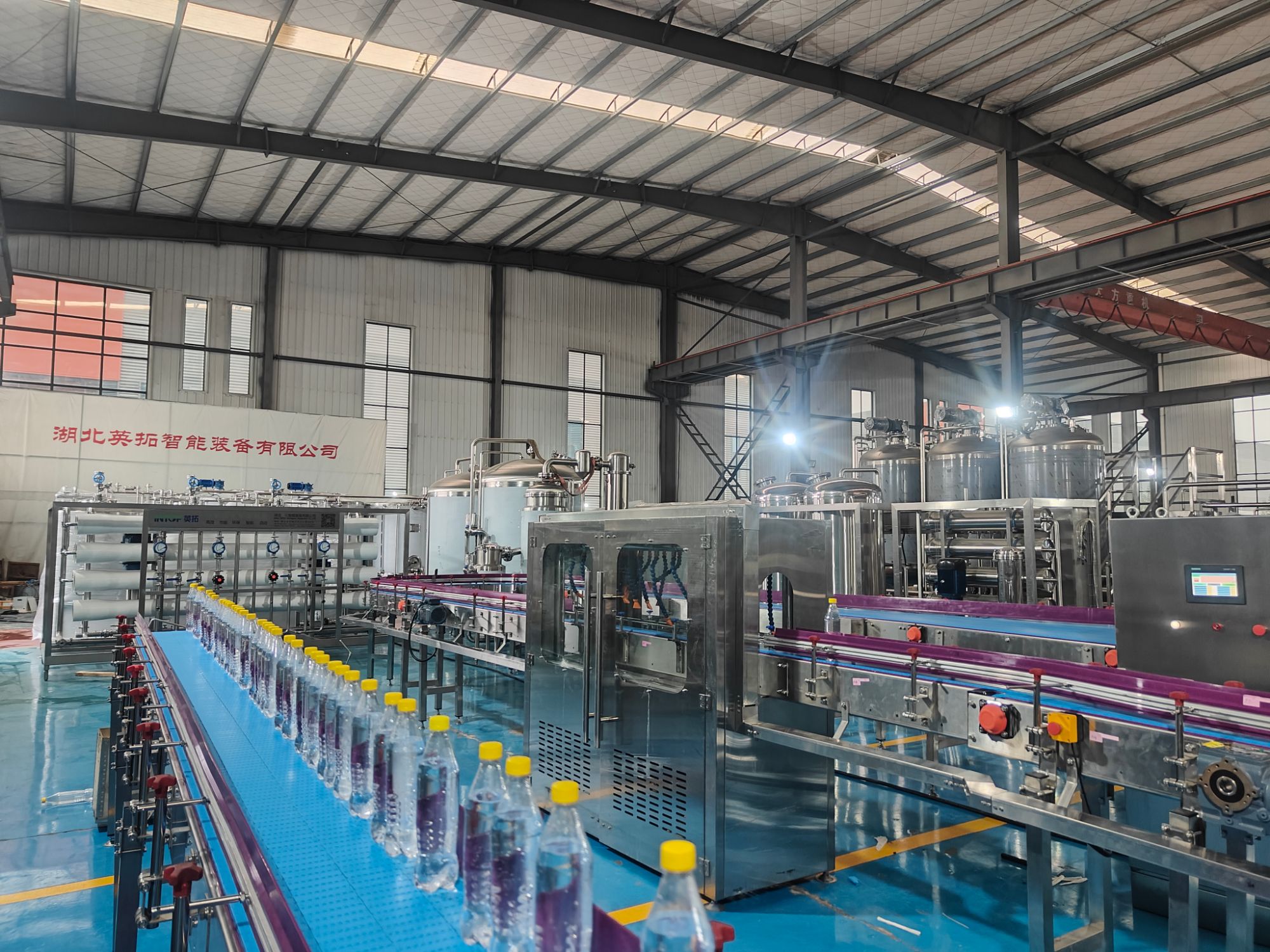
Walk through the airlock and the first thing you notice is the hush. Air moves in steady, filtered streams, and every surface carries the faint gleam of stainless steel that has been wiped down minutes ago. This is not a place where cleanliness is a guideline; it is a measurable parameter, tracked shift by shift.
On the production line, operators in full gowns handle components with a deliberate calm. Temperature, humidity, and particle counts are displayed in real time, but the real discipline shows in the small routines: the way tools are placed back in their shadow boards, the way gloves are changed at fixed intervals. Precision here is not just about tolerances on a print. It is about removing every variable that could compromise the work before it ever gets measured.
The Materials That Keep Contamination Out and Output Flowing
Every production line has its silent guardians—the seals, gaskets, and linings that stand between a clean process and a costly batch of scrap. The right material choice does more than just fill a gap; it shrugs off aggressive chemicals, holds tight under thermal cycling, and refuses to shed particles into the product stream. For food, pharmaceutical, and semiconductor operations, this isn't a luxury. It's the difference between a line that runs for months and one that stops every few days for cleaning or replacement.
Look closely at where contamination creeps in and you'll usually find a material that was specified for the wrong reason. A cheap elastomer might survive initial contact but slowly swell, crack, or leach plasticizers. A metal seal that works in air can gall or corrode in a humid or acidic environment. The materials that actually keep output flowing tend to be unglamorous: perfluoroelastomers for aggressive solvents, PTFE-based compounds for high purity, or engineered thermoplastics that resist abrasion without generating fines. Each one earns its place by behaving predictably over thousands of cycles, not by looking good on a datasheet.
The real test comes when you stop treating these components as consumables and start treating them as part of the process. A well-chosen seal material can extend maintenance intervals, reduce flushing volumes, and cut the risk of a contamination recall. But that only happens when the selection accounts for the full picture—temperature swings, cleaning agents, line speed, and even the way operators handle the equipment. The materials that keep contamination out are rarely the stars of the line, but without them, nothing else keeps moving.
Custom Builds, Not Cookie-Cutter Lines
Most equipment vendors hand you a spec sheet and ask where to park it. We start from the opposite direction—your parts, your tolerances, your floor space, and the way your operators actually work. That means a line built around an awkwardly shaped casting or a fragile electronic assembly gets the same attention as a high-volume packaging run. The result is a system that doesn't require you to re-engineer your product just to make it fit the machine.
Instead of reusing a standard chassis and bolting on whatever options fit, our engineers rebuild the core modules each time. Conveyor pitch, fixture design, inspection stations, even the direction material flows through the room—all negotiated with your team before we cut metal. This takes longer up front, but it eliminates the usual retrofits, workarounds, and operator frustration that show up six months after a “standard” line is installed.
That also means no two systems leave our floor looking identical. One might be a compact, single-operator cell for low-volume medical devices. Another could be a forty-meter line with automatic pallet changers and inline testing for automotive components. The common thread is that each one was designed from the ground up, not copied from a catalog.
Why Smart Automation Is Only as Good as Its Sensors
Automation systems often get praised for their logic, speed, and consistency, but these strengths collapse the moment a sensor feeds them bad data. A robotic arm can execute perfect movements, yet if its torque sensor drifts by a few percentage points, it will either crush a fragile part or fail to seat a component correctly. The same holds for temperature probes in chemical reactors, LiDAR units on autonomous forklifts, or pressure transducers in hydraulic lines. Smart automation is not a brain in isolation; it is a nervous system, and the sensors are the nerve endings. When those endings go numb or start misfiring, the smartest algorithm becomes a well-dressed guess.
Many facilities treat sensors as simple on/off switches that either work or don't, so they defer replacements until a device fails outright. That approach ignores the slow decay of calibration, the buildup of residue on optical lenses, or the gradual loosening of a vibration mount. A sensor can be technically alive but practically blind, delivering values that are consistently off by a margin just wide enough to degrade product quality without tripping an alarm. The result is a subtle erosion of trust: operators begin overriding automated decisions, engineers add manual checkpoints, and the promised efficiency quietly disappears. Sensors don't just measure the process; they define the boundaries of what automation can safely do.
The way out is not to buy more expensive sensors but to treat them as first-class citizens of the automation stack. That means logging raw signals, not just processed results, so anomalies can be spotted before they cause defects. It means setting up cross-checks where a flow meter and a pressure sensor can verify each other's story. And it means scheduling calibration based on drift patterns, not calendar dates. When a plant finally accepts that its smartest system is only as trustworthy as its least reliable input, the conversation shifts from "how can we automate more" to "how can we sense better." That shift usually delivers more real improvement than any algorithm upgrade.
Beyond Installation: The Support That Keeps Lines Humming
Most line managers know the launch day rush—technicians on site, cables neatly routed, software installed, and then the handshake. But what happens after the applause fades? Machines drift out of alignment, filters clog in ways the manual never predicted, and operators develop workarounds that quietly erode throughput. Real support begins the moment the installation crew packs up, when the line starts revealing its own quirks under real production loads.
A practical support model doesn't wait for a breakdown call. It schedules preventive check-ins at intervals that match the line's actual wear patterns, not generic calendar reminders. Technicians who know your specific tooling can spot a bearing running hotter than last quarter or a sensor drifting outside its normal band before those issues become downtime. This is the difference between reacting to a stopped line and keeping one that never has to stop.
Flexibility matters as much as frequency. A good support partner adjusts their level of involvement based on your in-house capabilities—some plants want weekly vibration analysis, others only need quarterly audits with remote monitoring in between. The goal isn't to sell more service hours; it's to make the line so predictable that support becomes nearly invisible. That's when the humming really starts.
Sustainability Without Sacrificing Throughput
Most plants still treat energy reduction as a trade-off with line speed, but the smartest operations have quietly shifted to variable-frequency drives and heat recovery loops that trim consumption during micro-stops without touching cycle times.
Instead of separating sustainability targets from output metrics, they now run on the same dashboard. A line that recovers braking energy from palletizers or reuses washdown water doesn't slow down to hit an environmental goal—it simply wastes less between cycles.
The real differentiator is design, not discipline. Lightweight tooling, low-pressure pneumatics, and closed-loop cooling let you push the same units per hour while drawing less power and water. Throughput stays intact because the savings come from idle gaps and losses, not from asking operators to work around a greener process.
FAQ
It comes down to how they handle pressure testing and material traceability. Top factories document every weld and component batch, and they test each finished line under simulated production loads rather than relying on spot checks.
They don't force a standard layout. Instead, they map out your floor space, target output per hour, and even water chemistry before proposing filler types, capping heads, and conveyor routing that fit your specific range.
The difference is usually in frame materials and drive systems. A slightly thicker stainless steel frame, higher-grade bearings, and modular servo drives reduce breakdowns and make changeovers faster, cutting labor and downtime costs significantly.
Beyond a warranty, look for remote diagnostics access, clearly documented maintenance schedules, and a local spare parts kit included in the initial quote. The best factories also offer operator training on-site, not just a manual.
It matters most for consistency, not just speed. Automated rinsing, filling, and capping with sensor-based rejection systems keep defect rates below 0.1%, something manual or semi-automatic lines struggle to achieve over long shifts.
Ask to see their in-house testing area and ask about the specific standards they follow for food-contact materials. A good factory tests every pump and filler valve before assembly and then runs the entire line with water for at least eight continuous hours.
They use variable-frequency drives on conveyors and pumps, optimized spray nozzles for bottle washing, and heat recovery systems for any hot-rinse stages. This can lower utility costs by 15–25% compared to older designs.
It's often the hidden factor. A factory with a dedicated project engineer who gives you weekly photo updates, a clear installation sequence, and a punch list before shipping will avoid the common three-month delays caused by miscommunication.
Conclusion
What really separates a top water production line factory from the rest isn't just fast machinery or a recognizable logo. It's the way precision and hygiene are treated as one and the same from the moment you walk onto the floor. In the best facilities, every surface, every weld, and every conveyor bend is designed to eliminate places where bacteria can hide. The materials matter just as much—food-grade stainless steel, sealed bearings, and tubing that resists biofilm buildup keep contamination out without slowing down output. And unlike mass-produced one-size-fits-all lines, the top manufacturers actually listen to what a bottler needs: different bottle shapes, fill volumes, cap styles, or even a quirky layout forced by an old building. They engineer around those constraints instead of forcing a standard footprint.
Smart automation is a selling point everywhere, but it only works if the sensors are accurate enough to catch a missing cap or a drop in pressure before it becomes a recall. The best factories pair that automation with support that doesn't vanish after installation—think remote diagnostics, stocked spare parts, and technicians who know your line by name. Finally, sustainability isn't just a slogan. Top-tier lines reduce water and energy waste through smarter rinsing, leak detection, and variable-speed drives, all while keeping throughput at full tilt. That combination of upfront engineering and long-term commitment is what makes a production line factory genuinely stand out.
Contact Us
Contact Person: Laura
Email: [email protected]
Tel/WhatsApp: +86 13957758832
Website: https://www.intopmachinery.com