China Abrasive Paper Types and Uses Explained
2026-09-09
Choosing the right abrasive paper in China isn't just about grit size—it's about matching the backing, mineral, and bond to the actual job. Yet most buyers end up with a drawer full of half-used sheets that either clog too fast or leave deep scratches. At SHENZHEN SUN ABRASIVES, we see this confusion daily. This guide cuts through the noise: it lays out the main types of abrasive paper produced in China, explains where each one shines, and points out the common mistakes that waste time and money on the shop floor.
What Changes When a Sheet Is Marked Waterproof in Chinese Tool Shops
The most immediate change is the backing. In a typical Chinese tool shop, an unmarked sheet of abrasive paper often uses a plain paper or light cloth base that starts to soften and tear as soon as it gets wet. Once the label says waterproof, that backing is swapped for a latex-saturated paper or a denser cloth. This lets the sheet stay intact under running water or when soaked in a bucket, which matters a lot if you are wet sanding a car panel or smoothing out plaster.
The bonding agent also shifts. Ordinary sheets rely on hide glue or a basic resin that dissolves with moisture, causing the grit to shed quickly. Waterproof sheets use a tougher resin system, sometimes paired with silicon carbide abrasive. That combination keeps the grit anchored even during long wet sessions, and the abrasive itself tends to cut more consistently. You will also notice the grit distribution is often tighter, so the scratch pattern stays more uniform when you work on clear coats, stone, or metal.
Price and availability change as well. In many Chinese hardware stores, waterproof sheets sit in a separate rack or get stored in plastic sleeves to keep humidity out before sale. They usually cost a bit more per sheet, but the trade-off is a longer working life and the ability to sand without creating airborne dust. For anyone doing paint correction, headlight restoration, or fine finishing on hard materials, the waterproof mark signals a sheet that won't fall apart halfway through the job just because the surface is wet.
Reading Grit Numbers for Furniture Work Without Overthinking
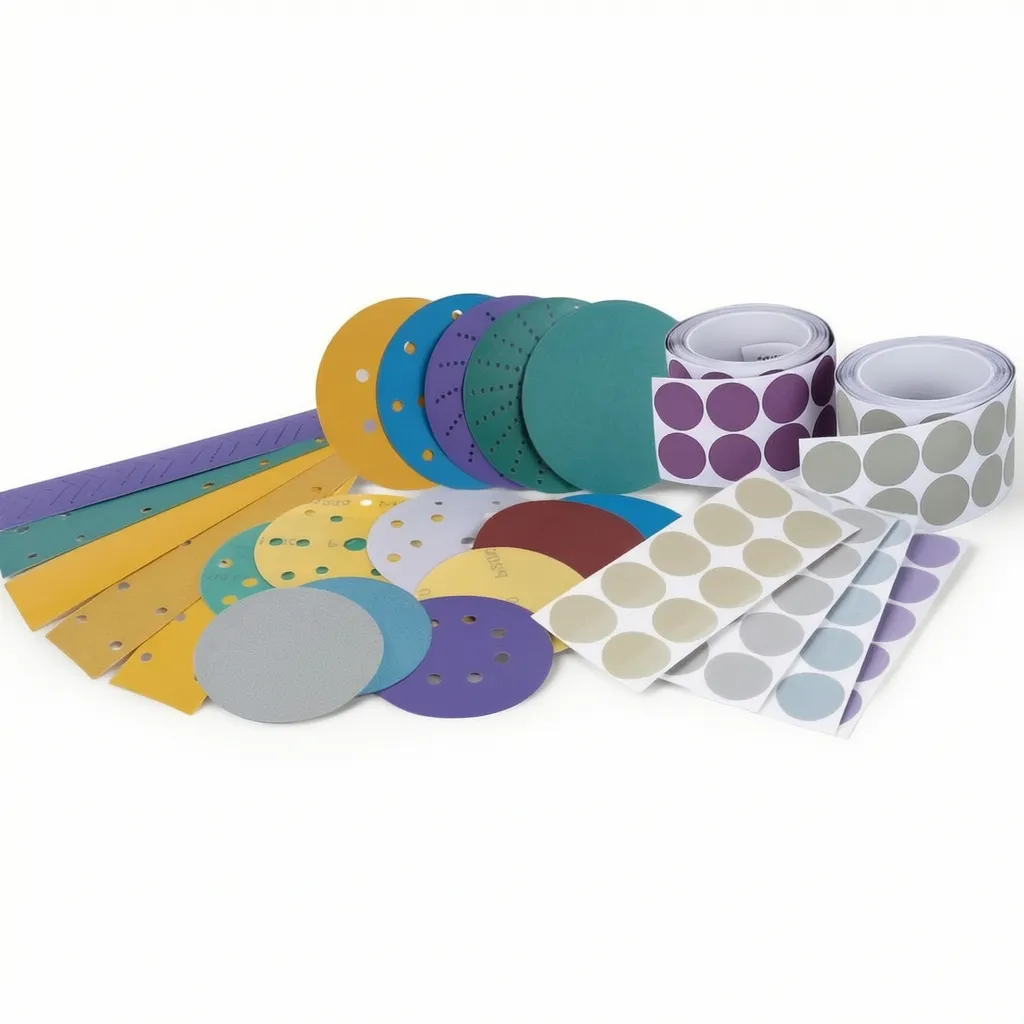
Grit numbers are simpler than they look. Lower numbers mean coarser paper that removes material fast; higher numbers mean finer paper that smooths out the scratches left behind. For furniture work, a typical path is 100, 150, then 220 before finishing. You don't need to memorize every possible sequence—just understand the direction you're moving.
The real trouble starts when you skip grits. Jumping from 80 straight to 220 leaves deep scratches that show up under stain or paint. A better rule is to work in steps, roughly increasing the grit by half each time. Let the paper do the cutting instead of pressing down hard, and wipe the surface between grits so you can see what's actually happening.
If you catch yourself obsessing over which exact number to use next, step back and feel the wood. Run your hand over it. If it's still rough, go one step coarser. If it already feels smooth, you're probably ready to move on. Furniture work rewards patience more than perfect calculations.
Why Silicon Carbide Edges Out Aluminum Oxide on Stone and Glass
Silicon carbide has a Mohs hardness of around 9.5, which is noticeably higher than aluminum oxide's 9. When grinding or sanding hard, brittle materials like glass and stone, that extra hardness lets the abrasive grains bite into the surface instead of skidding over it. Silicon carbide also has a sharp, angular crystal structure that fractures along clean lines, constantly exposing fresh cutting edges. This self-sharpening behavior keeps the abrasive aggressive over time, whereas aluminum oxide grains tend to round off and require more pressure to maintain the same cutting rate.
Another key advantage is thermal conductivity. Silicon carbide dissipates heat much faster than aluminum oxide, pulling grinding heat away from the contact zone. This is critical for glass and many natural stones, which are prone to thermal shock—sudden temperature spikes can cause micro-cracks, discoloration, or even visible fractures. In dry grinding or light-pressure finishing, silicon carbide's ability to manage heat means fewer burned spots and a cleaner surface.
In real-world use, silicon carbide discs, belts, and wheels hold up better on edge chamfering, rough shaping, and surface prep before polishing. While aluminum oxide may cost less upfront, the reduced downtime from clogging, fewer workpiece rejects due to heat damage, and faster material removal often make silicon carbide the more economical choice for stone and glass fabrication—especially in continuous production or automated lines where consistency matters more than initial abrasive price.
Cloth Backing Versus Paper Backing on Curved Metal Parts
On curved metal parts, the difference between cloth and paper backing becomes obvious within the first few passes. Paper tends to fold, crack, or lift at the edges when forced around a tight radius, leaving uneven scratch lines and forcing the operator to keep repositioning the disc. Cloth, especially a flexible J-weight or X-weight backing, bends with the contour and keeps the abrasive grains in contact across more of the surface. This reduces chatter and makes it easier to follow blend lines on fenders, pipes, and rounded corners.
Paper still has a place on nearly flat or gently crowned sections, where its stiffer feel helps maintain a crisp edge and lower cost per disc matters. But once the part includes compound curves or deep draws, paper backing tends to skip and burnish rather than cut. Cloth backings resist flex fatigue much longer, so they hold up better even when the operator leans into the work. The extra expense is usually recovered through fewer torn discs, fewer rework passes, and a more consistent finish.
How Aluminum Oxide Sheets Handle Bare Wood in Humid Climates
Bare wood is notorious for soaking up moisture like a sponge, especially in humid regions where the air hangs heavy for weeks on end. That’s where aluminum oxide sheets step in, acting as a tough but unobtrusive barrier between raw timber and a damp environment. Instead of sealing the wood in a plastic-like film, the sheets allow just enough vapor exchange to prevent trapped condensation while keeping liquid water from seeping into the grain. The result is a surface that stays stable, resisting the swell-and-shrink cycle that usually leads to warping or cracking.
Installation on uncovered lumber requires a bit of finesse, since the sheet’s abrasive top layer can bite into soft fibers if pressed too aggressively. But once seated, the aluminum oxide coating forms a micro-textured shield that sheds rain and humidity without dulling the natural look of the wood beneath. In practice, builders often use these sheets in covered outdoor spaces or interior rooms with poor ventilation, where ordinary varnishes would turn milky or peel within a season. The key is choosing a sheet with a permeable backing, so the wood can still breathe slowly rather than suffocating under a vapor lock.
What makes aluminum oxide particularly handy in muggy climates is its indifference to fungal growth. While bare wood left exposed to 70% relative humidity often becomes a breeding ground for mold and mildew, the sheet’s inert surface leaves nothing for spores to cling to. A simple wipe-down removes any surface dust or condensation, and the material won’t degrade from repeated exposure to damp air. For anyone tired of babysitting raw timber through a sticky summer, this is one of the quieter, more reliable fixes that doesn’t demand a complete overhaul of the wood itself.
When Buying Local Abrasive Paper by the Roll Makes Sense
If your shop goes through abrasive paper faster than expected, buying local rolls starts to look less like convenience and more like common sense. A local supplier can hand you a roll the same afternoon, so you're not left staring at a half-sanded cabinet while a tracking number slowly updates. That kind of availability matters when a single missing grit stalls the whole workflow.
There's also the matter of storage and cash flow. Bulk overseas orders might offer a lower per-sheet price, but they force you to stockpile dozens of rolls you may not touch for months. Local sellers often let you buy smaller quantities or even cut a roll to your exact length, which keeps inventory lean and your money where it belongs.
Finally, local rolls make sense for quality control. You can feel the backing weight, check the grain distribution, and even test a small strip before committing. If something is off, returns and replacements happen in person, not through a chain of emails. For professional finishers, that kind of direct accountability outweighs a modest price difference.
FAQ
In China, abrasive paper usually falls into three broad groups: dry sanding sheets, waterproof (wet/dry) paper, and sponge-backed abrasives. Dry sheets handle wood and painted surfaces, waterproof versions are used with water for automotive finishes and metal, and sponge pads conform to curved profiles.
Start with a coarse grit like 60 or 80 to remove material quickly, move to 120–180 for smoothing, and finish with 220 or higher before painting. For metal prep, 240–400 wet/dry paper often gives a clean surface without deep scratches.
Waterproof abrasive paper has a resin bond and a backing that won't fall apart when wet. Using water reduces clogging, carries away debris, and keeps the surface cooler, which is useful for car bodywork, lacquer sanding, and fine metal finishing.
Aluminium oxide is tougher and works well on wood, painted surfaces, and general metal. Silicon carbide is harder and sharper, often used on glass, stone, ceramics, or for wet sanding clear coats. Chinese manufacturers produce both, but silicon carbide tends to cost more.
Yes, but it's not always ideal. A mid-range aluminium oxide sheet will handle both if you're not too fussy. For finer metal work or automotive paint, switch to a waterproof silicon carbide paper to avoid loading and get a smoother result.
Not necessarily. Price often reflects backing weight, grain uniformity, and bond strength. Some budget sheets wear out faster or shed grit, but many Chinese factories produce OEM-grade paper that performs close to international brands. Testing a small pack before bulk buying is wise.
Paper backing ranges from light A-weight to heavier C-weight; cloth backing is used for belts and tough jobs. For hand sanding, a C-weight waterproof paper stays flat and resists tearing. Sponge backing is common for contour work on furniture and auto panels.
Keep it in a sealed plastic bag or airtight box away from damp floors. Humidity can curl paper backing and weaken the bond, especially for animal-glue bonded sheets. If sheets have curled, you can flatten them under a board with weight, but bond damage can't be reversed.
Conclusion
In Chinese tool shops, a sheet stamped waterproof means the abrasive grains are bonded to a resin that doesn't degrade when wet, so it survives wet sanding without falling apart. Furniture makers benefit more from feeling the surface than from fussing over exact grit numbers; a practical run of 120, 180, and 240 removes mill marks and leaves a ready-to-finish surface without turning the wood glassy. On stone and glass, silicon carbide outlasts aluminum oxide because its sharper, harder grains keep biting after aluminum oxide dulls and slides.
Cloth-backed abrasive paper wraps around curved metal parts without cracking, while paper backing tends to crease and tear on tight radii. In humid climates, bare wood sanded with aluminum oxide sheets holds up better than expected because the open coat resists loading from damp dust, though a dust extractor still helps. Buying local abrasive paper by the roll makes sense for shops that burn through sheets on repeated shapes or large surfaces, since you cut custom lengths, reduce leftover waste, and skip the cost of individually packaged sheets. Choosing the right abrasive paper in China ultimately means matching backing, grain type, and format to the job at hand instead of grabbing whatever is closest.
Contact Us
Contact Person: Amanda Wang
Email: [email protected]
Tel/WhatsApp: +86-13602569854
Website: https://www.sunabrasives.com.cn