
China Ring Main Unit Factory Selection Tips for Global Buyers
2026-09-19
Selecting the right ring main unit factory in China is no longer about skimming supplier lists or comparing spec sheets. It’s about spotting the signals that separate a partner who can handle your project’s voltage, timeline, and compliance needs from one who will leave you chasing revisions. In this guide, we cut through the noise and focus on what actually matters—from factory audits and testing standards to real-world lead times. And if you’re looking for a name that consistently checks those boxes, CNKEEYA is one you’ll want on your shortlist.
Check the Factory's In-House Test Bay, Not Just Its Certificate Wall
A wall of certificates looks impressive, but it mostly tells you about past audits. The test bay is where current production gets proven or exposed. Walk over there before you sit down in the meeting room.
Look for signs of real use. Are the machines warm, the cables plugged in, the calibration stickers current? Ask to see a test report from this morning, not a sample from six months ago. Watch how the technician handles a failed unit. That tells you more than any framed ISO printout.
Some bays are showpieces with clean benches and unused chambers. Others are noisy, crowded, and a bit messy because they run all day. You want the second kind. If the test log has entries written in different handwriting every few hours, you are probably looking at a factory that actually checks what it ships.
Ask for a Customized RMU Design Based on Your Local Grid Fault Levels
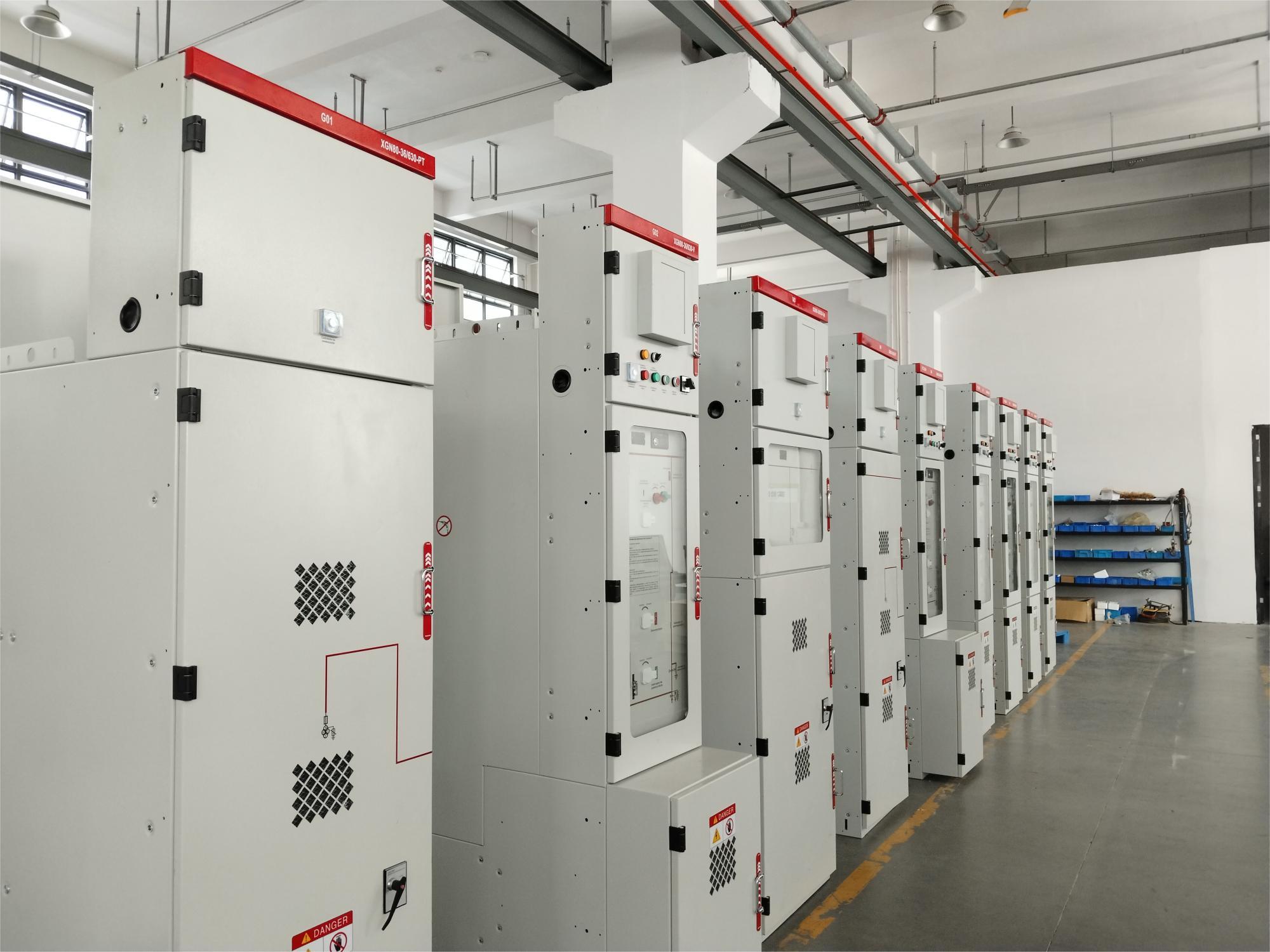
When specifying a ring main unit, the local grid's fault level is not a minor detail—it's the baseline that determines whether the equipment will survive a short circuit or fail catastrophically. Fault currents can vary by an order of magnitude between dense urban networks and remote rural feeders. A unit rated for 16 kA will be dangerously undersized in a substation where the prospective fault current reaches 25 kA, while installing a 31.5 kA design everywhere leads to unnecessary cost and bulk.
That's why experienced utilities and contractors no longer settle for off-the-shelf RMUs. A customized design allows you to match the busbar cross-section, breaker interrupting capacity, and earthing switch ratings to the actual fault levels measured or calculated at your point of connection. This tailors the unit's fault-withstand capability precisely, improving protection coordination and reducing the risk of nuisance tripping or equipment damage during a real fault event.
Before you place an order, gather the latest short-circuit study from your network operator or consulting engineer. Provide those numbers—along with your operating voltage, environmental conditions, and cable entry preferences—to a manufacturer that offers engineering support. The result is an RMU that fits your grid like a glove, not a generic box that you hope will be good enough.
Look at Component Traceability from Breaker to Bushing
Tracing a component from the breaker down to the bushing is rarely a straight line. Each handoff between assembly stages, test benches, and storage creates opportunities for records to drift. The breaker might carry one serial scheme while the bushing uses another, and unless those identifiers are reconciled at the point of installation, you end up guessing which bushing actually went into which breaker. This gap shows up later as mixed histories, unclear test results, or delayed maintenance decisions.
A practical traceability chain starts with capturing the breaker's identifier before any bushing is mounted. As each bushing is fitted, its own lot or serial number gets linked to that breaker record, along with torque values and test readings if available. The point isn't to collect more data, but to make the connection explicit enough that a field technician can pull one record and see the full path without cross-referencing three systems. When a bushing fails or is recalled, that single link tells you which breakers are affected and which are not.
The payoff becomes visible during audits and retrofits. Instead of walking the yard with clipboards to match nameplates, maintenance teams can rely on the breaker-to-bushing record to plan replacements, confirm compatibility, and avoid rework. It also helps when older equipment changes hands, since the traceability file becomes the most reliable evidence of what was actually installed, not just what the drawings suggested.
Require a Trial Order with Your Country's Type Test Parameters
When you place a trial order, asking for it to be built around your country's type test parameters isn't just a technical box to tick—it's how you avoid the expensive surprise of products that pass in the lab but fail at your border. Every market has its own voltage dips, insulation requirements, or temperature cycling rules, and a generic prototype rarely captures those local quirks. By insisting on those exact parameters from the start, you get a sample that behaves like the final shipment will, not like a flattering approximation.
Suppliers sometimes push back because customizing a trial run means more setup time and less room for their standard shortcuts. But that's precisely the point. A trial order aligned with your country's type tests gives you real data on performance, safety margins, and durability under the conditions your customers actually experience. It also flags potential redesign needs early, when fixes are cheap, instead of after a container is already on the water. If a factory can't handle this for a small order, they won't magically handle it for a large one.
Assess the Factory's Experience with Export Logistics to Your Region
When evaluating a factory's capability to serve your market, the depth of their export logistics experience to your specific region often separates reliable partners from those still learning on the job. Rather than asking for generic shipping references, dig into how they handle the real friction points: customs documentation quirks, port congestion patterns, and last-mile coordination typical for your destination. A factory that has repeatedly navigated your region's import requirements will have established relationships with freight forwarders who know the local clearance bottlenecks, negotiate better rates, and preempt delays before they snowball. This practical familiarity shows up in how confidently they discuss Incoterms, packaging for your climate, and contingency plans for seasonal disruptions—signals that they've already absorbed the learning curve at someone else's expense.
Ask for concrete examples tied to your country or trade bloc. Which ports do they typically ship through, and how do they route around recurring bottlenecks? Have they dealt with your region's labeling standards, product certifications, or restricted materials lists? A factory with genuine experience will mention specifics—say, handling the documentation for your country's certificate of origin, or adjusting pallet sizes to match your local warehouse racking—without needing prompts. They'll also be honest about past hiccups and how they resolved them, because logistics mastery isn't about avoiding every delay but recovering quickly and communicating clearly when one occurs. This transparency is often more valuable than a spotless record, since it reveals a problem-solving mindset rather than a lucky streak.
Finally, weigh their regional volume and consistency. A factory that ships ten containers a month to your region has refined a repeatable process; one that has sent only a couple of samples may still rely on ad hoc arrangements. Look for evidence of ongoing orders, not just a one-off trial. Check whether their logistics team includes someone who regularly communicates with local brokers or carriers in your time zone. This on-the-ground familiarity reduces miscommunication and speeds up issue resolution. Ultimately, export logistics experience to your region isn't just about moving boxes—it's about anticipating local friction and smoothing it out before it reaches your loading dock, so your inventory keeps flowing without you micromanaging every step.
Compare After-Sales Support Commitments Against Actual Response Times
Plenty of brands advertise lightning-fast after-sales support—24-hour replies, live chat always on, toll-free lines that never sleep. Yet once a customer files a ticket, the reality often involves days of silence, canned acknowledgments, and a queue that never seems to move. Comparing what was promised to what actually happens reveals a gap that quietly erodes trust.
Tracking response times against stated commitments isn't just about metrics; it forces accountability. If a service level agreement promises a first response within one hour but the average sits closer to four, the disconnect is more than an operational hiccup. It signals to customers that their urgency doesn't matter, and repeated disappointments push even loyal buyers toward competitors.
The most useful comparisons aren't performed once a year but continuously, with anomalies flagged as they occur. Teams that openly review the delta between promised and actual response times can adjust either their commitments or their staffing. Owning the gap—and communicating concrete steps to close it—turns a support weakness into a trust-building opportunity.
FAQ
Look beyond the sales brochure. Ask for type test reports from independent labs, not just in-house certificates. Check whether the factory holds ISO 9001 and type approvals like IEC 62271-200 for RMUs. Also verify if the certificates are still valid and match the exact product series you plan to buy.
Cross-check the certificate number on the issuing body's website. Many buyers stop at a scanned copy, but independent labs like KEMA, CESI, or ASTA have public verification portals. Also request the full test report, not just the cover page, and look for the exact model and rated parameters.
Ask about their welding process for the gas tank, leak testing method, and vacuum filling procedure. A serious RMU maker will use robotic welding for stainless steel tanks and helium leak detection, not just soap bubble tests. Also check if they have an in-house lab for partial discharge testing on every unit.
Request a video walk-through of their engineering department, not just the assembly line. Look for 3D modeling software, prototype testing areas, and engineers who can discuss arc quenching technology or gas insulation alternatives like dry air or vacuum. If they can't explain why they chose a specific load break switch design, they are likely just copying others.
Ask how many service engineers they employ full-time and where they are based. Then request a sample service manual and spare parts price list. A factory that cannot provide a clear spare parts catalogue or response time commitment for overseas sites will leave you stranded when a unit trips.
Compare the total cost of ownership over 15 years, including failure rates, maintenance intervals, and spare part availability. Cheap units often use thinner stainless steel, lower quality vacuum interrupters, or skip critical routine tests. Ask for the design lifetime and the number of mechanical operations rated for the switchgear—genuine factories will provide these numbers without hesitation.
Request a live video tour where you control the camera direction. Ask them to show the raw material storage area, the welding station, the test bay, and the packing zone. Pay attention to whether they stop to explain or rush past the testing area. A factory that hesitates to show the partial discharge test setup is hiding something.
Don't just ask if they have experience with your market. Ask for a detailed compliance matrix that maps their product specifications to your local standards, such as IEC 62271-200, GB 3906, or ANSI/IEEE C37.74. Also request reference projects from neighboring countries with similar grid requirements, and verify those installations actually went into service.
Conclusion
When evaluating ring main unit factories in China, most buyers start with certificates, but the real indicator is what happens in the test bay. A wall of ISO or type-test papers means little if the factory cannot stage a live fault simulation while you watch. Ask to see their in-house short-circuit and temperature-rise testing, and press for a customized RMU design based on your local grid fault levels—not a generic 630A/20kA package that was tuned for a different market. The same rigor applies to component traceability. A breaker is only as reliable as the bushing and vacuum interrupter behind it. Demand batch-level records that tie each serial number to raw-material heats, subcontractors, and final inspection data. If the factory hesitates to share this, that hesitation is itself an answer.
Before committing to volume, place a trial order that mirrors your country's type test parameters, including any specific X/R ratio, altitude derating, or ambient temperature requirements. This step reveals whether the engineering team can adapt quickly or just sells from stock. Also ask pointed questions about export logistics to your region: port handling, packaging for sea freight, and past deliveries to buyers with similar customs regimes. Finally, compare after-sales support commitments against actual response times. A service level agreement written for marketing purposes is not the same as a confirmed, named engineer who answers video calls during your business hours. Factories that treat these checks as normal business—rather than objections—are the ones worth a long-term contract.
Contact Us
Contact Person: Queenie
Email: [email protected]
Tel/WhatsApp: +86 15558806611
Website: https://www.cnkeeya.com