
China Roll Up Doors: A Complete Guide to Choosing the Best
2026-06-29
When it comes to securing your industrial or commercial space in China, roll up doors are more than just a barrier—they're a critical component of efficiency and safety. From bustling factories to high-traffic warehouses, the right door can streamline operations, reduce energy costs, and withstand the test of time. But with so many options flooding the market, how do you pinpoint the perfect fit? That's where NORTON steps in, offering decades of innovation and a reputation built on reliability. In this guide, we'll cut through the noise and walk you through everything you need to know, from materials and mechanisms to installation and maintenance, so you can make a choice that truly pays off.
What Defines a High-Quality Roll Up Door from China?
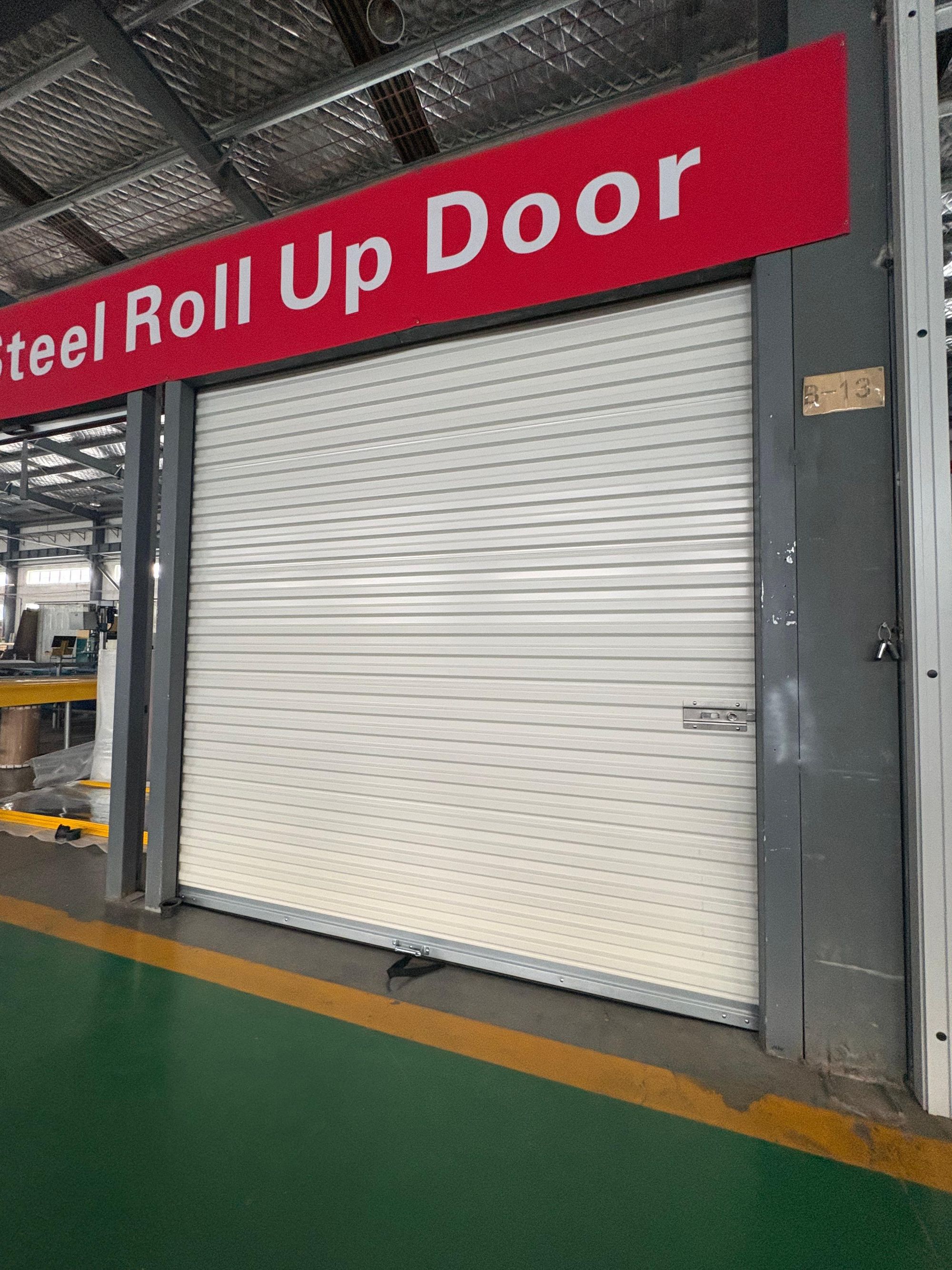
The backbone of a premium roll up door lies in its materials and fabrication precision. Top-tier manufacturers source high-tensile galvanized steel or corrosion-resistant aluminum alloys directly from certified mills, often specifying thicknesses like 0.8mm to 1.2mm for the curtain slats. Instead of generic coatings, they apply multi-layer polyester powder finishes that resist UV fading and scratches in demanding environments. Production facilities equipped with CNC roll forming and laser cutting ensure each panel interlocks consistently, delivering smooth coiling and uncoiling even after tens of thousands of cycles. Behind the scenes, rigorous inline inspections and a documented ISO 9001 quality system catch deviations early, so the door you receive operates quietly and seals tightly against weather, dust, and pests.
What truly sets a door apart is the integration of safety intelligence and thoughtful customization. A high-quality unit will incorporate redundant protection—photoelectric sensors that reverse closing upon obstruction, a pneumatic or resistive safety edge at the bottom, and a spring break device that prevents free-fall if the counterbalance fails. Motor and control systems are often sourced from trusted brands like German or Japanese manufacturers, offering soft start/stop cycles that reduce wear. Beyond safety, a door should adapt to your site: manufacturers can tailor dimensions down to the millimeter, provide insulated foam-filled laths for temperature control, or add vision panels cut precisely to your specification without compromising structural integrity. These doors typically carry internationally recognized certifications such as CE or UL, reflecting extensive fatigue testing rather than just a paper claim.
Material Choices That Impact Longevity and Performance
The materials you choose for a product’s construction often determine whether it thrives or fails over time. Take outdoor equipment, for example. A stainless steel hinge might outlast a zinc-plated one in coastal environments because it simply doesn’t corrode as easily, even when the paint chips. It’s not just about resisting rust—materials that handle temperature swings without warping or cracking are equally vital for any item that lives outside. This kind of foresight prevents the small annoyances that add up to early replacement.
Performance under load is another area where material selection quietly makes its mark. Think about a bicycle frame: aluminum offers a stiff, lightweight ride but can fatigue after years of heavy use, while titanium absorbs road vibrations better and keeps its integrity indefinitely. The right material balances strength, weight, and elasticity to match specific demands. That balance directly influences how smoothly a machine operates, whether it’s a kitchen mixer or a high-speed turbine.
Sometimes the newer, “fancy” materials promise breakthroughs but can bring their own headaches. Carbon fiber composites, for instance, yield incredible stiffness-to-weight ratios that make racing cars and aircraft more efficient, yet they’re costly to repair and sensitive to impact in ways traditional metals aren’t. Longevity isn’t just about lasting forever; it’s about enduring real-world use without unexpected failures. A well-considered material choice can mean the difference between a product that ages gracefully and one that becomes a throwaway statistic.
Motor and Operational Mechanisms You Should Know About
Behind every smoothly running piece of equipment lies a motor paired with a carefully designed operational mechanism. The motor isn’t just a spinning shaft—it’s the heart of motion, converting electrical energy into mechanical force. But raw rotation alone rarely solves a real-world problem. That’s where the operational mechanism steps in, transforming that rotation into linear movement, precise indexing, or controlled torque delivery. Understanding how these two elements interact is key to choosing the right setup for anything from automated factory arms to household appliances.
One of the most overlooked aspects of motor-driven systems is the mechanical linkage that follows. Consider a simple conveyor belt: the motor may run at a constant speed, but the operational mechanism—perhaps a gearbox and belt tensioner—determines whether it handles delicate parcels gently or accelerates heavy loads without slipping. Different mechanisms excel at different tasks. A cam-driven actuator, for instance, offers repeatable stop-and-go motion without complex electronics, while a ball screw converts rotary motion into smooth, precise linear travel. Knowing which mechanism pairs best with a given motor type can save hours of redesign and prevent premature wear.
The real art often lies in matching the motor’s torque-speed characteristics to the load’s demands through the mechanism. A high-speed stepper motor might lose steps if directly coupled to a heavy lead screw, but adding a timing belt reduction stage can multiply torque and improve resolution. Similarly, a simple DC motor can become a positioning workhorse when combined with a feedback encoder and a rack-and-pinion drive. These combinations aren’t always obvious, but once you recognize common patterns—geared-down torque multipliers, linkage-based stroke amplifiers, clutch-brake modules for cycling—you start seeing solutions where others see obstacles.
Safety Features That Go Beyond the Basics
Modern vehicles increasingly incorporate safety technologies that extend far beyond standard airbags and seatbelt reminders. Some now feature cross-traffic alert systems with automatic braking, capable of detecting approaching cars, cyclists, or pedestrians from the side and intervening if the driver fails to react. This kind of proactive assistance reduces the risk of low-speed collisions in crowded parking areas and busy intersections, quietly working in the background without relying on constant driver attention.
Another advanced element is the integration of artificial intelligence into hazard recognition. Instead of simply warning about a forward collision, newer setups analyze multiple inputs—camera feeds, radar, even past driving patterns—to predict potential chain-reaction scenarios seconds ahead. The vehicle might subtly tighten the seatbelts, adjust the suspension for emergency maneuvering, or prime the brakes before the driver even touches the pedal. Such predictive measures feel less intrusive yet offer a meaningful layer of preparedness that older reactive systems lack.
Driver monitoring has also evolved from basic fatigue detection into nuanced awareness sensing. Using a discreet interior camera that never records, the system tracks eye gaze, blink rate, and head position to gauge attentiveness. If it senses prolonged distraction or drowsiness, it can escalate alerts—starting with a gentle audio prompt, then a haptic pulse on the steering wheel, and finally, if necessary, safely guiding the car to a controlled stop. The aim isn’t to police the driver but to seamlessly bridge moments of human fallibility, making every trip more secure without demanding extra effort.
Customization Options to Match Your Space and Style
Your space tells a story, and we believe every piece in it should reflect that. That’s why we offer a range of finishes, fabrics, and dimensions that let you tweak every detail. Whether you’re working with a compact corner or an airy open layout, you can adjust proportions to get the perfect fit—no awkward gaps or squeezed-in look. Choose from a curated palette of colors that blend or contrast with your existing décor, and select materials that bring the texture and durability you need for your lifestyle.
Beyond the basics, you can tailor functional elements to suit your daily habits. Add hidden storage, tweak the leg style, or opt for a different cushion firmness—small choices that make a big difference in how a piece serves you. We’ve designed these options to be intuitive, so you don’t feel overwhelmed by technical jargon. Instead, you get a straightforward path to a piece that looks like it was made just for your room, without the designer price tag.
Still unsure what might work best? Our team can guide you toward combinations that have worked well for similar spaces, and you can even request fabric swatches or digital previews before you commit. This way, you’re not just buying furniture; you’re shaping an environment that aligns with your personal aesthetic and day-to-day rhythm.
Installation and Maintenance Insights for Long-Term Value
Getting installation right from day one sets the stage for everything that follows. It’s not just about following the manual—it’s about understanding the environment where the system will live. Factors like ambient temperature, vibration, and even the quality of incoming power can quietly eat away at performance if ignored. Taking time to really dial in the setup, rather than rushing to finish, pays off in ways that aren’t always obvious on a checklist.
Maintenance often gets reduced to a schedule of filter changes and inspections, but there’s a deeper layer worth paying attention to. The data your equipment generates—pressure drops, energy draw, subtle shifts in operating sound—tell a story long before a failure occurs. Teaching teams to listen to what the machinery is saying, rather than just reacting to alarms, transforms maintenance from a cost center into a strategic advantage.
Long-term value doesn’t come from any single grand gesture; it’s the accumulation of small, consistent choices. Upgrading components before they fail, documenting odd behaviors that later reveal patterns, and giving technicians the autonomy to improve procedures all add up. Over a decade, the difference between a system that’s merely maintained and one that’s genuinely understood can be measured in millions—not just in avoided downtime, but in sustained efficiency and extended service life.
FAQ
They often feature galvanized steel or aluminum alloys with anti-corrosion coatings, tailored for high-humidity or coastal areas. Some manufacturers also use reinforced polycarbonate panels that resist impact and UV damage better than generic alternatives.
Calculate the door's weight and usage cycles. A typical 500 kg door with 20 daily cycles would need a 1.5 HP tubular motor. Always ask for a detailed torque curve from the supplier, not just peak power, to avoid under-performance in cold starts.
Look beyond basic infrared sensors. Effective models include bottom-edge air pressure switches, anti-drop mechanical locks, and manual override chains that work during power outages. Avoid those that rely solely on photocells, as they can fail in dusty environments.
Yes, many offer powder-coating lines that match RAL or Pantone standards, with baked-on finishes that surpass wet paint. However, request a salt-spray test certificate to ensure the coating won't peel in your climate.
Standard sizes ship in 25–35 days, while custom doors may take 45+ days. Consolidate with other shipments via LCL to cut costs, but insist on factory-sealed packaging with VCI paper to prevent rust during sea transit.
For cold storage, key is heated side seals and low-temperature lubricants. In desert heat, look for doors with reflective polyester films and ventilation louvers. Always verify the operational temperature range specified in the manual, not just the marketing claim.
Common fixes include realigning photo eyes, tightening loose brackets, and lubricating springs every six months. Keep spare limit switches and remotes on hand—most models use universal parts. Avoid forcing doors that stick; it usually means the guides need cleaning.
Conclusion
When searching for the ideal roll up door from China, understanding the core elements that define quality is essential. A premium door isn’t just about sturdy materials like galvanized steel or aluminum; it’s about how those materials are treated for corrosion resistance and how they interact with the operational system. Motor selection, for instance, should match the door’s size and usage frequency—a high-cycle tubular motor with thermal protection outperforms basic chain-drives in demanding settings. Safety mechanisms such as infrared sensors and auto-reverse functions should be standard, not optional, to prevent accidents. Customization allows the door to complement your building’s aesthetic while meeting functional needs like wind load resistance or insulation.
Equally important is the long-term perspective. Proper installation by experienced technicians and adherence to a maintenance schedule significantly extend the door’s lifespan. Even the best door can fail prematurely if installed carelessly or neglected. Regular checks on tracks, springs, and safety sensors keep operations smooth and prevent unexpected breakdowns. Seek suppliers who offer clear guidelines and responsive after-sales support. By balancing material quality, advanced motor technology, robust safety features, and thoughtful customization, you can secure a roll up door that delivers consistent performance and lasting value.
Contact Us
Contact Person: Cyril He
Email: [email protected]
Tel/WhatsApp: 8613969697307
Website: https://cqyqgd.en.alibaba.com/