
China Sliding Head Lathe Enhances Precision Manufacturing Capabilities
2026-07-25
When precision is non-negotiable, every micron counts. Across high-stakes industries like medical devices and aerospace, China's sliding head lathe technology is quietly setting new standards—and WINNRUI CNC is pushing those limits further. Imagine turning complex, hair-thin components in a single setup, with tolerances so tight they border on the impossible. It’s no longer just about speed; it’s about repeatable perfection. In this post, we’ll unpack how advanced Swiss-type machines are reshaping what’s achievable in precision manufacturing—and why the name behind the machine matters more than ever.
The Secret Behind Micron-Level Accuracy in Modern Machining
At the core of micron-level precision is a relentless pursuit of stability in every physical variable. Temperature fluctuations of a fraction of a degree can expand machine components by several microns, so the most advanced shops now operate in climate-controlled environments where ±0.5°C is considered a generous tolerance. Vibration isolation goes far beyond simple rubber mounts—active damping systems use piezoelectric actuators to cancel out ambient vibrations in real time, reducing displacement to single-digit nanometers. Even the foundation matters: some high-end machining centers sit on isolated concrete blocks that weigh hundreds of tons, decoupled from the rest of the building to prevent footfall or distant road traffic from influencing the cutting process.
The tools themselves have evolved into integrated sensing systems. Modern spindles embed temperature and displacement sensors that feed data to the CNC controller thousands of times per second, allowing on-the-fly compensation for thermal growth or tool deflection. This closed-loop control often extends to the workpiece: in-situ probing and laser interferometry map the exact position and form of the part before the final finish pass, automatically adjusting offsets to correct for any previous tool wear or material spring-back. It’s not uncommon to see a machine essentially self-calibrating between cycles, maintaining accuracy without human intervention.
Beyond the hardware, the real differentiator is often the process planning. Micron-level features are rarely machined in a single step; they require roughing passes that intentionally leave a predictable stress state in the material, followed by semi-finishing that relaxes those stresses under controlled conditions, and finally a light finishing pass that removes only a few microns. The sequence of operations, the toolpath strategy, and even the choice of cutting fluid pressure and direction are tuned through a combination of experience and finite-element simulation. This holistic view—where the machine, fixture, tool, and part material are treated as one interconnected system—is what separates occasional micron-level accuracy from repeatable, production-grade precision.
How Sliding Head Technology Redefines Complex Part Production
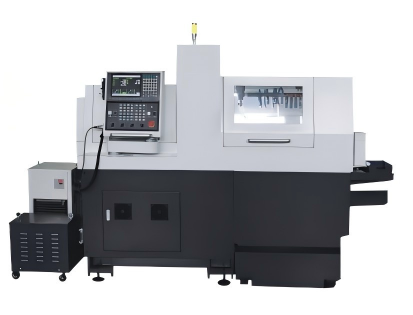
The shift toward sliding head technology marks a quiet revolution in the manufacture of intricate components. Unlike conventional lathes that work with a stationary headstock, these machines feed the bar stock through a moving head while the cutting tools remain fixed. This simple inversion changes everything: it allows simultaneous operations using multiple tools, drastically reducing cycle times and eliminating the need for secondary processes. For parts with slender profiles, long overhangs, or demanding concentricity requirements, the guide bush supports the workpiece close to the cutting zone, keeping deflections negligible and tolerances astonishingly tight.
What truly redefines complex part production is the ability to machine an entire workpiece in a single setup. Tooling can be arranged around the bar stock on linear and cross slides, enabling a mix of turning, milling, drilling, and threading without interruption. The result is a finished part that doesn't need to be transferred between machines, which preserves alignment and surface finish while slashing production time. This is especially vital for medical implants, aerospace fasteners, and micro-mechanical components where even the tiniest handling mark can compromise functionality.
Beyond precision, sliding head machines bring a level of autonomy that transforms cost-effectiveness. Bar feeders can run unattended for hours, and the compact work envelope reduces footprint and energy consumption. The technology also handles advanced materials—from titanium to high-temperature alloys—with consistent repeatability, opening up design possibilities that were once too fragile or time-consuming to produce. As manufacturers push toward smaller, smarter, and more reliable products, sliding head systems are not just keeping up; they're making the impossible routine.
From Aerospace to Medical: Where Precision Matters Most
In the aerospace sector, a single micron can mean the difference between a successful mission and catastrophic failure. Components like turbine blades and guidance system housings require tolerances so tight that they push the very limits of modern machining. These aren't mere engineering exercises—they're the physical safeguards that protect crews and equipment in the harshest environments imaginable.
That same rigor has quietly reshaped the medical field, where implantable devices such as hip joints and spinal fixation hardware must integrate flawlessly with the human body. A rough edge or slight dimensional drift can lead to pain, premature wear, or even life-threatening complications. The machining methods born from aerospace—like electrical discharge machining and ultra-precision grinding—now produce surfaces smooth enough for tissue integration, a crossover that few anticipated but many now rely upon.
Yet the most profound impact might be in the mindset this fusion has created. Engineers who once designed for the cold vacuum of space now collaborate with surgeons to craft tools that feel like natural extensions of the hand. Robotic surgery platforms, for instance, borrow heavily from flight control principles, turning tremors into smooth, scaled movements. The common thread is an almost obsessive refusal to accept deviation—a philosophy that continues to refine how we build the things that matter most.
Boosting Productivity Without Sacrificing Quality
The trick to doing more without letting standards slip often lies in rethinking how we approach tasks. Instead of simply pushing harder, it’s about identifying the few activities that truly move the needle and giving them your best energy. By fiercely prioritizing and stripping away low-value busywork, you create breathing room for focused effort. It’s not about doing everything—it’s about doing the right things with full attention.
Smart systems can also quietly lift the load. When repetitive decisions or routine steps are baked into your workflow, your brain isn’t constantly starting from scratch. This might mean setting up simple templates, batching similar tasks, or deciding in advance what “good enough” looks like for each project. The clarity removes friction and helps you stay consistent without second-guessing yourself at every turn.
Equally important is building in small pauses. A rushed mind makes more mistakes, so stepping back briefly to review or reset can save hours of rework later. Whether it’s a five-minute walk between deep work sessions or a quick mental checklist before hitting send, these deliberate pauses tend to sharpen judgment and keep quality intact. Over time, this rhythm of focused work and intentional rest becomes a natural way to sustain both pace and precision.
The Evolution of CNC Swiss-Type Lathes in China
The journey of CNC Swiss-type lathes in China mirrors the nation's rapid industrial transformation. In the early days, these machines were imported, often at steep costs, to serve the needs of burgeoning electronics and medical device sectors. Local adoption was slow, hindered by a lack of technical know-how and supporting infrastructure. Yet, a handful of domestic pioneers began reverse-engineering and experimenting, laying the groundwork for what would become a fiercely competitive local manufacturing landscape.
By the 2010s, Chinese manufacturers were no longer playing catch-up. They had begun weaving innovations like multi-axis synchronization and live tooling into their designs, often at price points that undercut European and Japanese counterparts. The shift wasn’t just about cost—factories in Shenzhen and Suzhou started pushing the boundaries of precision and surface finish, surprising even industry veterans. Collaborative ecosystems emerged, with local tooling and software companies fine-tuning solutions specifically for Chinese-built Swiss lathes, accelerating the learning curve for operators across the country.
Today, the evolution continues with a focus on intelligence and connectivity. Homegrown control systems now incorporate real-time monitoring and predictive maintenance, a far cry from the button-operated relics of the 1990s. The real story, however, is in the niches: specialized machines for dental implants or micro-connectors, where Chinese Swiss lathes aren’t just options but first choices. The technology is no longer an imported luxury—it’s a homegrown workhorse, continuously adapted to the rhythm of China’s manufacturing demands.
Real-World Success Stories: Faster Turnarounds, Tighter Tolerances
At a precision aerospace shop in the Midwest, a switch to five-axis machining with in-process probing compressed the production of turbine blade assemblies from eighteen days to just over a week. The real win, though, was holding profile tolerances within ±0.0003 inches on complex airfoil surfaces—something the previous three‑axis setup could never maintain consistently across a full batch. Operators now spend less time on manual checks and more on value‑added tasks, thanks to automated tool offset adjustments that correct deviations mid‑cycle.
Medical device manufacturers are achieving similar breakthroughs. One firm specializing in spinal implants adopted direct metal laser sintering paired with adaptive post‑processing, cutting lead times for custom patient‑specific cages by 60%. The digital workflow eliminates multiple setup translations and the stack‑up errors they introduce, resulting in porous lattice structures with strut dimensions accurate to within a fraction of a hair’s breadth—critical for osseointegration. Surgeons now receive implants that fit perfectly from the start, slashing revision rates and operating room delays.
In the competitive realm of injection mould tooling, a family‑run business invested in high‑speed micromilling and real‑time thermal compensation. The payoffs were immediate: cavity dimensions for a multi‑impression connector mould held to ±5 microns, while the overall build time dropped from three weeks to ten days. By running lights‑out with minimal human intervention, they not only tightened tolerances but also freed up capacity to take on rush orders that competitors had to turn away. These stories share a common thread—smart automation and data‑driven process control turn yesterday’s trade‑offs into dual gains.
FAQ
Chinese sliding head lathes combine advanced CNC controls with robust mechanical design, delivering tight tolerances and high repeatability. They integrate live tooling and sub-spindle options, allowing complex parts to be finished in one setup, which reduces handling errors and cycle times.
By supporting simultaneous operations—like turning, milling, and drilling in a single machine cycle—they eliminate secondary processes. The guide bushing design keeps the workpiece close to the cutting point, minimizing deflection and enabling faster, more accurate machining of slender components.
Medical device, automotive, electronics, and watchmaking industries see the biggest gains. These sectors demand miniature, intricate parts with fine finishes, such as screws, connectors, and implantable devices, all of which sliding head lathes produce consistently.
Many Chinese manufacturers now meet or exceed international standards, often rivaling Swiss and Japanese machines. They employ linear guideways, servo-driven spindles, and thermal compensation systems that maintain micron-level accuracy, even during extended production runs.
Key features include a high-pressure coolant system for chip evacuation, a sufficient number of tool positions, a sub-spindle for back machining, and user-friendly programming software. Build quality of the guide bush assembly and spindle synchronization are also critical for long-term performance.
Generally, Chinese machines offer a lower initial purchase price and competitive operating costs. Parts and service are often more accessible regionally, and the growing network of experienced technicians helps keep maintenance expenses manageable without sacrificing capability.
Recent models feature smarter control interfaces with real-time monitoring, automatic bar feeders, and energy-efficient motors. Enhanced rigidity and faster acceleration rates allow for higher productivity, while modular designs make it easier to upgrade tooling and automation as production needs change.
Conclusion
The rapid advancement of CNC Swiss-type lathes in China has brought micron-level precision to modern manufacturing, enabling shops to produce intricate components that were once considered nearly impossible. At the heart of this capability is the sliding headstock design, which feeds bar stock through a guide bushing, supporting the workpiece extremely close to the cutting tool. This minimizes deflection and vibration, allowing for consistent accuracy within a few microns even over long production runs. As Chinese manufacturers have refined this technology—particularly over the past decade—they've moved from simple turned parts to crafting highly complex geometries with multiple features, all in a single setup. The secret lies not just in the hardware but in the integration of advanced control systems that adjust for thermal drift and tool wear in real time, pushing the boundaries of what precision machining can achieve.
These machines now serve critical roles in aerospace and medical device manufacturing, where tolerances directly affect safety and performance. From turbine components that must withstand extreme forces to bone screws and surgical instruments with sub-millimeter features, the demand for flawless output is uncompromising. Yet Chinese sliding head lathes have also cracked the code on productivity—their ability to run lights-out with simultaneous operations slashes cycle times without any drop in quality. Real-world cases show shops cutting lead times by over 40% while holding tolerances that rival traditional grinding. This blend of speed and accuracy has reshaped supply chains, proving that high-end CNC Swiss turning is no longer the exclusive domain of a few regions but a robust, evolving strength of China's manufacturing landscape.
Contact Us
Contact Person: Tim
Email: [email protected]
Tel/WhatsApp: +86 15522553731
Website: https://www.winnrui-cnc.com/