
China Tris(2-ethylhexyl) Phosphate: A Comprehensive Guide to Its Market and Applications
2026-10-22
Tris(2-ethylhexyl) phosphate doesn't get the attention of its halogenated cousins, but in China's specialty chemical market, that's exactly what makes it interesting. As regulations tighten and flame-retardant plasticizers face reformulation pressure, TEHP is moving from a background ingredient to a strategic choice for PVC, rubber, and lubricant applications. Fortune has been watching this quiet shift up close—tracking how regional capacity, export trends, and end-user demand are converging. In this guide, we unpack the forces that will define the market's next chapter.
Why China Dominates Global TEHP Production Capacity
A closer look at China’s TEHP output shows that control over upstream feedstocks sets the pace. The country’s massive refining and petrochemical complexes turn out 2-ethylhexanol and phosphoric acid at volumes that few other regions can match, cutting both procurement lead times and transportation expenses. When raw materials sit within the same industrial parks as the esterification units, producers avoid the cost spikes and logistics bottlenecks that often hit competitors in Europe or North America.
Beyond feedstock access, the scale of Chinese chemical parks makes a difference. Continuous production lines, shared utilities, and high reactor utilization rates bring unit costs down to a level that discourages new capacity elsewhere. Domestic demand for flame retardants, hydraulic fluids, and PVC plasticizers keeps plants running near nameplate capacity, while export-oriented traders use bulk shipping advantages to serve markets in Asia, the Middle East, and Latin America. The result is a reinforcing cycle: lower costs attract orders, orders justify larger plants, and larger plants push costs lower still.
The Role of TEHP in Flame-Retardant PVC and Rubber Formulations
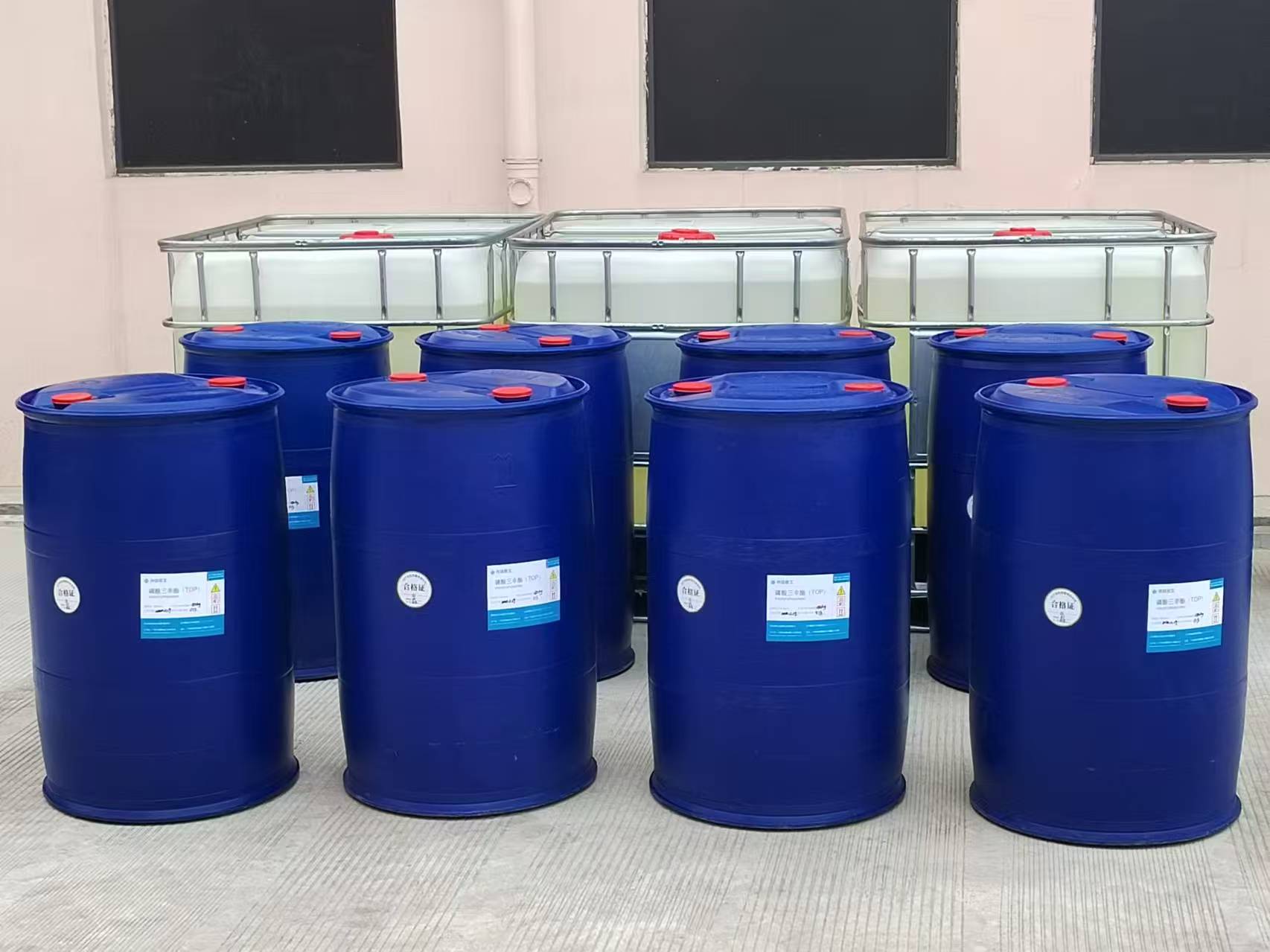
TEHP, or tris(2-ethylhexyl) phosphate, functions as both a plasticizer and a flame retardant in flexible PVC compounds. Its branched alkyl chains lower the polymer's glass transition temperature more effectively than many aryl phosphates, which keeps the material supple at low temperatures while still contributing phosphorus to the char-forming reactions during combustion. In PVC, TEHP enhances the inherent chlorine-based flame retardancy by promoting a denser, less flammable char layer and reducing melt dripping, often allowing formulations to reach UL 94 V-0 without excessive antimony trioxide.
In rubber systems such as NBR, CR, or EPDM, TEHP serves a similar dual purpose. It reduces compound viscosity during mixing and extrusion, improves filler wetting, and shortens incorporation time, all while raising the limiting oxygen index when paired with metal hydroxides or zinc borate. Because TEHP has a relatively high molecular weight and low volatility, it resists migration to the surface over long service life, making it suitable for wire and cable jackets, conveyor belts, and flooring where both flexibility and fire safety are critical.
How Downstream Demand from Wire and Cable Shapes China’s TEHP Market
China’s wire and cable sector has long been the primary demand engine for tri(2-ethylhexyl) phosphate, known in the industry as TEHP. This plasticiser finds its way into flexible PVC compounds used for insulation and sheathing across everything from household wiring to high-voltage transmission lines. As the country pushes forward with grid upgrades, urban rail expansion, and a rapid build-out of EV charging infrastructure, cable manufacturers have ramped up output considerably. That uptick feeds directly into TEHP consumption, since every new kilometre of cable produced requires a steady supply of plasticised compounds that can withstand temperature swings and mechanical stress without cracking.
The nature of this downstream pull is not merely volumetric. It shifts the way TEHP producers in China plan capacity, manage inventories, and negotiate contracts. When large cable makers secure multi-year orders for renewable energy projects or data centre builds, their material procurement teams lock in TEHP volumes months ahead, creating a rhythmic demand pattern that domestic suppliers have learned to read. Price movements in the TEHP market increasingly mirror project timelines in the wire and cable industry rather than raw material cost swings alone. For instance, a surge in ultra-high-voltage line construction tends to tighten TEHP availability in eastern provinces within a quarter, prompting local producers to adjust batch runs or allocate more feedstock to plasticiser units.
At the same time, downstream requirements are pushing TEHP formulations toward higher purity and lower volatility grades. Cable producers, especially those exporting to markets with strict environmental regulations, now demand TEHP with reduced heavy metal content and tighter acid value specifications. This quality pressure is reshaping China’s TEHP supply base, favouring larger integrated chemical plants that can refine esters to exacting standards over smaller, less flexible facilities. Consequently, the wire and cable sector is not just driving TEHP demand—it is dictating the technical trajectory and competitive landscape of the entire domestic market.
Price Pressures and Raw Material Volatility in China’s TEHP Supply Chain
China’s TEHP producers have spent much of the past year caught between sticky upstream costs and uneven downstream demand. The main alcohol intermediate, 2-ethylhexanol, tracks propylene and oxo-alcohol capacity utilization, and any tightening in coastal crackers quickly reshapes TEHP cost curves. At the same time, phosphorus-derived inputs remain exposed to seasonal power rationing in provinces such as Yunnan and Sichuan, where hydroelectric availability swings can push phosphate chemical prices higher without warning.
This volatility rarely translates into straightforward pass-through. Buyers in flexible PVC, synthetic leather and lubricant additives often push back on rapid increases, forcing TEHP suppliers to absorb part of the margin squeeze or adjust operating rates instead of lifting list prices. Smaller plants with older esterification lines and limited raw material storage have found it especially difficult to manage sudden spikes, while integrated producers with captive alcohol or phosphate intermediate supply hold a clearer cost advantage.
Inventory behavior has also become more defensive. Distributors now hold thinner safety stocks and purchase in shorter cycles, which amplifies spot price swings during maintenance turnarounds or logistics disruptions. Export orders add another layer of unpredictability, as overseas buyers time purchases around tariff windows and freight rates, leaving domestic spot prices to absorb the residual volatility rather than reflecting only local supply-demand fundamentals.
Environmental Compliance and the Shift Toward Safer Plasticizer Alternatives
Regulatory pressure has fundamentally reshaped the plasticizer market over the past decade. Traditional phthalates like DEHP and DBP, once ubiquitous in flexible PVC products, have faced tightening restrictions across the European Union, North America, and parts of Asia due to confirmed reproductive toxicity and endocrine disruption. Manufacturers now operate under frameworks such as REACH and updated TSCA rules that mandate substitution when viable alternatives exist. This compliance burden has accelerated a structural shift toward non-phthalate plasticizers, particularly in high-contact applications like medical devices, food packaging, and children’s toys.
The transition is not merely a matter of swapping one chemical for another. Safer alternatives—including citrate esters, adipates, and bio-based plasticizers derived from vegetable oils—must demonstrate equivalent or better performance in flexibility, low-temperature resistance, and migration stability. For example, dioctyl terephthalate (DOTP) has gained significant traction as a drop-in replacement for DEHP in wire and cable, flooring, and automotive interiors because it offers similar plasticizing efficiency without the same toxicological profile. Meanwhile, citrates like acetyl tributyl citrate (ATBC) dominate in medical tubing and food contact films where biocompatibility is non-negotiable.
Cost and supply chain readiness still pose challenges. Bio-based plasticizers often command a price premium and face limitations in feedstock availability, while some non-phthalate synthetics require reformulation adjustments to match processing windows. Nevertheless, forward-looking companies are treating compliance not as a penalty but as an opportunity to differentiate product lines and capture environmentally conscious buyers. As regulatory bodies continue to evaluate additional phthalates and restrict legacy plasticizers further, the competitive advantage will increasingly belong to those who invest early in safer, fully compliant formulations.
What’s Next for China’s TEHP Export and Domestic Consumption Patterns
Export volumes are unlikely to repeat the double-digit jumps seen earlier in the decade, but China’s TEHP shipments will continue to find room in Southeast Asia, the Middle East, and parts of Africa where cost-sensitive flexible PVC manufacturing still dominates. The real shift is less about tonnage and more about product form: fewer bulk ISO tanks of generic TEHP, more pre-formulated blends and drummed specialty grades aimed at wire and cable, synthetic leather, and flame-retardant films. Domestic producers who invest in low-odor, low-acidity variants will hold margins even if total export growth flattens.
Domestically, the consumption pattern is being pulled in two directions. On one side, traditional downstream sectors such as tarpaulin, artificial leather, and general-purpose hoses remain price-driven and will keep demand for standard TEHP steady but unspectacular. On the other, tighter indoor air quality rules and automotive interior standards are pushing formulators toward plasticizers with better fogging and volatility profiles. That does not automatically favor TEHP over every alternative, but it rewards suppliers who can document batch consistency and offer technical support instead of competing only on yuan per ton.
Looking further out, China’s TEHP market will likely split into a commodity export stream and a domestic specialty stream. Exporters will face more anti-dumping scrutiny and occasional logistics shocks, while domestic buyers will demand shorter lead times, smaller minimum order quantities, and flame-retardant performance tied to specific polymer systems. The producers that move early to regional warehousing outside China and to application labs inside China will be the ones that shape the next cycle rather than merely reacting to it.
FAQ
Tris(2-ethylhexyl) phosphate, often called TEHP, is an organophosphate ester widely used as a flame retardant and plasticizer. In China, its prominence stems from the country's massive manufacturing base for PVC, synthetic rubber, and flame-resistant materials, all of which consume TEHP in substantial quantities. Domestic producers have scaled up capacity over the past decade, turning China into both a major consumer and exporter of this compound.
The largest users are producers of flexible PVC products such as cables, hoses, and flooring, where TEHP improves low-temperature flexibility and reduces flammability. The automotive sector also consumes significant volumes for interior plastics and wire insulation. Additionally, manufacturers of synthetic rubber, adhesives, and certain coatings incorporate TEHP to boost durability and fire resistance without sacrificing processability.
Over the last five to eight years, several Chinese chemical companies have expanded or built new TEHP plants, pushing national capacity well beyond internal demand. This oversupply has made China a key exporter to Southeast Asia, Europe, and the Americas. As a result, global TEHP prices are increasingly influenced by feedstock costs and operating rates in Chinese plants, rather than by demand alone in importing regions.
Three factors stand out: stricter fire safety codes for building materials and electronics, expansion of electric vehicle production requiring flame-retardant wire and cable compounds, and the ongoing shift away from certain phthalate plasticizers due to health concerns. TEHP is often viewed as a safer alternative in many non-food-contact applications, which has accelerated adoption in domestic formulations.
China has not banned TEHP, but it is included in the country's existing chemical registration and hazard communication frameworks. Factories producing or handling TEHP must comply with workplace exposure limits and wastewater discharge standards. Recent revisions to the 'Measures for Environmental Management of New Chemical Substances' mean any new TEHP-related substances or mixtures require notification, while established uses continue under general industrial chemical rules with periodic safety data updates.
Compared to chlorinated phosphate esters such as TCPP or TCEP, TEHP offers better low-temperature performance and lower volatility, which matters for outdoor cable jackets and automotive parts. However, TEHP generally provides slightly lower flame-retardant efficiency per unit weight, so formulators sometimes blend it with other additives. In China, the choice often comes down to cost, end-use temperature requirements, and whether chlorine content is undesirable for a given export market.
The outlook remains positive but not without risks. Raw materials like 2-ethylhexanol and phosphorus oxychloride are readily available domestically, supporting stable production. Demand from construction and automotive sectors is expected to grow at a moderate pace through 2030. The main uncertainty lies in potential overcapacity leading to price competition, and in any future tightening of environmental rules that could raise compliance costs for smaller producers.
Most domestic TEHP is produced in integrated chemical parks. A plant receives 2-ethylhexanol by pipeline or tank truck and phosphorus oxychloride from nearby phosphorus chemical bases. After synthesis and purification, the TEHP is sold either directly to large PVC compounders or through regional distributors to smaller manufacturers of cables, rubber goods, and coatings. Exporters often ship in ISO tanks or flexibags to ports like Shanghai or Ningbo, where the product continues to Southeast Asia or the Middle East.
Conclusion
China’s grip on the global tris(2-ethylhexyl) phosphate (TEHP) market stems from a combination of massive production capacity, vertically integrated supply chains, and relentless cost competitiveness. This position is reinforced by TEHP’s essential function as a flame-retardant plasticizer in flexible PVC compounds and rubber formulations, where it balances flexibility with fire safety. Downstream, the wire and cable sector exerts a powerful pull on domestic demand—manufacturers depend on TEHP to meet insulation and sheathing specifications, and any shift in construction or infrastructure spending quickly ripples through consumption volumes.
Nevertheless, the market is not without friction. Producers face persistent pressure from fluctuating prices of key feedstocks like 2-ethylhexanol and phosphorus oxychloride, squeezing margins amid intense competition. At the same time, tightening environmental regulations and growing scrutiny of organophosphate esters are nudging formulators toward less hazardous alternatives, gradually reshaping application portfolios. Looking ahead, China’s TEHP trade patterns are likely to evolve as domestic consumption matures and export destinations adjust to stricter sustainability standards—creating a more nuanced outlook than the simple growth story of the past decade.
Contact Us
Contact Person: WANG SIHAI
Email: [email protected]
Tel/WhatsApp: +86-13815295628
Website: https://www.fortunechemtech.com/index_en.html