
Commercial and Industrial Energy Storage System (C&I ESS) Supplier: What to Look For
2026-11-16
Most C&I energy storage buyers don't realize that the supplier's track record matters as much as the battery cells themselves. A system that looks great on a datasheet can turn into a logistical nightmare if the vendor lacks field experience or skimps on after-sales support. So before you sign off on a commercial and industrial ESS, let's talk about the non-negotiables—from safety certifications to scalability—and why UNC keeps coming up in those conversations.
Can They Back Up Their Performance Claims with Site Data?
Any provider can throw around phrases like “99.9% uptime” or “blazing-fast load times,” but the real test is whether those numbers hold up when you look at actual monitoring data from live sites. A company that genuinely stands behind its performance won't just point to a single speed test screenshot or a cherry-picked uptime month. Instead, it will offer transparent access to historical uptime logs, real-user monitoring (RUM) data, and perhaps even a status page that shows incidents alongside the resolution timeline. If a vendor is vague about where its metrics come from or refuses to share methodology, that's usually a sign the marketing copy is doing more work than the infrastructure.
Another thing to watch is whether the performance claims line up with third-party benchmarks and independent reviews. While internal dashboards can be useful, they often reflect ideal conditions—empty caches, no heavy plugins, low traffic. Real site data from tools like Pingdom, GTmetrix, or Core Web Vitals field data gives a much clearer picture of how a service performs under everyday conditions. Look for case studies or customer testimonials that include specific numbers over an extended period, not just a single day's snapshot. The strongest evidence is when a provider can show consistent results across multiple sites, regions, and traffic levels, and is willing to walk you through the raw data behind those claims.
Finally, ask directly: can they provide a sample of site data from a current customer whose setup is similar to yours? If they hesitate or only offer a controlled demo environment, that tells you something. Performance isn't just about server speed; it's about how the whole stack—caching, CDN, database tuning, and code optimization—works together. A provider that can back up its claims with real, verifiable site data is one that has nothing to hide. Anything less, and you might be paying for a promise rather than a measurable outcome.
Safety Certifications That Actually Matter for Your Facility
When facility managers ask which safety certifications to prioritize, the answer should always start with the hazards your building actually faces. A chemical storage area has little use for a certification centered on arc flash, just as a data center won't benefit much from a food safety audit. Start with local code compliance as the bare minimum, then layer on standards that address real operational risks: NFPA 70E for electrical work, NFPA 25 for water-based fire suppression systems, and UL 924 for emergency lighting and exit signs.
Third-party certifications carry weight only if they include regular re-inspection and unannounced audits. A wall plaque from a one-time evaluation means far less than an active certification that requires documented maintenance, staff training, and corrective action within a set timeframe. Ask your insurer which certifying bodies they recognize; aligning with their list can lower premiums and speed up claims after an incident.
Finally, don't confuse certifications with compliance. OSHA sets legal minimums but does not certify most equipment or systems. Instead, look for marks from UL, FM Global, or Intertek that cover specific components, not whole buildings. The goal is a handful of meaningful, enforceable certifications tied to your facility's risk profile, not a lobby wall of generic plaques.
Will the System Scale Without a Complete Overhaul?
Scaling a legacy system often feels like trying to widen a river while the water is still rushing through. The usual impulse is to rip everything out and start fresh, but that's rarely practical when the system is already handling live traffic and real customers. The better question isn't whether the current code is perfect—it's whether the architecture has enough give to handle more load without crumbling at the seams. Most systems built in the last decade can absorb a surprising amount of growth if you're willing to make targeted changes instead of a full rewrite.
Look at where the actual bottlenecks are. Maybe the database is thrashing because every read hits the same overworked primary node. Maybe the API layer is doing too much synchronous work that could be queued or cached. These are surgical fixes—adding a read replica, moving heavy jobs to a background worker, splitting one monolithic service into a couple of smaller ones. None of these require tossing out the entire codebase. The key is measuring first, changing second. A lot of “unscalable” systems are really just under-tuned in a few predictable spots.
Of course, there's a limit. If the core domain logic is tangled in a way that makes every new feature a week-long archaeology dig, or if the team can't deploy without triggering a cascade of failures, then incremental scaling will eventually hit a wall. But that's not a scaling problem—that's a maintainability problem. For most systems asked to handle two to five times their current load, the answer is yes: you can scale without a complete overhaul, provided you're honest about where the pain actually lives and disciplined about fixing those spots first.
Post-Installation Support: What Does 'Service' Really Include?
Post-installation support often gets reduced to a warranty card and a phone number that routes you through menus. In practice, genuine service starts with a walkthrough of the installed system tailored to how your team actually works, not a generic manual. It includes configuration adjustments after the first week of real use, not just the day of install. If the service agreement doesn’t spell out who to contact when something misbehaves at 4:30 PM on a Friday, or how long you’ll wait for a callback, you’re not looking at support—you’re looking at a liability.
Beyond reactive fixes, meaningful support covers routine health checks, firmware or software updates that are tested before they’re pushed, and a clear escalation path that doesn’t require re-explaining your setup to each new technician. It also means having access to documentation written for your environment, not a knowledge base that answers every question except yours. The best post-installation service feels less like a helpline and more like having someone who already knows your system’s quirks on standby.
Look Beyond Price: Total Cost of Ownership and Financing Options
A low sticker price can be a trap if the vehicle drains your wallet later. Instead of fixating on the number on the windshield, calculate what you'll actually spend over the first five years: fuel or electricity, insurance premiums, scheduled maintenance, unexpected repairs, and depreciation. A hybrid that costs $3,000 more upfront might save you twice that in fuel and brake wear before you've finished paying it off.
Financing shapes the real cost just as much as the car itself. A 72-month loan with a low monthly payment often hides thousands in extra interest, while a shorter term with a slightly higher payment may leave you owning the car sooner and paying far less overall. Compare annual percentage rates from credit unions, banks, and dealership offers, and ask for the total interest paid over the life of the loan—not just the monthly figure. Sometimes a lease with a guaranteed buyout price makes more sense than buying, especially if you drive predictable miles and prefer a new model every few years.
Supply Chain and Delivery: Avoiding Project Delays
Project timelines often unravel when procurement decisions are made in isolation. Bringing suppliers into the conversation during the design phase—not after the fact—unlocks early warnings about lead times, material shortages, or logistical bottlenecks.
Rather than treating a delivery date as a single point, smart project managers build in tiered buffers: a short-term cushion for minor hiccups and a contingency plan that activates when a supplier misses a milestone by more than a week. This dual-layer approach prevents last-minute scrambling.
Weekly supplier scorecards that track not just on-time delivery but also quality and responsiveness create a shared rhythm. When a vendor knows their performance is being reviewed against agreed metrics, they tend to flag potential delays earlier—giving the project team time to reroute or expedite.
FAQ
Look beyond the sales pitch. A qualified supplier should demonstrate in-house engineering capability—custom enclosure design, thermal management tuning, and proven integration with your facility’s electrical infrastructure. Ask for detailed single-line diagrams and test reports from previous installations, not just a datasheet.
Non-negotiable. You need UL 9540, UL 9540A, and IEC 62619 or equivalent regional certifications covering the complete system, not just cells. Ask whether the supplier has passed large-scale fire testing and can provide third-party failure mode analyses. A supplier that hesitates on these documents should be disqualified immediately.
Expect more than off-the-shelf cabinets. A solid partner will adapt voltage windows, discharge durations, enclosure ratings, and communication protocols to match your load profile and local utility requirements. They should also offer modular expansion paths so you can add capacity later without replacing core components.
Check their regional service footprint and response-time guarantees. Request the escalation matrix and names of local technicians who would actually handle your site. A good test: ask how they manage a failed battery module two years into operation. If the answer is vague or export-only, keep looking.
Because C&I storage failures usually come from integration mistakes, not cell defects. A supplier with ten similar installations in your industry understands load spikes, peak shaving windows, and local permitting quirks. Ask for reference sites you can call—not just case studies—and verify how those systems performed during grid outages.
Request audited financials, warranty reserve details, and bank references. Many energy storage startups offer attractive pricing but lack the balance sheet to honor a 10-year performance guarantee. Check whether the supplier has secured project financing or insurance backing for their warranty obligations.
The EMS is what turns a battery into a revenue-generating asset. Evaluate whether the supplier’s EMS can handle time-of-use arbitrage, demand charge management, and utility API integration without custom coding. A demo on real historical interval data from your own meter is far more telling than a polished slide deck.
Absolutely. Modern C&I systems need continuous telemetry to detect thermal anomalies, state-of-health drift, and firmware vulnerabilities. Confirm the supplier hosts data in a SOC 2 or ISO 27001 compliant environment and that you retain ownership of your operational data. If they cannot show a live monitoring dashboard during evaluation, that’s a red flag.
Conclusion
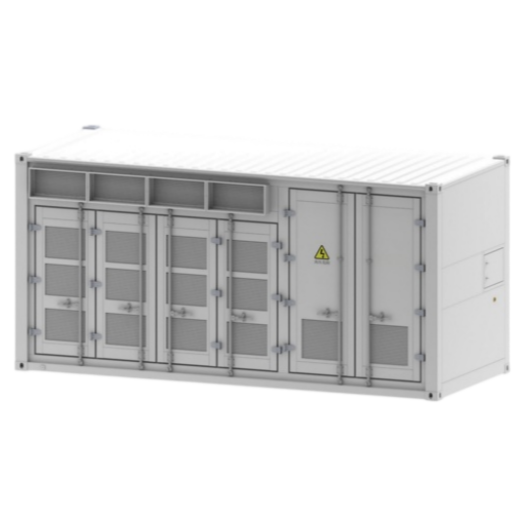
When evaluating suppliers for commercial and industrial energy storage, the first thing to demand is proof, not polished pitch decks. A vendor who cannot share real-world site data showing round-trip efficiency, cycle life, and uptime under load is essentially asking you to fund their R&D. Equally non-negotiable are safety certifications that align with your facility's actual risks — UL 9540, UL 9540A, and IEC 62619 are useful benchmarks, but they only matter if the supplier can explain how their thermal management and fire suppression design fits your building's layout, not just a checkbox on a datasheet. Also ask whether the system scales gracefully. If adding a second container or more battery racks forces a new EMS or inverter overhaul, that's a hidden cost you'll pay twice.
After installation, the real test is service. 'Service' can mean a 24/7 monitoring center with remote diagnostics and a technician on site within 48 hours, or it can mean an email ticket that sits unanswered. Get that in writing. Price is a distraction — look at total cost of ownership, including augmentation, degradation guarantees, and whether the supplier offers flexible financing or an energy-as-a-service model instead of a lump-sum capital outlay. Finally, check the supply chain. Delays in cells, power conversion equipment, or even shipping containers have killed otherwise solid projects. A supplier who can show buffer stock, multiple logistics routes, and a clear delivery schedule will save you from watching interest accrue on an empty concrete pad.
Contact Us
Contact Person: Manager Leng
Email: [email protected]
Tel/WhatsApp: 8613764878967
Website: https://www.unc-energy.com