Corrosion Inhibitor for China Oilfield Reinjection Water: Enhancing Pipeline Longevity and Efficiency
2026-07-10
In China’s demanding oilfields, reinjection water plays a critical role in maintaining reservoir pressure and boosting recovery—but it also brings a relentless enemy: corrosion. Pipelines and equipment face constant attack from aggressive ions, dissolved gases, and bacteria, leading to costly failures, unplanned shutdowns, and compromised safety. The right corrosion inhibitor isn’t just a chemical; it’s a shield that extends asset life and keeps operations running smoothly. At EVO, we specialize in advanced inhibitor formulations tailored to the unique water chemistry of Chinese oilfields, delivering unmatched protection without harming the reservoir. Discover how smart chemistry can transform your reinjection system from a liability into a long-term asset—and why producers across the country are making the switch.
Understanding the Corrosive Nature of Oilfield Reinjection Water
The corrosive nature of oilfield reinjection water stems primarily from its complex chemical makeup, which includes dissolved gases like carbon dioxide and hydrogen sulfide, high salinity, and the presence of microorganisms. When this water is injected back into the formation for pressure maintenance or disposal, it interacts with metal infrastructure under high-temperature and high-pressure conditions, drastically accelerating electrochemical reactions that lead to material degradation.
Corrosion mechanisms in reinjection systems are seldom isolated; instead, they often overlap. For instance, CO₂ dissolves to form carbonic acid, causing sweet corrosion that manifests as pitting or mesa attack on carbon steel. Simultaneously, sulfate-reducing bacteria can thrive in oxygen-depleted environments, producing H₂S and triggering sour corrosion or sulfide stress cracking. The combination of these factors generates a particularly aggressive environment that compromises the integrity of pipelines, tubing, and injection well casings.
The impact extends beyond simple metal loss—it can lead to sudden failures, costly downtime, and environmental hazards if leaks occur. Effective management requires a holistic understanding of water chemistry, real-time monitoring, and the selection of appropriate inhibitors or resistant alloys. Treating reinjection water as a dynamic, reactive fluid rather than just a waste byproduct is essential to maintaining the long-term safety and productivity of oilfield operations.
How Corrosion Inhibitors Act as a Shield for Pipeline Infrastructure
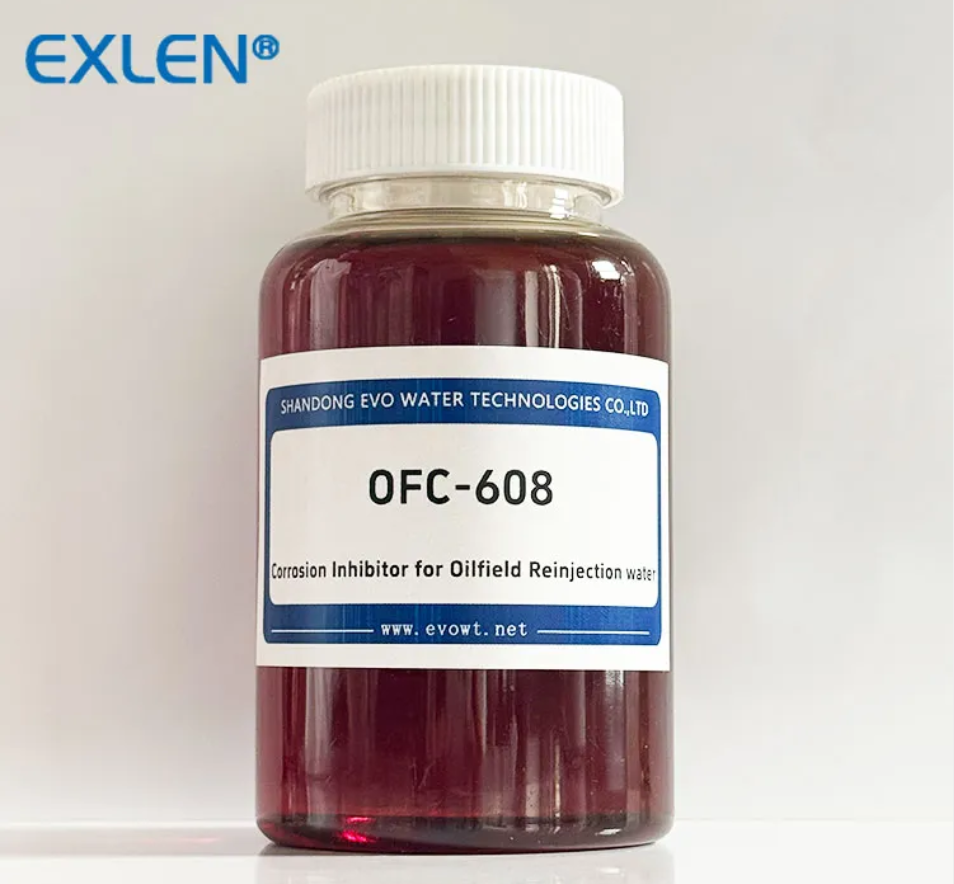
Corrosion in pipelines isn't just a surface problem—it's a slow but relentless threat that can compromise the entire structural integrity of a network. When water, oxygen, and other corrosive agents meet the metal walls of a pipeline, electrochemical reactions kick off immediately. Left unchecked, these reactions eat away at the steel, leading to thinning, pits, and eventually leaks or catastrophic failures. Corrosion inhibitors step in by forming a protective molecular layer right at the metal surface, physically blocking the aggressive substances from making contact. Think of it like an invisible, ultra-thin coat of armor that bonds to the pipe’s interior, repelling corrosive elements and halting the reaction cycle before it can gain any traction.
The way these inhibitors work is surprisingly targeted. They’re added directly into the fluid flowing through the pipeline—whether it’s oil, gas, water, or a multiphase mix—and they travel the entire length of the system. Once they reach the pipe wall, the active compounds, typically organic molecules with polar head groups, anchor themselves to the metal. This adsorption process creates a continuous film that can withstand turbulent flow, temperature swings, and pressure changes. Different inhibitors are tuned for specific environments: some tackle oxygen-driven rust in water lines, others neutralize acid gases like hydrogen sulfide in sour service, and many are designed to perform under harsh downstream conditions. It’s a chemical balancing act that transforms a raw pipeline into a resilient conduit, extending its life far beyond what unprotected steel could achieve.
Beyond just barrier protection, modern inhibitors often bring extra defensive mechanisms to the table. Many formulations include filming agents that repair themselves if the protective layer is scratched or washed away, basically self-healing the shield while the pipeline remains in operation. Some even alter the fluid’s pH or scavenge dissolved oxygen before it attacks the metal. The result is a multitiered defense system that’s both passive and active. By consistently dosing the right inhibitor, operators keep corrosion rates negligible—sometimes below industry thresholds—even in aging infrastructure. It’s not a permanent fix, but it’s a remarkably effective way to shield pipelines day in and day out, without ever shutting them down.
Key Characteristics of High-Performance Inhibitors in Chinese Oilfields
The design of inhibitors for Chinese oilfields demands a deep understanding of the unique geological and operational conditions prevalent in the region. High-performance inhibitors must demonstrate exceptional thermal stability, often exceeding 150°C, to withstand the high-temperature reservoirs commonly encountered in formations like the Tarim Basin. They also require robust tolerance to high salinity, particularly in oilfields where formation water can reach concentrations beyond 200,000 mg/L, such as in the Liaohe or Shengli fields. This dual resilience ensures the inhibitor molecules remain intact and functional under extreme heat and ionic stress, preventing degradation that would otherwise lead to scaling or corrosion.
Another defining trait is their targeted molecular architecture, which is tailored to combat specific scaling tendencies in Chinese oilfields. Many reservoirs, including those in the Changqing and Daqing areas, exhibit severe sulfate and carbonate scaling due to waterflooding operations and incompatible water mixing. Effective inhibitors incorporate functional groups—like phosphonates, carboxylates, or sulfonates—that exhibit high chelation and dispersion capabilities. These groups work synergistically to adsorb onto crystal nuclei and inhibit growth, even at minimal dosage levels. The ability to perform under a wide pH range and in the presence of divalent cations like Ca²⁺ and Mg²⁺ is indispensable for maintaining oil production continuity.
Environmental compatibility and long-term stability are increasingly critical, as Chinese oilfields operate under stringent environmental regulations. High-performance inhibitors are formulated to be biodegradable and low in toxicity, minimizing ecological impact during produced water discharge. Concurrently, they must resist hydrolysis and maintain activity over extended periods, reducing the need for frequent re-treatment in deep, horizontal, or complex well architectures. This balance between ecological safety and operational endurance ensures that inhibitors not only protect assets but also comply with the sustainability goals of China’s energy sector, especially in large-scale developments like the Bohai Bay offshore fields.
Real-World Impact: Extending Pipeline Service Life
Every year of added service from a pipeline translates into millions of dollars saved and countless disruptions avoided. When corrosion-resistant coatings and advanced cathodic protection systems are deployed, operators regularly observe asset lifetimes stretching a decade or more beyond original design expectations. This isn’t theory—offshore platforms in the North Sea and gas transmission lines across the Middle East have quietly passed their 40-year marks, still running safely thanks to proactive integrity management.
Far from being a routine maintenance checkbox, extending pipeline life rewrites the economics of entire networks. Instead of mobilizing massive trenching crews and enduring lengthy regulatory shutdowns, operators can redirect capital toward monitoring technologies and localized repairs. The ripple effects show up in more stable energy prices and fewer supply interruptions for industries and households that depend on uninterrupted flow.
The environmental upside is just as compelling. Fewer new pipeline projects mean less ground disturbance, reduced steel production, and lower cumulative emissions from construction. In sensitive areas—from arctic permafrost to densely populated corridors—keeping an existing line in safe operation often carries a smaller ecological footprint than building anew, a fact that regulators and communities are increasingly weighing in approval processes.
Boosting Operational Efficiency Through Effective Corrosion Management
Corrosion often operates as a silent drain on resources, eating away at equipment integrity while inflating maintenance budgets. When left unchecked, it leads to unplanned downtime that disrupts production schedules and erodes profit margins. Effective corrosion management flips this dynamic by embedding protective measures into daily operations, turning a reactive cost center into a strategic advantage. By monitoring corrosion rates in real time and applying targeted inhibitors or coatings, facilities can extend asset life and reduce the frequency of emergency repairs. This proactive stance not only stabilizes throughput but also frees up engineering teams to focus on optimization rather than firefighting.
A well-structured corrosion control program does more than safeguard metal; it streamlines workflows and sharpens decision-making. For instance, integrating corrosion sensors with predictive analytics allows managers to schedule maintenance during planned outages rather than scrambling when a pipe fails. This level of foresight minimizes inventory stockpiles for spare parts and lowers labor costs associated with overtime. Additionally, data gathered from corrosion monitoring feeds into risk assessments, helping operators prioritize high-consequence areas and allocate budgets where they matter most. The result is a leaner operation where every dollar spent on prevention directly bolsters the bottom line.
Beyond immediate cost savings, effective corrosion management enhances overall system reliability and energy efficiency. Corroded surfaces increase friction in piping and reduce heat transfer in exchangers, forcing pumps and compressors to work harder. By maintaining clean, intact surfaces, energy consumption drops, and carbon footprints shrink. This alignment of operational and sustainability goals strengthens regulatory compliance and builds stakeholder confidence. Ultimately, treating corrosion not as an inevitable nuisance but as a manageable variable unlocks hidden capacity and drives consistent, profitable performance across the asset lifecycle.
Selecting the Right Inhibitor: Factors That Matter
When evaluating inhibitors, potency often steals the spotlight, but selectivity is equally vital. A molecule might demonstrate impressive IC50 values in biochemical assays, yet if it also binds to related targets, cellular outcomes can become unpredictable. Early profiling against broader target families helps avoid off-target effects that could compromise data interpretation or lead to unwanted toxicity in downstream applications. This balance between hitting the intended target hard and ignoring others is a cornerstone of any thoughtful selection process.
Beyond biochemical affinity, the physicochemical properties of an inhibitor dictate how it behaves in a living system. Solubility, permeability, and metabolic stability can make or break a compound’s usefulness, regardless of its potency in a test tube. For cell-based or in vivo work, prioritizing molecules with favorable drug-like characteristics—even if they appear slightly less potent on paper—often yields more reproducible and physiologically relevant results. Assay conditions, such as serum protein binding or cellular ATP levels, should also be anticipated, as they directly influence free drug concentrations and true efficacy.
Practical considerations round out the decision-making process. Availability, cost, and the existence of well-characterized negative controls can determine whether a project moves forward or stalls. Researchers frequently overlook the value of orthogonal validation compounds; having a structurally distinct inhibitor with a complementary mechanism can strengthen confidence in target engagement. Ultimately, the “right” inhibitor is not simply the strongest binder, but the one that fits the specific biological question, experimental design, and long-term goals of the study.
FAQ
Produced water from these fields often carries high salinity, carbon dioxide, hydrogen sulfide, and sometimes bacteria. These components work together to accelerate metal loss, leading to pitting, cracking, and eventual failure if left untreated.
It forms a dense, persistent molecular barrier on the inner pipe walls. This film blocks corrosive ions and gases from contacting the metal, while also disrupting electrochemical reactions that drive rust and pit formation. The result is a much slower degradation rate and fewer unplanned repairs.
It shows high film persistency even under turbulent flow, remains effective across a wide pH and temperature range, and resists being stripped away by suspended solids. Laboratory tests have demonstrated over 95% corrosion inhibition efficiency in simulated field conditions.
It has been tested with common biocides, scale inhibitors, and oxygen scavengers without antagonistic effects. Field trials confirmed no loss of performance when dosed together, making it straightforward to integrate into existing treatment programs.
The formulation avoids heavy metals and persistent organic pollutants. It degrades into low-toxicity byproducts under reservoir conditions, and its low dosage rate helps minimize the chemical footprint in produced water reinjection operations.
It is usually injected continuously via a chemical dosing pump at a point upstream of the main injection pumps. The dosage rate is fine-tuned based on water chemistry and flow rate, typically starting at a few tens of parts per million based on water volume.
Operators have reported substantial reductions in pipeline replacement frequency, fewer workovers caused by downhole tubing failures, and lower chemical cleaning costs. In one case, a mature field cut its annual pipeline integrity expenses by nearly 40% after adoption.
Conclusion
Oilfield reinjection water in China presents a complex corrosion challenge, often carrying high levels of dissolved salts, carbon dioxide, hydrogen sulfide, and bacteria that aggressively attack steel pipelines. The resulting pitting, scaling, and under-deposit corrosion can rapidly thin pipe walls, leading to leaks, safety hazards, and costly downtime. Understanding this corrosive nature is the first step toward building a reliable protection strategy. High-performance corrosion inhibitors specifically designed for these waters act as a chemical shield, forming a durable film on internal pipe surfaces that blocks contact with corrosive species. In Chinese fields, where produced water chemistry varies greatly—from high-mineralization brines to polymer-flooding effluents—the ideal inhibitor must withstand high temperatures, shear forces, and varying pH while remaining effective at low dosage. It should also be compatible with other treatment chemicals and resistant to the stripping effects of entrained oil and solids.
Real-world case studies across major Chinese oilfields confirm that a well-chosen inhibitor can double or even triple pipeline service life, dramatically reducing replacement costs and the frequency of unplanned repairs. Beyond longevity, effective corrosion management boosts operational efficiency by minimizing flow restrictions caused by corrosion debris, maintaining injection pressures, and lowering energy consumption. It also simplifies water treatment processes and helps meet environmental discharge limits by reducing iron counts. Selecting the right inhibitor requires a thorough evaluation of water analysis, metal coupon tests under field conditions, and a cost-benefit analysis that includes not just price per liter but total impact on maintenance cycles and throughput. When corrosion risks are accurately matched to inhibitor chemistry—whether film-forming imidazolines, neutralizing amines, or synergistic blends—the result is more predictable pipeline integrity, safer operations, and a tangible return on investment for oilfield operators seeking to maximize asset life and production continuity.
Contact Us
Contact Person: Fiona Su
Email: [email protected]
Tel/WhatsApp: 8619963724144
Website: https://www.evo-chemical.com/