
Custom Zinc-Nickel Alloy Plating Equipment for Precision Surface Finishing
2026-09-20
Getting a uniform zinc-nickel coating on complex geometries isn't a job for generic plating lines. From aerospace fasteners to automotive safety parts, the margin for error keeps shrinking. Custom equipment—engineered around your part geometry and throughput—changes the equation. At Junda, we've learned that precision surface finishing starts long before the first rack hits the bath. Here's what to look for when your specs outgrow standard machinery.
Why Off-the-Shelf Plating Lines Undermine Precision Zinc-Nickel Work
Most standard plating lines are built for volume, not nuance. Their rectifiers, agitation systems, and tank geometries are tuned for a broad range of generic finishes, which means the tight parameter windows required for precision zinc-nickel—like current density control to within a few amps per square foot—simply aren't achievable. When a line drifts even slightly outside those windows, you get inconsistent alloy ratios, uneven thickness distribution, and poor adhesion on complex geometries.
The electrolyte chemistry in zinc-nickel is also far less forgiving than conventional zinc or nickel baths. Off-the-shelf lines often rely on simple dosing pumps and periodic lab checks, but precision work demands real-time monitoring of nickel concentration, pH, and temperature with automated replenishment tied directly to amp-hours. Without that level of control, the bath ages unpredictably, and your coating's corrosion resistance degrades from lot to lot—sometimes subtly, sometimes catastrophically.
Then there's the issue of post-treatment. High-performance zinc-nickel usually needs a specific passivation and sealer sequence to hit automotive or aerospace specs. Generic lines rarely accommodate the dwell times, rinse cascades, and drying profiles that keep the passivation film intact. The result is a coating that looks fine on the surface but fails salt spray testing far earlier than a well-engineered, purpose-built line would deliver.
The Tank Features That Actually Control Alloy Thickness Distribution
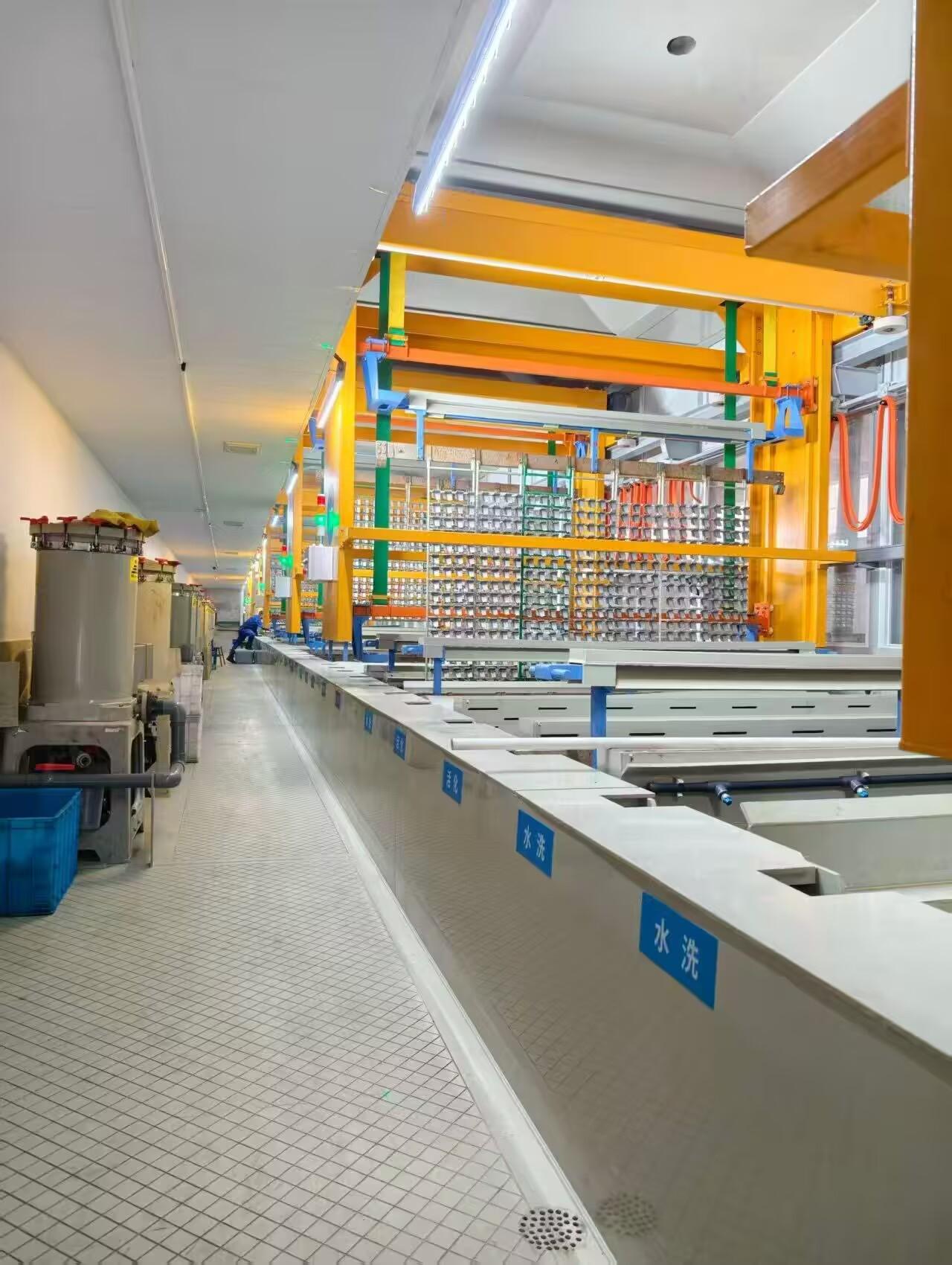
Alloy thickness distribution in electroplating tanks is rarely dictated by the power supply alone. The geometry of the anodes, their spacing relative to the cathode, and the use of shields or thieves quietly shape where metal builds up. A slight shift in anode angle can redirect current density more effectively than doubling the rectifier output.
Tank hydrodynamics also play a decisive role. Agitation from eductor nozzles or air sparging changes the diffusion layer thickness, which in turn controls how evenly alloying elements deposit. Without deliberate flow patterns, even a perfectly aligned anode array will produce erratic thickness profiles across complex part geometries.
Finally, the bath level and part orientation inside the tank are often overlooked. A low solution level exposes the top of the cathode to altered current paths, while parts racked at inconsistent depths see different local field strengths. These subtle tank features, not just chemical composition, ultimately determine whether an alloy plate measures uniform or wildly variable.
Choosing Plastics and Linings That Survive Zinc-Nickel Chemistry
Alkaline zinc-nickel baths run hot and caustic, so the first mistake shops make is picking a general-purpose PVC liner and expecting it to shrug off sodium hydroxide at 120°F. Instead, match the polymer to the bath side: polypropylene handles the alkalinity and temperature well, but it gets brittle around aggressive mist suppressants and some brighteners. For tanks that see both alkaline cleaner carryover and acid zinc-nickel drag-in, CPVC or PVDF gives you more chemical headroom without the cracking you'll see in straight PVC after a few months.
Acid zinc-nickel is a different animal. The ammonium chloride and boric acid load eats through cheap polyethylene and can turn flexible vinyl liners into a swollen mess. Here, PVDF or a fluoropolymer lining is worth the extra cost because it resists both the acid side and the occasional alkaline shock from neutralization steps. Watch the welds and seams more than the base sheet—most failures start at a stressed corner or a poorly fused joint, not in the middle of a panel.
If you're lining an existing steel tank, don't just glue in a drop-in liner. Zinc-nickel solutions creep behind seams and create crevice corrosion that looks like a coating failure. Use a bonded lining system with a proper primer, or choose a thick, stress-relieved polypropylene sheet with rounded corners. Also check the anode and heater zones: those hot spots can push a liner past its continuous-use rating even when the bulk bath reads fine.
Small Agitation Changes, Big Differences in Coating Consistency
Even a tiny shift in agitation speed can ripple through the entire coating process. Operators often treat mixing as a fixed step, but small adjustments—like altering RPM by just ten or twenty—change how pigments disperse, how bubbles form, and how evenly the final layer cures. These are not theoretical concerns; they show up as visible streaks, uneven gloss, or patchy adhesion on finished parts.
The most overlooked variable is not the mixer itself, but the way agitation interacts with material viscosity over time. A coating that mixes perfectly at the start may settle into a different flow pattern minutes later, especially if the impeller sits slightly off-center or the batch temperature drifts. By simply shortening the agitation window or adjusting the blade angle a few degrees, teams have eliminated recurring defects that were previously blamed on raw material quality.
What makes these small changes so powerful is that they are easy to test on the line without new equipment. Recording baseline settings, then making one controlled adjustment—such as a gentler ramp-up or a short pause before final thinning—often reveals a clear link between agitation and coating consistency. Over time, these minor refinements add up to a noticeably more uniform finish, and the process becomes far less sensitive to batch-to-batch variation.
Designing Racks and Anodes for Parts With Tight Tolerances
The contact points on a rack do more than hold the part—they directly shape the local current density. For parts with tight tolerances, placing those contacts on non-critical surfaces or in recessed areas prevents excessive buildup at the touch points. A rigid rack design also matters; any flex or shifting between loads changes the anode-to-cathode gap and pushes thickness outside the allowed range.
Anode geometry often gets overlooked, yet it controls how evenly metal or oxide forms across the surface. When a part has sharp edges, deep cavities, or flatness requirements, a simple flat anode rarely works. Shaped or auxiliary anodes placed near low-current regions force deposition into those areas without overplating the outside corners. The spacing between anode and part should be adjusted so the field strength stays consistent even if the part has slight dimensional variation.
Prototyping a rack and anode setup with tight tolerance parts means checking actual thickness distribution rather than assuming a standard fixture will hold. Use test coupons at multiple locations and map the results back to the rack contact layout and anode placement. Small changes like adding shielding to the rack frame, moving auxiliary anodes a few millimeters, or switching anode material can bring the process back into control. Once the setup is proven, document every connection point and anode position so repeated runs do not drift.
Modular Zinc-Nickel Systems That Grow With Your Finishing Demands
A modular zinc-nickel plating line lets you start with exactly the capacity you need today, then add stations, rectifiers, or filtration units as your workload climbs. You aren't locked into a fixed footprint or forced to overbuild from day one. Instead, the system's frame, plumbing, and controls are designed so new segments bolt on with minimal rework, keeping your initial investment lean while preserving room to expand.
What makes this approach practical is how cleanly the modules integrate. The electrical bus, chemical dosing, and exhaust ducting are pre-engineered to accept additional cells without shutting down the whole line for weeks. When a new tank or rinse stage arrives, operators typically connect it during a scheduled maintenance window, not a full rebuild. That means you can respond to a sudden jump in fastener or bracket orders without disrupting the parts already in process.
Over time, this pay-as-you-grow model often proves cheaper than buying a large line upfront. You avoid paying for idle capacity, yet you retain the option to handle thicker deposits, longer racks, or higher throughput later. The same rectifier software and monitoring tools scale along with the hardware, so training stays consistent and process control doesn't become a patchwork as the system matures.
FAQ
The alloy typically contains 12–16% nickel, which sharply improves corrosion resistance—often outlasting pure zinc by a factor of five or more in salt spray tests. It also holds up under elevated temperatures without losing adhesion, so it suits parts that face both road chemicals and engine heat.
Instead of relying on a fixed anode arrangement, the equipment can use conforming anodes, auxiliary shields, and programmable rectifiers that adjust current density across the surface. This lets deep recesses, threads, and edges receive a consistent deposit thickness rather than burning at high-current areas or staying thin in low-current zones.
Automotive drivetrain and brake components, aerospace fasteners, hydraulic fittings, and marine hardware are common. Any application where a few microns of coating variation could cause assembly problems or early failure tends to benefit from tailored zinc-nickel lines.
Real-time bath analysis with automatic dosing of nickel brighteners and zinc metal keeps the ratio steady. Temperature control, agitation tuning, and periodic Hull cell checks are also built into the line so operators don't need to constantly adjust parameters by hand.
Yes, many custom designs include interchangeable stations or separate process tanks wired to the same rectifier bank. That allows mixed production—small fasteners in barrels and larger housings on racks—without duplicating the entire wastewater treatment and ventilation setup.
It often integrates post-treatment steps like trivalent passivation, sealers, and controlled drying. These layers not only preserve the zinc-nickel deposit but also give consistent friction, torque, and appearance characteristics, which matter for assembly and coating adhesion.
That varies widely. Small systems might use 100-liter process tanks for prototype work, while full production lines can exceed 10,000 liters per stage. Throughput is designed around rack dimensions, barrel capacity, and dwell-time requirements rather than a one-size-fits-all specification.
The bath contains chelated nickel and zinc ions that can't simply be discharged. A custom treatment module typically includes pH adjustment, hydroxide precipitation, and filtration to meet local discharge limits, and it can recover some rinse water for reuse, cutting operating costs.
Conclusion
Standard plating lines rarely hold up when the goal is a tightly controlled zinc-nickel deposit. The tank geometry, anode spacing, and solution movement all shape how the alloy deposits across a part—especially on complex profiles where edges plate faster and recessed areas starve. Custom equipment addresses this by positioning anodes and shields around actual part geometry rather than assuming a uniform bath. Material choice is just as critical; the plastics, liners, and seals must withstand the alkaline or acidic zinc-nickel chemistry without leaching or degrading, or the bath chemistry drifts and coating quality falls apart. Even small changes in agitation, such as eductor placement or air sparge pattern, determine whether low-current-density areas receive enough nickel to meet corrosion specs.
Racks and anodes built for tight tolerances make the next difference. Conforming anodes and custom rack contacts keep current density within the narrow window where zinc-nickel stays in the 12–15% nickel range. Modular system design then lets a shop grow without ripping out the whole line: additional plating cells, rectifiers, filtration, or automation can be added as part mix or volume changes. This kind of tailored approach removes the compromises forced by off-the-shelf equipment and gives consistent, repeatable results on precision components.
Contact Us
Contact Person: hayyr
Email: [email protected]
Tel/WhatsApp: 8613082110525
Website: https://www.jundaelectroplating.com