
Diaper Making Machine Factory Evaluation Checklist for Smart Buyers
2026-08-30
Most diaper machine buyers start by comparing prices—and that's exactly where expensive mistakes begin. A factory can look polished in a brochure but fail on tolerances, speed consistency, or spare parts support. This checklist is built for smart buyers who want to verify what actually matters before signing. Use it to compare suppliers objectively, and as you work through each point, remember that Womeng applies these same criteria to its own production lines.
Ask Them to Run Your Own Nonwoven and Watch the Tension
When evaluating a nonwoven material, static specs rarely tell the full story. Hand the roll to someone who runs it daily—a converter, a laminator, a slitter operator—and ask them to process it on their own equipment. The way the web feeds, stretches, or shifts under tension exposes weaknesses that a data sheet never will. Small inconsistencies in fiber distribution, bonding points, or edge trim become obvious the moment the line starts moving.
Watch their hands and eyes. If they keep adjusting the unwind brake or nudging the edge guide, that's a signal. A well-made nonwoven holds steady tension across the full width, with no bagging in the center and no tight edges curling at the trim. Ask them to run at their usual speed, not a cautious crawl. Tension problems rarely show up in a slow demo—they appear when the roll is pushed to production pace. The feedback you get from a real operator will tell you more about your material than any lab test.
Spend Ten Minutes at the Reject Chute, Not the Demo Line
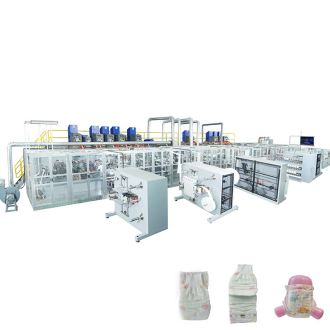
Most people gravitate toward the demo line because it flatters the process. Everything runs smooth, every part snaps into place, and the operators make it look inevitable. But that’s the theater of manufacturing, not the reality. The reject chute is where the truth collects: the warped edges, the missed tolerances, the subtle cracks nobody caught upstream. Ten minutes there teaches you more about a production line than an hour watching the perfect run.
When you stand at the reject chute, you start asking different questions. Why does this same flange keep cracking? Which shift produced that pile of short shots? Instead of admiring the polished output, you trace defects back to their source—bad material, worn tooling, a rushed setup. That’s where improvements actually hide. The demo line rarely changes, but the reject chute shows you what to fix next.
Snap a Blade Mid-Run and See Who Flinches
The moment the blade leaves the sheath mid-stride, everything else drops away. It’s not about speed or strength—it’s about who trusts their edge enough to keep moving while everyone else hesitates. A half-second flinch tells you more about a person than ten minutes of talk. That’s why this simple test works: it strips the polish off and leaves only the raw, unscripted reaction.
You’ll see it in the eyes first. The ones who flinch aren’t weak; they’re just still thinking in terms of danger instead of flow. The ones who don’t flinch have already accepted the blade as an extension of their own arm. It’s not reckless—it’s a kind of quiet certainty. Snap it clean, keep the stride unbroken, and watch who leans in and who pulls back. No commentary needed.
Try it with a group sometime. Let the blade crack the air at waist height, not aimed at anyone, just a sharp interruption. Some will laugh, some will step back, some will just nod. The nod is the one you remember. That’s the person who understands that control isn’t about avoiding the edge—it’s about knowing exactly where it is without having to look.
Get References From Buyers in Your Climate, Not Just Your Country
When you're validating a product idea or fine-tuning an existing offer, it's tempting to collect testimonials and feedback from anyone who speaks your language or lives within your national borders. But a buyer in a humid coastal city and a buyer in a dry inland region can have completely different pain points, even if they're only 300 miles apart. Climate shapes daily habits, purchasing triggers, and how products degrade or perform over time. So the references that matter most are often from people who share your local weather patterns, not just your country code.
Think about a company selling portable dehumidifiers. A glowing review from a customer in Arizona might reassure you about the unit's energy efficiency, but it tells you almost nothing about how well the device holds up during a week of monsoon-season dampness in Kerala or a mold-prone basement in Seattle. If your primary market is hot and humid, you need references from buyers who live in hot and humid conditions. Their complaints about water tank capacity, filter lifespan, or noise during continuous operation are far more predictive of how your future customers will react. A reference from a dry climate can even mislead you into ignoring critical flaws.
To gather these climate-matched references, start by filtering your existing customer list by postal code or city, then cross-reference with climate data. Reach out to the ones who've already purchased and ask specific questions about seasonal usage, performance during temperature spikes, or durability after exposure to salt air or heavy rain. If you don't have enough customers in your target climate zone yet, join online communities or trade groups where people from similar regions discuss their struggles. The goal isn't to collect the most references—it's to collect the references that actually reflect the environment your product will be judged in.
Look Under the Panels at the Drive Train Before You Talk Speeds
The glossy brochure numbers never tell you how a car actually behaves when you push it through a canyon or merge onto a fast freeway. Lift the hood and look past the engine cover—what you really need to inspect is the drive train layout. A transverse front-wheel-drive setup might save cabin space, but it will fight you with torque steer the moment you ask for real acceleration. Longitudinal mounts, on the other hand, tend to put the weight where it helps, letting the front wheels focus on steering while the rears dig in. If you skip this step, you'll end up quoting horsepower figures to your friends while a lesser-powered car walks away from you at the next green light.
Gearbox choice shapes the character more than any badge on the trunk. A dual-clutch unit can snap off shifts with brutal efficiency, yet it may feel clunky in stop-and-go traffic and expensive to service once the warranty expires. A traditional torque-converter automatic has come a long way—modern ones lock up early and hold gears without slurring—but nothing matches the direct connection of a well-sorted manual. Look at the final drive ratio too. Two cars can share the same engine, but the one with a shorter final drive will feel lively at city speeds while the other lopes along on the highway. The drive train is where a car's personality lives.
Don't get distracted by peak power numbers printed on a spec sheet. Check how the axles, differential, and transfer case are actually built. Open differentials are fine for commuting, but a limited-slip unit changes how the car exits a corner—inside wheel stops spinning, power goes to the ground. If you're looking at all-wheel drive, find out whether it's a reactive system that only sends torque rearward after slip occurs, or a proactive one that biases power before you even notice traction loss. These details never make the headlines, but they decide whether the car feels nervous or planted when you're carrying speed through a wet off-ramp.
Call Their Service Line on a Sunday and Ask for a Real Fix
Sunday support lines have a way of exposing what a company really thinks about its customers. Instead of asking about pricing or features, describe a specific problem you’re having—maybe a sync failure, a settings loop, or an error that only appears after a recent update—and ask what they can do right now to fix it. If the person on the other end starts reading from a script or tells you someone will get back to you on Monday, you’ve already learned more than any demo could show.
A real fix usually involves a few clear signs: they ask you for the exact version you’re running, they walk you through a diagnostic step instead of guessing, and they don’t immediately push a paid upgrade or a “reset everything” answer. Push back gently. Say you’ve already tried the basic steps. Then see if they can reach into logs, adjust a setting on their end, or explain the root cause in plain language. That’s the difference between a support line that exists to close tickets and one that exists to keep you working.
FAQ
Look beyond glossy brochures. A dependable factory will openly share production floor videos, welcome unannounced inspections, and have a clear system for tracking machine assembly milestones. If they hesitate to show you real-time operations or avoid questions about recent client feedback, that's a red flag.
Focus on the servo motor count, web tension control accuracy, and the speed at which the machine can switch between diaper sizes. Also ask for actual defect rate data from their existing clients rather than relying on the spec sheet alone.
After-sales support often outweighs the upfront cost. A slightly more expensive machine from a factory with a responsive spare parts inventory and remote troubleshooting team can save months of downtime. Ask how many service engineers they have and their average on-site response time for overseas buyers.
Request ISO 9001, CE marking for the control systems, and any safety certifications for electrical components. Also ask for a copy of their recent machine installation and commissioning reports. If they cannot provide these, treat it as a sign that their quality management may be inconsistent.
Calculate energy consumption per thousand diapers produced, expected spare part wear intervals, and operator training requirements. A cheap machine that needs frequent blade replacements and high electricity use can end up costing far more over three years than a pricier, optimized model.
Observe how materials are stored—humidity control and contamination prevention matter for absorbent cores. Check if workers follow standard operating procedures on the assembly floor, and ask to see a machine being tested with the buyer's intended raw materials, not just factory-approved samples.
Absolutely. Many factories run trials with ideal materials that make the machine look perfect. Requesting a trial with your actual nonwoven fabric, film, and SAP can reveal issues like poor ultrasonic bonding or uneven elastic application that would otherwise surface only after installation.
Factories confident in their build quality often accept staged payments tied to milestones, such as 30% deposit, 60% after factory acceptance testing, and 10% after installation. If a factory demands full payment before shipping and refuses any performance guarantees, that suggests they may not stand behind their equipment.
Conclusion
Smart buyers treat a factory visit as a stress test, not a showcase. Ask the vendor to run your own nonwoven instead of their carefully chosen material, then watch how the tension system reacts—real defects show up when the substrate is less forgiving. Leave the demo line and spend ten minutes at the reject chute; the waste count tells you more about everyday reliability than any polished output sample. While you are there, snap a blade mid-run. If the operator flinches or the whole line stalls for half an hour, you have uncovered a weakness that no sales script will mention. Solid factories practice for this exact moment and recover quickly without blaming the film, the glue, or your material.
References should come from buyers who operate in your climate, not just your country, because humidity and temperature change how adhesives, elastic, and nonwoven behave on a daily basis. A dry-region reference will not predict your rainy-season downtime. Before you talk about line speeds, open the panels and look at the drive train—cheap chains, exposed belts, and flimsy couplings wear out fast, while direct drives and properly guarded gearboxes mean fewer midnight failures. Then call their service line on a Sunday and ask for a real fix, not a callback. How they handle an urgent, off-hours fault reveals the true cost of ownership. Smart buyers build the checklist around these uncomfortable, unscripted moments, because a machine that only performs well when the factory is watching is not worth the invoice.
Contact Us
Contact Person: Jessie Lai
Email: [email protected]
Tel/WhatsApp: 86-188594442931
Website: https://www.wm-machinery.com