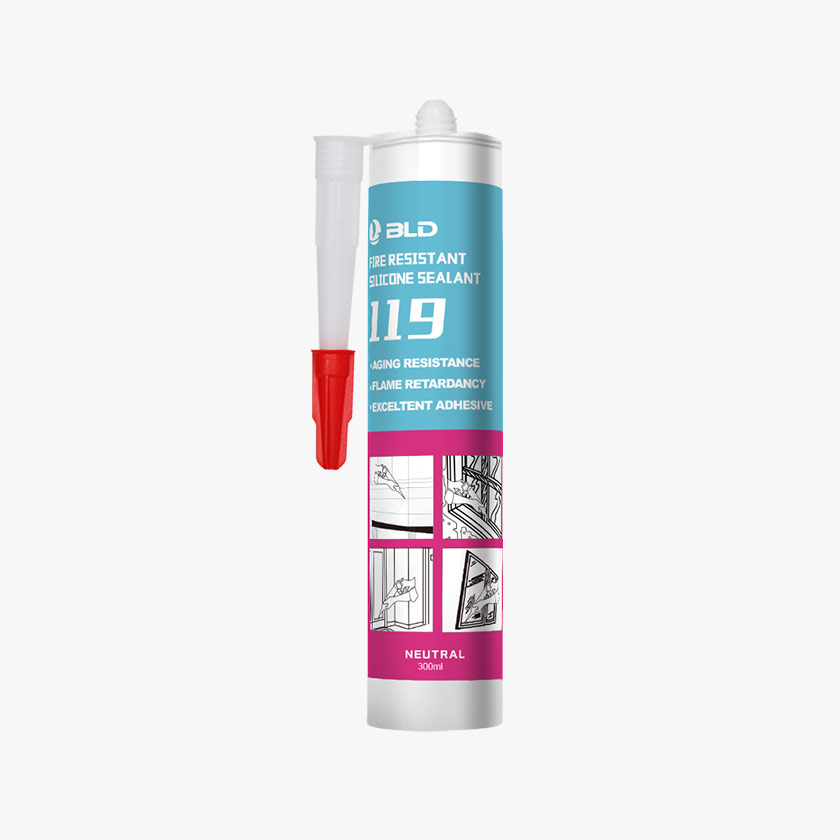
Fire-Resistant Silicone Sealant Exporter What to Look for in a Reliable Supplier
2026-11-16
Fire-resistant silicone sealant is only as trustworthy as the exporter behind it. If you pick the wrong supplier, you’re not just risking product failure—you’re risking lives and liability. But how do you tell a genuinely reliable exporter from one that just talks a good game? The clues are in certifications, material consistency, and how openly they share test data. Baolongda Group believes buyers should never have to guess. So before you commit to a shipment, let’s break down the signals that separate dependable specialists from costly shortcuts.
Ask for the Full Fire Test File, Not Just the Cover Page
A cover page tells you a product was tested. That's about it. If you're in the middle of specifying materials or reviewing compliance, you need the actual numbers behind that first sheet. Request the complete fire test file with the full thermal exposure curves, ignition times, and any photographs from before and after the test. The cover page rarely shows whether the sample passed by a wide margin or barely limped across the line.
Insist on getting the lab's raw data sections, not just the summary table. Look for details like mounting orientation, substrate type, and conditioning of the sample before the burn. These variables can change a result dramatically. A full file will also list any deviations from the standard procedure, so you can judge whether the test reflects your real-world installation or just a best-case lab setup.
Don't accept a one-page certificate as proof of performance. Ask for the complete document from the testing body, including the revision history and the name of the technician who signed off. If someone pushes back and offers only the cover page, treat that as a warning sign. The missing pages are often where the limitations and special conditions live.
How the Supplier Keeps Formulation Consistent Across Production Runs
Batch-to-batch consistency doesn’t come from a single magic step—it’s built into the workflow from raw material intake to final sign-off. Ingredient lots are pre-qualified against tight specification windows, and any drift in viscosity, particle size, or active content triggers a reformulation check before production even begins. Operators follow a locked master batch record, but they’re also trained to flag subtle shifts in mixing torque or temperature curves that automated logs might miss.
Mid-run adjustments are rare, and when they happen, they’re documented with reason codes rather than silent overrides. Statistical process control charts track critical quality attributes across dozens of runs, giving the team early warning of tool wear or seasonal humidity effects. This means a customer receiving product from run 47 can trust it matches run 12 without needing to re-qualify their own process.
The real differentiator is how the team treats deviations: not as failures to hide, but as data that sharpens the next cycle. A quarterly review pulls together all lot release data, line clearance photos, and raw material certificates to spot patterns that no single operator would see. That loop—measure, compare, adjust the control limits only when justified—keeps the formulation stable without freezing the process into brittle rigidity.
Export Paperwork Should Never Be an Afterthought
Handling export documents only when the shipment is already packed creates unnecessary pressure. Mistakes slip in when you rush through certificates of origin, commercial invoices, or packing lists. A missing HS code or an outdated consignee address can hold your cargo at the border for days, eating into margins and customer goodwill. Treating paperwork as a parallel workflow rather than a final checkbox keeps every departure date realistic.
Forwarders and customs brokers often bear the blame for delays that actually start in a shipper's back office. When export forms are filled out from memory instead of verified against the latest trade agreements, minor oversights compound. One quick habit changes this: maintain a digital template library for every destination country, and update it whenever regulations shift. That way, generating accurate paperwork takes minutes, not hours, and leaves room for last-minute changes without panic.
Shipping teams that give paperwork the same priority as physical logistics rarely scramble on pickup day. They assign a dedicated owner to document review, schedule a pre-shipment audit, and treat any discrepancy as a red flag. This discipline turns a routine task into a competitive advantage — your cargo clears faster, your customers receive predictable deliveries, and your team avoids the costly rerouting mess that comes from treating export paperwork as an afterthought.
Get Technical Answers on Joint Movement and Adhesion Before You Commit
Most suppliers hand you a spec sheet and wish you luck. That doesn't help when your application flexes at odd angles or sits in a damp corner. Ask us how a joint actually behaves under load, what happens to adhesion after thermal cycling, or why a particular sealant creeps at the edge. We'll walk you through real test data, not marketing bullet points.
Bring your material pairing, surface roughness, or exposure scenario. We can pull up case studies from similar assemblies, run small-batch trials, and measure peel strength or elongation before you commit to a full order. No pressure, no vague "it should be fine" answers.
If the joint design needs a nudge—say, adding a fillet or changing cure depth—we'll tell you straight. Better to adjust a prototype now than discover a failure in the field six months later.
Check Whether the Sealant Meets the Codes at Your Destination
Before settling on a firestop or expansion joint sealant, verify what the local building and fire codes require at your destination. A product that passes one region's standards may not be approved in another, and many jurisdictions demand third-party listings or specific test methods such as UL 2079 or ASTM E814. Ignoring these local rules can lead to failed inspections, costly rework, or even safety liabilities down the road.
Contact the local authority having jurisdiction, review the adopted code editions, and ask the sealant manufacturer for documentation that matches those exact requirements. Some areas accept widely recognized test reports, while others maintain their own pre-approved product lists. Getting written confirmation early keeps the project on schedule and avoids last-minute substitutions.
Know What Happens When a Pallet Arrives Damaged or the Sealant Underperforms
When a pallet shows up with crushed corners or a punctured box, the immediate reaction is annoyance—but the real story is what that damage means for the sealant inside. A torn bag or cracked pail can let air and moisture creep in, slowly turning a reliable product into a lumpy, unworkable mess. Before you even think about using it, check for dried skin on the surface, unusual thickness, or a sour chemical smell. These are telltale signs that the sealant has already started curing in its container, which means it will never bond the way it was designed to.
If the sealant seems fine at first glance but fails on the job—maybe it won’t skin over in the expected time, or it stays tacky for days—the problem often traces back to hidden damage during shipping. A broken pallet can shift the weight, putting stress on pails and tubes, cracking seals that look intact. Temperature swings during transit only make it worse, accelerating premature curing or separating the base from the activator. Instead of assuming you applied it wrong, give the packaging a hard look: any dent, bulge, or wet spot is a red flag that the chemistry has already been compromised.
What many people don’t realize is that underperforming sealant rarely announces itself loudly. It might cure too fast in the nozzle, clogging your gun, or it might bead up and refuse to lay flat. Waste a few minutes testing a small bead on scrap material before tackling the real joint. If the sealant doesn’t smooth out easily or forms a weak, crumbly skin, it’s safer to reject the whole pallet than to gamble on a seal that could fail months later. Your best move is to document the damage with photos, note the batch number, and contact the supplier immediately—don’t wait until the last tube lets you down on a finished project.
FAQ
Look for test reports aligned with UL 94, EN 1366-4, ASTM E84, or BS 476. A dependable exporter will share the lab name and report number so you can verify authenticity instead of just forwarding a PDF.
Ask for the technical data sheet and the safety data sheet together, then cross-check the exact test method and specimen thickness. Call the testing laboratory directly with the report number to confirm it hasn't been altered.
Check whether they run automated mixing and filling lines, keep a dedicated quality control lab, and publish real monthly capacity figures. A track record of supplying international construction or marine projects is a strong indicator.
Small formula deviations can kill the intumescent response under fire. Request a certificate of analysis for every batch and compare key values like expansion ratio, slump, hardness, and adhesion strength against the approved sample.
Confirm the product's shelf life, storage temperature range, and whether it is classified as dangerous goods for sea or air freight. Ask about leak-proof packaging, palletization, and whether they provide temperature loggers for long shipments.
Most established exporters do offer OEM or ODM work, but you need to confirm their in-house R&D capacity, minimum order quantity, and lead time for custom colors or labels. Always test the modified formulation yourself because a small change can affect fire performance.
Be cautious if they refuse to provide a traceable test report, quote a price far below market average, avoid sending a sample for independent testing, or give vague answers about raw material sources. Poor technical communication is often the first warning sign.
Conclusion
A fire-resistant silicone sealant exporter is only as trustworthy as the documentation they can produce when asked. Before committing to a supplier, request the complete fire test file—not merely the cover page—and verify that the test standards match the codes enforced in your destination market. Consistency across batches matters just as much as a single passing report, so dig into how the manufacturer controls formulation from one production run to the next. If they hesitate to explain their batching process or only offer vague promises, treat that as a red flag. Export paperwork should never be an afterthought: a dependable exporter will handle certificates of origin, packing lists, and compliance documents without needing reminders, because they understand that customs delays can ruin a project timeline.
Beyond paperwork, technical support is where reliable suppliers separate themselves. Ask pointed questions about joint movement capability and adhesion to common substrates like concrete, glass, or powder-coated metal—expect answers backed by data, not marketing phrases. Also find out what happens when something goes wrong: if a pallet arrives damaged or the sealant underperforms, a supplier with a clear replacement or claims process saves you from costly rework. Look for a partner who treats your inquiry about failure scenarios as a normal part of due diligence, not as an inconvenience. The right fire-resistant silicone sealant exporter combines transparent testing, consistent manufacturing, proactive export handling, and responsive after-sales support, so you can specify their product with confidence on projects where fire safety cannot be compromised.
Contact Us
Contact Person: Charles
Email: [email protected]
Tel/WhatsApp: +86-0536-3350888
Website: https://www.baolongda.com/