
Flame Resistant Clothing Factory: How Protective Apparel Is Made
2026-07-18
Ever wondered what it takes to turn raw materials into the protective gear that saves lives? At DROTEX, the journey from fiber to finished flame-resistant clothing is a fascinating blend of science, precision, and safety-first engineering. While the final product looks simple, the factory floor tells a different story—one where every stitch and treatment layer is designed to withstand extreme heat and open flames. Dive into the behind-the-scenes process that makes modern protective apparel possible, and discover why quality manufacturing matters when seconds count.
Raw materials that resist extreme heat
When you need something that won't buckle under blistering temperatures, the go-to candidates are often ceramics and certain metals. Alumina, for example, stays stable well past 1500°C, making it a favorite for furnace linings and kiln shelves. Silicon carbide pushes even higher, shrugging off heat that melts most alloys, which is why it shows up in jet engine components and industrial burners. These aren't just lab curiosities—they quietly prop up entire industries where failure isn't an option.
Graphite offers a different kind of resistance. It doesn't melt at ambient pressure—it sublimates, way above 3000°C, and actually gets stronger the hotter it gets, unlike many metals that turn into wet noodles. That quirk makes it indispensable in electric arc furnaces and nuclear reactors. Then there are the refractory metals: tungsten has the highest melting point of any element, and molybdenum brings a similar stubbornness at a lower cost. You'll find them in glass-making electrodes, rocket nozzles, and even the filaments inside your old-school light bulbs.
Sometimes the real challenge isn't just pure temperature, but rapid changes or corrosive atmospheres. Mullite ceramics handle thermal shock beautifully—heat them and cool them quickly and they won't crack. In the extreme realm, hafnium carbide and tantalum carbide cross the 4000°C mark, materials that literally line the edges of re-entry vehicles. It's a quiet arms race of atoms, where a shift in bonding structure buys a few more degrees of survival.
Weaving flame-resistant fibers into durable fabric
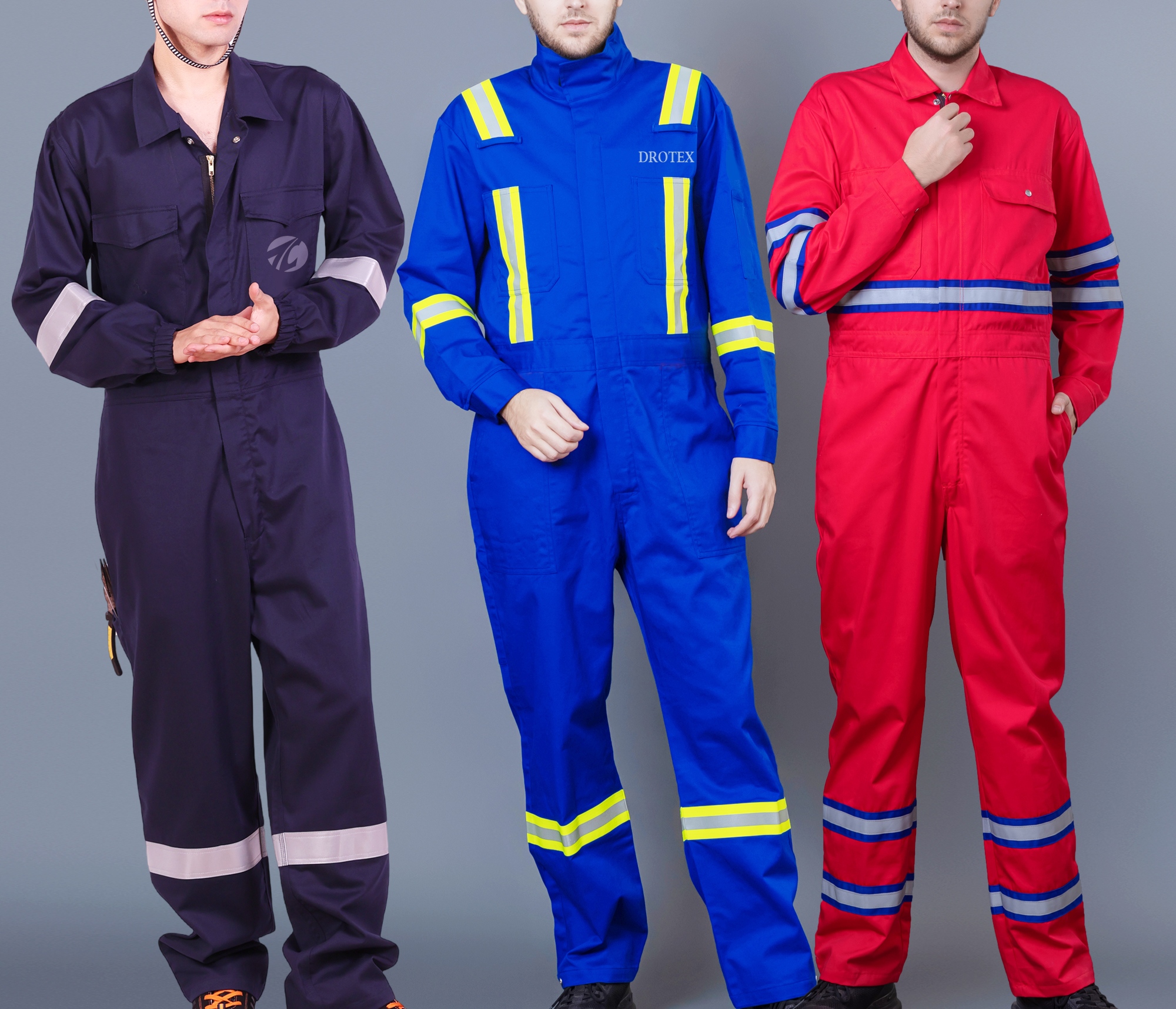
The process begins by selecting inherently flame-resistant fibers, such as aramids, modacrylics, or oxidized polyacrylonitrile, which do not rely on chemical treatments that wash out over time. These fibers are carefully blended and carded to align them for optimal strength and uniformity, then spun into yarns engineered to withstand high tension. The precise twist count and plying techniques are adjusted to enhance the fabric’s eventual tear resistance and dimensional stability, ensuring that the base material can endure repeated industrial laundering without compromising its protective qualities.
During weaving, the yarns are interlaced using advanced loom setups—often rapier or air-jet—with denser constructions like twill or ripstop weaves that inherently improve durability. A tight weave density not only locks the yarns in place to resist abrasion and snagging but also creates a more effective thermal barrier by limiting oxygen flow through the fabric. Skilled technicians monitor the machinery to maintain consistent thread tension, because even minor fluctuations can weaken the fabric’s matrix and reduce its lifespan in high-risk environments like metalworking or firefighting, where both flame protection and ruggedness are non-negotiable.
After weaving, the fabric undergoes finishing stages that further marry flame resistance with long-term durability. Some versions receive a light resin treatment to stabilize the weave and prevent shrinkage, while others are brushed or calendered to compact the surface without sealing the fiber pores—preserving breathability. The result is a textile that maintains its structural integrity and protective performance through countless wear-and-tear cycles, even in harsh conditions, because the flame-resistant properties are embedded in the fiber itself rather than applied as a temporary coating.
Precision cutting and assembly lines
Modern manufacturing leans heavily on the seamless integration of precision cutting and assembly lines. When every component fits perfectly, the downstream assembly process flows without hesitation, reducing the manual tweaking that often slows production. It's not just about tight tolerances on paper; it's about repeatable accuracy that holds up under the pressures of high-volume runs, where even a minor misalignment can cascade into costly downtime.
Behind the scenes, the cutting phase sets the stage. Advanced laser systems and CNC shears now handle a range of materials—from thin-gauge sheet metal to composite substrates—with minimal kerf and exceptional edge quality. The goal isn't merely to slice material quickly, but to produce burr-free edges that feed smoothly into automated pick-and-place stations. This harmony between cut quality and assembly speed is what turns a good line into a great one.
Then comes the assembly, where robotics and precision fixturing take over. Each station is designed to receive parts in a predictable orientation, joining them through methods like adhesive bonding, ultrasonic welding, or mechanical fastening—all calibrated to preserve the geometric integrity established upstream. The result is a workflow where dimensional checks happen inline, catching drift before it compounds, and where the final product consistently meets spec without rework. It's a system built on the principle that accuracy isn't just inspected in; it's manufactured in from the very first cut.
Chemical treatments for enhanced protection
Chemical treatments provide a way to tailor surface properties by initiating controlled reactions at the molecular level. For instance, certain silane-based solutions bond with hydroxyl groups on metal or glass, forming a dense, water-repellent network that obstructs corrosive ions. These layers often act as adhesion promoters for subsequent coatings, creating a gradient interface that distributes mechanical stress more evenly. Instead of simply covering the substrate, the treatment integrates with it, resulting in a barrier that resists undercutting and delamination even when scratched.
Beyond passive barriers, newer approaches incorporate active protection mechanisms. Microcapsules filled with healing agents, such as polymerizable oils or corrosion inhibitors, can be embedded within a matrix. When the coating is damaged, the capsules rupture and release their contents, sealing the breach and restoring protection without external intervention. This self-healing capability, combined with chromium-free formulations that rely on rare earth salts or organic inhibitors, reduces the need for frequent recoating while meeting stricter environmental regulations. The shift toward selective reactivity, rather than broad-spectrum toxicity, is redefining how chemical treatments balance performance with sustainability.
Rigorous lab testing for safety standards
Every product that reaches the shelf has been pushed to its breaking point—on purpose. In dedicated testing facilities, prototypes endure simulated years of daily use in just a few weeks. They’re dropped, shaken, heated, frozen, and drenched to uncover weaknesses that might only surface after months in a real home. It’s a deliberately brutal process, and it’s designed to weed out anything that can’t hold up.
Testing protocols often go beyond what any normal use would demand. For instance, charging circuits are repeatedly overloaded, enclosures are exposed to extreme humidity, and mechanical joints are cycled thousands of times. Third-party labs, accredited to international frameworks like ISO 17025, verify that every material and component meets strict electrical, chemical, and structural criteria. The paperwork alone for a single product certification can run into hundreds of pages, but the real outcome is a device that won’t surprise you with a failure when you rely on it most.
What this translates to is more than a stamp on a label. It’s the reason a charger doesn’t overheat on your nightstand, a cable doesn’t fray after being coiled and uncoiled daily, and a power bank doesn’t swell inside a backpack. Behind that quiet reliability are engineers who refused to shortcut the testing phase, and labs that held every sample to a standard higher than the minimum legal requirement. It’s the kind of effort you’ll likely never see—but you’ll notice its absence if it ever gets cut.
Final quality checks before shipment
Every order gets a final once-over before it leaves our facility. We don’t just trust the earlier steps—we physically verify that items match the order specs, colors are consistent, and there’s no last-minute damage from handling. It’s a hands-on, methodical process that catches things automated systems might miss.
Our team runs spot-checks on functionality, especially for electronics or assembled parts, and gives packaging a shake test to ensure nothing shifts in transit. If a box looks even slightly worn, we repack it. No checklist is just a formality—each point is a real action taken by someone who knows the product inside out.
These checks aren’t about bureaucracy; they’re about respect for the person opening the box. A missing screw or a scuffed panel can sour an entire experience, so we treat every shipment like it’s going to someone who’ll notice the details. That’s our baseline.
FAQ
Most protective garments start with specialty fabrics like modacrylic, aramid blends, or cotton treated with fire-retardant chemicals. The choice depends on the specific hazards, comfort needs, and whether the garment will be washed industrially.
It’s a two-way street: either the fibers themselves are inherently non-flammable (like aramids), or the finished textile gets a chemical bath that bonds at the molecular level. This treatment shouldn’t wash out if it’s done right.
Look for NFPA 2112 or NFPA 70E in the US, or EN ISO 11612 internationally. These aren’t just stickers—they require full garment testing, not just fabric swatches, to simulate real flash-fire or arc-flash conditions.
It’s less dramatic than you’d expect. Technicians expose fabric swatches to a controlled flame for a set time, then measure afterflame, char length, and whether the material melts or drips. The entire garment may also go on a manikin for a three-second engulfment test.
Absolutely. The thread itself is often flame-resistant, and seams get reinforced or taped so no heat or sparks can penetrate the stitching holes. Even labels and logos have to be heat-sealed or sewn with FR thread.
It’s a mix of raw-material checks, inline inspection at each cutting and sewing station, and random burn tests from finished lots. A good factory also keeps a piece of every production batch for future reference if a field failure ever occurs.
Covered zippers, no exposed metal that could heat up, and reinforced high-wear areas are standard. The fit is engineered to trap an insulating air layer without being baggy—too loose and hot air can circulate; too tight and you lose that thermal barrier.
Conclusion
The journey of flame-resistant clothing begins with carefully selected raw materials like aramid fibers, modacrylic, and treated cotton, which are inherently capable of withstanding extreme heat and flames. These fibers are not just heat resistant; they are engineered to form a protective char layer when exposed to fire, preventing the fabric from melting onto the skin. Once the fibers arrive at the factory, they are blended and spun into yarns with precise ratios to balance protection, comfort, and durability. The weaving process then transforms these yarns into dense, tightly constructed fabrics that limit oxygen flow and create a formidable barrier against thermal hazards. Skilled technicians operate high-speed looms, continuously monitoring tension and weave patterns to ensure every inch of fabric meets rigorous specifications.
After weaving, the fabric may undergo chemical treatments to enhance properties like oil and water repellency, further bolstering its protective capabilities. The treated rolls then move to the cutting floor, where automated cutting systems and experienced workers follow exact patterns to minimize waste and maintain consistency. Assembly lines hum with activity as sewers construct each garment with flame-resistant thread, reinforcing critical seams and attaching closures designed to withstand high-stress environments. No piece leaves the factory without undergoing stringent lab tests—vertical flame tests, thermal manikin evaluations, and tear strength assessments verify compliance with industry safety standards such as NFPA 2112. Finally, each garment passes through a meticulous quality inspection, where even minor defects are flagged before the apparel is packaged and shipped, ready to safeguard the lives of workers in the world’s most hazardous occupations.
Contact Us
Contact Person: Sandy
Email: [email protected]
Tel/WhatsApp: 86150 8310 5120
Website: https://www.frdrotex.com