
FWA Solution Supplier: Unlock the Potential of Fixed Wireless Access
2026-05-17
Fixed Wireless Access (FWA) is reshaping how we think about last-mile connectivity, but unlocking its true potential demands more than just off-the-shelf equipment. As a specialized FWA solution supplier, IPLOOK brings carrier-grade innovation to the table, turning technical hurdles into seamless deployments. Curious how the right partner can transform your network’s reach and reliability? Let’s dive into what makes IPLOOK a game-changer in the FWA landscape.
Why 5G Fixed Wireless Finally Delivers on the FWA Promise
For years, fixed wireless access (FWA) was seen as a niche solution—promising but never quite able to match the reliability and speed of wired broadband. The advent of 5G changes that equation entirely. With massive spectrum allocations, particularly in the mmWave bands, 5G can deliver multi-gigabit throughput that rivals fiber. More importantly, network slicing and beamforming technologies allow carriers to dedicate resources specifically for home internet traffic, ensuring consistent performance even during peak hours. This isn’t just an incremental improvement; the low latency and increased capacity of 5G finally make FWA a true alternative for households and businesses that have long been underserved.
Another critical factor is the economic viability that 5G brings to FWA. Previous generations required expensive customer-premises equipment and deployment models that didn't scale. 5G’s ability to use massive MIMO and advanced antennas means that a single base station can serve hundreds of homes with stable connections, drastically lowering the cost per subscriber. This shift allows operators to price FWA competitively against traditional cable and DSL, opening up new markets in suburban and rural areas where laying fiber isn't cost-effective. The user experience also gets a boost: self-installable devices and cloud-managed networks take the friction out of setup, making it as simple as plugging in a router.
Perhaps the most overlooked advantage is how 5G FWA integrates with broader network evolutions. Unlike legacy fixed wireless, 5G isn’t a siloed technology—it's part of a converged network that dynamically allocates resources between mobile and home users. This flexibility means that excess capacity during off-peak mobile usage can automatically be redirected to FWA subscribers, optimizing the overall infrastructure. Combined with edge computing and the ongoing decline in fiber backhaul costs, 5G FWA has shifted from a theoretical promise to a practical, large-scale solution that is already transforming connectivity in dozens of countries.
Beyond Fiber: How Modern FWA Handles Interference and Distance
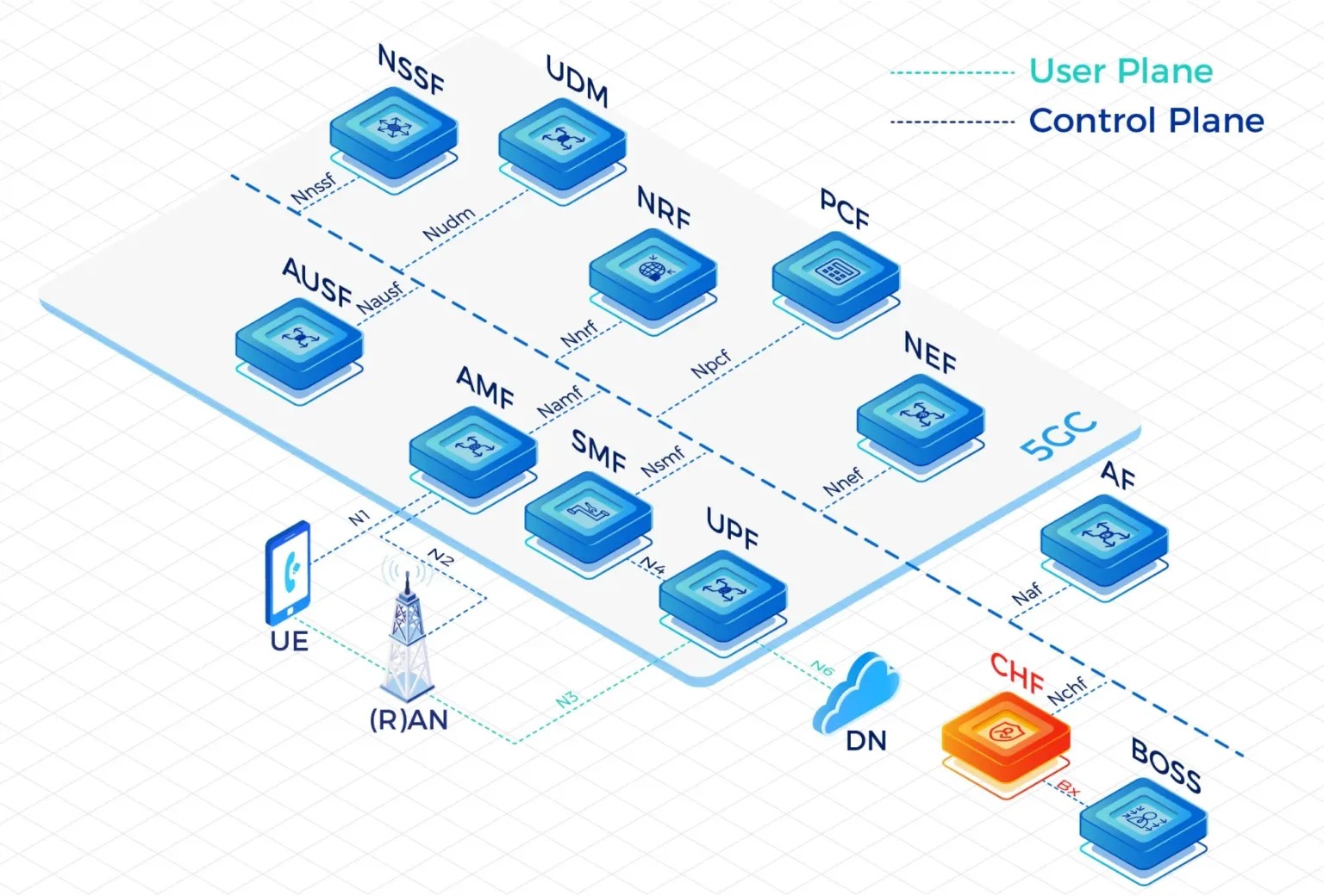
Modern Fixed Wireless Access doesn’t just beam a signal and hope for the best—it actively sculpts the radio environment. Beamforming antennas, now standard in 5G-based FWA gear, lock onto the customer premise equipment with narrow, focused beams instead of spraying energy in all directions. This reduces noise for other users and helps the link punch through clutter. If a tree branch sways or a truck parks in the path, the system can shift beam direction in milliseconds, using multiple antenna elements to maintain coherence. It’s less like a floodlight and more like a spotlight that tracks a moving target, only the target is a fixed rooftop radio, and the “movement” comes from the world moving around it.
On the distance front, FWA has learned to trade speed for reach in smarter ways. Adaptive modulation and coding schemes let the radio dial its data rate up or down based on real-time signal quality. A customer 10 kilometers away might see 200 Mbps on a clear day, then 80 Mbps during a downpour—without the link dropping. Sub-6 GHz deployments can easily cover 15 kilometers in rural areas, while mmWave used to be limited to line-of-sight and a few hundred meters. Now, with repeaters and mesh extensions, even higher frequencies are creeping past those old boundaries. The physical distance hasn’t changed, but the way the technology works around it has.
Interference management leans heavily on spectrum agility. Instead of sitting on a single crowded channel, modern CPE can hop across available frequencies within a band, or even between bands, if the primary one gets jammed. Carrier aggregation bonds non-contiguous chunks of spectrum, turning fragmented resources into a single fat pipe. And when a neighbor’s misconfigured Wi-Fi or a radar pulse threatens the link, the system reacts in under a second—often before a user notices a hiccup. This isn’t just about raw power; it’s about being a polite but persistent occupant of the airwaves, constantly negotiating for clear airtime.
The Cost-Efficiency Argument Nobody Talks About
When most people discuss cost-efficiency, they fixate on upfront price tags and generic ROI metrics. But the real savings often hide beneath the surface—in reduced cognitive load, faster decision-making, and fewer hidden fees that compound over months. A tool or service that seems pricier at first glance might actually streamline workflows so dramatically that the time reclaimed pays for itself within weeks, not years.
Consider the overlooked drain of context-switching. Cheap solutions frequently require patching together multiple disjointed tools, forcing teams to juggle interfaces and duplicate data entry. That friction eats into productivity in ways that rarely appear on a balance sheet until you calculate the cumulative hours lost. A slightly higher investment in an integrated system can wipe out those invisible drains, turning a perceived extra cost into a net gain.
Then there is the durability factor. Low-cost options often come with fragile architectures that demand more maintenance, updates, or replacements. Over a three-year horizon, what started as a bargain becomes a series of repair expenses and downtime. Smart cost-efficiency thinking weighs the entire lifecycle, not just the initial checkout price, and that is the argument most people conveniently skip.
Surprising Use Cases That Demand Fixed Wireless Access
Film crews shooting in remote locations often struggle with connectivity. Fixed wireless access lets them upload high-res footage and collaborate in real time without waiting for fiber to be trenched. Just a portable 5G router and an antenna on the production truck can turn a mountainside or a desert into a connected studio.
Scientists monitoring seismic activity or wildlife in isolated areas face a similar dilemma. They need to send data from sensors to labs, but traditional wired links are impossible. Fixed wireless links, sometimes using solar-powered relays, beam critical measurements across vast distances, enabling research that simply wouldn’t happen otherwise.
Even short-term events like food festivals or pop-up shops rely on fixed wireless to run card machines and customer Wi-Fi. Instead of trusting spotty public cellular, vendors can deploy their own access points, creating a stable, private network that handles spikes in demand. It’s a simple solution for a problem many don’t realize needs solving.
Your Roadmap to Deploying a Bulletproof FWA Network
Building a fixed wireless access network that truly withstands the pressures of daily demand starts long before the first radio is mounted. It requires a clear-eyed assessment of the environment—everything from terrain and tower availability to local spectrum regulations. Without that upfront legwork, you’re simply guessing, and guesswork leads to dead zones and frustrated subscribers. The roadmap begins with a detailed site survey and capacity modeling, ensuring each link is engineered to handle not just today’s peak load but the growth that will come in two or three years. Rushing this phase is the single biggest mistake operators make, and it almost always ends in costly retrofits.
Once the foundation is laid, the focus shifts to equipment selection and network architecture. Rather than grabbing whatever gear is on sale, think in terms of a coherent system: radios, antennas, backhaul, and core routing should all play nicely together. Redundancy is not optional—building in failover links and power backups at critical nodes can mean the difference between a minor hiccup and a day-long outage. The roadmap here also demands careful attention to interference. Clean spectrum is a myth, so you’ll need tools to monitor and dynamically adjust channels. A bulletproof network thrives on adaptability, and the hardware choices you make now should support remote management and software-defined tuning down the road.
Deployment itself is where the plan meets reality, and here the roadmap turns into a structured rollout. Rather than flipping the switch across the entire footprint, bring sites online in clusters, testing real-world throughput and user experience at each stage. This phased approach lets you catch alignment issues, local interference, or backhaul bottlenecks before they scale. Post-launch, the work is far from over: proactive monitoring, regular firmware updates, and field audits keep performance honest. When you treat the rollout as a living process rather than a one-off project, the network not only stays bulletproof—it gets smarter and more resilient with every passing month.
Extracting Maximum Value from Your FWA Infrastructure Investment
Getting the most out of FWA starts with where you put your assets. Instead of blanketing entire regions, we've seen better returns when operators pinpoint neighborhoods with weak DSL or cable, then use existing tower and fiber backbones to keep deployment lean. That kind of surgical expansion not only speeds up time-to-revenue but also sidesteps the trap of overbuilding before demand kicks in.
Once the network is live, raw speed claims don't mean much if the connection staggers under peak loads. Practical capacity management—using real-time usage data to adjust sector assignments and schedule frequency cleanups—can make a 100 MHz block behave like a much wider pipe. It's less about adding radios and more about staying ahead of interference and congestion through routine, almost obsessive, parameter tuning.
Churn eats away at margins faster than almost anything else in fixed wireless. Customers who leave rarely come back. Tighten retention by offering something beyond a dumb pipe: a simple bundled security package, parental controls that are genuinely easy to set up, or even a local streaming cache for popular content. That transforms a commodity connection into a sticky household utility people are reluctant to cancel.
FAQ
They design and deliver end-to-end fixed wireless access systems, handling everything from site surveys and equipment provision to installation and ongoing support, so you get a robust internet link without digging up streets.
Instead of relying on cables all the way to your door, FWA uses radio signals from a nearby tower to a small antenna on your building, slashing deployment time and reaching places where fiber simply can't go economically.
Speed to market is the big one—you can have high-capacity connectivity in days, not months. Add in predictable costs, symmetrical speeds, and the flexibility to scale bandwidth as you grow, and it becomes a solid alternative to wired services.
Absolutely. Modern FWA links deliver low latency and consistent throughput, which means multiple HD video calls, large file transfers, and cloud apps run smoothly, often matching or beating what you'd get from a leased line.
Look beyond the price tag. Focus on their track record for uptime, what service level agreements they really offer, whether they own the spectrum and infrastructure, and how proactively they monitor and fix issues before you notice them.
Today's equipment uses advanced signal processing and adaptive modulation to maintain a stable link even in heavy rain or snow. While extreme conditions can cause momentary dips, properly engineered networks are built to keep you connected when it matters.
Once the site survey is done and line-of-sight confirmed, a typical install takes just a few hours. No construction permits, no road closures—just a small antenna mounted and aligned, and you're online.
Conclusion
The long-standing promise of Fixed Wireless Access is finally materializing, thanks to the robust capabilities of 5G. Unlike its predecessors, 5G FWA delivers fiber-class speeds, low latency, and massive device connectivity, making it a genuine alternative to wired broadband. Modern solutions have overcome historical challenges like interference and distance through advanced technologies such as massive MIMO, beamforming, and adaptive modulation. These innovations ensure stable connections even in non-line-of-sight environments, extending coverage far beyond what traditional fiber can economically reach. Beyond the technical leap, there's an overlooked cost-efficiency angle: deploying FWA eliminates the need for costly trenching and last-mile fiber, drastically reducing both capital expenditure and time-to-market. Operators can serve subscribers in rural and underserved areas almost immediately, creating new revenue streams without the burden of lengthy infrastructure builds.
FWA is also unlocking unexpected use cases that go far beyond simple home broadband. Enterprises use it for pop-up locations, backup connectivity, and industrial IoT in sectors like manufacturing, agriculture, and logistics. When designing your network, a phased roadmap is essential: start with spectrum analysis, select optimal equipment, and plan for capacity growth. To maximize return on investment, it's critical to treat your FWA deployment not as a one-off project but as an evolving asset. Continuous monitoring, proactive maintenance, and leveraging analytics for capacity planning ensure long-term performance and profitability. By combining strategic deployment with a forward-looking operational mindset, you can build a truly bulletproof FWA network that delivers sustained value and adapts to future demands.
Contact Us
Contact Person: Shimmy
Email: [email protected]
Tel/WhatsApp: 85253392231
Website: https://www.iplook.com