
Halogenated Aromatic Intermediate Distributors: A Practical Guide to Reliable Chemical Sourcing
2026-09-27
Sourcing halogenated aromatic intermediates rarely goes as smoothly as the spec sheets suggest. A distributor can look flawless on paper yet still deliver off-spec material, missed deadlines, and silence when you need answers. This guide is built for buyers who are done gambling on unverified claims. Drawing on real supply-chain experience, we walk through the practical signals that separate reliable partners from costly liabilities. Along the way, you'll see why teams across the industry turn to DSL Chemicals when they need consistency, technical clarity, and a distributor that actually understands the chemistry behind the intermediates they ship.
Why Your Supplier’s Paper Trail Can Hide More Than It Shows
A supplier’s paper trail can look unshakeable—certificates, test reports, shipping logs, audit summaries, all neatly filed. But documents are curated. They reflect what someone chose to record, not what actually happened on the floor. A clean file often has little bearing on whether the batch in the container matches the sample that passed inspection three months ago.
Some suppliers recycle test reports with new dates, borrow certificates from a partner factory, or quietly shift production to an unlisted subcontractor. Even genuine audit reports are snapshots: the auditor leaves, and practices revert. The gap between paper and reality widens when deadlines tighten and margins shrink.
Treat the paper trail as a starting point, not proof. Cross-check certificate numbers with issuing bodies, call the lab that ran the test, and show up without notice. What the documents omit—mixing batches, untested raw materials, off-the-books rework—is usually where the real risk sits.
Purity Certificates Aren’t the Whole Story for Halogenated Aromatics
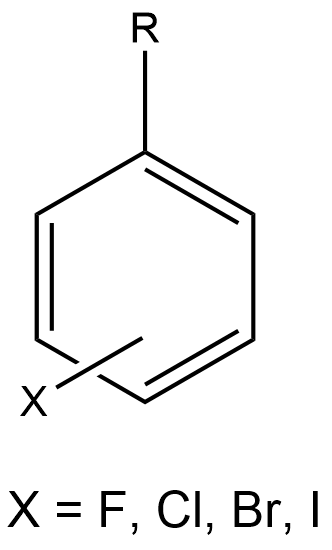
A certificate that reads 99.5% purity rarely tells you whether that remaining 0.5% is a single troublesome isomer or a cluster of closely related halogenated species. Standard GC or HPLC methods often fail to resolve positional isomers of halogenated aromatics, and over-halogenated byproducts can hide under the main peak without triggering any purity warning. The synthetic route itself usually guarantees that such relatives are present, so a high assay number can quietly overstate how clean the material really is.
Even when two suppliers list the same nominal purity, their numbers may rest on different analytical setups. One might quote area percent from GC-FID, while another uses HPLC with a UV wavelength that misses weakly absorbing halogenated impurities. These differences matter once the material enters a demanding reaction; a batch that passes its certificate can still underperform because a minor component interferes with a catalyst or changes the crystallization behavior. The certificate gives a starting point, not a guarantee of interchangeable performance.
For work where trace halogenated impurities affect color, toxicity, or catalytic turnover, treating the certificate as the final word leaves a practical blind spot. Running an extra check with a more selective column, a mass spectrometer, or quantitative NMR can reveal co-eluting compounds that the standard purity panel never flagged. It is particularly worth looking for species with a similar boiling point or polarity to the main aromatic, since those are the ones most likely to remain invisible in routine QC.
Tracing Your Intermediate from Reactor to Receiving Dock
Following an intermediate from the moment it leaves the reactor until it reaches the receiving dock isn't just about paperwork — it's about knowing exactly where your material is when a batch question comes up, a temperature excursion happens, or a downstream unit suddenly changes schedule. Most plants rely on a patchwork of shift logs, tank gauges, and transfer tickets, but that rarely gives you a clean trail for a single lot. The practical approach is to anchor traceability to the reactor discharge time and lot number, then link every movement, hold, and blend step to that anchor using operational timestamps and flow meter readings.
The biggest friction usually shows up in intermediate storage. Tanks are shared, heels get mixed, and manual entries drift. A simple fix is to create a visual movement map for each product grade that shows the expected path from reactor to dock, including any day tanks, filters, or recirculation loops. Then, during each shift, operators only need to record deviations from that map rather than trying to reconstruct the entire route from memory. This turns tracing from a forensic exercise into a live check — you can see if an intermediate is sitting longer than normal, if a transfer line wasn't flushed, or if a tank level doesn't match the expected drawdown.
For the receiving dock handoff, the key is to close the loop with a receiving log that captures the tank, the lot, the volume, and any quality hold status before unloading or packaging. If your site handles multiple grades or customer-specific intermediates, adding a simple barcode or QR code at the first transfer point can save hours of cross-referencing later. The goal isn't more forms — it's fewer blind spots. When a receiving operator can pull up the reactor batch record, the storage history, and the transfer details in one view, you've built a traceability line that actually holds up under audit and daily operations.
Batch-to-Batch Drift Is the Silent Sourcing Killer
Most sourcing teams track supplier performance in broad strokes—on-time delivery, cost per unit, defect rates. But the metric that quietly eats away at margins is batch-to-batch drift. This is the gradual, almost imperceptible shift in material properties, color consistency, viscosity, thickness, or chemical composition from one production run to the next. A vendor can pass every incoming inspection yet still deliver a slightly different batch each month. Over time, those small deltas compound into assembly line stoppages, higher scrap rates, or customer complaints that no one traces back to the original source.
Because batch-to-batch drift rarely triggers a formal rejection, it lives in the gray zone between acceptable variation and unacceptable failure. Engineers compensate with extra tolerances. Quality teams absorb the rework. Procurement may not even see the data unless they ask for it at a granular level. The danger is that drift becomes normalized—one tweak here, one adjustment there—until the process no longer matches the approved sample. By then, the cost of switching suppliers or re-qualifying materials has already compounded.
Catching drift early demands a different sourcing mindset. Instead of treating each batch as a binary pass/fail event, forward-thinking teams monitor the trend line. They request control charts from suppliers, run periodic fingerprint testing on raw materials, and build clause language that ties payment to consistency, not just compliance. Quiet problems require loud visibility. Otherwise, the silent killer in your supply chain keeps working in the background, one batch at a time.
What Distributors Really Stock vs. What They Claim
Plenty of distributors flash inventory numbers that look impressive on a screen, yet the warehouse tells a different story. A buyer searching for a specific connector may see “500 in stock” on the portal, but after placing the order, they get a call explaining a three-week backorder. This gap often comes from stale manual updates or sales teams inflating availability to lock in purchase orders before the competition. Over time, engineers learn to call first and trust the website second, building extra lead time into every project just to survive the mismatch.
The real stockroom also diverges sharply from claimed breadth. A distributor might tout lines from a dozen major manufacturers, but the shelves reveal deep inventory in only two or three high-margin lines, with everything else drop-shipped from a remote hub or sourced on demand. Worse, physical counts rarely match system records—damaged returns, unprocessed RMA units, and parts reserved for internal use all quietly erode the published figure. Savvy buyers push for a live API feed or a recent bin-level audit rather than accepting a glossy line card at face value, because the only inventory that matters is what can be picked, packed, and shipped today.
Regulatory Changes Are Redrawing Halogenated Aromatic Supply Lines
The tightening of chemical safety rules in Europe and North America is quietly dismantling long-standing procurement patterns for halogenated aromatic compounds. Brominated flame retardants and chlorinated intermediates once flowed predictably from a handful of production hubs, but fresh restrictions on persistent organic pollutants have forced buyers to rethink inventories and contract terms almost overnight.
This isn't simply a story of higher compliance costs. Some Asian manufacturers, particularly in India and China, have moved faster than their Western counterparts to reformulate around non-regulated isomers or to secure alternative halogenation routes that avoid newly listed substances. As a result, trade flows are bending toward suppliers who can demonstrate regulatory agility rather than just price competitiveness.
Downstream users in electronics, construction, and specialty chemicals now face a supplier market split between legacy producers struggling with legacy stock and a smaller group of reformulation-ready facilities. Contractual language is shifting accordingly, with more emphasis on substitution guarantees and rapid requalification timelines than on volume discounts.
FAQ
Look beyond price—request batch-specific certificates of analysis, ask about their storage and handling protocols for moisture-sensitive or light-sensitive compounds, and verify whether they can provide reference samples from past production runs. A distributor that openly shares stability data and impurity profiles is usually a safer bet than one that only quotes lead times.
Ask for a documented supply chain map that identifies the original manufacturer, any subcontractors, and the transport routes used. Reliable distributors will also have contingency plans for port delays or plant shutdowns and should be able to show you recent on-time delivery metrics without hesitation.
At minimum, you want a safety data sheet that matches the exact grade being shipped, a certificate of analysis with lot-specific test results, and any export/import permits required under applicable chemical control regimes. If the compound falls under REACH or TSCA, confirm the distributor can provide registration or exemption details before payment.
Yes—vague answers about storage temperature, reluctance to share impurity data, lack of documented cleaning procedures between different product campaigns, and frequent changes in the country of origin. Also be wary of distributors that cannot explain how they prevent cross-contamination with brominated or chlorinated analogs.
Packaging can make or break a shipment. Many of these compounds are sensitive to light, oxygen, or moisture, so amber glass or nitrogen-flushed steel drums may be necessary. A knowledgeable distributor will recommend specific liners, desiccants, or vacuum-sealed bags based on the compound's reactivity rather than offering a one-size-fits-all option.
Absolutely. A pre-shipment sample—usually 10 to 50 grams—lets your QC lab verify identity, assay, and key impurities against your own methods. If a distributor resists sending a sample or insists you rely only on their in-house COA, treat that as a warning sign.
Pricing matters, but the lowest quote often hides costs elsewhere: re-testing, rejected batches, or delayed production. Instead, compare total landed cost including freight, customs clearance, and potential rework. A slightly higher unit price from a distributor with consistent quality and shorter lead times usually saves money in the long run.
Ask for a specific case where they helped a customer troubleshoot a synthesis or adjust a specification. A capable distributor will have chemists or engineers on staff who can discuss reaction conditions, byproduct formation, or purification options—not just sales representatives reading from a catalog.
Conclusion
Sourcing halogenated aromatic intermediates often means trusting documentation that can be as opaque as it is reassuring. A supplier’s paper trail may look complete—certificates of analysis, spec sheets, audit forms—but it rarely captures what actually happens between the reactor and your receiving dock. Purity numbers, for instance, are usually generated under ideal lab conditions and say little about how the material behaves after weeks in a drum or during scale-up. Batch-to-batch drift compounds the problem: a single impressive COA doesn’t prevent the next shipment from carrying a slightly different isomer profile or residual catalyst level. Distributors sometimes list products they don’t physically stock, relying on back-to-back orders that stretch lead times and dilute accountability. In this environment, a practical sourcing strategy starts by treating every certificate as a hypothesis rather than a guarantee, and by asking for retention samples, real-time batch records, and a clear chain of custody.
Regulatory shifts are also redrawing where and how these intermediates move. Halogenated aromatic compounds face tightening controls on precursors, environmental reporting, and cross-border transfers, which means a distributor’s past reliability may not survive the next policy update. Buyers should probe whether the supplier’s inventory claims match their warehouse reality, and whether they can provide traceability from specific manufacturing campaigns rather than generic product codes. Reliability increasingly depends on the distributor’s willingness to share unglamorous details: storage conditions, repackaging history, and any reanalysis performed after import. The most dependable sources are not those with the shiniest brochures, but those who can explain why a batch drifted and what they did about it. Ultimately, a resilient supply line for halogenated aromatic intermediates is built on verification, not vendor loyalty.
Contact Us
Contact Person: Wei Zhang
Email: [email protected]
Tel/WhatsApp: 862163529955
Website: https://www.dslchem.com