
Handheld Hard Case Exporter: Durable Protection for Your Devices Worldwide
2026-11-16
A cracked screen on a warehouse floor isn't just an inconvenience—it's a halted workflow, a missed scan, and a repair bill that shouldn't exist. That's where a reliable handheld hard case exporter comes in. WEISHUO has spent years refining cases that keep handheld devices alive in places where concrete, vibration, and weather do their worst. Yet the market is full of options, and not all of them survive the first drop. Before you place another order, let's look at the details that separate genuinely durable protection from marketing fluff.
Built for the Worst Leg of the Trip
Most gear starts to feel fragile the moment the pavement ends. This one was built from the opposite direction: take the harshest stretch of road you can remember, the one with washboard ruts, loose gravel, and a crosswind that won't quit, and design for that first. The frame doesn't flex when you hit a deep pothole at speed, and the mounting points are reinforced in the exact places that usually crack after a few thousand rough miles.
The suspension was tuned not for a showroom floor but for that long, jarring climb into the mountains where every component gets punished in a different way. Bushes are thicker, seals are double-lipped, and the joints are greased for life so you're not crawling underneath with a grease gun halfway through the trip. Even the small details, like the way the wiring loom is routed and clipped, are meant to survive being bounced around when the road turns into a suggestion.
That's why it feels different on the bad days. When the GPS gives up, the temperature drops, and the nearest help is a day away, you stop worrying about whether something will rattle loose or snap. You just drive, because everything that matters was overbuilt for this exact moment.
Foam That Remembers Your Device’s Shape
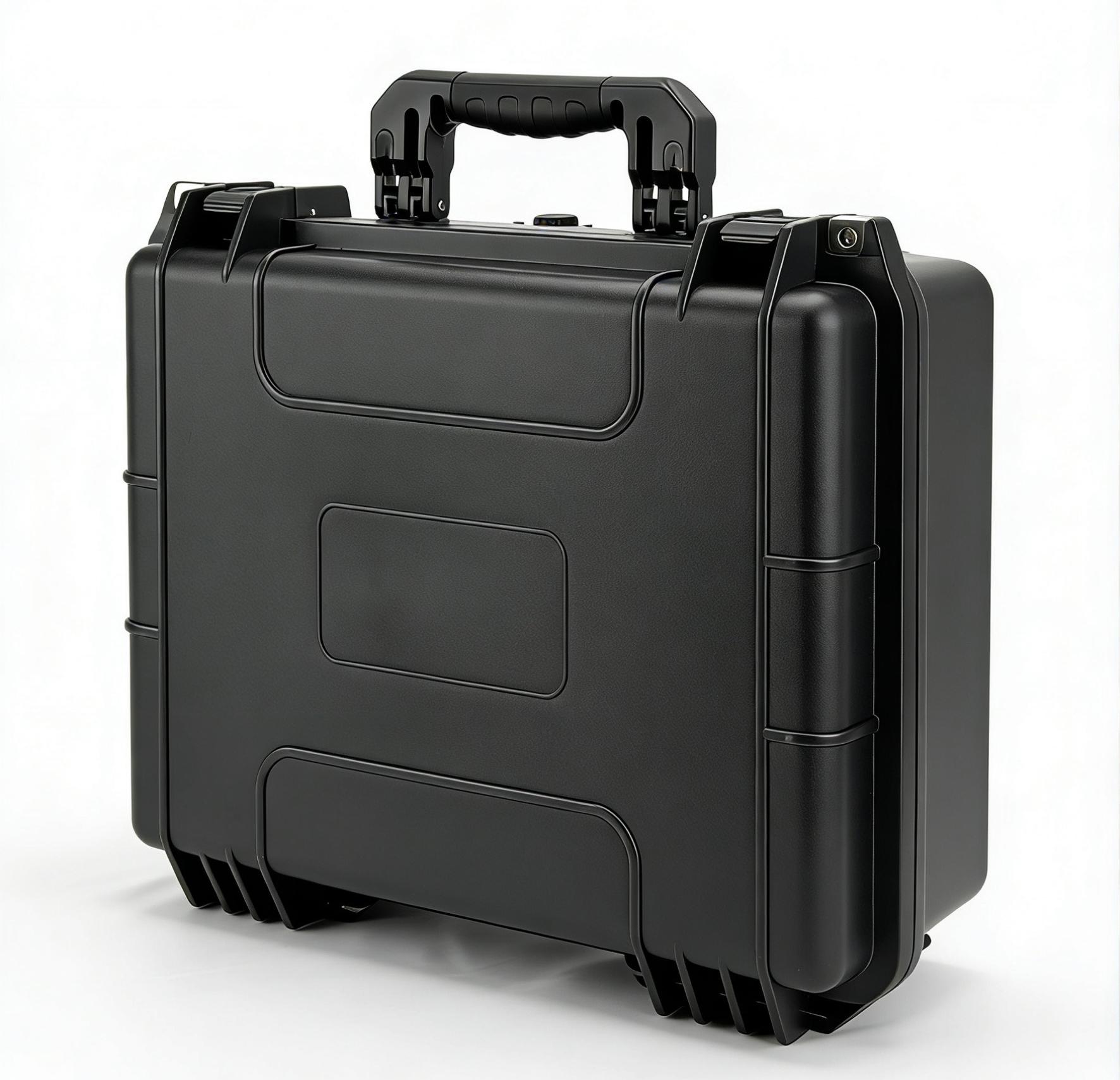
Once you press your phone, earbuds, or handheld controller into this foam, it doesn't just bounce back. It holds the exact contours of whatever was placed inside, creating a custom nest that fits your gear like a worn-in shoe. The material works slowly, taking a few seconds to settle around each edge and curve, then stays locked until you reshape it again.
That means no more cutting foam inserts, no guessing which cutout fits which gadget, and no rattling around in a too-generic case. Drop a camera body in one week, a portable game system the next, and the foam re-learns the new silhouette without losing its grip. It's the kind of quiet convenience you don't think about until you realize you've stopped worrying about scratches and bumps altogether.
The foam itself feels dense but not hard, with enough give to absorb a drop while still holding everything steady. Over months of use, it keeps returning to whatever shape you last impressed, so the case you pack today fits just as snugly as the one you packed last month.
Drop-Tested, Dust-Sealed, Rain-Ready
We didn't just set this device on a counter and call it tough. The chassis gets bounced off concrete from waist height, corner-first, over and over until the dents become part of its character. The display glass isn't an afterthought either—it takes repeated drops onto gravel and metal grates without spiderwebbing into uselessness.
Every seam, port, and speaker grille is gasketed or mesh-filtered to keep fine desert silt and workshop dust from creeping inside. We ran it for hours in a dust chamber with talc-fine particles, then opened it up to check the internals. Nothing but clean air inside.
Rain isn't a reason to stop. From a sudden downpour at a job site to getting caught out on a trail, the seals hold up under driving water from multiple angles. The touchscreen works with wet fingers or rain on the glass, so you don't need to dry anything off before you use it.
Ships Worldwide Without the Customs Guesswork
International shipping often feels like a puzzle of duty calculations, HS codes, and ever-changing import rules. We take that burden off your plate. Every order is checked against the destination country's current regulations before it leaves our facility, so you never have to guess whether a product will clear customs.
Our system automatically classifies each item, calculates landed costs upfront, and flags restricted goods early. That means your customers see the true total at checkout—no surprise fees on delivery, fewer abandoned carts, and far fewer packages stuck at the border.
Behind the scenes, a dedicated customs team monitors regulatory shifts daily and adjusts your documentation in real time. So whether you ship to Berlin, Bangkok, or Buenos Aires, the paperwork is already right. You sell, we handle the crossing.
Prototype to Pallet: Scaling Without the Sweat
Moving from a rough prototype to full-scale production often feels like a leap across a canyon. The trick is to design your process so that scaling happens quietly in the background. Instead of re-engineering every step when demand spikes, build small modular pieces from day one. When the first pallet leaves the dock, it should feel like a natural next step, not a panic-driven scramble.
The sweat usually comes from trying to automate too late. Hand-assembling ten units is fine, but hand-assembling ten thousand is a slow bleed. That’s why early decisions about jigs, standard parts, and repeatable workflows matter more than perfecting the prototype’s look. Focus on boring consistency: same screw length, same box size, same tape width. Those little choices compound into a line that runs without you hovering over it.
Another quiet win is treating your suppliers as part of the scaling team. Share your forecast early, even if it’s rough. Ask what they’d need to double your order without changing their own setup. Often the answer is a simple packaging tweak or a different lead-time agreement. When the prototype becomes a pallet, the goal isn’t just more output—it’s the same output with less mental overhead per unit.
Cases That Keep Field Teams Moving
Field teams often lose hours to scheduling gaps, unclear task details, and equipment that refuses to cooperate. The most effective cases we've seen come from supervisors who treat every assignment as a living document rather than a static checklist. For instance, a utility crew in the Midwest cut response times by a third simply by letting technicians attach voice notes to each completed step. Those recordings became the real handoff notes, catching details that typed logs always missed.
Another pattern emerges when teams stop hoarding information. A construction services company gave field leads a shared board where they could drag job photos, mark blocked routes, and update material shortages in real time. The unexpected win was fewer phone calls back to the office — leads solved problems locally because they could see what other crews had already tried. That kind of visibility keeps trucks moving instead of idling at dispatch.
What stands out in successful cases is not fancy software but a shift in how work gets described. Instead of generic statuses like "in progress," teams use plain language: "waiting on concrete pump, ETA 20 min." The specificity removes guesswork, and the next crew arrives ready to act. Field teams move fastest when the next step is obvious to anyone glancing at the screen.
FAQ
Our cases are built around real field use. Instead of a one-size-fits-all shell, we focus on shock dispersion, gasketed seals, and interiors that can be milled to hold each device without shifting. That means a handheld radio or meter arrives exactly as it left, no matter how rough the handling gets.
Yes. We ship to over 40 countries regularly. Our export documentation, customs labeling, and packaging have been refined through years of cross-border work, so the case that reaches your door is identical to the one that left our floor, with no surprise hold-ups.
Absolutely. We take your device's dimensions or even a 3D model and cut high-density foam so it sits snugly. You can choose lid foam, base foam, or full custom layouts, and we also offer options for accessory pockets, battery compartments, and cable routing.
We test for vibration, drop impact, and moisture ingress before any case leaves. The shells use a reinforced polymer blend, and the pressure relief valve prevents vacuum lock at altitude. Combined with steel-reinforced padlock points and a tight tongue-and-groove seal, your gear stays dry and intact even if the pallet gets tossed around.
Most of our customers are in field service, utilities, geospatial surveying, medical device transport, and defense contracting. They share a need for something that can be opened and closed daily, thrown into a truck, and still protect sensitive handhelds after years of abuse.
Yes, we offer single-unit samples for evaluation. You can test fitment, latch durability, and foam density before committing. For larger orders, we often produce a pre-production sample with the exact custom foam and color so there are no surprises.
We use an impact-modified copolymer that stays tough in cold temperatures and doesn't become brittle. The latches and hinges are made from glass-filled nylon with a stainless steel pin, and the O-ring is silicone for long-term flexibility. This combination resists oils, solvents, and UV exposure better than many cheaper ABS-only cases.
Conclusion
Moving sensitive handheld gear across borders often means gambling with rough cargo holds, sudden downpours, and customs delays. This exporter builds cases around a simple idea: your device should arrive exactly as it left your bench. The shells get thrown onto concrete, shaken in transit crates, and sprayed with rain before they earn a batch number. Inside, custom-cut foam keeps screens and buttons from shifting, so the case itself becomes a second skin rather than just a box. No more re-cutting foam on site or wrapping gear in bubble wrap at the last minute. That confidence comes from testing every batch, not just a showroom sample.
The bigger headache is scale. A single prototype case is easy; keeping a field deployment of three hundred units on schedule isn't. That's where the exporter's documentation and tariff coding remove the usual border friction, letting shipments clear without back-and-forth emails asking for the same form twice. From the first sample to a full pallet, the process stays boringly predictable—which is exactly what field teams need. Whether your crew is mapping a remote grid, servicing towers in a monsoon, or running diagnostics in a desert, the case holds up and the paperwork doesn't stall the job.
Contact Us
Contact Person: Logious
Email: [email protected]
Tel/WhatsApp: +86 15867373883
Website: https://www.vso-case.com