
High Quality Concrete Cutter Makers You Can Trust for Precision Cutting
2026-09-17
Precision cutting isn't just about sharp blades—it's about trusting the hands behind the machine. When deadlines tighten and tolerances drop to millimeters, you need concrete cutter makers with a track record that speaks louder than spec sheets. Among the names quietly earning that trust is Dynamic, a brand that pairs rugged engineering with the kind of consistency that turns first-time buyers into long-term partners. In this guide, we'll cut through the noise and highlight the builders who actually deliver clean edges, minimal downtime, and results you can measure—not just promise.
The Factory Habits That Keep Concrete Cutters on the Straight and Narrow
Before any saw touches the floor, the best crews run through a ten-minute pre-cut ritual. Blades get checked for flatness and segment wear, water lines are blown clear, and the guide rail is wiped down with a rag. If the rail has even a thin crust of dried slurry, the saw will wander off the mark. That little routine feels like overkill until you watch someone skip it and end up with a wavy expansion joint.
During the cut, the rule is simple: let the blade set the pace. Forcing the saw forward to save a few seconds almost always ends with the line drifting, especially on aggregate or rebar. Good operators keep their eyes on the chalk mark, not the spray, and if the saw starts to pull, they ease off and back up half an inch instead of muscling the handle sideways. A steady two-handed grip and a relaxed stance do more for accuracy than any laser guide bolted to the frame.
After the last cut, the habits don't stop. Slurry gets washed off the tracks, bolts are given a quick torque check, and worn blades are tagged for sharpening. If the saw is stored with a bent guide or a half-clogged water jet, the next shift inherits the problem. Over time these small end-of-day tasks become automatic, and that's when straight, clean cuts stop being luck and start being the default.
Blade Runout and the Art of Building Cutters That Don't Wander
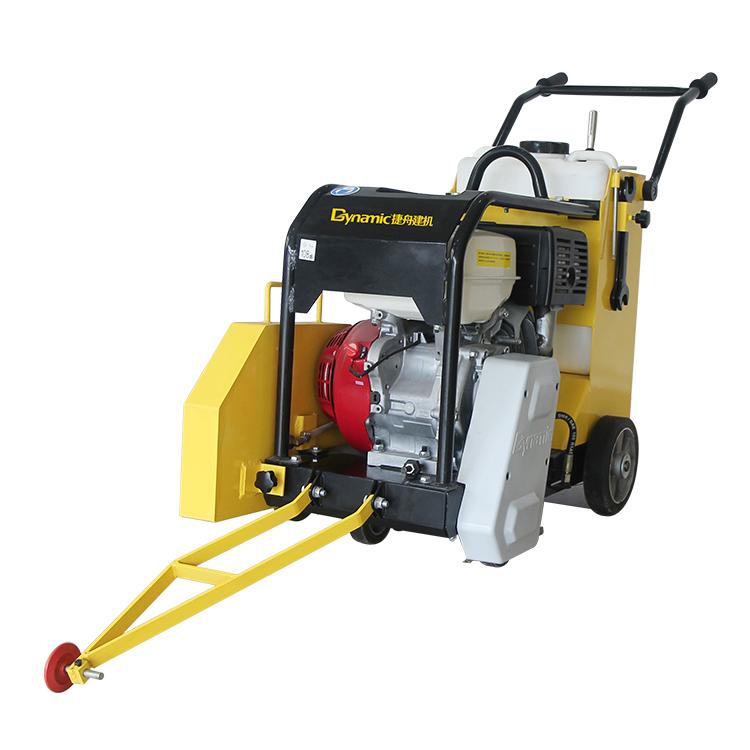
A cutter that wanders rarely announces itself until the kerf starts drifting or the finish turns ugly. The root cause is often blade runout—the radial and axial deviation of the cutting edge from its true rotation axis. Even a few thousandths of an inch at the arbor translates into a tooth biting deeper on one side of the spin, which forces the tool sideways and leaves a washboard surface. Runout isn't just a manufacturing flaw; it's a mechanical amplifier for every imbalance and misalignment in the system.
Building cutters that refuse to wander starts with how the blank is held and ground. The bore and the mounting face get finished first, because every subsequent grind references them. If the bore isn't dead concentric with the outside diameter, no amount of careful tooth shaping will rescue the tool. After heat treating, stress relief matters as much as hardness—residual stress can quietly warp a blade the first time it reaches cutting temperature. The best shops grind the teeth in a single setup or use the bore as the only datum, then check each tooth's radial position with a dial indicator rather than trusting the machine's readout.
Static geometry only gets you so far. At speed, centrifugal force and uneven mass distribution turn a perfectly concentric cutter into a wobbling one. Dynamic balancing isn't just about adding weights; it's about mapping where the heavy spots are and removing material from non-critical areas. Some makers also do a test cut in a controlled fixture and measure sideways force with a load cell. The cutters that pass aren't just straight—they're predictable, and that predictability is what separates a properly built tool from one that merely looks sharp.
When a Clean Edge Is Non-Negotiable, These Makers Deliver
There's a certain kind of maker who understands that a clean edge isn't just a detail—it's the whole point. Whether it's a razor-thin bezel on a display, a seamless joint in a piece of furniture, or a perfectly flush mount in architectural hardware, these craftspeople treat the boundary line as a promise. No over-polished flash, no forgiving chamfer to hide behind. Just a crisp, deliberate termination that says the person on the other end actually cared.
What separates them from the crowd is an almost stubborn refusal to compromise on tolerance. A half-millimeter gap that most would call acceptable gets rejected at the bench. The edge gets checked under magnification, with a fingertip, against a straightedge in different light. This isn't about chasing perfection for its own sake—it's about knowing that a clean edge holds shadows differently, reveals fingerprints less, and ages with a kind of quiet honesty that rounded-over corners never manage.
The result isn't always the loudest piece in the room. But if you run a thumb along the seam, or catch the way a surface ends against another material, you'll feel it. These makers don't need to explain why the edge matters. They just deliver it—sharp, unapologetic, and exactly where it's supposed to be.
Hard Concrete, Tight Tolerances, and the Toughest Testing Grounds
Pouring concrete that must hold a tolerance within a few thousandths of an inch is not a job for the faint of heart. Every batch gets tested for slump, air content, and temperature before a single truck churns toward the pour site. The real challenge arrives when the forms are stripped and the laser scanners come out — any surface deviation beyond spec means tearing it out and starting over, no questions asked.
The testing grounds themselves are where reputation gets earned. We cure cylinders under jobsite conditions, not in a lab, because the numbers that matter are the ones pulled from the same weather, same wind, and same brutal sun the slab will face for decades. Freeze-thaw cycles, chloride exposure, heavy rolling loads — the concrete doesn't care about your schedule. It only respects what was done right when nobody was watching.
That's why every pour here gets documented with time-stamped photos, mix tickets, and independent third-party verification. Tight tolerances are not a selling point; they're the bare minimum for structures that cannot flex, cannot crack, and cannot call for a do-over once the cranes leave the site.
What Trusted Shops Do Differently Before the First Cut Is Made
In a trusted shop, the moments before the first cut are rarely rushed. The craftsperson will often re-measure a piece twice, ask about how it will be used, and even have you hold it in place just to be sure. This isn't hesitation—it's a deliberate pause that catches small errors before they become permanent ones.
Rather than promising a flawless result, these shops tend to talk openly about what could go wrong. A tailor might point out how a certain fabric frays easily, or a carpenter might mention a knot near the planned cut. Sometimes they'll make a small test incision on a hidden edge, letting you see the blade's behavior before committing to the full line.
They also settle the practical details early: exact cost, timeline, and what happens if adjustments are needed later. That way, the first cut doesn't feel like a gamble. It becomes the logical next step after both sides have looked at the same measurements, the same risks, and the same plan—so there are no surprises once the blade finally comes down.
Partnering with Concrete Cutter Makers Who Sweat the Small Stuff
Concrete cutting is a field where precision isn't just a preference—it's the bare minimum. But the best partners in this trade go beyond the obvious specs of blade diameter or horsepower. They obsess over the tiny details that most people overlook: the way a diamond segment bonds to the steel core, the cooling channels that prevent micro-fractures during a long cut, or the ergonomic placement of a depth gauge. When a manufacturer sweats these small things, it shows up on the jobsite as fewer stalls, cleaner edges, and a saw that doesn't fight you after hour three.
What sets those makers apart is their willingness to listen to the guy holding the trigger. A contractor who spends eight hours a day cutting rebar-laced concrete will notice if a blade wanders by half a millimeter or if the water feed clogs in dusty conditions. Small-stuff partners iterate based on that feedback—adjusting segment geometry, tweaking weld points, or redesigning a guard latch so it doesn't jam with debris. They don't chase the next big marketing splash; they just quietly ship a better product every quarter, and the crews who rely on them feel the difference in their hands and their schedules.
Choosing a concrete cutter maker that sweats the small stuff means you're not just buying a tool. You're buying reduced downtime from a dust seal that actually seals, or fewer callbacks from a cut that stays true on the last inch. These are the partnerships that last years, not jobs, because both sides understand that the real craftsmanship lives in the details nobody claps for.
FAQ
The biggest difference is rigidity. High-end machines use machined castings and tighter bearing tolerances, so the blade doesn't wander even when you push through aggregate. Cheap cutters flex under load, which shows up as chipped edges and uneven depth.
Hilti, Husqvarna, and Makita have strong track records for precision. Their pro-grade models include features like laser guides, adjustable depth stops, and blade stabilization systems that keep cuts straight after hundreds of feet.
For indoor work, an electric cutter with a vacuum port or wet-cutting capability is easier to manage than a gas-powered unit. Electric motors also offer more consistent RPMs, which helps maintain a clean cut without exhaust or vibration interfering.
It depends on the aggregate and how often you dress the blade. A diamond blade that's glazed over will drift and burn instead of cutting. Check the exposed diamond segments after every major job; if the edge looks smooth or rounded, replace or redressing it before precision work.
Wet cutting usually gives you more precision because it cools the blade and reduces dust that can obscure your cut line. However, many dry-cut models with good dust extraction can match it if you slow down and let the blade do the work.
A blade guard with a sturdy hinge, an emergency stop switch, and a reliable depth lock are non-negotiable. Cheaper guards can wobble and actually pull the blade off-line. Look for a cutter where the guard doesn't flex when you press sideways.
Walk-behind cutters with a guide wheel or track system will hold a straight line much longer than a handheld unit. If you're doing long expansion joints or slab cuts, the weight and stability of a walk-behind machine are worth the extra setup time.
Vibration is often overlooked. Anti-vibration handles and dampened engine mounts reduce fatigue, but they also keep the blade from micro-oscillating as you cut. That oscillation is what causes hairline deviations in otherwise straight cuts.
Conclusion
Precision cutting doesn't start on the jobsite. It's baked into the way a factory treats tolerances long before a blade ever touches concrete. The shops worth trusting build their cutters around a simple obsession: keeping the blade path true. That means checking runout at the spindle nose, balancing rotating assemblies to fractions of a gram, and machining guide surfaces so the saw doesn't fight the operator. When a clean edge is the whole point—when a misaligned cut means rework, downtime, or a failed inspection—these manufacturers don't leave that to chance. They run their machines on hard, cured slabs in testing bays that mimic the worst pours you'll ever face, measuring deflection and edge quality under load instead of assuming the CAD model is enough.
What separates them further is what happens before the first production unit ships. Trusted shops do dry runs with the exact blade types customers will use, checking for heat buildup, tracking drift, and bearing wear at hour intervals that go well past a typical demo. They sweat the small stuff: fastener torque sequences, cable routing, vibration damping pads, even the grip texture on handles. That's the kind of partner you want when concrete won't cooperate. The result is a cutter that holds its line through the last inch of a deep cut, not just the first ten feet. For anyone who has had to grind out a wandering kerf or accept a jagged edge on an exposed wall, the difference isn't marketing. It's measurable, and it's the reason certain makers keep getting called back for the tough work.
Contact Us
Contact Person: Annie
Email: [email protected]
Tel/WhatsApp: 8613391442963
Website: https://www.dynamic-eq.com