
High Quality Concrete Cutter Manufacturer for Precision Cutting Projects
2026-11-01
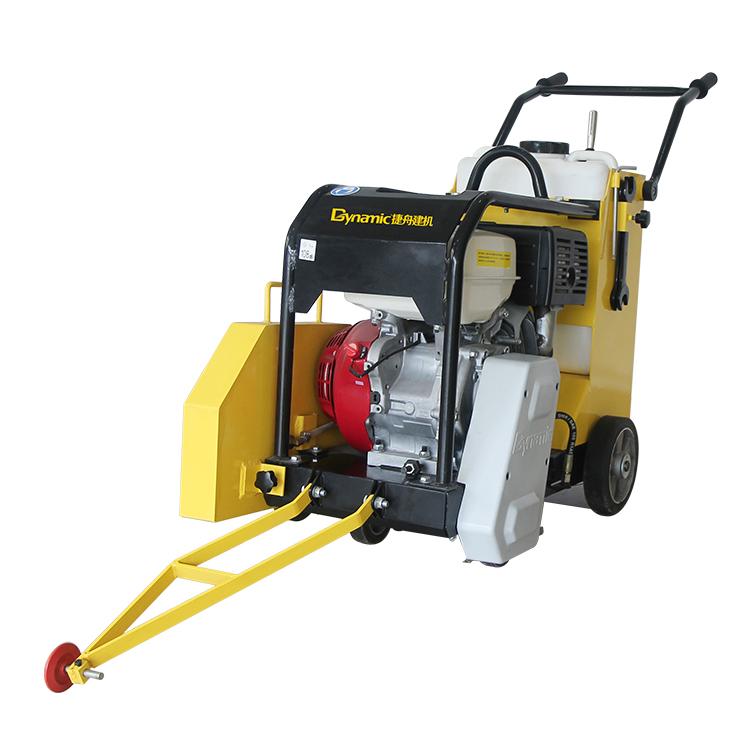
Precision isn't a luxury in concrete cutting—it's the baseline. Yet too many contractors settle for tools that wander, wear, or compromise the finish. If clean lines and on-time completion matter to your projects, you need equipment built with intent. Dynamic produces high-quality concrete cutters designed for exactly that: repeatable, accurate cuts on the toughest jobsites. In this post, we'll look at what separates a true precision machine from the rest—and why the right manufacturer changes everything.
Cutting Through Rebar Without Sacrificing Precision
Rebar has a habit of rolling just as the cut starts, which throws off accuracy before the blade even bites. Securing the bar in a V-block or a dedicated rebar cutter cradle removes that variable, letting you focus on blade alignment instead of fighting the material. A quick check with a square against the cut line is worth the extra few seconds on repetitive jobs.
Blade choice matters more than cutting speed here. A fine-tooth carbide-tipped blade made for ferrous metal keeps the kerf narrow and the edge cool, preventing the heat buildup that causes rebar ends to mushroom or drift. If you are using a chop saw, let the blade reach full RPM before contact and keep the feed steady rather than forcing the cut through the final ridges.
For tight-tolerance work, a cold cut saw or a hydraulic shear leaves a cleaner shoulder than an abrasive disc. Abrasive wheels remove material fast but tend to leave a slight bevel, which can compromise fit-up in structural assemblies. Marking the bar with a thin scribe line instead of a wide marker also keeps the actual cut point visible, so the finished length stays true to layout.
Blade Composition Drives Clean Cuts More Than RPM
Many operators assume a faster spinning blade automatically yields smoother edges, but the metallurgy behind the cutting edge tells a different story. Carbide-tipped and high-speed steel blends hold their geometry under heat, preventing the micro-tearing that high RPMs can amplify. A blade made from lower-grade alloy, even at maximum rotations, will deflect and burn the workpiece long before it delivers a clean separation.
The real difference appears when you compare grain structure and hardness. Premium blades use fine-grain carbide or cobalt-infused steel, which resist edge rounding and keep each tooth sharp through repeated passes. Spindle speed merely controls how often the teeth strike the material; if those teeth are dull or poorly bonded, extra speed only creates friction, scorch marks, and ragged fibers.
So before reaching for the speed dial, check what the blade is actually made of. A well-composed blade at moderate RPM will routinely outperform a cheap steel disc spinning twice as fast, because clean cuts come from edge stability and chip clearance, not raw rotational force.
Wet or Dry Cutting Depends on Site Conditions
On most job sites, the choice between wet and dry cutting isn't about preference—it's dictated by what the space allows. Tight indoor renovations with finished flooring or sensitive electrical equipment often rule out water entirely, pushing crews toward dry blades and local exhaust. Outdoor demolition or green concrete work, by contrast, tends to favor wet cutting because the slurry keeps dust down and extends blade life without requiring vacuum attachments.
Water availability and drainage also flip the decision quickly. A parking garage with no hose bib or a high-rise interior with strict runoff rules can make wet cutting impractical, even when silica dust is a real concern. In those cases, dry cutting with a proper shroud and HEPA vacuum is the only workable path. Conversely, a slab pour near an open trench drain invites wet methods that are faster and cooler on the blade.
Experienced operators read the site before unpacking the saw: Is there power for a vacuum? Will slurry reach a storm drain or occupied space below? What does the GC's dust plan allow? Answering those questions first avoids a morning of rework and keeps the job moving without fighting the conditions.
Built to Stay Cool When the Job Runs Hot
When you're pushing through a long shift and the equipment around you is radiating heat, the last thing you need is gear that traps that warmth against your skin. This design channels air through carefully placed vent zones, pulling cooler outside air in while pushing hot, stale air out. The result is a steady circulation that keeps you from overheating even when the ambient temperature climbs.
The materials themselves play an active role. A moisture-wicking liner pulls sweat away from your body before it can turn into a sticky layer, while the outer shell reflects a portion of the sun's infrared heat instead of absorbing it. Together, these layers create a buffer that keeps your skin temperature lower and more stable, so you can stay focused on the task instead of the heat.
What a Clean Edge Reveals About Manufacturing Tolerances
A clean edge on a machined or cut part is more than an aesthetic detail—it is a direct visual record of how tightly the manufacturing process held its tolerances. When a cutting tool passes through material with minimal deviation, the resulting edge stays crisp and uniform, with no obvious burrs, tears, or waviness. Any surface irregularity along that edge hints at variation in feed rate, tool wear, or thermal drift, all of which push the final dimension outside the intended range. Inspecting an edge under magnification often reveals tolerance drift long before a coordinate measuring machine flags a part as out of spec.
Tight tolerances demand control over every variable that touches the workpiece, and the edge condition reflects that discipline. A sharp, burr-free edge typically means the toolpath, spindle speed, and material removal rate were balanced so the cutting forces stayed predictable. If the tolerance window is loose, manufacturers may accept a slight rollover or micro-chipping because it does not affect function. But when an edge must seat against a sealing surface or guide a precision bearing, even a five-micron inconsistency changes how the part performs. The edge becomes a physical signature of the process capability.
Different industries set different expectations for what a clean edge means. In medical device manufacturing, a razor-sharp edge with no visible defects is non-negotiable because patient safety depends on predictable geometry. In heavy equipment, a slightly rounded edge might be perfectly acceptable if the mating parts have generous clearance. Yet in both cases, the edge quality still communicates whether the tolerance band was respected. A skilled machinist reading an edge can often estimate the process capability index just by running a fingernail along the surface—no fancy measurement system required. That tactile checkpoint is a reminder that manufacturing tolerances are not abstract numbers but physical realities you can see and feel.
Finishing Jobs Faster With Fewer Correction Passes
Most slowdowns don't come from the actual work—they come from cycling through the same sections again and again. Each correction pass adds overhead: reopening files, re-reading context, waiting for approvals. The fastest way to finish is to shrink the number of passes, not to speed up each individual edit.
Start by locking down what "done" actually means before anyone starts typing. Share a short example or a filled-out template that shows the expected depth, tone, and formatting. A five-minute alignment call at the beginning can eliminate two full rounds of revisions later, because reviewers won't be guessing what you meant.
Move quality checks earlier instead of fixing everything at the end. Use a simple checklist for the top recurring issues—stale references, inconsistent terminology, missing data points—and run through it once before handing off. If you can automate basic formatting checks, do it, but keep your own attention on the substance. Fewer passes usually means fewer chances for new errors to slip in.
FAQ
We build every cutter around a rigid steel frame and a spindle assembly that holds blade runout under 0.002 inches. Paired with laser-cut guide rails, operators can follow layout lines without wandering, even on long passes through cured slabs.
Yes. Besides standard models with 14- to 36-inch blades, we offer modified arbor sizes, hydraulic or electric drive packages, and extended depth kits for bridge deck repairs or thick foundation removal. Each custom order includes a pre-delivery alignment report.
Every machine goes through a loaded run-in on our test pad, cutting actual concrete samples for at least two hours. We record vibration, bearing temperature, and blade speed to confirm they stay within the tolerances we publish in the spec sheet.
We keep a direct line to our engineering team, not just a call center. Most spare parts ship within 48 hours from regional warehouses, and we offer on-site commissioning for complex setups. Annual maintenance kits include genuine bearings, belts, and anti-wear guides.
Road and bridge contractors, demolition crews working near sensitive utilities, and decorative concrete specialists use our cutters. The narrow kerf and low vibration are particularly valuable for retrofits in occupied buildings or for creating control joints in polished floors.
We isolate the handle assembly with dual-stage dampers and position the center of gravity low, so the saw tracks straight without constant correction. Controls are laid out for gloved hands, and the depth lock uses a cam mechanism that doesn't drift during repeated passes.
Yes. Each machine ships with a QR-coded manual that links to short video walkthroughs for blade changes, belt tensioning, and daily grease points. We also run live webinars for fleets with more than five units, covering troubleshooting that goes beyond the basic checklist.
The frame is welded from laser-cut A36 plate with stress-relieved joints, and the blade guard is cast aluminum with reinforced ribs. The spindle rides on double-row tapered roller bearings rated for 8,000 hours at maximum RPM, which keeps deflection minimal under heavy downfeed.
Conclusion
When a concrete cutter is expected to slice through embedded rebar without wandering off the marked line, the difference rarely comes down to raw motor speed. It comes from how deliberately the blade was composed and how tightly the machine's frame and spindle were built. High-quality manufacturers treat diamond segment distribution, bond hardness, and core tensioning as variables that must be tuned to the aggregate and steel density on site. A blade that sheds worn diamonds at the right rate will keep cutting cleanly through both concrete and steel, while a cheaper blade may glaze or fracture. The same principle applies to manufacturing tolerances: if the arbor, flange, and guard are not machined to tight limits, even the best blade will wobble. You see the result in the edge itself—sharp, square, and free of spalling. That clean reveal is not accidental; it is a direct reflection of tolerances held during production.
Site conditions determine whether wet or dry cutting makes sense, and a well-engineered cutter should adapt without forcing the operator to fight the tool. Wet cutting suppresses dust and cools the rim, but it is not always practical indoors or near electrical work. Dry cutting demands a blade and airflow design that can manage heat without warping the steel core. That is why high-quality machines are built to stay cool when the job runs hot—through vented guards, better airflow, and heat-resistant components. The payoff shows up in how few correction passes are needed after the primary cut. If the blade holds its line, stays sharp, and does not wander when it hits rebar, the operator spends less time grinding and patching. Faster completion is not about pushing harder; it is about the machine doing exactly what it was built to do, pass after pass.
Contact Us
Contact Person: Annie
Email: [email protected]
Tel/WhatsApp: 8613391442963
Website: https://www.dynamic-eq.com