
High Quality TIJ Inkjet Printers: Unlocking Precision and Efficiency in Industrial Printing
2026-05-13
In the fast-paced world of industrial printing, achieving both precision and efficiency can feel like chasing an impossible dream. Yet, the latest advancements in thermal inkjet (TIJ) technology are changing that narrative. Imagine crisp, high-resolution codes on any surface, delivered at production line speeds without constant maintenance headaches. That’s the reality Danmajet brings to the table—a brand quietly revolutionizing how manufacturers mark products. But what makes these printers stand out, and why are industry leaders making the switch? Let’s peel back the layers on what truly sets high-quality TIJ inkjet printers apart.
Inside the Technology That Powers TIJ Accuracy
Thermal inkjet (TIJ) accuracy starts with a precisely controlled heating element. Each nozzle contains a resistor that rapidly heats a thin layer of ink, creating a vapor bubble that expands and forces a tiny droplet out. The key to consistency is timing—the bubble must form and collapse in microseconds, and even slight variations in voltage or ink viscosity can skew results. Advanced TIJ systems now use feedback circuits to monitor temperature and adjust pulse width on the fly, ensuring every drop lands exactly where it’s supposed to.
Beyond the nozzle, ink composition plays a silent but critical role. Fluids engineered for TIJ have to balance surface tension, viscosity, and drying time. If the ink is too thick, bubbles won’t form cleanly; too thin, and satellites—stray micro-droplets—degrade edge sharpness. Modern formulations incorporate co-solvents and humectants that keep nozzles clog-free during idle periods, a common problem in high-speed coding lines. This careful chemistry, paired with microfabrication techniques that create nozzles with sub-micron tolerances, is what makes TIJ reliable for even the tiniest 2D barcodes.
In practice, TIJ accuracy reveals itself where it matters most: on the production floor. Printers churning out intricate QR codes or fine text at hundreds of feet per minute rely on the technology’s inherent simplicity—no moving parts, just heat and ink. Because each nozzle is independently controlled, the system can compensate for weak spots by slightly overprinting adjacent drops, a trick impossible with continuous inkjet. The result is crisp, scannable marks on everything from plastic cards to curved metal pipes, achieved without constant recalibration.
Speeding Up Production Lines With Advanced Inkjet Systems
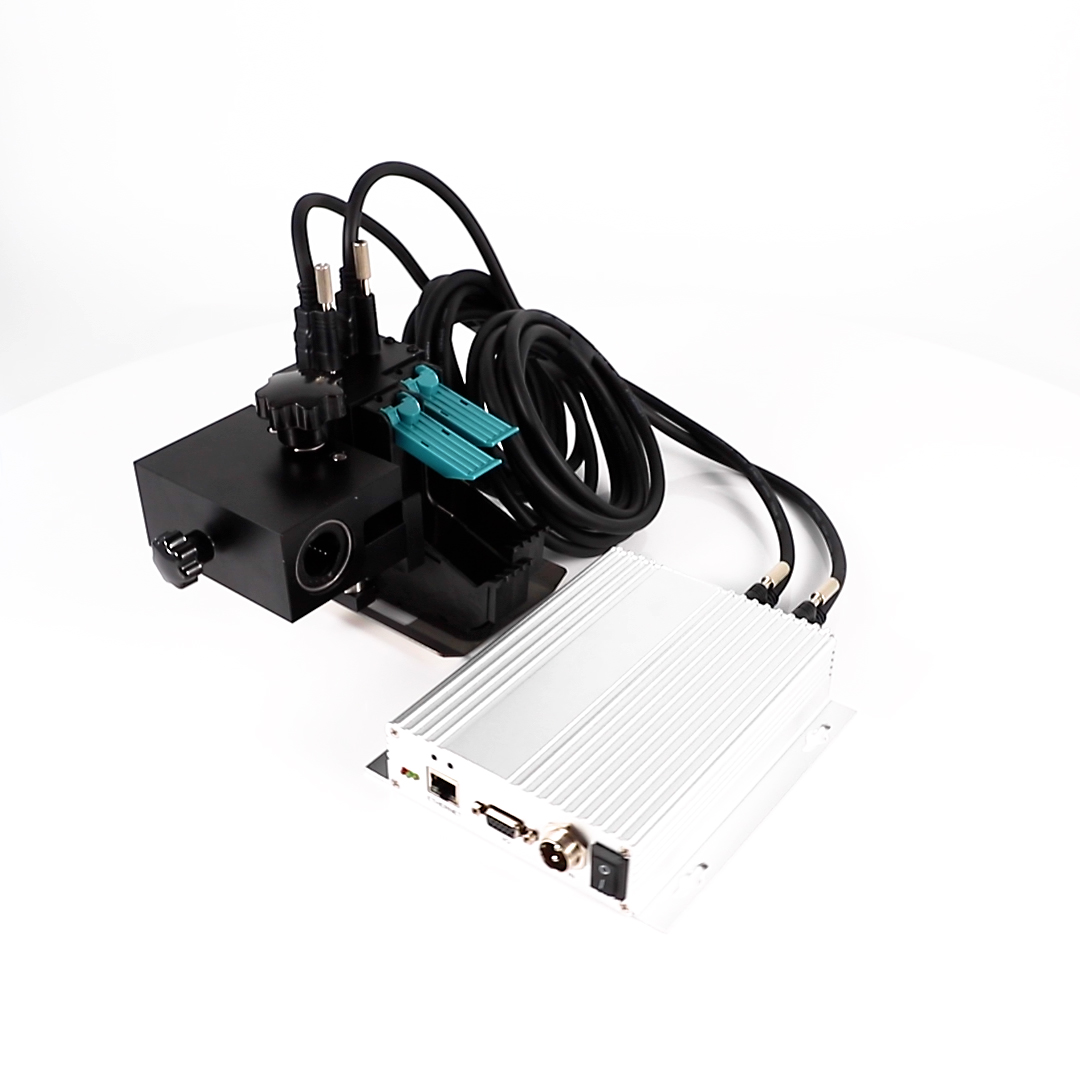
Modern manufacturing environments face constant pressure to increase throughput without sacrificing quality. Advanced inkjet systems have emerged as a key solution, capable of printing at unprecedented speeds while maintaining crisp, clear codes on products moving along high-speed conveyors. These systems leverage precision nozzle technology and intelligent waveform control to achieve rapid drying and adhesion, allowing production lines to accelerate beyond previous limitations.
Beyond raw print speed, the real gains come from seamless integration and smart automation. Today's inkjet printers can automatically adjust print parameters based on line speed variations, substrate changes, or environmental conditions without operator intervention. Self-diagnostic routines and predictive maintenance alerts minimize unexpected downtime, ensuring that the printing station never becomes the bottleneck. This level of adaptability means that switching between product SKUs or packaging types can happen in moments rather than hours, keeping the line flowing consistently.
The impact on overall equipment effectiveness is measurable. By eliminating the micro-stoppages and quality rejections that often plague older printing technologies, advanced inkjet setups enable packaging lines to operate closer to their theoretical maximum throughput. Companies report not just faster line speeds, but also reduced consumable waste and lower energy consumption per printed unit—proving that velocity and efficiency can advance hand in hand.
Choosing Inks and Substrates That Deliver Lasting Impressions
The real work of a lasting print starts long before the press run, in the quiet pairing of ink and substrate. A vibrant graphic on lightweight paper may look luminous for a month before the ink sinks too deep, leaving behind a ghost of the original message. On dense, coated sheets, that same ink can sit proudly on the surface, holding its edge for years. The trick is matching the fluid character of the ink to the absorbency and texture of the material—porous stocks drink heavily from pigment, while non-porous films demand a holdout that bonds without drowning the color.
Beyond the basic chemistry, the real differentiators often hide in additives and cure mechanisms. UV-curable inks lock in gloss and scratch resistance almost instantly, but they can struggle to flex with thin plastic films unless the formulation includes just enough oligomer elasticity. Solvent-based inks bite deep into vinyl and banners, offering weatherproof bite, yet their drying process can release compounds that demand careful handling. Even water-based options, once dismissed for slow drying and dull results, now carry cross-linking technologies that surprise with sharp detail and fastness. Choosing properly means looking past the container label and questioning how the ink’s binder system will age against the substrate’s own chemistry over thousands of light hours, humidity cycles, and temperature swings.
Testing often separates what looks good at delivery from what holds up two years into a storefront or shelf life. Simple rubs with an eraser, drops of cleaning fluid, or hours under a xenon lamp can reveal whether adhesion will crack, fade, or peel. But lab results never fully predict how a tag on a freezer door or a decal under relentless tropical sun will actually behave. The most reliable route is to lean on substrate suppliers who offer ink-matched systems tested in the specific abuse a final product will face—rather than piecemealing materials from different catalogs. That kind of forethought doesn’t just save reprints; it quietly builds a reputation for quality that no amount of digital promotion can replace.
Preventive Care to Keep Your Printer at Peak Performance
Giving your printer a routine wipe-down goes a long way. Dust and stray paper fibers sneak into rollers and printheads, causing streaks or paper jams. A soft, dry cloth across the exterior and gently along accessible interior areas prevents buildup that silently degrades output.
Firmware updates aren’t just feature add-ons; they quietly patch glitches that affect print speed and reliability. Spending five minutes every couple of months on the manufacturer’s site keeps the machine’s logic fresh and sidesteps cryptic error messages.
Even if you’re not printing daily, the occasional workout matters. Print a small color test page once a week to stop ink from drying in the nozzles and to keep the mechanics from stiffening. It’s a tiny habit that saves you from clogged cartridges and unexpected downtime.
What to Look for in an Industrial-Grade TIJ Printer
A printer that looks good in a brochure won't necessarily survive a busy packaging floor. For industrial TIJ printing, focus on hardware that's built to take a beating—think reinforced casing, protected electronics, and a design that doesn’t flinch at humidity or dust. If the machine can't run consistently in your specific environment, it’s not worth the investment.
It's easy to get distracted by maximum dpi figures, but what really matters is how the printed code holds up day after day. Consistent drop formation keeps batch numbers and expiry dates scannable, even on uneven or glossy surfaces. Equally important is a cartridge system that swaps out cleanly, with no mess and no risk of dried ink jamming the works during a shift change.
Before you commit, take a close look at how the printer communicates with your existing setup. Clunky software or a lack of basic connectivity options can turn a simple installation into a headache. You want something that plays nice with your production software, allows remote monitoring if needed, and doesn’t demand a technician every time you switch substrates or adjust a print position.
How Leading Sectors Are Leveraging TIJ for Growth
Pharmaceutical companies have quietly integrated thermal inkjet (TIJ) systems directly into blister packaging lines, using variable data printing to stamp unique identifiers on each pill cavity. This shift isn't just about regulatory box-ticking—it slashes the time spent on manual inspections and recalls by giving every unit a traceable digital fingerprint. Production managers report fewer line stoppages because the non-contact process doesn't damage delicate coatings, and the elimination of messy ink changeovers keeps cleanroom environments intact.
Beverage bottlers are taking a different angle, deploying TIJ cartridges to print scannable recipes or limited-time offers on bottle caps without slowing high-speed filling equipment. Because the ink dries almost instantly on curved surfaces, marketing teams can rotate promotions weekly—something older continuous inkjet setups never handled cleanly. One craft brewery saw a 12% rise in direct app downloads after adding QR codes directly to its labels using the same printhead technology, proving that the real growth lever isn't just speed, but how easily TIJ bridges production-floor practicality with consumer-facing creativity.
FAQ
TIJ, or thermal inkjet, uses tiny heating elements to vaporize ink and create bubbles that force precisely controlled droplets onto a surface. In industrial environments, this process delivers sharp, durable marks on materials like cartons, plastics, and films without mechanical contact.
Their droplet placement accuracy can reach 600 dpi or higher, far exceeding many traditional coding methods. This level of detail is crucial for complex barcodes, small text, and brand-critical imagery where every pixel counts.
They eliminate lengthy warm-up times and reduce maintenance downtime thanks to cartridge-based designs. Quick changeovers and minimal cleaning cycles keep lines moving, while on-demand printing avoids the waste of continuous systems.
Food and beverage packaging, pharmaceutical labeling, electronics traceability, and cosmetics branding all rely heavily on TIJ. Any sector needing crisp variable data on fast-moving production lines stands to gain.
Yes, they excel at dynamic content. Each print is generated in real time, so no two codes need be identical. Advanced cartridges and solvent-based inks ensure those codes remain scannable and legible throughout the supply chain.
Most involve simple cartridge replacement when ink runs low or printheads wear. Periodic cleaning of the printhead face with a lint-free cloth and using manufacturer-approved inks prevents clogging and extends printhead life.
TIJ typically offers higher resolution and finer text, while CIJ is faster on non-porous surfaces. For dense codes and graphics where clarity is paramount, TIJ is often the preferred choice despite slightly lower line speeds.
Absolutely. Inks must bond to challenging substrates, resist abrasion, and sometimes endure sterilization or extreme temperatures. Formulations vary for porous, semi-porous, and non-porous materials, making ink selection as critical as the printer itself.
Conclusion
High-quality thermal inkjet (TIJ) printers have redefined industrial printing by merging microscopic precision with high-speed production. At the core of their accuracy lies a sophisticated drop-ejection system that precisely controls ink delivery, eliminating satellite drops and ensuring crisp codes, text, and graphics on virtually any surface. This technological edge not only boosts print quality but also accelerates throughput, as advanced inkjet systems integrate seamlessly with fast-moving lines, reducing downtime between jobs and enabling real-time variable data printing. To get the most out of these systems, selecting the right combination of inks and substrates is crucial—fast-drying, high-adhesion formulations paired with compatible materials guarantee durable markings that resist smudging, chemicals, and abrasion, even in harsh environments.
Equally important is a proactive maintenance regimen that keeps printers running at peak performance with minimal intervention, featuring automated cleaning cycles and user-replaceable components that cut service costs. When investing in an industrial-grade TIJ printer, buyers should evaluate build quality, software integration, scalability, and after-sales support to match long-term operational needs. Industries from food and beverage to pharmaceuticals and electronics are already capitalizing on these advantages, using TIJ to print lot codes, barcodes, and serialized labels with unmatched consistency, traceability, and speed—ultimately driving growth through improved productivity and regulatory compliance.
Contact Us
Contact Person: Jacky
Email: [email protected]
Tel/WhatsApp: 086 15000607053
Website: https://www.danmajet.com