
Integrated Energy Storage Cabinet 135kW/261kWh for Companies Pursuing Energy Independence
2026-11-21
Energy independence sounds ambitious until you see how much storage can fit into a single, well-engineered cabinet. The Integrated Energy Storage Cabinet 135kW/261kWh is built for companies that are done relying on fragile grids and unpredictable rate windows. Instead of treating backup power as an afterthought, this system makes stored energy a working part of daily operations. UNC brings a practical edge to that shift, combining real capacity with a form factor that doesn’t demand a dedicated powerhouse. If your business is weighing resilience against rising energy pressure, here’s why this cabinet changes the conversation.
What One 135kW Cabinet Changes Behind the Meter
Once a 135kW cabinet is installed behind the meter, a facility's demand curve stops being a passive record of operations. Instead of letting every motor start, chiller stage, or kitchen load push the site toward a new peak, the cabinet discharges during those short intervals and clips the top off demand. That sounds minor until the monthly bill arrives: utility demand charges are often set by the highest 15-minute window, so even a brief peak can lock in costs for weeks. The cabinet does not need to run all day; it just has to be available at the right moments.
The cabinet also changes how a site uses time-of-use pricing. In areas where afternoon electricity is expensive and overnight rates collapse, 135kW of output is enough to shift a meaningful share of a small facility's load without involving the grid. It can charge from cheaper overnight power or from rooftop solar that would otherwise be exported for minimal credit, then release that energy when rates climb. Over time, the effect is less about total consumption and more about when energy is drawn.
There is also a shift in resilience expectations. A single 135kW cabinet will not keep an entire industrial plant running, but it can preserve a critical subset of loads—lighting, servers, refrigeration controls, or one production line—long enough to ride out a short outage or allow a generator to start. For many facilities, that kind of partial backup is new; previously backup was either whole-building or absent. The cabinet creates a middle ground that moves operators from simply reacting to grid failures toward managing them.
A 261kWh Buffer That Runs Deeper Than Backup Power
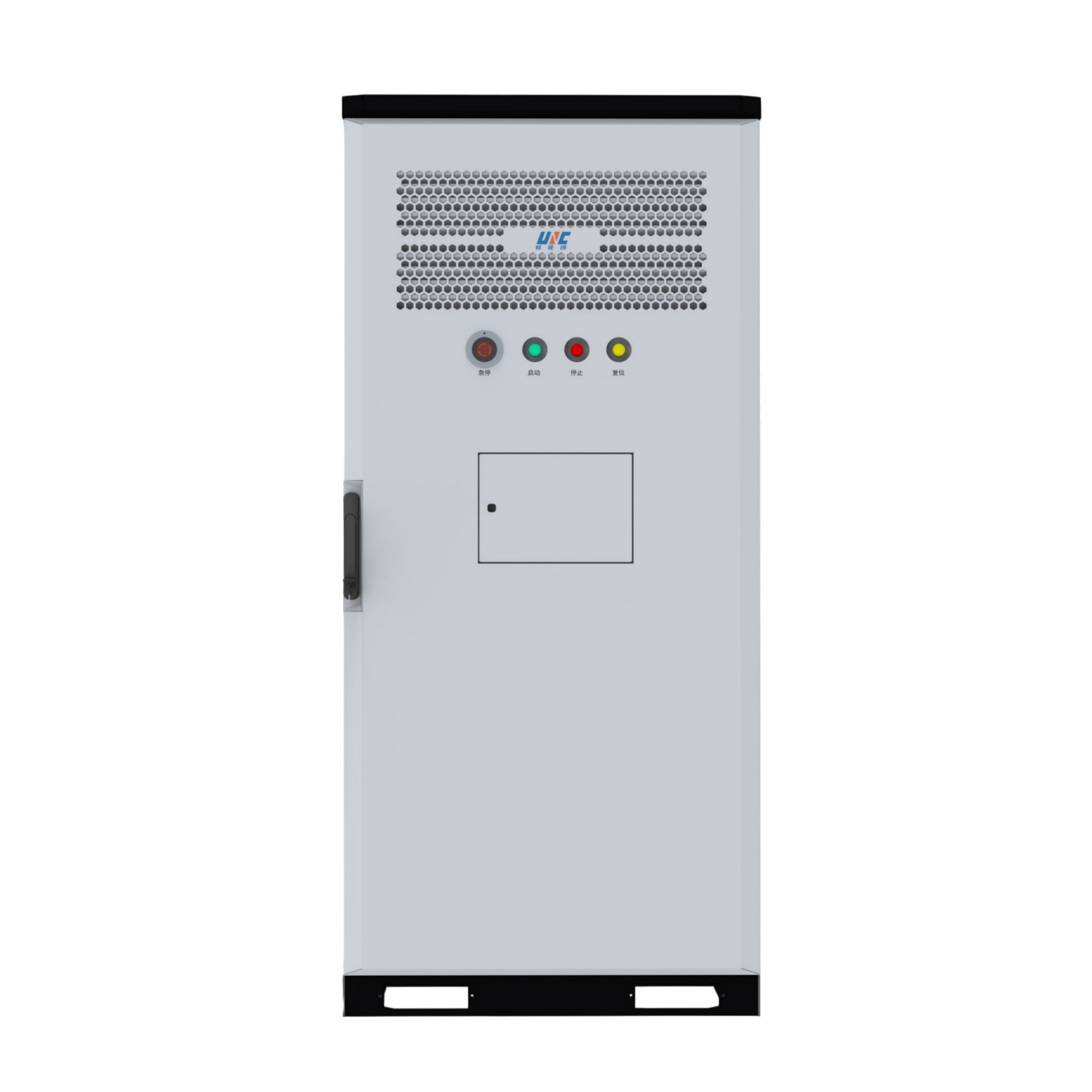
A 261kWh buffer shifts from being a standby box to something closer to a daily operating asset. Instead of waiting for outages, it trades expensive grid peaks against cheaper overnight charging, absorbs surplus solar that would otherwise be clipped, and releases that energy during late afternoon demand spikes. The result feels less like backup and more like a quiet margin that keeps the whole electrical setup from running hot.
That depth also changes how a site handles irregular loads. Cold storage, workshops, kitchens, and small manufacturing lines rarely pull steady power. A 261kWh reserve smoothes those surges before they reach the transformer or generator, reducing nuisance trips and letting a smaller grid connection do more work. In many cases, the battery covers the rough edges, not just the rare blackout.
Where the grid is weak or diesel is the default, the buffer creates room for renewables to lead. It lets a solar array power the site through the evening, then hands over to a generator only when state of charge drops below a set threshold. That reduces fuel burn, keeps noise down at night, and turns the battery into a real control layer rather than a safety net.
Cutting Peak Charges Without Cutting Production
Peak charges rarely come from running essential lines; they come from running everything at once. A closer look at interval data often shows that air compressors, chillers, and batch ovens all spike within the same fifteen-minute window. Staggering startup sequences by as little as twenty minutes can flatten that spike without touching throughput. The key is to treat flexibility as an asset: identify loads that can move, pre-cool or pre-heat thermal mass, and give operators a simple schedule instead of a curtailment order.
Storage works as a buffer between the grid and the floor. A modest battery pack charging after midnight and discharging during the afternoon peak can shave the highest demand interval enough to lower the monthly capacity charge. The same logic applies to chilled water tanks, compressed air receivers, and even product stored in cold rooms. Let temperatures drift within a safe band while compressors throttle back for two or three hours; production continues, but the meter sees a smaller draw.
Tariff structure matters as much as equipment. Some facilities pay for demand based on a single annual peak, while others reset monthly or use time-of-use windows. Pull the billing line items apart and model what happens if one flexible load shifts from 2 p.m. to 1 p.m. or if a generator runs during a narrow utility window. In many cases, a small change in schedule or a targeted investment in controls delivers a larger saving than a costly production slowdown ever would.
A Storage Footprint That Fits an Existing Site Plan
The storage footprint doesn’t demand a blank slate. It’s laid out to follow the lines already drawn on the site, whether that means tucking units against a rear setback, keeping the existing driveway as the main access spine, or stepping the buildings along a slight grade instead of forcing a level pad.
That approach leaves mature trees, drainage swales, and utility corridors where they are. Rather than redrawing the whole plan, the layout absorbs the constraints—narrow side yards become pass-through aisles, an odd corner becomes a small maintenance nook, and the required fire lane keeps its original curve.
The result is less site work and fewer surprises during approval. The footprint reads as a considered part of the existing plan, not a foreign object dropped onto it.
When the Grid Fades, Your Operations Keep Moving
The lights dip for half a second, then the room steadies. Compressors keep humming, conveyor motors hold their rhythm, and nobody reaches for a flashlight. This is not luck; it is the quiet result of power architecture that treats grid failure as just another operating condition. The handoff happens before a voltmeter can register the disturbance, so the only sign anything changed is the faint click from the transfer cabinet.
Resilience here does not come from a single oversized generator or a stack of batteries. It comes from sequencing: nonessential loads shed in a planned order, critical circuits stay fed, and storage fills the gap while backup assets ramp. The system knows which equipment can wait and which cannot, and it acts on that list without waiting for someone to arrive on site.
By the time the utility crew starts diagnosing the outage, your shift is still hitting its marks. Orders ship, temperature setpoints hold, and data logs show nothing more than a routine blip. That is the point. When the grid fades, your operations do not pause for a hero moment; they simply keep moving.
Independence That Does Not Come With a Generator
There is a particular quiet that settles over a house when the generator never starts. It is not the silence of an outage, but the low, steady breath of a refrigerator running from batteries filled by afternoon sun. Independence that lasts beyond a single fuel can begins when you stop planning around a machine and start shaping routines around what the sky actually offers. That change works its way into the feel of a morning.
The durable version of living without a generator is rarely loud. It looks like smaller loads, better insulation, and a willingness to do laundry when the sun is high. It arrives as a battery bank reaching full charge, a stove lit without ceremony, a winter evening that does not end with a walk outside to refill a can. It is less dramatic, but it does not vanish when the fuel runs out.
Without a backup roar to lean on, attention sharpens. You read the clouds, notice the house temperature, and learn which appliances actually earn their place. That daily awareness becomes a different kind of independence, one stored in habits and decisions rather than in a tank of gasoline.
FAQ
Think of the 135kW figure as the maximum load the cabinet can cover at any moment, while 261kWh is the total energy held in reserve. A facility drawing a steady 50kW can run for roughly five hours on a full charge, but if demand spikes toward 130kW, expect closer to two hours before the battery needs to recharge or tap another source.
It can carry critical loads such as lighting, controls, compressors, and select motors if the total draw stays within the 135kW ceiling and the outage does not outlast the stored energy. Most companies get the best results by pairing the cabinet with an automatic transfer switch and a clear load-shedding plan rather than trying to back up an entire facility.
The onboard energy management system watches utility rates, demand peaks, and any connected solar output throughout the day. It typically charges when electricity is cheap or solar production is high, then discharges during expensive peak windows or when the grid becomes unstable, keeping the building on the most economical and dependable path.
Operations with sharp demand charges, cold storage, food processing, light manufacturing, logistics hubs, and businesses with rooftop solar or frequent brief outages usually see the strongest payback. The cabinet is sized for a meaningful slice of load rather than a massive campus, which makes it a practical fit for mid-sized facilities pursuing more control over their energy.
Yes, it can integrate with solar inverters and other distributed sources. Surplus solar that would otherwise be exported at a low rate can be stored and used after sunset or during cloud cover, which shifts more of your own generation into hours when grid power is most expensive.
You will need a level concrete pad or reinforced floor, enough clearance around the enclosure for airflow and service access, a suitable electrical connection point, and compliance with local permitting and fire codes. Some sites also add a communications link so the cabinet can respond to utility signals or building management commands.
Routine care is fairly light. Expect quarterly visual checks, cleaning or replacing air filters, verifying coolant or HVAC function if equipped, and periodic firmware updates. Annual thermal imaging of electrical connections and a capacity test are usually enough to catch most issues before they affect performance.
Multiple layers are standard: a battery management system that monitors cell voltage and temperature, short-circuit and ground-fault protection, thermal runaway safeguards, and ventilation or cooling controls. The enclosure is engineered to contain a cell-level event and alert staff before a minor fault becomes a larger problem.
Conclusion
A single 135kW/261kWh cabinet changes what happens behind the meter without asking a company to rethink its daily operations. Rather than treating grid instability as a fixed cost, the system turns it into something you can manage. The 261kWh buffer does more than sit idle waiting for an outage; it works through the day, absorbing the short demand spikes that often make commercial utility bills climb. Because the cabinet discharges during expensive peak windows, it quietly reduces peak charges while production continues unchanged. There is no need to slow down equipment, shift schedules, or sacrifice output just to keep energy costs under control.
The cabinet also earns its place on site by fitting into an existing plan without demanding major construction. Its compact footprint works well next to switchgear or in unused corners where larger battery rooms would not fit. When the grid fades, this same unit carries critical loads fast enough to keep operations moving, but without the noise, fuel deliveries, and ongoing maintenance that come with a standby generator. That makes the independence feel less like emergency backup and more like everyday continuity: quiet, automatic, and already working long before the next outage arrives.
Contact Us
Contact Person: Manager Leng
Email: [email protected]
Tel/WhatsApp: 8613764878967
Website: https://www.unc-energy.com