
Laser Hair Removal Glasses Manufacturer: How to Choose the Right Protective Eyewear
2026-08-22
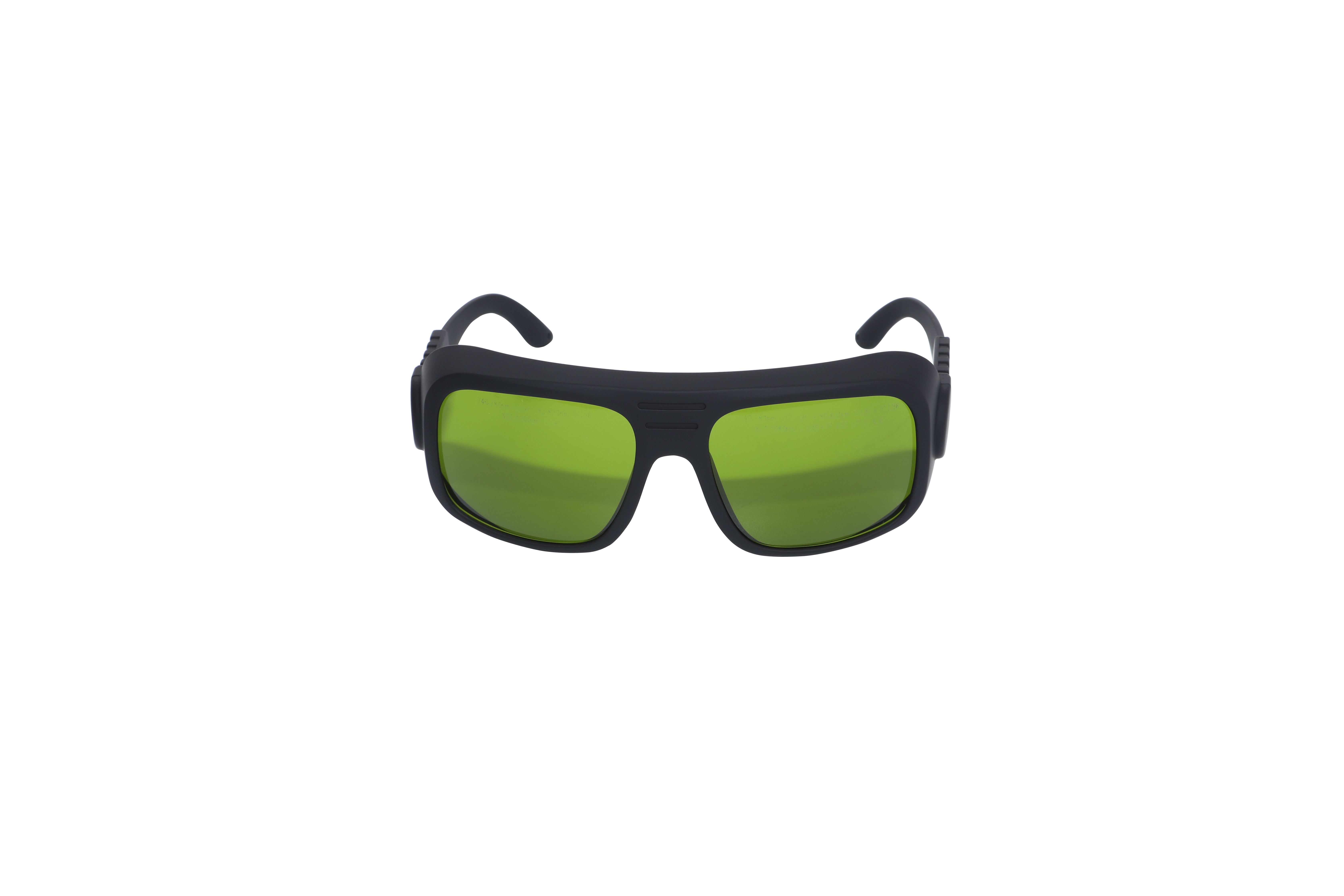
Finding the right laser hair removal glasses isn’t just about grabbing any dark pair from the shelf—it’s about matching optical density, wavelength coverage, and comfort to the specific laser or IPL device being used. That’s where a dedicated manufacturer like LASERPAIR comes into play. In this guide, we’ll break down the key factors to consider so you can choose protective eyewear that truly shields your eyes without compromising visibility or fit.
Does the Eyewear Match Your Laser's Exact Wavelength?
Many laser safety glasses are marketed as "universal" or "multi-wavelength," but that broad label often hides a critical gap: your specific laser emits at a very precise nanometer value, and the eyewear's optical density is only guaranteed at certain tested points. A pair rated for 1064 nm may offer zero protection at 1030 nm or 1070 nm, even though all three fall under "near-infrared." Before trusting your eyes to any filter, compare the laser's exact output wavelength against the lens's certification curve—not just the general range printed on the frame.
The mismatch risk isn't limited to exotic or tunable lasers. Even common diode modules can drift a few nanometers with temperature or aging, and frequency-doubled systems introduce harmonics at half the fundamental wavelength. If your eyewear specification sheet lists only a peak optical density at one wavelength, you are relying on assumptions that may not hold in a real work environment. Ask the manufacturer for the full attenuation spectrum, then verify that your laser's nominal wavelength—and any plausible sidebands—falls within the protected zone with sufficient margin.
A practical check is to look for lens markings that include the exact wavelength range, such as "800–1100 nm OD5+" rather than a vague "IR protection." Also be wary of filters that are certified only for continuous-wave operation while your laser is pulsed: peak power density can exceed the damage threshold of the coating even if average power seems safe. When in doubt, request a test report from an independent lab for your specific laser model and operating mode. Eyewear that doesn't match your laser's exact wavelength is not a minor inconvenience—it's the difference between a comfortable safety margin and an unprotected exposure.
Optical Density: What Those Numbers Actually Mean
Optical density, often abbreviated OD, measures how much light is attenuated when it passes through a sample. It is not a linear scale, which trips people up. A reading of 0.3 means roughly half the light is blocked, while 0.6 means only about a quarter gets through. Each 0.3 increase cuts transmission by another factor of two, so small numerical changes reflect big differences in actual absorbance.
In practice, many labs treat OD as if it were concentration, but that only holds for relatively low values. Once you push past 1.0 or 1.5, the relationship starts to bend because the instrument's detector is seeing very little light and scattering effects become significant. That is why diluting a dense sample and multiplying back often gives a more reliable estimate than trusting the raw high number.
For microbiological work, OD600 is a familiar shorthand for cell density, yet the actual number depends heavily on the path length of the cuvette and the specific organism. A reading of 0.4 in one spectrophotometer might correspond to a different cell count than 0.4 in another. So the numbers are useful for tracking relative growth over time, but they should never be taken as absolute physical constants.
Comfort Features That Keep Staff Wearing Them All Day
The first thing most teams notice after a shift isn't the color or stitching — it's whether their feet still feel alive. A contoured insole that actually matches the arch of a human foot, not just a flat foam pad, makes a bigger difference than most people expect. Pair that with a heel cup that doesn't rub raw against the Achilles, and you've got the kind of quiet practicality that gets mentioned in break rooms more than any spec sheet.
Breathability is the unsung hero here. A fabric that wicks sweat away from the top of the foot and dries fast between shifts prevents that sticky, overheated feeling that leads to blisters and morale drop. And the weight matters more than you'd think — every ounce feels heavier by hour six, so a midsole that absorbs impact without turning the shoe into a brick is the kind of detail nobody notices until it's gone.
The real test is whether someone forgets they're wearing work shoes by lunchtime. That means no stiff toe box that pinches when crouching, no laces that dig into the instep, and no awkward seam across the widest part of the foot. When the design lets staff move the same way they would in their favorite weekend sneakers, they stop counting down the minutes until they can take them off — and that's the whole point.
Certifications You Should Demand from Any Manufacturer
A certification is only as meaningful as the follow-up behind it. When you're vetting a manufacturer, don't accept a logo on a website as proof of quality. Ask for current, unredacted copies of ISO 9001 or IATF 16949 documents, check the scope of what's actually covered, and verify the issuing body is accredited. If a factory hesitates to share these details, that tells you more than any brochure.
Regional compliance matters just as much as quality management. Depending on where your products will be sold, you may need CE marking, UKCA, UL listing, or FCC approval. A manufacturer that genuinely understands export markets will walk you through which certifications apply to your specific product category—not just hand you a folder of generic paperwork.
Material and environmental standards are where many suppliers fall short. RoHS and REACH are baseline for electronics and consumer goods, but you should also check for recent test reports from independent labs and ask how often they re-test. Good manufacturers treat compliance as an ongoing process, not a one-time cost.
Seeing Clearly: How Lens Tint Affects Your Work
Lens tint isn't just about cutting glare or looking sharp on the job—it's about how your eyes and brain team up under different light conditions. A subtle amber tint, for instance, can boost contrast in hazy or overcast environments, making it easier to spot fine details on a circuit board or a faint pencil line on drafting paper. But that same warm tint might skew your color perception if you're matching paint swatches or sorting wires by insulation hue, so understanding the trade-off is key before you settle on a pair.
On the flip side, gray tints keep color fidelity nearly neutral while reducing overall brightness, which is why they show up in jobs where true color matters more than edge enhancement—think quality control on a print line or inspecting welds for cracks. Then there are specialized tints like copper or rose, which can sharpen depth perception in changing light, a real advantage for tasks like operating heavy machinery or navigating a cluttered construction site. The point isn't to pick the darkest lens but to match the tint's effect on contrast, color, and light transmission to the specific demands of your workflow.
It's worth testing a few options in your actual work environment rather than going off a chart. What looks great on a sunny drive might flatten the shadows you need to read a machinist's scale or a display screen. And don't forget that tint interacts with coatings—anti-reflective layers can make a lighter tint perform better than a darker one without them. Get the pairing right, and you'll notice fewer squinting headaches, fewer mistakes, and less fatigue by the end of your shift.
From Drops to Disinfectant: Building Eyewear That Lasts
Rain, sweat, spilled coffee, a quick spritz of hand sanitizer that drifts toward your face—glasses live in a splash zone. Most frames start showing their age after a few months of this: cloudy patches on the arms, tiny cracks near the hinges, a dull film that won't wipe clean. We decided to stop treating those as inevitable wear and tear, and instead build eyewear that shrugs off the daily drip.
The frame material itself went through a rethink. Instead of standard acetate that absorbs moisture and slowly warps, we settled on a bio-based polymer with a tighter molecular structure. Alcohol-based disinfectants and soap residue simply bead up and roll off, rather than seeping into micro-abrasions. The hinges are sealed with a fluoropolymer bushing, so repeated cleaning cycles don't corrode the pivot or loosen the fit. Even the lens coating was reformulated—an oleophobic top layer that resists fingerprint smears, but also survives hundreds of passes with a disinfectant wipe without developing that chalky haze.
In the lab, we simulate a year of real-world abuse in about six weeks: frames dunked in saline, sprayed with 70% isopropyl alcohol, flexed open and shut thousands of times, and left under UV light to mimic sun exposure. The goal isn't just to survive—it's to keep the same crisp optical clarity and comfortable grip from day one to day four hundred. Fewer replacements, less plastic in the landfill, and a pair of glasses that doesn't flinch when the next wave of sanitizer comes its way.
FAQ
They are built to block specific wavelengths emitted by hair removal devices, typically using optical density filters that absorb or reflect intense laser light. Regular sunglasses do not offer the same level of narrowband protection and can give a false sense of safety.
Look for clear documentation of tested optical density at the wavelengths your equipment uses, along with certification marks from independent labs. A trustworthy manufacturer will share test reports and offer guidance on matching lenses to your laser type.
Protection should never be compromised, but comfort affects whether staff actually wear the glasses consistently. Lightweight frames, adjustable temples, and a secure fit help ensure compliance without sacrificing safety.
Not usually. Different machines operate at different wavelengths, such as diode, alexandrite, or Nd:YAG. You need eyewear with the correct optical density for the specific wavelength range your device produces.
Look for compliance with recognized safety standards like ANSI Z136.1 in the US or EN 207 in Europe. These indicate the eyewear has been tested for laser protection rather than just impact resistance.
Inspect them before each use for scratches, cracks, or frame damage. Any visible damage to the lens or filter layer means they should be replaced immediately, even if the stated protection period has not ended.
Many do offer fit-over models, wraparound designs, or prescription inserts. It is worth asking about custom lens shapes or adjustable nose bridges to improve wearability for long sessions.
After-sales support and replacement lead times. If a lens gets damaged, you need quick access to certified replacements. A manufacturer with local stock or fast shipping can prevent downtime in a busy clinic.
Conclusion
Choosing protective eyewear for laser hair removal isn't just about picking the darkest lens on the shelf. The first thing you need to verify is that the glasses block the exact wavelength your laser emits—many manufacturers list broad ranges, but if the peak wavelength isn't covered, you're getting false security. Optical density then tells you how much attenuation you're actually getting; a higher OD means more protection, but it also darkens the view, so you need to match it to your device's power and pulse settings. What often gets overlooked is comfort. If the frames pinch or the nose pads slide, staff will take them off between pulses, and that's when accidents happen. Lightweight materials, adjustable temples, and anti-fog coatings keep them on faces all day, which matters more than any spec sheet.
When you narrow down candidates, demand certifications from the manufacturer—look for EN 207 or ANSI Z136 markings, not just a generic "laser safe" sticker. Those standards test the lens under direct beam exposure, not just a quick filter check. Lens tint plays a bigger role than most realize: too dark and you can't see skin details or the aiming beam; too light and you might not block enough stray reflections. A reddish or amber tint often works well for common diode and alexandrite wavelengths without killing visibility. Finally, think about durability. These glasses get dropped, wiped with alcohol, and tossed into drawers daily. A reputable manufacturer will use scratch-resistant polycarbonate and reinforced hinges, and they'll tell you exactly which disinfectants won't degrade the coating. If they can't answer that, walk away.
Contact Us
Contact Person: Jenny
Email: [email protected]
Tel/WhatsApp: +86 13537713281
Website: https://www.laserpair-safety.com/