
OEM 2.5T Dual-Axle Hydraulic Lifting Trailer Solutions: Boost Your Hauling Efficiency
2026-07-29
Struggling with slow loading or limited capacity on the job site? The right trailer can transform your daily operations. At Whole Chain Tech, we've engineered a 2.5-ton dual-axle hydraulic lifting solution that combines rugged reliability with intelligent design—so you spend less time wrestling with equipment and more time getting the job done. Whether you're hauling construction materials, landscaping supplies, or heavy machinery, this trailer is built to handle the toughest demands while making unloading effortless. Discover how our OEM solutions can give your business a competitive edge.
Why Dual-Axle Design Transforms Load Stability on Every Trip
Load stability isn't just about strapping down cargo—it starts with the foundation underneath. A dual-axle setup distributes weight more evenly across four tire contact patches instead of two, creating a broader and more planted footprint. This immediate shift in weight distribution reduces the seesaw effect that single-axle trailers often experience, where bumps or uneven terrain can send unsettling wiggles through the entire frame. By simply doubling the axle count, the physical dynamics change: the pivot point between the trailer and tow vehicle becomes less twitchy, and the entire rig feels more like one cohesive unit rather than two independent pieces fighting against each other.
The second axle also introduces a mechanical advantage that's often overlooked—redundancy. Even if one wheel encounters a dip or a sudden loss of air pressure, the remaining three tires maintain contact and keep the load level. This isn't just about peace of mind; it directly affects how the trailer absorbs shocks. With two axles sharing the workload, each individual suspension component handles less stress, meaning potholes and rough patches get smoothed out before they can transfer jarring forces to the cargo. The result is a ride that feels dampened and controlled, even when the road isn't cooperating. You'll notice fewer rattles, less sway when passing semis, and a trailer that seems to hold its line without constant steering corrections.
Beyond the physics, there's a subtle psychological shift for the driver. When you know the trailer isn't going to suddenly wag its tail or lurch sideways in a crosswind, you can focus on the drive itself rather than white-knuckling the wheel. That confidence comes from the dual-axle design's ability to turn reactive moments into predictable ones—whether you're navigating a winding mountain pass or merging onto a busy highway. It's a difference that's tough to quantify until you've experienced it firsthand, but once you do, the transformation in load stability becomes obvious: less drama, less fatigue, and far fewer moments of second-guessing what's happening behind you.
Hydraulic Lifting Systems That Cut Loading Time in Half
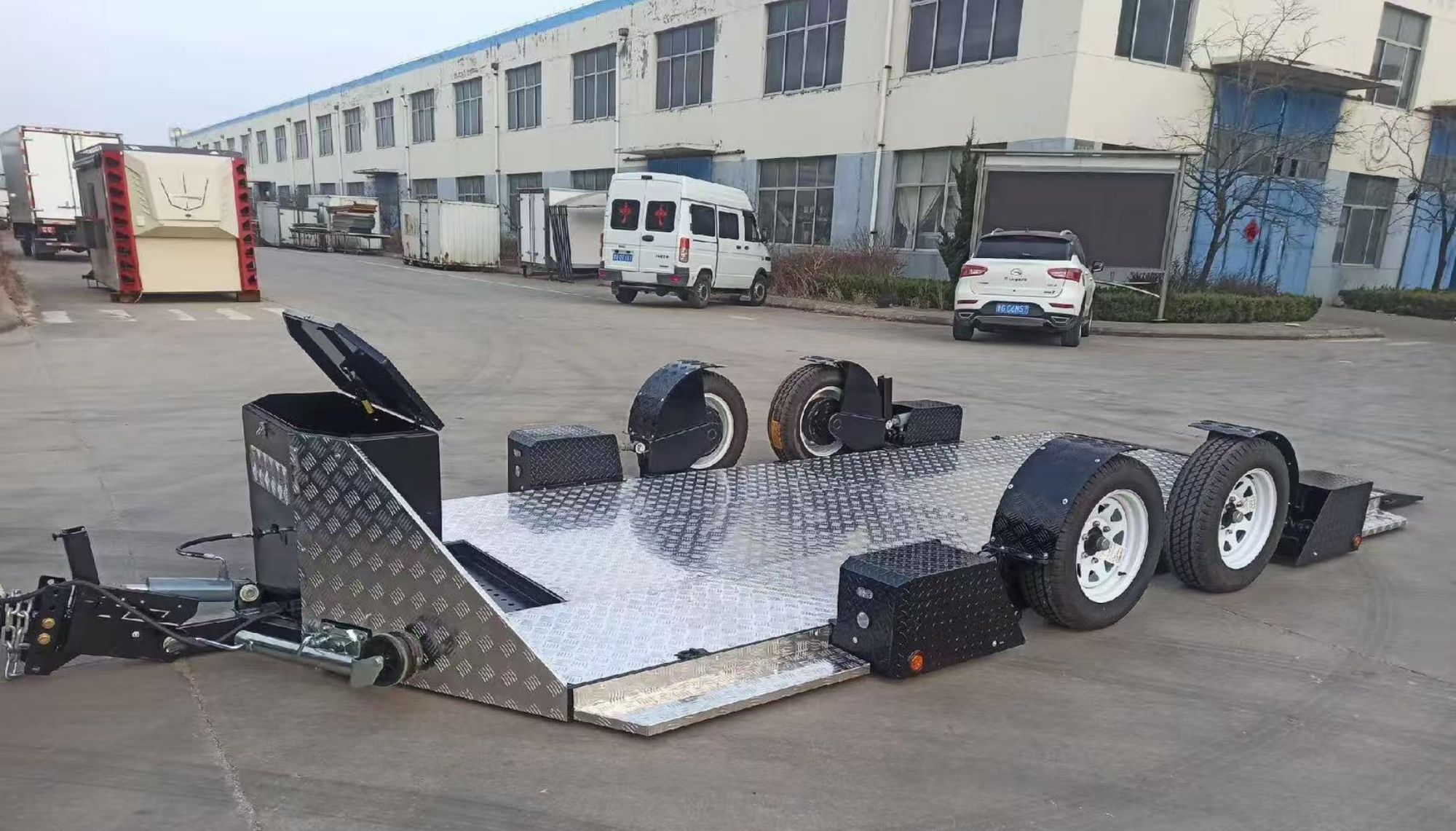
Modern hydraulic lifting systems have transformed warehouse and logistics operations by dramatically speeding up the loading process. Unlike traditional methods that rely on manual labor or slower mechanical lifts, these systems use pressurized fluid to generate smooth, consistent power. This eliminates the jerky movements and downtime often associated with chain- or cable-driven alternatives. Operators can position loads with precision in a fraction of the time, and the reduced physical strain means fewer pauses for repositioning or safety checks. The result is a workflow where trucks spend less time at the dock, and goods move through the supply chain significantly faster.
The secret behind the efficiency lies in advanced control valves and variable-speed pumps that match lifting speed to the exact weight and size of each load. Smart sensors automatically adjust pressure in real time, preventing overloads and energy waste, while keeping acceleration and deceleration perfectly tuned. This not only extends equipment life but also allows operators to complete a full loading cycle in about half the time of older models. Many facilities report a doubling of throughput without adding extra shifts, simply by upgrading to these responsive, low-maintenance hydraulic platforms.
Custom OEM Engineering for Your Toughest Hauling Demands
When standard equipment just won't cut it, we dive deep into your operational challenges to craft hauling solutions that fit like a glove. Our engineers work side by side with your team, from initial concept to final testing, ensuring every weld, every component, and every system is purpose-built for the loads you carry and the terrain you conquer.
We don't just modify existing designs—we often start with a blank sheet, combining rugged materials with clever engineering to handle extreme weights, corrosive environments, or tight spaces that off-the-shelf products can't touch. The result is a machine that feels less like an adapted tool and more like a natural extension of your fleet.
From reinforcement strategies that extend service life to intuitive features that slash maintenance downtime, every detail is considered. You get more than a piece of hardware; you get a trusted partner in steel, built exactly for the demands you face every day.
How 2.5 Ton Capacity Balances Power and Maneuverability
The 2.5-ton capacity sits in a sweet spot that many operators overlook. It’s not just a number—it’s the result of careful engineering that pairs a robust lifting core with a compact, nimble frame. This balance means you can handle serious loads without sacrificing the ability to navigate tight job sites, from crowded warehouses to uneven outdoor terrain.
What makes this capacity really work is how it distributes weight and power. The machine’s design ensures that even at full load, the center of gravity stays low and stable, giving you the confidence to maneuver around obstacles or up inclines. At the same time, the responsive steering and tight turning radius let you finesse into spots that larger machines can’t touch, making every lift feel controlled and precise.
In everyday use, that equilibrium translates to less downtime and fewer compromises. You’re not wrestling with an oversized beast for light tasks, and you’re not running into the limits of a smaller unit when the heavy stuff shows up. It’s a practical harmony that keeps productivity high and operator fatigue low, proving that the right balance is worth more than raw capacity alone.
Real-World Performance: Trailer Solutions Built for Job Sites
Every feature on these trailers is shaped by feedback from actual job sites—mud, gravel, and uneven terrain aren't afterthoughts; they're the baseline. The frame geometry and suspension tuning are calibrated to handle repeated heavy loads without developing stress cracks, a common fail point in lesser models. Tilt decks and ramp angles are designed so that low-clearance equipment rolls on smoothly, while integrated tie-down points stay accessible even when caked in dirt.
We focus on components that take the most abuse: reinforced hinge points, sealed wiring harnesses, and brake lines routed away from debris impact zones. The deck coating isn't just paint—it's a textured, high-grip surface that resists chipping from tracked machines and spilled fuel. These aren't showroom specs; they're the result of walking countless acres of construction sites and seeing what actually breaks first.
When a trailer performs predictably under load, operators spend less time repositioning and more time working. The balance between axle placement and tongue weight isn't guesswork—it's calculated per model so that the trailer tracks straight without excessive sway, whether you're hauling a skid steer or a mini excavator. That stability pays off when maneuvering in tight spots where a jackknifed trailer would bring a project to a halt.
From Factory to Field: The Long-Term Value of Reinforced Frame Builds
The real test of any reinforced frame isn’t in the controlled chaos of the factory floor but out in the field, where dust, vibration, and unexpected loads become daily realities. From the moment the first weld is laid, the build process prioritizes fatigue resistance and stress distribution—details that might seem excessive during assembly but prove their worth over decades of service. Shops that invest in rigorous alignment checks and multi-pass welding techniques aren’t just satisfying a spec sheet; they’re engineering a structure that quietly absorbs punishment without complaint, year after year.
This shift in perspective—from treating the frame as a one-time manufacturing output to designing it as a long-term field asset—shapes every decision downstream. Material selection moves beyond raw tensile numbers to consider corrosion rates, thermal cycling tolerance, and repairability in remote locations. Bolted connections get oversized and galvanized not because the drawings demand it, but because maintenance crews need to swap components under harsh conditions without specialized tools. The ability to swap out a worn gusset plate in the field, for example, transforms a potential week-long shutdown into a quick overnight repair.
Ultimately, the premium paid for a reinforced frame build isn’t really about the extra steel or labor—it’s an insurance policy against the unknown. When equipment is deployed in environments that punish undersized components with accelerated wear, the total cost of ownership flips dramatically. A design that anticipates field abuse rather than assuming ideal conditions keeps uptime higher and emergency retrofits rarer. The long-term value reveals itself not in a single performance metric, but in the absence of failure.
FAQ
The dual-axle setup distributes weight more evenly, enhances stability during transport and lifting, and allows for a higher payload without overloading a single axle. It also reduces tire wear and improves braking performance, especially on uneven terrain.
A hydraulic pump, typically powered by the towing vehicle or an onboard battery, pressurizes fluid that extends cylinders to raise the trailer bed. The system includes controls for smooth, gradual lifting and a reliable lock to hold the load securely in an elevated position without drift.
Most light- to medium-duty trucks and SUVs with a proper hitch and a towing capacity of at least 3.5 tons can handle this trailer comfortably. It’s important to check the gross vehicle weight rating and ensure the tow vehicle’s braking and suspension are up to the task.
Yes, since it’s an OEM solution, it can be tailored with features like extended beds, side rails, different hitch types, or specialized cargo tie-down points. The hydraulic lifting parameters can also be adjusted for different dump angles or lifting speeds.
Regularly check hydraulic fluid levels and look for any signs of contamination or leaks. Inspect hoses and fittings for wear, keep the cylinder rods clean and lubricated, and cycle the system occasionally to prevent seals from drying out. Always follow the manufacturer’s service intervals.
It’s popular in landscaping, construction, agriculture, and light industrial settings where efficient unloading of materials like gravel, soil, debris, or equipment is needed. The hydraulic lift reduces manual labor and speeds up turnaround times.
By enabling quick, controlled tipping of the load, it cuts down on unloading time and manual shoveling. The dual-axle stability means you can carry more per trip with confidence, and the OEM design lets you match the trailer exactly to your workflow, reducing downtime and boosting productivity.
It includes a mechanical lock or check valve system that prevents accidental lowering if hydraulic pressure drops. There are also clear operational labels, robust pinning for the dump bed during transport, and often an emergency manual release lever.
Conclusion
The dual-axle layout fundamentally changes how a trailer handles under load, distributing weight evenly to eliminate sway and bounce—even on rough terrain. Paired with a hydraulic lifting system that slashes loading times, operators spend less time wrestling with ramps and more time moving cargo. OEM engineering means every component, from axle placement to pump specs, aligns with your exact hauling demands, not a one-size-fits-all compromise. And at 2.5 tons, you get just enough muscle for skid steers, mini excavators, or palletized materials without the bulk that kills fuel economy or maneuverability on tight job sites.
Field-tested in real job sites, these trailers shrug off the daily grind—mud, gravel, heavy drops—because reinforced frames are built from the ground up for fatigue resistance. Unlike generic alternatives that start showing cracks after a season, the factory-to-field longevity comes from welds and steel grades chosen by engineers who understand what repetitive loading does to metal. Over time, that durability, combined with faster cycles and less downtime, translates into a hauling solution that doesn’t just move equipment; it protects your bottom line.
Contact Us
Contact Person: Ethan
Email: [email protected]
Tel/WhatsApp: +86 13963964935
Website: https://www.wholechaintech.com/