
OEM Butterfly Valve Factory: How to Choose the Right Manufacturing Partner
2026-08-20
Selecting an OEM butterfly valve factory goes far beyond comparing prices. The right partner controls everything from raw material traceability to final pressure testing, and a wrong choice can quietly erode your margins. At ZMV, we've learned what to look for through years of manufacturing and sourcing—keep reading to avoid the most common traps.
Stop Asking for a Quote First—Ask to See Their Rejection Rate
It's natural to start with the number. You want to know what it'll cost each month, so you ask for a quote. But that quote is just a promise on paper. The moment you actually need the policy to work—when you file a claim—the real test begins. A rock-bottom premium can hide a claim rejection rate that leaves you covering the bill yourself.
Instead of leading with cost, ask a more uncomfortable question: 'What percentage of claims do you reject?' Any provider can tell you their price. Far fewer will volunteer how often they say no. The answer tells you whether their business model is built on protecting you or on collecting premiums and hoping you never ask for help.
Compare two companies offering similar quotes. One pays out 96% of claims; the other rejects one in five. The cheaper quote from the second company isn't really cheaper—it's a bet against your own future need. Rejection rate turns an abstract premium into a real-world measure of whether the policy will actually be there when you need it.
A Good Butterfly Valve Factory Will Challenge Your Spec, Not Just Accept It
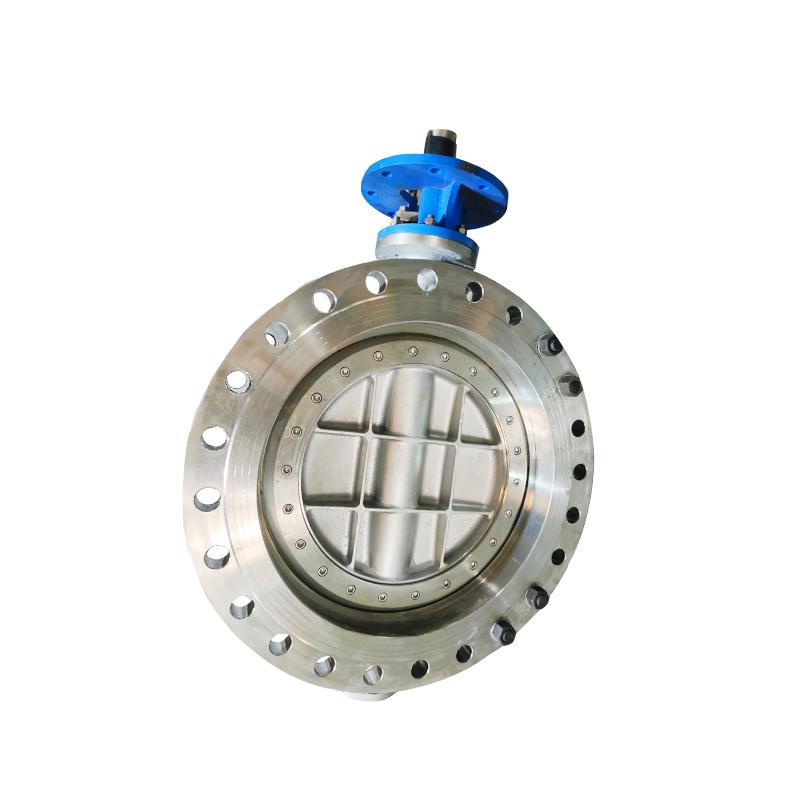
Most valve buyers expect a supplier to quote exactly what’s on the datasheet. But a truly competent butterfly valve manufacturer will often pause and ask uncomfortable questions. Why a triple offset design for a low-cycle, low-pressure application? Why specify CF8M when the medium is mildly corrosive and carbon steel with an epoxy coating would last just as long? A factory that simply says “yes” to every line item may be protecting its own margin, not your process. The best partners are the ones who push back with engineering logic, offering alternatives that reduce cost, shorten lead time, or improve long-term reliability without sacrificing performance.
Challenging a spec doesn’t mean ignoring it. It means tracing each requirement back to the actual operating conditions—temperature swings, particulate load, actuation speed, maintenance access. An experienced factory will point out contradictions: a seat material rated for high temperature but paired with a shaft seal that degrades at half that range, or a face-to-face dimension that forces expensive piping modifications when a standard lug pattern would do. These observations come from years of field failures and successful retrofits, not guesswork. When a manufacturer recommends a change, they should be able to show you the failure data or the performance curve behind it.
This kind of dialogue saves money before the valve is even built. It reduces the chance of installing a valve that technically meets the spec but underperforms in service. Next time you send out a butterfly valve inquiry, watch how the factory responds. If they come back with nothing but a price and a delivery date, you’ve found a parts seller. If they come back with questions, calculations, or a marked-up datasheet, you’ve found a partner worth keeping.
Supply Chain Depth Beats a Fancy Equipment List Every Time
A glossy equipment list might look great in a funding pitch, but it rarely reflects how reliably you can ship product. What carries you through demand swings, raw material shortages, and supplier failures is the depth of your supply chain—multiple vetted sources, realistic lead times, and fallback logistics that have been tested before you need them. That kind of resilience doesn't come from owning more machines; it comes from knowing exactly where every critical input is coming from and what you'll do when that route breaks.
We've watched factories with modest, older equipment outperform rivals with brand-new, automated lines simply because they had stronger supplier relationships and smarter inventory buffers. The newer facility still stalled when a single custom part was delayed, while the older one switched to a pre-qualified alternate vendor within a day. Fancy gear gives you theoretical capacity; supply chain depth gives you actual throughput when it matters most.
Small-Batch Trials Reveal More Than Any Factory Audit
A factory audit shows you the paperwork, the machinery, and a rehearsed walkthrough. What it doesn't show is how a production line actually behaves when your specific design hits the floor. Small-batch trials force that moment. You get to see where operators struggle, which tolerances drift, and how materials from real suppliers perform—not the sample swatches shown in the conference room.
These trials also expose the quiet failures that never make it into an audit report. Stitching that bunches on curved seams, plastic parts that warp slightly after cooling, packaging that slows the line to half speed. None of these will appear in a quality manual, but they will ruin a full production run. Running a few hundred units under normal conditions tells you more than a binder full of certificates.
The real value is speed of correction. When you catch a problem in a 500-unit trial, you adjust the die, retrain the operator, or switch the adhesive before 50,000 units are sitting in a warehouse. That's a conversation you can have standing next to the line. An audit won't give you that; it just tells you the factory looked fine on a Tuesday afternoon.
Own Your Testing, or Your Reputation Pays for It Later
Few things feel as satisfying as pushing code live and watching it work. That rush can quietly convince you that skipping tests is a reasonable trade-off. The problem is, the bill always arrives — just not on launch day. It shows up weeks later when a small change ripples into a payment glitch, or when a new teammate breaks a feature they never knew existed. By then, the "quick win" has become a slow, expensive untangling.
Thorough testing is less about catching bugs and more about protecting the story others tell about your work. Every unreported edge case, every silent regression, every 3 a.m. incident chips away at the trust you’ve built. Users don’t care about your sprint pressure or your tight deadline — they only remember that the checkout button failed. Reputation isn’t rebuilt with a postmortem; it’s rebuilt with the next launch proving you’ve learned.
Treat test coverage as a design habit, not a chore. Automate the boring paths so you can manually explore the weird ones. Write tests that read like a contract for future maintainers. The teams that own their testing process never have to apologize for their software later — they earn the quiet confidence that comes from knowing exactly what they shipped.
The Third-Year Cost of a Valve Is Hidden in the Factory’s After-Sales Habits
Most buyers only compare the purchase price of a valve. The first two years typically pass without incident, which makes the initial savings feel real. But in the third year, seals and seats start to wear, and that's when the factory's after-sales behavior starts to matter. A low-cost supplier might take weeks to answer a service request, quote a replacement part at several times the market rate, or simply tell you to buy a new valve. The downtime alone can erase whatever you saved on the invoice.
Good factories treat the third year as part of the product lifecycle. They keep installation records, send maintenance reminders before failure becomes likely, and stock common wear parts so they can ship within days. They also train their service team to diagnose problems over the phone instead of demanding an expensive site visit. Bad factories, by contrast, view after-sales as a revenue stream. They make parts hard to get, push unnecessary upgrades, and leave you stranded when a small leak turns into a shutdown.
Before choosing a valve supplier, look beyond the unit price. Ask about the typical cost of a third-year overhaul, the availability of seals and packing, and average response time for technical support. Talk to plants that have run the same valves for three or more years. A valve that costs 20% more upfront but comes with fast, reasonably priced after-sales support often turns out cheaper by the end of year three than a bargain that forces you into emergency repairs or early replacement.
FAQ
Start by checking their actual production floor, not just the sales pitch. Visit the foundry or machining area, look at the raw material storage, and ask to see in-process inspection records. A reliable factory will have clear process flow, calibrated gauges, and a documented non-conformance procedure. Also confirm their engineering team can read your technical drawings and offer design improvements before tooling begins.
Request a copy of their quality manual and then ask for evidence that it is actually used daily. Look for traceability from heat numbers to finished valve bodies, in-house pressure testing capability, and third-party inspection reports from past orders. If they hesitate to show you test certificates or let you witness a hydrostatic test, treat that as a red flag.
The material choice depends on the media, temperature, and pressure. For corrosive service, ask about duplex stainless, Hastelloy, or lined bodies rather than standard carbon steel. Certifications like ISO 9001 are baseline, but for specific industries you may need API 609, PED, ATEX, or NSF/ANSI 61. Confirm the factory can supply EN 10204 3.1 or 3.2 material certificates and has experience with the exact alloy you need.
A factory with too much idle capacity can be as risky as one running overbooked. Ask about their current workload, average lead time for similar valve sizes, and how they handle rush orders without disrupting your schedule. Inquire about bottleneck processes like CNC machining or rubber lining, because these often determine real delivery dates. A good partner will give you a realistic timeline with buffer, not an optimistic one just to win the order.
Beyond basic size and pressure class, a competent factory should handle custom disc profiles, special seat materials, extended bonnets for insulation, gear operators, pneumatic or electric actuators, and even custom painting or tagging. They should also be willing to modify lug or wafer patterns, provide fire-safe design variants, and offer engineering support for your specific installation constraints. If they only offer catalog items with no flexibility, they are probably a reseller rather than a true OEM.
Ask for a written warranty that covers not just manufacturing defects but also seat leakage and actuator integration for a defined period. Find out how they handle field failures: do they send a replacement immediately, or do you have to ship the valve back and wait weeks? Check if they stock spare parts for older models and whether they offer on-site commissioning assistance. A factory that assigns a dedicated account engineer is usually more responsive than one where you only talk to a sales agent.
Watch for vague material descriptions like 'stainless steel' without a grade, missing or copied test certificates, reluctance to allow third-party inspection, and prices significantly below the market average. Also be cautious if they cannot explain how they control wall thickness, seat compression, or shaft alignment. Factories that outsource too many critical steps such as casting, machining, or testing often lose quality control, so ask which processes are done in-house.
Don't just compare unit prices; calculate the cost of downtime, replacement labor, and potential safety incidents. A slightly more expensive valve with better seat material and tighter tolerance may last three times longer. Request a life-cycle cost estimate from the factory and ask for reference customers who have used their valves for at least five years. Sometimes paying more upfront for a factory that does full traceability and in-house testing saves you from expensive field failures later.
Conclusion
Most sourcing teams evaluating an OEM butterfly valve factory start with price, but the first real filter is transparency around rejection rates. Ask for batch-level defect data, not a polished certificate wall. A factory that tracks and shares internal reject rates—and explains corrective actions—already treats quality as a measurable process rather than a marketing claim. Equally telling is how their engineers respond to your valve specification. If they simply accept every dimension, material, and seat choice without comment, you are not talking to a manufacturing partner; you are talking to a quote machine. The best factories push back where a small change reduces leakage risk, improves torque consistency, or simplifies maintenance, because they have seen failures you have not.
Beyond the shop floor, dig into supply chain depth: foundry relationships, raw material traceability, and buffer stock for critical components matter more than a row of new CNC machines. After that, run a small-batch trial under your own test protocol—pressure cycling, seat leakage, coating adhesion—and do not outsource the pass/fail decision. A factory audit tells you how clean the floor is; a trial tells you how honest the process is. Finally, price the third year, not the first invoice. Look at how the factory handles warranty claims, spare part lead times, and failure analysis. A partner that treats after-sales as an engineering obligation, not a cost center, is the one that protects your brand when a valve is installed in a hard-to-reach line and has to work without drama.
Contact Us
Contact Person: Lucas Lin
Email: [email protected]
Tel/WhatsApp: +8613968913000 / +8613868610141
Website: https://www.zhengmaogroup.com