
OEM Gray Iron Casting Benefits and Best Practices for Manufacturers
2026-10-02
Ask a maintenance engineer what kills production uptime, and you'll often hear about casting failures that could have been avoided. OEM gray iron castings, when done right, offer the vibration damping, wear resistance, and cost efficiency that keep machinery running longer. But not all gray iron is equal. Below, we break down the key benefits and the best practices manufacturers should demand from their foundry partners—including the checks we've built into every Zhaoyuqi casting.
Gray Iron's Damping Capacity: The Overlooked Reason It Beats Steel in Heavy Equipment
When a machine frame or gearbox housing rings after a load shift, the problem isn't just noise—it's oscillating energy looking for a crack to start. Gray iron quietly swallows that energy. The graphite flakes scattered through its microstructure act like millions of tiny, randomly oriented shock absorbers. Each flake interrupts the elastic wave, forcing it to scatter and shed amplitude as heat. Steel doesn't have anything like this internal friction network. Its crystals are continuous, so vibrations travel farther and linger longer.
This difference shows up fastest on a machine tool bed or a diesel engine block. A steel weldment that gets excited by a cutting pass or a firing cylinder will keep shivering long after the input stops, which translates into chatter, dimensional drift, and premature bearing wear. Swap in gray iron and the same excitation dies out in a fraction of the time. The material isn't just stronger in the conventional sense—it's fundamentally calmer under dynamic load. That calmness buys a level of stability heavy equipment designers rarely get from steel without adding bulk, tuned dampers, or expensive active systems.
Field experience backs this up in ways lab tensile tests miss. Operators don't feel a yield strength number; they feel a machine that doesn't buzz their feet through the platform. Maintenance crews see fewer loose bolts and less fretting on mating surfaces. None of this gets printed on a spec sheet as a headline property, but it's why a well-ribbed cast iron base often outlasts a geometrically identical fabricated steel one in the same service. The overlooked metric isn't how much stress the material can take once—it's how quickly it can forget the last stress event.
Why Experienced Designers Specify Gray Iron for Hydraulic Manifolds and Gearboxes
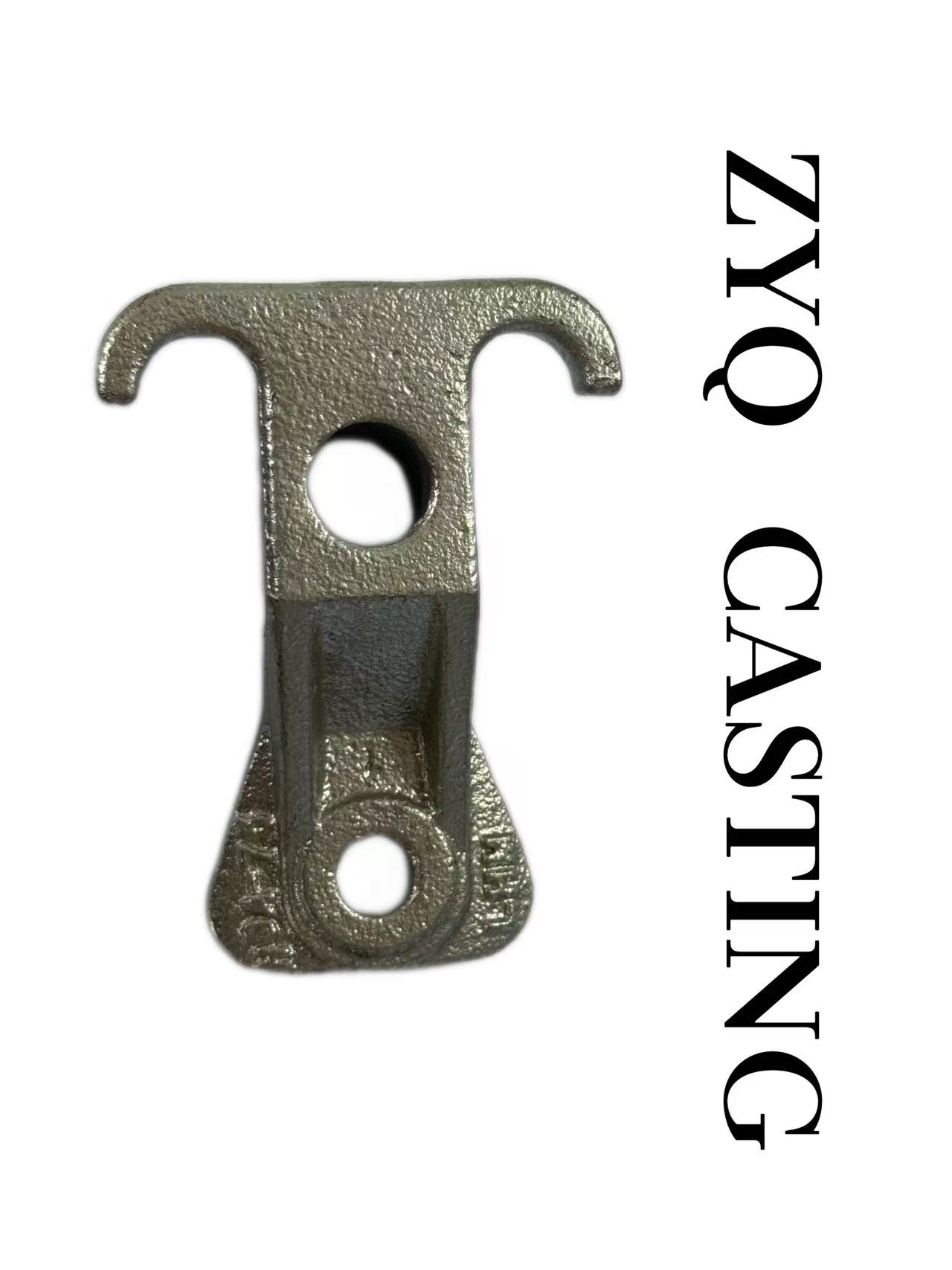
Gray iron remains a quiet workhorse in hydraulic systems, and seasoned designers keep returning to it for reasons that go beyond simple cost. Its high carbon content forms graphite flakes that do more than just weaken the matrix—they damp vibration, provide natural lubricity, and create a material that absorbs noise in ways steel seldom matches. In manifold blocks and gearbox housings, where fluid pulses and gear meshing create constant micro-shocks, this inherent damping can mean the difference between a quiet, long-lived assembly and one that chatters or fatigues prematurely.
Machinability is another factor that rarely shows up in a spec sheet but often decides a project's timeline. Gray iron cuts cleanly, breaks chips predictably, and holds tight tolerances without work-hardening. For complex manifolds with intersecting drilled passages or gearbox cases with bearing bores and alignment surfaces, this predictability lowers set-up time and reduces scrapped parts. Experienced designers know that a material which behaves well in the machine shop also tends to behave well on the assembly floor.
Then there is the matter of long-term stability. Gray iron has a low modulus-to-density ratio compared to steel, meaning it can flex slightly under load without permanent deformation. Combined with excellent thermal conductivity, this helps manifolds and gearboxes maintain shape and alignment even as temperatures cycle. It is not the flashiest choice on paper, but for those who have rebuilt machines after decades of service, it is often the one that aged most gracefully.
Getting Wall Thickness Right: A Practical Guide to Avoiding Shrinkage Defects
Shrinkage defects rarely come from one bad parameter; they usually start with a wall section that cools out of sync with the rest of the part. When a thick boss or rib meets a thin wall, the thick area stays molten longer, shrinks more, and pulls the surface inward, leaving a sink mark. If the skin solidifies before the core can shrink, the part may develop an internal void instead. The simplest fix is to make wall thickness as uniform as the part design will allow, and to treat every abrupt change as a potential defect site.
For ribs, bosses, and gussets, the old rule still holds: keep them thinner than the main wall—usually around 40% to 60% of the adjoining wall thickness. This isn't just a drafting suggestion; it changes the local cooling rate enough to keep the surface stable. Where a thick section is unavoidable, core it out from the back or split it into two thinner walls. Gradual transitions with generous radii also help, because sharp corners create hot spots that are easy to overlook in CAD but obvious on the molded part.
Processing can compensate only so much. Higher hold pressure and longer cooling time may hide a sink mark on a prototype, but they often add cycle time and still leave internal stresses. It's usually cheaper to adjust the steel than to fight the physics of differential shrinkage. If you have to gate into a thick area, move the gate so the pack pressure reaches the problem region before the gate freezes. A quick mold flow study or even a simple cross-section review will show where the wall thickness is fighting you.
From Ladle to Mold: Melt Control Steps That Eliminate Gas Porosity
The fight against gas porosity starts the moment metal leaves the furnace. In the ladle, it pays to run a quick but thorough degassing cycle—rotary impellers work, but a simple porous plug with argon can be just as effective if you watch the bubble plume and don't rush the dwell time. Skim off the dross twice, not once, and keep the ladle covered between transfers. A lot of shops chase temperature losses by overheating the melt, which only drives more hydrogen into solution. Instead, preheat the ladle lining until it's evenly dull red, then treat the metal at the lower end of your pouring window. Adding a small amount of a commercial flux or a clean, dry cover slag also helps float out inclusions that often serve as nucleation sites for pores.
From ladle to mold, the goal is a short, uninterrupted stream with no splashing. Bring the ladle nozzle as close to the pouring basin as practical—ideally less than 50 mm. Use a bottom-pour or teapot ladle if you can, since top-pour streams tend to fold in air and create oxide films that later become porosity. A ceramic foam filter placed in the sprue or runner does more than trap slag; it also forces the metal to flow in a laminar fashion, which prevents air entrainment. Keep the pouring speed steady rather than fast, and make sure the mold vents are open. In green sand, even a small drop in moisture content right before pouring can cut gas defects noticeably. If you still see pinholes clustered near the ingate, try tilting the mold a few degrees during fill so the metal rises along one wall—that simple change gives trapped gases a cleaner escape path.
How to Audit a Foundry for Consistent Gray Iron Quality Without Paying a Premium
Don’t start with certificates—start on the foundry floor. Ask to watch a live pour and stand near the inoculation station. Inoculation fade is one of the most common reasons gray iron comes out with uneven hardness or chilled edges. If the shop hesitates to let you observe, or can’t show you real-time process data for metal temperature and pour time, treat that as a warning sign regardless of the paperwork they handed you.
Next, dig into their sand lab and scrap logs. Consistent gray iron depends heavily on green sand moisture, compactability, and active clay levels. Request the last three months of daily sand test records—not a polished summary chart. Then compare those numbers with the defect reports from the same period. A foundry that records test values but never adjusts its sand system when trends drift isn’t controlling quality; it’s just documenting problems.
Finally, compare total cost, not just the quoted piece price. Ask for a trial lot with a clear acceptance window for hardness range and graphite structure. If they push back on tight tolerances or want to add a surcharge for guaranteed consistency, look elsewhere. You’re not asking for special treatment—you’re looking for a shop that already runs a disciplined process, because that’s what delivers repeatable gray iron without adding cost.
Secondary Operations That Keep Gray Iron Castings Within Tight Tolerances
A raw gray iron casting is essentially a near-net shape, not a finished component. To hold tight tolerances, foundries and machine shops rely on a sequence of secondary steps that begin with stress relieving. Heating the part slightly below the critical range lets uneven cooling stresses redistribute, so the casting doesn't move during the first roughing cut. Skipping this often means watching a bore drift out of round after the part cools on the bench.
Once the casting is stable, machining establishes datums and removes the minimum stock needed. Facing, boring, and drilling are tuned to gray iron's free-machining graphite structure—fast feeds and low cutting forces keep heat and chatter down. For bores or faces that need better than ±0.0005 in., honing or lapping follows as a final correction. These operations don't just resize; they also improve surface finish and roundness, which is critical for sealing and bearing fits.
Not every secondary operation is subtractive. Controlled shot blasting can relieve surface stress and slightly alter profile, while targeted straightening presses correct minor warpage in long castings like machine bases. The key is that each step is verified with hard gaging or CMM checks, because gray iron will not forgive a missed tolerance downstream.
FAQ
Its combination of machinability, thermal conductivity, and vibration damping remains hard to beat. For many housings, brackets, and engine blocks, the material's self-lubricating graphite flakes also reduce wear on cutting tools during secondary operations.
The lower melting temperature shortens cycle times and reduces energy use per casting. Combined with excellent fluidity, it fills thin-walled sections reliably, so scrap rates stay manageable even on complex geometries.
Shrinkage porosity, gas holes, and chill spots near thin edges are common trouble areas. Controlling pour temperature, using proper risers, and avoiding excessive inoculation usually prevent these before they reach machining.
The graphite structure helps dissipate heat quickly and reduces thermal stress build-up. Brake rotors and exhaust manifolds benefit from this behavior, as the material resists cracking better than many alternatives under uneven heating.
Keep section changes gradual and avoid sharp corners that create hot spots. Ribs should be roughly 60-80% of the adjoining wall thickness to prevent sink marks and improve feeding during solidification.
If damping capacity and thermal conductivity rank higher than tensile strength or impact resistance, gray iron is the better fit. Components like machine bases and pump housings rarely need ductile iron's elongation and fare well with gray iron's stiffness.
Allowances of 1.5-3 mm on critical surfaces are common, but they depend on casting size and molding method. Shell molding and high-pressure green sand can hold tighter tolerances, letting designers reduce stock and cut machining time.
Tight control over carbon equivalent, inoculation practice, and cooling rates has the largest effect. Regular thermal analysis of the melt and standardized ladle additions keep the graphite flake structure uniform from batch to batch.
Conclusion
Gray iron's damping capacity is the quiet advantage many heavy-equipment builders miss until they test prototypes. The graphite flakes in the matrix absorb vibration far better than a solid steel structure, so gearboxes run with less noise transmission and hydraulic manifolds hold pressure without developing stress cracks over time. That is why seasoned designers keep specifying gray iron for these load-bearing housings even when alternatives look cheaper on paper. However, the benefit disappears if wall sections are uneven or transition too sharply. A practical approach is to keep adjacent walls within a narrow thickness range, add generous fillets at junctions, and use properly sized risers to feed the heavy bosses. These steps cut shrinkage porosity dramatically without adding cost.
Equally important is what happens before the pour. Melt control from ladle to mold matters more than the chemistry alone: holding temperature steady, adding inoculants at the right moment, and skimming slag thoroughly stops most gas porosity before it starts. To get this consistency outside your own plant, audit the foundry on how they document each heat—look for spectrometer records, sand lab data, and traceability on raw pig iron and scrap. A foundry that tracks these details usually delivers repeatable quality without a premium price tag. Once the casting arrives, secondary operations earn their keep. CNC machining, honing of seal bores, and pressure testing keep gray iron components well within tight tolerances, turning a solid casting into a reliable OEM part.
Contact Us
Contact Person: Nico Yin
Email: [email protected]
Tel/WhatsApp: 8618561567088
Website: https://www.ductileironparts.com/