
OEM Leather Office Chair Buying Guide for Superior Comfort and Durability
2026-10-24
Most leather office chairs feel great for the first month—then the seat foam softens, the upholstery creaks, and the 'premium' label starts peeling. If you're evaluating OEM leather office chairs for your lineup, comfort and durability aren't buzzwords; they're the result of specific material choices and assembly standards. This buying guide walks you through the non-negotiables, from full-grain vs. bonded leather to frame construction, so you can avoid costly returns. OFCJNS puts these specs front and center, making it easier to compare suppliers side by side.
What ‘Genuine Leather’ Actually Means on an OEM Chair
Most people hear “genuine leather” and picture a luxurious hide, but in furniture manufacturing the phrase carries a much more modest meaning. On OEM chairs, genuine leather usually refers to split leather—the lower layers left after the top grain has been shaved off. It gets stamped or coated to create a uniform surface, which is why it often looks smooth and consistent out of the box.
The catch is that not all genuine leather is created equal. Some OEM builds use genuine leather only on the seat and backrest while the sides and rear are vinyl or polyurethane. Others blend shredded leather scraps with adhesives and label it genuine, which sits closer to bonded leather. If you run your hand across the surface and feel a faint plastic-like finish, that’s a telltale sign of a heavy coating rather than an unaltered hide.
For everyday use, genuine leather on an OEM chair can still hold up reasonably well, especially compared to low-end faux materials. It tends to stay cooler than vinyl and resists minor scuffs. But don’t expect the deep patina or soft flexibility of full-grain or top-grain leather. Genuine leather is real, yes—just not the premium grade the name implies.
The Cushion Test: Foam Density and Seat Comfort Nobody Mentions
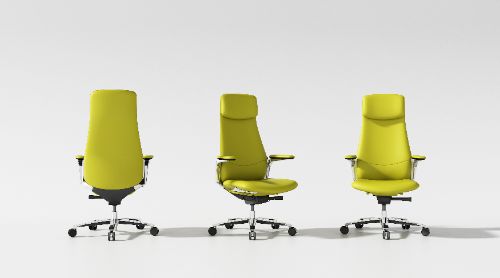
The first mistake is judging a seat by its showroom feel. A high-density cushion often feels too firm in the first minute, yet it is exactly what keeps the metal frame from pressing into your thighs after an hour. Cheaper low-density foam, by contrast, gives that plush initial sink but collapses quickly, and the "cushion" becomes little more than a fabric cover over a hard pan.
Density is not the same as softness. It refers to how much foam material is packed into a given volume, usually expressed in pounds per cubic foot. Automotive seat foam that holds up over time typically starts around 2.5 pcf, while anything below about 2.0 pcf tends to degrade into a saggy, deflated shape within a few years. Softness is controlled separately by the foam's indent force deflection, which is why two cushions can feel similar in the showroom yet perform completely differently on a long drive.
A simple thumb test reveals more than most spec sheets. Press your thumb firmly into the cushion and release. If it snaps back immediately, the foam is probably low-density with high-resilience additives, which feels lively at first but causes the hips to work harder over time. A slower, more deliberate recovery usually means more material per unit volume and better pressure distribution, even if the initial impression is less dramatic.
Gas Lifts and Mechanisms: The Silent Durability Killers
Most people never think about the small gas strut holding up a cabinet lid until the day it stops holding anything at all. These cylinders look sealed and maintenance-free, but inside there is a piston, a rod seal, and a finite charge of nitrogen. Over hundreds of open-close cycles, microscopic wear on the rod lets a trace of gas escape with each stroke. The loss is so gradual that users adapt to a lid that needs a little extra push, then a lot, and finally a prop rod jammed in place because the lift is completely dead.
Mounting geometry quietly adds to the problem. A slightly misaligned bracket or a pivot point that was never lubricated after installation forces the rod to deflect sideways as it extends. That side load chews up the internal guide bushing and accelerates seal wear far beyond the design spec. You won't hear a loud failure; you'll notice a faint hiss on compression, or see an oily film forming on the shaft. By the time the telltale signs appear, the gas charge is often too low to recover without a full replacement.
The real trap is that these small losses compound across every moving part. A gas spring that loses ten percent of its force makes the hinge carry more load, which loosens screws, which changes the closing angle, which stresses the bracket. The silent killer never announces itself with a snap or a crack. It shows up as a door that drifts down on your fingers, a lid that won't stay open on a chilly morning, or a seat that slowly sinks while you're driving. Rechecking the struts and pivot points once a year is the cheapest way to avoid buying new hardware way too soon.
Stitching, Edges, and the Small Details That Reveal Quality
Look closely at a seam. Mass-produced pieces often rely on loose, uneven stitches that pucker fabric or snap after a few wears. In quality work, thread tension is consistent, stitches are short enough to hold but not so dense that they perforate the material. The reverse side matters just as much: clean backstitching, no dangling loose ends, reinforcing at stress points like pockets or underarms. This isn't about decoration; it's structural honesty.
Edges are equally telling. A raw, unfinished hem or a glued edge that peels after one season betrays corner-cutting. Better makers bind, fold, or paint edges until they feel smooth and dense. Run your finger along a strap or a cuff. If it's even, slightly rounded, and free of ridges, that's time someone spent setting creases, sanding layers, or hand-rolling a hem. It's the kind of thing you don't notice until you compare it side by side with the alternative.
Small details - button shanks wrapped with thread, bar tacks at pocket corners, linings cut on the same grain as the shell, zippers that glide without catching. These aren't extras; they're evidence. A maker who aligns patterns across seams or matches thread color under different lighting isn't showing off. They're simply paying attention after the point where most would stop. That's the difference between something that looks good in a photo and something that still looks good after years of use.
Paying for the Chair, Not the Brand: Getting OEM Comfort Without the Markup
Most people assume a high-end office chair justifies its price with superior craftsmanship. In reality, many well-known brands don’t manufacture their own chairs at all — they contract OEM factories to build them, then slap on a logo and add a hefty markup for advertising, retail partnerships, and brand prestige. Paying for the chair itself, not the label on the headrest, means understanding that the core comfort, adjustability, and durability often come from the same assembly line regardless of what badge ends up on the back.
OEM (original equipment manufacturer) chairs are the exact models produced for these brands, but sold without the fancy branding — either through factory-direct channels, lesser-known distributors, or private-label sellers. The savings are not from cutting corners; they come from eliminating the marketing budget and middlemen. A chair that retails for $1,200 under a famous name might be available for $500–$700 from the OEM source, with identical mesh tension, lumbar support, armrest mechanics, and even the same warranty terms if you know where to look.
To shop smart, focus on measurable specs rather than brand reputation. Check the chair’s weight capacity, seat depth adjustment range, tilt lock positions, and the type of gas lift (look for Class 4, which indicates higher durability). Compare the dimensions to a known model you’ve tested in a showroom; if the measurements and material descriptions match, you’re likely looking at the same chair. Read long-term user reviews for squeaks, cylinder failures, or foam flattening instead of trusting a logo. Buying OEM comfort means doing a little homework up front so you can sit in the same ergonomics for hundreds of dollars less.
FAQ
Focus on seat foam density and shape rather than thickness alone. Press into the cushion—if it rebounds quickly and doesn't bottom out, that's a good sign. Also check whether the lumbar curve hits your lower back without forcing you to slump. Armrests that adjust in height, width, and depth make a bigger daily difference than extra padding.
Ask for the leather grade and finish. Full-grain or top-grain leather with a matte or semi-aniline finish usually ages better than heavily corrected or bonded leather. Request a swatch and bend it—cheap coatings crack or whiten along the crease. A mild leather smell, not a chemical one, also points to better material.
Yes. An aluminum base and steel-reinforced frame outlast most plastic parts. Check the gas lift for a recognized safety mark like BIFMA or SGS. If you use the chair on hard floors, softer casters prevent scratches, but the mechanism underneath matters more than the wheels.
Seat depth, seat height range, backrest tilt lock, and adjustable lumbar support matter most. If you're taller, make sure the seat depth can clear the back of your knees by a couple of inches. A headrest is nice but only if it doesn't push your head forward. Skip chairs with only a one-touch height lever if you plan to sit for more than two hours.
Leather doesn't breathe like mesh, so body heat builds up. Perforated leather panels or a breathable fabric insert under the seat and back can help. Also ask about the foam's open-cell structure—denser closed-cell foam traps heat. If you run warm, opt for a lighter leather color or a chair with a seat ventilation channel.
Realistically, $400 to $900 gets you solid construction with top-grain or good quality corrected leather, a reliable gas lift, and decent foam. Below $200 usually means bonded leather and low-density foam that flattens within a year. Since OEM skips brand markup, you can often get better specs for less, but compare the frame warranty and return policy before buying.
Look for a gas lift certified to BIFMA or SGS standards, a foam density rating above 1.8 lb/ft³ (or a 24/7 use rating), and a leather abrasion score over 30,000 Martindale cycles. A frame warranty of at least five years is a strong signal. If they won't share these specs, treat that as a red flag.
Yes, many OEM suppliers let you request a longer gas lift, deeper or shallower seat pan, different armrest ranges, or a taller backrest. Just confirm that the custom parts still pass the same structural testing as the standard model. Customization doesn't have to mean weaker—it just means you need clear written specs.
Conclusion
When you start comparing OEM leather office chairs, the phrase 'genuine leather' gets thrown around a lot, but it rarely tells the whole story. On many OEM builds, genuine leather is a split hide that's been sanded and coated, which gives you a uniform look but not necessarily the breathability or wear resistance of full-grain. That doesn't mean it's bad—it just means you should check how the leather is finished and where it's used. The real test you won't see in most listings is the cushion. Foam density matters far more than initial softness. A high-resilience foam with a density around 2.5 pounds per cubic foot or higher will hold up for years, while a cheap low-density foam collapses after six months and leaves you sitting on the frame. Press down on the seat with your palm; if you can feel the base quickly, walk away.
Gas lifts and tilt mechanisms are where OEM chairs either prove their worth or fail quietly. A Class 4 gas lift from a known supplier like SHS or KGS will last far longer than a no-name Class 2, and a smooth, clunk-free recline with adjustable tension is a good sign the mechanism was built to handle daily use. Then look at the small stuff. Double stitching along the seams, neatly folded edges, and leather that's glued and stretched without wrinkles or gaps tell you the factory cared about more than hitting a price point. A quality OEM chair should feel solid when you tilt back, with no wobble in the armrests or creaks from the base. And remember, you're not paying for a logo. OEM chairs skip the brand markup, but that only works if the factory put the savings into materials and assembly instead of just cutting corners. Ask for the spec sheet—foam density, gas lift class, leather finish—and compare it to a branded chair at twice the price. Often the difference is just a badge.
Contact Us
Contact Person: Diff Wang
Email: [email protected]
Tel/WhatsApp: +8613650281199
Website: https://www.ofcmeshchair.com/