Recloser Company Solutions for Smarter Grid Reliability
2026-08-31
Ask any utility engineer what keeps them up at night, and grid reliability will top the list. Reclosers have long been the silent workhorses of distribution networks, but legacy devices can't keep pace with today's fluctuating loads and extreme weather. That's where Deepwill comes in. We build recloser solutions that don't just react to faults—they anticipate them, using smarter sensing and faster isolation to keep power flowing. This article explores how the right recloser strategy turns a fragile feeder into a resilient, self-correcting grid asset.
Grid Resilience That Begins at the Feeder
Most conversations about grid resilience zero in on high-voltage transmission corridors or utility-scale storage. But the real work often happens closer to home, at the distribution feeder level. Feeders are the circuits that carry power from substations into neighborhoods, commercial strips, and industrial parks. When they fail, customers lose service regardless of how well the bulk system is performing. Building resilience here means rethinking how these circuits are designed, monitored, and restored after disruptions.
A feeder-level approach starts with better visibility. Many utilities still lack real-time sensing on every feeder, so outages are discovered only when customers call. Adding smart sensors and automated switches turns a passive network into one that can isolate faults and reroute power without waiting for a crew. Pair that with targeted vegetation management and stronger poles in flood-prone areas, and the same feeder that used to trip during every storm can ride through most events.
Resilience also depends on local flexibility. Rooftop solar, small batteries, and controllable loads are often scattered across feeders. If utilities can coordinate these resources during emergencies, a feeder can keep critical services running even when the transmission link is down. This shifts the resilience conversation from giant infrastructure projects to everyday circuits—and that's where many utilities are finding the fastest, most affordable wins.
Smarter Fault Response, Fewer Outage Minutes
When a fault hits a distribution feeder, the difference between a few flickering lights and a long, silent outage often comes down to how quickly the system can tell a tree branch from a failed transformer. Modern fault response pulls waveform data from line sensors in milliseconds, compares it against a running library of known fault signatures, and flags the likely location before the first customer call even arrives.
That speed feeds directly into isolation. Instead of sending a crew to patrol miles of line, operators can open the nearest automated switches and reroute power around the damaged section. Some networks now let the grid make that call on its own: a temporary fault triggers one reclose attempt, while a permanent fault triggers immediate sectionalizing, keeping unaffected streets energized.
The practical result is fewer total outage minutes, not because crews work faster, but because the faulted area shrinks to the smallest possible footprint. Less line to patrol, fewer customers interrupted, and service restored before most people even realize the lights blinked.
Reclosers Built for the Real World
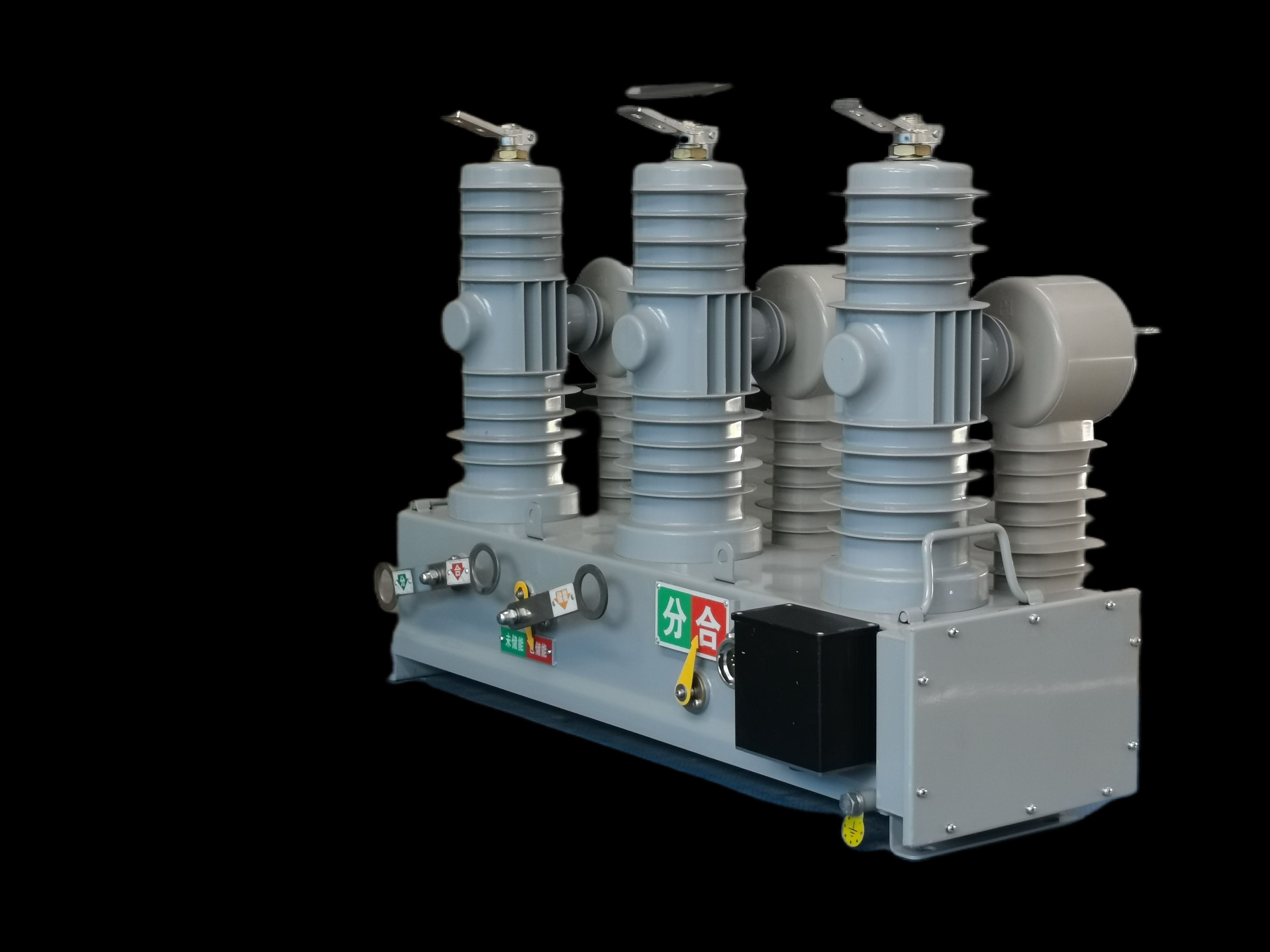
Out in the field, reclosers face more than just fault currents—they deal with ice storms, salt spray, wildlife, and years of neglect. That's why our reclosers aren't designed on a whiteboard; they're engineered from decades of utility feedback and hard-won lessons from the worst conditions imaginable. Every seal, every hinge, every control board is tested to survive what the real world throws at it.
We skip the fragile touchscreens and delicate electronics that look great in a demo but fail after a month of dust and vibration. Instead, you get robust mechanical indicators, intuitive manual controls, and a design that a lineworker can operate with gloves on in the middle of the night. The goal isn't to impress at a trade show—it's to keep working when everything else has given up.
From remote mountain feeders to coastal substations, our reclosers are built to be forgotten after installation, because they just don't need attention. No overly complex diagnostics, no proprietary software that requires a factory technician. Just solid engineering that understands one simple truth: a recloser is only as good as its last storm season.
Remote Diagnostics Without the Noise
Remote diagnostics often drowns teams in a flood of alerts, logs, and status updates—many of which mean nothing. The trick is to strip away that noise and surface only what actually needs attention. Instead of chasing every ping, engineers can focus on patterns that signal real trouble, like a sudden drop in throughput or a recurring timeout that survives a restart.
Quieting the noise isn't about ignoring data; it's about giving each signal a clear context. When a device reports an issue, the message should arrive with enough detail—error codes, affected component, recent changes—to act on immediately. That way, remote diagnostics becomes a conversation with the system rather than a wall of alarms.
From Reactive Repairs to Predictive Control
For decades, industrial maintenance followed a straightforward but costly pattern: run equipment until it breaks, then scramble to fix it. This reactive approach kept teams in constant firefighting mode, with unplanned downtime eating into production schedules and budgets. The shift toward predictive control changes that logic entirely. Instead of waiting for failure, sensors and operational data now reveal early warning signs—subtle changes in vibration, temperature, or current draw—long before a component actually fails.
Predictive control does not simply flag anomalies; it ranks them by urgency and likely impact, giving maintenance planners a clear view of what needs attention next week versus next month. That foresight allows work to be scheduled during normal downtime windows, parts to be ordered without rush fees, and skilled technicians to focus on high-value tasks rather than emergency call-outs.
The transition requires more than installing sensors. It demands clean data pipelines, models that learn from actual failure histories, and close collaboration between operations, maintenance, and data teams. When those pieces come together, the result is a quieter, more stable plant floor—where maintenance becomes a planned activity rather than a recurring crisis.
Utility-Grade Automation, Simplified
The phrase 'utility-grade' usually conjures images of hardened hardware, redundant systems, and a steep learning curve. That is exactly the assumption this approach works against. Automation should be tough enough to run a water treatment plant or a power substation without constant attention, but it should not take a team of engineers months to configure a basic process. The real breakthrough is treating robustness as a design constraint rather than an afterthought, then hiding that complexity behind an interface that does not intimidate operators.
What does simplified actually mean here? Not stripped-down or toy-like. It means the dangerous parts—state management, failover, error recovery—are handled by the platform instead of left to whoever writes the logic. Pre-built templates for common industrial patterns let you assemble a control sequence in an afternoon, not a quarter. And when something does go wrong at 3 a.m., the diagnostics are written for a tired technician holding a tablet, not a developer reading stack traces.
The result is a different kind of reliability. Systems stop being fragile because fewer custom scripts are involved. Teams stop being bottlenecks because routine changes no longer require specialized programming knowledge. And the plant manager stops dreading software updates. Utility-grade automation, simplified, is not about making industrial control easy at the expense of safety—it is about making safety the default setting so that ease of use becomes possible.
FAQ
They use adaptive timing curves and local fault sensing to distinguish between momentary tree contact and a permanent cable fault. Instead of locking out immediately, the recloser tests the line with a series of timed re-energizations. If the fault clears, service continues without a crew ever leaving the yard. Only when the fault persists through the full sequence does it open permanently and flag the location for dispatch.
We support DNP3, IEC 61850, and Modbus over fiber, cellular, or licensed radio. The controller can publish status changes, event logs, and analog measurements without polling overhead. For utilities that aren't ready for full remote control, a local HMI and optional RTU mode let you start with basic telemetering and add control later without replacing hardware.
Yes. The protection engine uses user-defined TCC curves and automatic coordination checking against uploaded fuse sizes and breaker settings. A built-in simulator runs fault scenarios across the zone before you commit settings, so you can catch a mis-coordination before it becomes a field problem.
Each phase operates independently with its own vacuum interrupter and current sensor. If one phase sees a fault, only that pole opens while the other two continue carrying load. This reduces stress on three-phase motors downstream and avoids dropping an entire neighborhood for a branch contact on one conductor.
The controller records oscillography, sequence-of-events, and load profiles for up to 90 days internally. You can pull waveform captures at 32 samples per cycle to see exactly when the fault started, how long each trip took, and what the current magnitude was. The data exports as COMTRADE or CSV so it drops straight into existing relay analysis tools.
We include a sensitive earth-fault element that uses zero-sequence voltage and current directional logic. It can pick up faults down to a few amps on high-impedance surfaces without tripping on load unbalance. This is especially useful in wildfire-prone areas where a downed line may not draw enough current for a standard overcurrent element to see.
Bi-directional current sensing and dual-directional overcurrent elements let the recloser protect the line regardless of power flow direction. The controller also tracks DER contribution and can adjust trip thresholds dynamically when feeder conditions change, preventing nuisance trips when solar output spikes during cloud clearing.
Conclusion
Starting at the feeder level, these recloser solutions fundamentally change how utilities handle grid disturbances. Instead of waiting for a full outage to trigger alarms, the system detects and isolates faults in seconds, often restoring power before customers even notice a flicker. This rapid response directly translates into fewer outage minutes and a noticeably stronger resilience profile for the entire distribution network. The hardware itself is engineered for harsh field conditions—sun, salt, ice, and everything in between—so the equipment keeps working without constant attention. That kind of ruggedness matters when every minute of downtime counts, and it’s exactly why line crews trust these devices in remote, hard-to-reach locations.
What really sets the approach apart is the shift from reactive repair to predictive control. Remote diagnostics cut through the usual flood of irrelevant alerts, highlighting only anomalies that truly need a crew’s attention. This means operators no longer waste hours sifting through false alarms—they see clear, actionable signals and can dispatch teams to the right place at the right time. As a result, planned maintenance becomes a strategic activity rather than a fire drill, preventing many outages before they ever happen. Utility-grade automation is wrapped in an interface simple enough that field teams don’t need specialized training to act on the data. It’s not just smarter grid tech; it’s a practical rethinking of how reliability gets built from the ground up.
Contact Us
Contact Person: Julion
Email: [email protected]
Tel/WhatsApp: 8617351370631
Website: https://www.deyunelectric.com