
Reliable Pharmaceutical Air Compressor Selection and Maintenance Essentials
2026-08-21
Behind every sterile vial and precisely coated tablet lies a compressed air system that most operators rarely think about—until it fails. Pharmaceutical production demands air that is bone-dry, oil-free, and contaminant-free, yet selecting the right compressor and keeping it in peak condition is often treated as an afterthought. What separates a reliable setup from a costly compliance headache? In this guide, we break down the non-obvious selection criteria and maintenance routines that keep air quality audit-ready. Whether you're upgrading an aging unit or troubleshooting pressure dew point drift, Seize Air brings practical, field-tested insights to help you avoid the mistakes that quietly erode product quality.
Matching Compressor Output to Cleanroom Air Purity Requirements
Supplying compressed air into a cleanroom is not simply a matter of connecting a line and setting a pressure. Even a well-maintained compressor can shed microscopic oil droplets, condensed water, or wear particles from internal surfaces, and these contaminants will quickly conflict with the ISO 14644-1 particle limits you are trying to protect. The first step in matching output is to know the cleanroom's actual demand: how much air is used, at what point it contacts the product or environment, and which particle size counts matter for the application. A Class 5 space may tolerate certain filtered air for pneumatic tool exhaust, while a Class 3 area near open product will need far stricter treatment.
Once the demand profile is clear, select a compressor type and treatment train that can realistically meet it without overbuilding. Oil-free scroll or rotary screw compressors reduce the risk of hydrocarbon carryover, but they still require coalescing and particulate filters plus a desiccant or membrane dryer to manage moisture. For oil-lubricated machines, high-efficiency coalescers, activated carbon towers, and redundant point-of-use filters become essential, not optional. Verify performance with a particle counter and dew point sensor at the cleanroom entry point, not just at the compressor outlet. This field measurement closes the gap between catalog specifications and what actually reaches the cleanroom air network, letting you adjust filter change intervals and dryer settings before a purity deviation becomes a product risk.
Evaluating Flow Rate, Pressure, and Duty Cycle Before You Commit
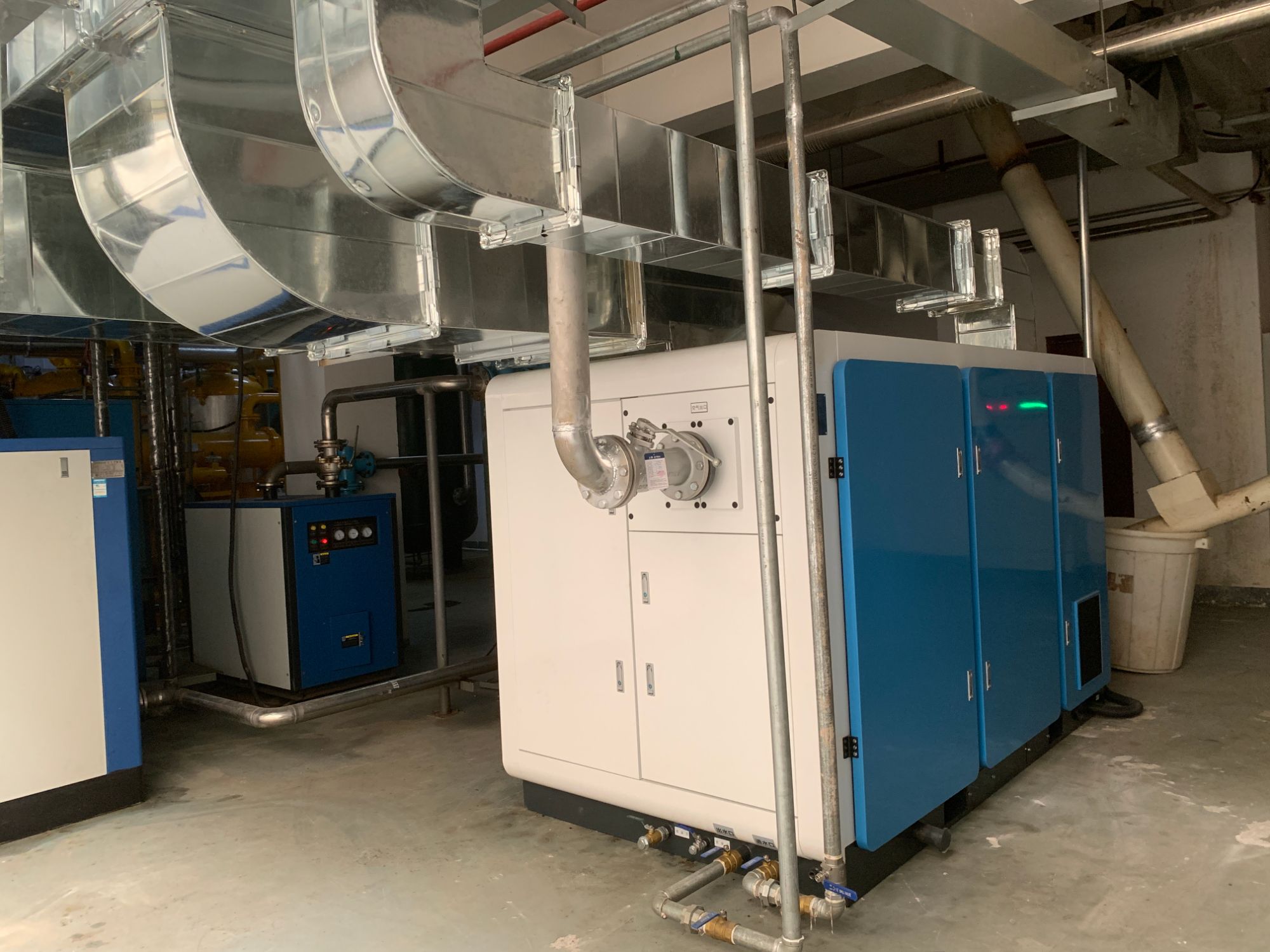
Flow rate gets most of the attention, yet it is often the place where buyers talk themselves into trouble. Rather than relying on the maximum output printed on a spec sheet, take stock of the tools or processes that will run simultaneously. Add up their actual consumption at the working pressure, then add a buffer of 15–20 percent. If long hose runs, quick-connect fittings, or altitude are part of the picture, your real-world delivery will drop below the brochure number.
Pressure is not a substitute for flow, but it is easy to confuse the two when a machine struggles to keep up. Check the minimum pressure your highest-demand tool needs while it is running, not the cut-in or cut-out pressure of the tank or pump. Account for pressure drop across filters, regulators, and every connection in the line. A system that only hits the right pressure with no air moving will fail the moment you pull the trigger.
Duty cycle is the quiet killer in budget equipment. A 50 percent duty cycle means the unit should rest for half of every ten-minute window, and ignoring that limit leads to overheating, moisture problems, and premature failure. Match the duty cycle to your actual work pattern: a nailer used a few seconds at a time is far less demanding than a sander or blast cabinet running for minutes on end. If your application is continuous, choose a machine rated for it or oversize the storage capacity to buy some cooling time.
Oil-Free Operation as a Foundation for Contamination Control
Choosing equipment that runs without oil eliminates a primary source of internal contamination from the start. In many compressed air and vacuum systems, lubricants gradually break down, migrate into the process stream, and compromise product purity. By removing oil from the equation entirely, you stop the problem before it begins rather than relying on downstream filters to capture what should never have been there in the first place.
This approach shifts the focus from treatment to prevention. Oil-free designs use alternative materials and coatings that maintain performance without the need for lubrication, which means fewer moving parts exposed to sticky residues. The result is a cleaner operating environment, reduced maintenance intervals, and less risk of unexpected contamination events that can shut down a line or spoil a batch.
For industries where even trace hydrocarbons are unacceptable—such as food processing, pharmaceuticals, or electronics manufacturing—oil-free operation is not just an option but a baseline requirement. It supports consistent output, simplifies validation, and gives operators confidence that the air or vacuum supply itself is not introducing variables into sensitive processes.
Scheduled Checks for Filters, Seals, and Condensate Drains
Set a reminder to inspect your air compressor's intake filter every two weeks. A clogged filter forces the motor to work harder, raising energy costs and shortening component life. If it looks grey or clogged with dust, replace it immediately—waiting until the quarterly service often means the machine has already been straining for weeks.
Seals around hoses, valves, and fittings degrade quietly. Run your fingers along connection points while the system is pressurized and listen for a faint hiss. Tiny leaks add up fast: a single 1/16-inch hole can waste over 3,000 cubic feet of air per month. Keep a small spray bottle of soapy water nearby—bubbles reveal leaks that your ears miss.
Condensate drains need more attention during humid months. If your timer drain is set to open only every 45 minutes, you may be trapping water inside the tank, which leads to rust and contamination downstream. Manually crack the drain valve at the end of each shift and watch the discharge. Clear water is normal; milky or rusty fluid means your separator needs a closer look before the next production run.
Building Redundancy and Emergency Bypass into Your Air System
A compressed air system that lacks a planned bypass path turns a routine filter change or pressure regulator failure into a full shutdown. The practical fix is to install isolation valves and a valved bypass loop around every component that can clog, freeze, or wear out—dryers, filters, regulators, and even the main receiver if your process cannot tolerate a pressure drop during inspection. This lets maintenance swap out a failed element while the rest of the line stays live, provided the bypass leg is sized for the full flow and not just a trickle that starves downstream tools.
For the supply side, redundancy usually means at least two compressors staged with a lead-lag controller and a shared receiver, so one unit can drop offline without the header pressure collapsing. Add a manual or automated emergency bypass around the dryer bank if you run refrigerated or desiccant dryers, because a dew point spike is sometimes preferable to losing all air to a critical process. Mark each bypass valve clearly and train operators to cross-connect only under controlled conditions, otherwise an open bypass can quietly send wet, dirty air into a line that is supposed to stay dry.
Controlling Heat, Humidity, and Ventilation in the Compressor Room
A compressor room that feels hot and sticky is not just uncomfortable—it is a sign that the equipment is working against itself. Air-cooled compressors depend on a steady flow of cooler air to carry away the heat they generate. When the room temperature creeps above 95°F (35°C), the compressor’s internal cooling system loses efficiency, oil life shortens, and the risk of overheating shutdowns rises sharply. A practical approach starts with measuring the actual heat load: for every 100 CFM of compressed air produced, roughly 15,000 to 20,000 BTU per hour must be removed. Placing exhaust fans high on the wall and intake louvers low on the opposite side creates a natural draft that sweeps hot air out while pulling fresh air across the motor and airend.
Humidity control is often overlooked until water starts showing up in the air lines. High relative humidity in the compressor room increases the moisture load on the dryer, forcing it to work harder and still delivering air with higher dew point. The goal is not to make the room bone-dry, but to keep relative humidity between 40% and 60%. This range prevents condensation on cool surfaces without causing static electricity problems. In humid climates, a dedicated dehumidifier or an air conditioning unit sized for the room’s latent heat load is a better investment than continuously replacing dryer desiccant or dealing with corroded piping downstream.
Ventilation must be treated as a flow problem, not just a fan size guess. A common mistake is installing a large exhaust fan with no clear intake path, which creates negative pressure and pulls dust or exhaust fumes from adjacent areas into the compressor room. Calculate the required airflow based on the compressor’s heat rejection and the allowable temperature rise. For a typical air-cooled rotary screw compressor, a minimum of 10,000 CFM per 100 HP is a safe starting point. Use motorized dampers tied to the room thermostat so ventilation increases automatically during hot weather or heavy load periods. Keep the area around the compressor clear of boxes and clutter—blocked airflow across the aftercooler can reduce compressor capacity by 15% or more without any visible warning.
FAQ
Look for an oil-free rotary screw or scroll design with stainless steel or coated wetted parts. The compressor should be able to deliver air that meets ISO 8573-1 Class 0 for oil and a pressure dew point of -40°C or lower if the air touches powder or sterile surfaces. Also check that the manufacturer provides full material certificates and validation support.
Trace oil can bind to fine powders, block sterilizing filters, and support biofilm formation inside piping. Removing oil at the source is much simpler than trying to guarantee zero carryover with downstream filters, especially during compressor startup and part-load conditions.
A pressure dew point of -40°C is common for critical uses, though some tableting and packaging lines can live with -20°C if the product is not hygroscopic. The key is to stay below the point where free water can condense in distribution piping or interact with excipients.
Daily checks of automatic drain operation, weekly logging of pressure differential across the final filter, and monthly verification of dew point against the baseline catch most issues early. Belt tension, intake filter condition, and receiver blowdown are also easy to overlook but cause gradual performance loss.
A properly sized receiver smooths out demand spikes from tablet presses or filling lines, reduces compressor cycling, and gives moisture a chance to drop out before the dryer. It also buys a few minutes of buffer if a compressor trips, which can be enough to finish a batch.
You start with factory acceptance testing and material documentation, then move to on-site IQ to confirm installation against specifications. OQ demonstrates the compressor and dryer hit dew point, pressure, and particulate targets under normal load, while PQ shows the air stays within limits during actual production cycles.
Watch for rising dew point readings, sticky or sluggish automatic drains, increasing pressure drop across the coalescing filter, and any oil sheen or odor in the air. A slow drop in receiver pressure during normal batch runs can also indicate undersized piping or a failing compressor element.
Conclusion
Pharmaceutical compressed air systems succeed or fail long before the first batch is produced, and the foundation rests on matching the compressor’s output to the cleanroom's actual purity needs. Rather than defaulting to a generic specification, engineers should verify the required ISO 8573-1 class for particles, water, and oil, then work backward to select equipment that can hold that standard under real operating conditions. Flow rate, pressure, and duty cycle are equally critical: oversizing wastes energy and invites moisture problems, while undersizing forces the compressor to run continuously and shortens its service life. Choosing oil-free compression removes a major contamination source at the origin, but it is not a substitute for downstream filtration and drying—it simply makes the whole chain more defensible during audits and less likely to fail unexpectedly between validation cycles.
Once the system is installed, reliability depends on routine attention to components that quietly degrade: intake filters, shaft seals, and condensate drains should be inspected on a fixed schedule, with logged results that catch small leaks before they alter dew point or particle counts. For facilities that cannot afford downtime, designing redundancy into the air supply—such as a parallel compressor or a valved emergency bypass—turns a potential shutdown into a non-event. Finally, the compressor room environment often gets overlooked: excess heat, humidity, or poor ventilation can reduce motor efficiency, promote corrosion, and overwhelm dryers, so maintaining a cool, dry, well-ventilated space is as much a maintenance task as changing filters. Together, these practices create a compressed air system that supports pharmaceutical production without becoming the weak link in contamination control.
Contact Us
Contact Person: Mia
Email: [email protected]
Tel/WhatsApp: +86 19821985894
Website: https://www.seize-air.com