Revolutionizing Efficiency: The Rise of the Autonomous Handling Factory
2026-11-16
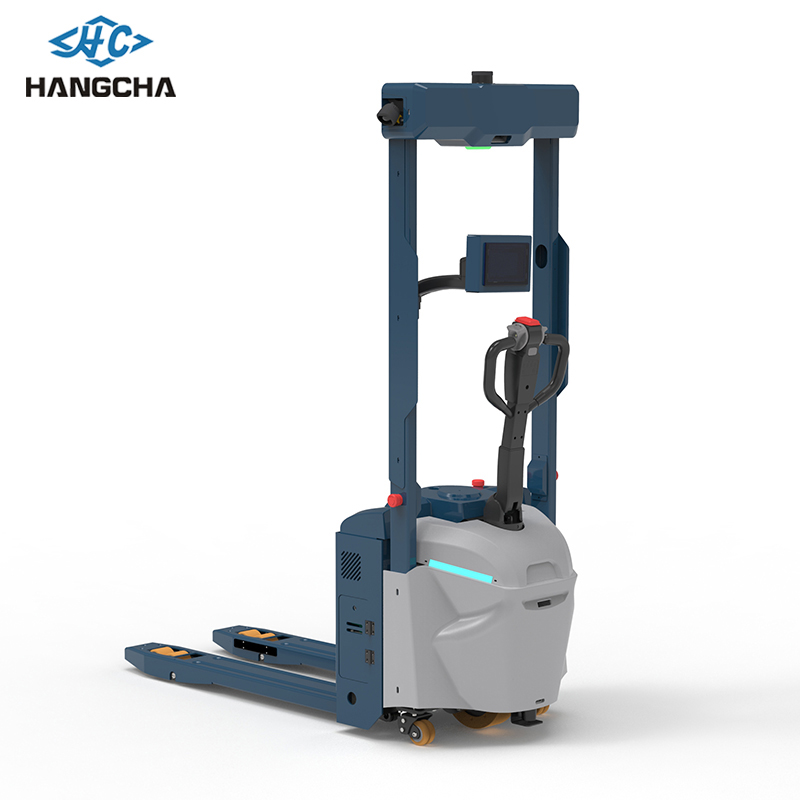
Walk into any forward-thinking warehouse today and you’ll witness something remarkable—machines that think, move, and adapt without a single human command. The autonomous handling factory is no longer a futuristic concept; it’s the quiet engine reshaping global supply chains. At the center of this shift stands HANGCHA, rewriting what efficiency means when forklifts learn to dance between racks, avoid obstacles, and make split-second decisions. This isn’t just automation—it’s a fully reimagined workflow where downtime vanishes and precision becomes the baseline. So what does it take to build a factory that practically runs itself? Let’s explore the forces converging to make autonomous handling not just possible, but inevitable.
When Machines Learn to Move: The New Logistics Backbone
Warehouses that once echoed with the sound of forklifts and shouted instructions are falling silent. In their place, fleets of autonomous mobile robots glide along invisible grids, rerouting themselves in real time when a sensor detects a fallen box up ahead. These machines aren't just following pre-scripted paths; they're learning from the flow of goods, remembering which items peak on rainy Tuesday afternoons and adjusting their staging positions before the first order hits the system. It's a quiet transformation that turns a building full of inventory into a living, breathing organism.
The real shift happens when motion becomes a shared language. Traditionally, each piece of equipment spoke its own dialect—conveyors, sorters, palletizers all locked into rigid sequences that took weeks to reprogram. Now, a single piece of software observes the entire floor, teaching robotic arms to place delicate bottles with the same grace a veteran picker reserves for champagne flutes. A six-axis arm might notice that a certain tote wobbles when placed at speed, and without human intervention, it will take a slightly different arc from that point forward, sharing the correction instantly with every other arm on the network. What emerges is not just automation, but orchestration—where every movement is a data point that refines the next one.
The ripple effects stretch far beyond the loading dock. Supply chains, long cursed with bullwhip-effect swings, start to dampen their own oscillations. When a distribution center in Rotterdam learns that a slower vessel is two days out, its autonomous fleet decelerates the put-away process to save energy, while in Memphis, a twin facility autonomously ramps up to absorb the redirected load. This isn't a command-and-control hierarchy; it's a network where each node has the intelligence to compromise between local efficiency and global resilience. The machines are no longer just moving boxes—they're moving judgment closer to the point of action, and in doing so, they're redefining how we think about velocity itself.
Inside the Zero-Touch Warehouse: Orchestrating Chaos Without a Human Hand
Walk into a modern zero-touch warehouse, and the first thing you notice isn't the silence—it's the rhythm. Pallets glide along magnetic tracks, bins weave through a ceiling grid of automated shuttles, and robotic arms pluck items with the spare precision of a watchmaker. Every movement answers to a central nervous system of sensors and algorithms that never blinks, never tires. The chaos of tens of thousands of SKUs gets collapsed into a fluid ballet where delays are measured in microseconds, not minutes.
Beneath the choreography lies a battlefield of decision-making. When a sudden rush of orders shifts product demand in real time, the system recalibrates without a pause. It might reroute a fleet of autonomous mobile robots to a priority zone, reconfigure packing stations on the fly, or balance the load across conveyance lines so tightly that bottlenecks dissolve before they form. People aren't just absent from the floor—they're absent from the loop. The warehouse doesn't know about morning shifts or coffee breaks; it knows only that a delivery promise is a data point, and data points don't forgive.
This isn't mere automation layered onto old layouts. The zero-touch philosophy demands a ground-up rethinking where inventory itself becomes active. Items are stored in dense honeycomb grids not by category, but by velocity and association, so the most frequently paired products end up in reach of the same retrieval arm. The result is a facility that feels less like a building and more like a living organism—one that inhales incoming shipments and exhales perfectly packed orders, orchestrated entirely by code that learns from every scan, every grasp, and every error it will never repeat.
From Forklifts to Fleets of Bots: A Silent Transformation Under One Roof
Walk through a modern warehouse today and the roar of diesel engines feels almost nostalgic. Where forklifts once ruled the aisles, a quiet army of autonomous mobile robots now glides across polished concrete, their paths lit by soft LED pulses rather than exhaust fumes. This shift happened not with a grand announcement but through gradual replacement—one bot at a time, one workflow at a time—until the whole floor started humming to a different rhythm.
Beneath the same roof, human roles have shape-shifted in unexpected ways. The veteran forklift driver who spent decades perfecting the tilt and balance of a load now trains neural networks that orchestrate fifty bots moving in concert. Colleagues who once shouted over engine noise now collaborate in near silence, trading wrenches for tablets that map real-time inventory. The transition hasn’t just automated lifting; it’s rewired how a team solves problems, creating a hybrid workforce where physical instinct meets algorithmic precision.
What’s most striking is how invisible the change feels from the outside. The same warehouse walls, the same shipping bays, the same pallets stacked to the ceiling. Step inside, though, and you’ll notice the differences in small details: sensors threaded through racking, QR codes stitched into floor patterns, and a collective calm that wasn’t there before. This isn’t a robotic takeover—it’s a reinvention of place, where the loudest sound is often the soft beep of a bot acknowledging a task completed.
The Brain Behind the Brawn: Real-Time Control Towers Remapping Production Floors
The shift from reactive problem-solving to proactive orchestration on factory floors didn’t happen overnight. It came with the arrival of real-time control towers — digital nerve centers that fuse live data from machines, workers, and supply streams into one visual cockpit. Suddenly, a delay in a pick-and-place robot’s cycle time isn’t logged in a report hours later; it triggers an immediate recalibration of upstream conveyors and alerts the shift lead’s tablet before the bottleneck even forms. These systems remap production flows dynamically, treating the floor not as a fixed layout but as a living grid of adjustable pathways, shifting workstations and rerouting material deliveries like a traffic system avoiding jams.
What makes the modern control tower the real “brain behind the brawn” is its ability to learn the rhythm of the floor. Unlike static dashboards, today’s platforms apply pattern recognition to historical shift data, spotting that Thursdays at 2 PM always see a minor drop in assembly line speed due to a transition in temporary staff. The tower pre-adjusts pace targets and subtly reallocates resources without anyone needing to pull a manual override. Operators who once relied on walkie-talkies and whiteboards now interact with a living map where a simple drag-and-drop can rebalance entire cell workloads, and the system instantly checks against SKU-level commitments to ensure on-time shipments don’t break.
Behind the scenes, these towers are quietly dissolving the wall between planning and execution. A demand spike from a retailer feeding into upstream schedules used to take planning cycles to materialize into shop-floor adjustments. Now, the tower catches that spike in real time, resequences batch production for the affected SKUs, and notifies a forklift driver to bring semi-finished units from buffer storage to a repurposed line. The “brawn” —the robots, conveyors, and manual stations—are still doing the heavy lifting, but it’s the control tower’s subtle, continuous remapping that keeps everything moving as if the floor itself had a nimble mind.
Where Every Second Counts: Collision-Free Corridors and Self-Healing Workflows
In environments where timing determines outcomes, the most overlooked vulnerability isn’t speed—it’s friction. When automated systems race through decision trees, even a single blocked pathway can cascade into delays that compromise entire operations. The solution lies not in making things faster, but in designing routes that refuse to collide in the first place.
Imagine a dispatch logic that doesn’t just react to conflicts, but pre-empts them. By mapping movement corridors with zero tolerance for overlap, real-time task orchestration becomes a quiet ballet rather than a frantic traffic controller. This isn’t about adding more lanes—it’s about making every possible trajectory mutually exclusive so that waiting ceases to be a default state.
Of course, perfect planning meets imperfect reality. That’s where the workflow heals itself. When a device drops offline mid-cycle or a resource becomes unavailable, the system rewrites its own script without pausing the rhythm. Failed steps get silently reassigned, alternate paths activate before anyone notices the break, and the only proof that something went wrong is a log entry no one will ever read. True continuity isn’t achieved by avoiding failure—it’s achieved by making recovery too seamless to measure.
Beyond the Assembly Line: How Autonomous Handling Redefines the Agile Supply Web
The classic assembly line didn't just move products—it dictated a fixed rhythm, a straight-line logic that collapsed when demand shifted or a single segment jammed. Warehouses and factories clung to that predictability for decades, but today's supply web looks nothing like a line. It's a mesh of shifting nodes, last-minute order changes, and micro-fulfillment pressures. Autonomous handling steps into this chaos not as a faster conveyor but as a decision-making layer that reroutes tasks while the floor is still running. A pallet no longer waits for the next scheduled transfer; it gets picked, redirected, or merged based on real-time material needs, bypassing the old start-to-finish cadence entirely.
What makes the shift profound is how autonomy dissolves the physical constraints we once designed around. Mobile robots and intelligent manipulation systems don't need permanent guidepaths or fixed pickup points. They read the environment, negotiate traffic with one another, and treat every route as provisional. An urgent replenishment doesn't require a supervisor to stop a zone—the handling system recalculates, pulls inventory from a nearer buffer, and feeds it to a workstation that was never in the original sequence. These micro-decisions accumulate, turning the facility into a live organism that leans toward bottlenecks before they harden. It’s less about automating a step and more about letting material flow reshape itself continuously, without human replanning cycles slowing it down.
Beneath the operational gains, there’s a quieter realignment happening: the supply web becomes capable of learning. Each deviation, each reroute, etches a pattern that informs future behavior. Over time, the system doesn't just react—it anticipates, staging inventory closer to consumption points when similar order profiles emerge. This is where agility graduates from a buzzword to a structural advantage. The assembly line imprisoned process in concrete and steel; autonomous handling gives it back a fluidity that matches how demand actually behaves—erratic, layered, and indifferent to the linear timelines we once relied on.
FAQ
It's a facility where material movement, sorting, and internal logistics are managed entirely by self-guided vehicles, robotic arms, and intelligent software, with minimal human intervention. Unlike traditional automation that relies on fixed conveyors or pre-programmed routes, these factories use real-time data, machine learning, and sensor fusion to adapt on the fly—rerouting a robot if a pathway is blocked or re-prioritizing tasks based on production demands. It’s less about rigid repetition and more about responsive orchestration.
Automotive assembly plants were early adopters, but now electronics manufacturing, e-commerce fulfillment centers, and cold-chain logistics are moving at breakneck speed. The need for high-mix, low-volume handling in semiconductor fabs and pharmaceutical distribution has made autonomous systems indispensable. Any sector facing labor shortages or requiring extreme precision and traceability finds itself drawn to these solutions.
A layered safety and redundancy system is key. Autonomous mobile robots (AMRs) use lidar, 3D cameras, and ultrasonic sensors to detect obstacles and instantly calculate alternative paths. When a vehicle breaks down, the fleet management software reassigns its tasks to nearby units while flagging the incident for remote supervision. Self-diagnostic tools can often run recovery routines automatically—like rebooting a gripper or clearing a minor jam—before a technician is notified.
AI transforms the factory from a reactive space into a predictive one. It analyzes historical throughput data to pre-position goods before they are needed, cutting idle time. Vision systems powered by deep learning identify damaged packaging or misaligned pallets and trigger corrective actions. Over time, the whole facility learns—optimizing traffic patterns during peak hours, coordinating charging schedules to avoid downtime, and even adjusting shelf layouts based on item popularity.
Upfront investment can be steep, but modular, subscription-based robotics platforms are lowering the entry point. Small and mid-sized companies often start with a few AMRs in a confined zone and scale up once they see a clear return on investment—usually from reduced product damage and lower labor turnover costs. Refurbished robot markets and leasing options also make adoption more accessible than a fully bespoke integration.
Roles shift from manual transport and inspection to system monitoring, data analysis, and robot maintenance. The factory doesn’t empty out; rather, it creates demand for technicians who can interpret fleet analytics and for logistics engineers who design layout changes. Many companies retrain floor staff into these positions, and the physical strain of repetitive lifting largely disappears, which can reduce long-term injury rates.
On-time delivery rates often jump above 99 percent, while order accuracy reaches near-perfect levels because barcode scanning and RFID checks are never skipped. Inventory cycle times can be cut by more than half, and energy consumption drops as robots follow the shortest, least-congested routes. Perhaps most telling is the drastic reduction in safety incidents—collisions, falls, and forklift accidents plummet when humans and heavy machinery are separated by design.
Retrofits are common and often preferred because they disrupt less land and capital. Solutions now use natural feature navigation rather than magnetic tape or fixed beacons, so a 50-year-old warehouse can be operational with AMRs in weeks. The main requirement is a solid wireless network and some minor floor hardening. Older sites often get a new lease on life when manual pallet jacks are replaced by a fleet that dances around support columns and narrow aisles without error.
Conclusion
The modern factory no longer revolves around the predictable rhythm of human-operated forklifts and fixed conveyor belts. Instead, fleets of autonomous mobile robots glide through production floors, weaving a fluid logistics backbone that learns and adapts in real time. These machines don’t just follow pre-scripted routes; they sense congestion, reroute around obstacles, and heal workflow interruptions without a single human touch. Inside the zero-touch warehouse, pallets stack themselves, orders pick themselves, and the chaos of high-volume movement gets quietly orchestrated by algorithms that understand the physics of every shelf and corridor. This silent transformation replaces the roar of diesel engines with the whir of electric bots, shifting the very notion of material handling from a brute-force task to a seamless, intelligent choreography.
Behind this orchestrated motion sits a real-time control tower—a digital brain that remaps the production floor by the second, turning static layouts into dynamic, self-optimizing grids. Every collision-free corridor is a calculated gamble won, every delay absorbed by a self-healing workflow that reassigns assets before a bottleneck even materializes. The impact stretches well beyond the assembly line: autonomous handling injects agility into the entire supply web, letting factories respond to demand surges not by adding shifts, but by unleashing an on-demand fleet of cooperative bots. In this environment, efficiency is no longer measured in pallets per hour but in the graceful, uninterrupted flow of goods that seems to anticipate the next move before any human planner does.
Contact Us
Contact Person: Liuxue
Email: [email protected]
Tel/WhatsApp: +86-19084200370
Website: https://www.hf-ec.com/