
Sandpaper Exporter Essentials for Quality Abrasive Sourcing
2026-09-07
Sourcing sandpaper that actually lasts shouldn't feel like guesswork. Yet too many buyers learn the hard way that a low upfront price hides poor backing, uneven grit, or inconsistent batches. Before you lock in your next abrasive order, it pays to know what separates a dependable sandpaper exporter from a costly compromise. From backing weight to grain adhesion and export documentation, the essentials are rarely complicated — they're just easy to skip under deadline pressure. At SHENZHEN SUN ABRASIVES, these details shape every shipment, and they might change how you evaluate your current supplier.
Why a Grit 100 From One Factory Isn't the Same
The number 100 on a grit label only tells you the sieve mesh size the particles passed through—it doesn't capture particle shape, fracture toughness, or how tightly the grading was controlled. Two batches from the same factory can differ if the crushing equipment wears down between runs, producing a higher percentage of blocky vs. sharp grains. That changes cut rate and finish quality even though both are called 100 grit.
Bonding and backing material also play an outsized role. A resin bond that cured in a humid week will flex differently than one cured in dry air, altering how the abrasive sheds dull grains. One factory might use a stiffer paper backing to survive aggressive sanding; another might choose a flexible cloth that conforms to curves. Neither is wrong, but they behave like completely different abrasives in the hand.
Real-world testing shows the gap. A 100-grit disc from line A can remove material 30% faster but leave visible scratch patterns, while a disc from line B might produce a near-polished surface at the cost of frequent clogging. Until you run a side-by-side on the same workpiece, the grit number alone is little more than a rough starting point.
Choosing Backings That Don't Curl in Humidity
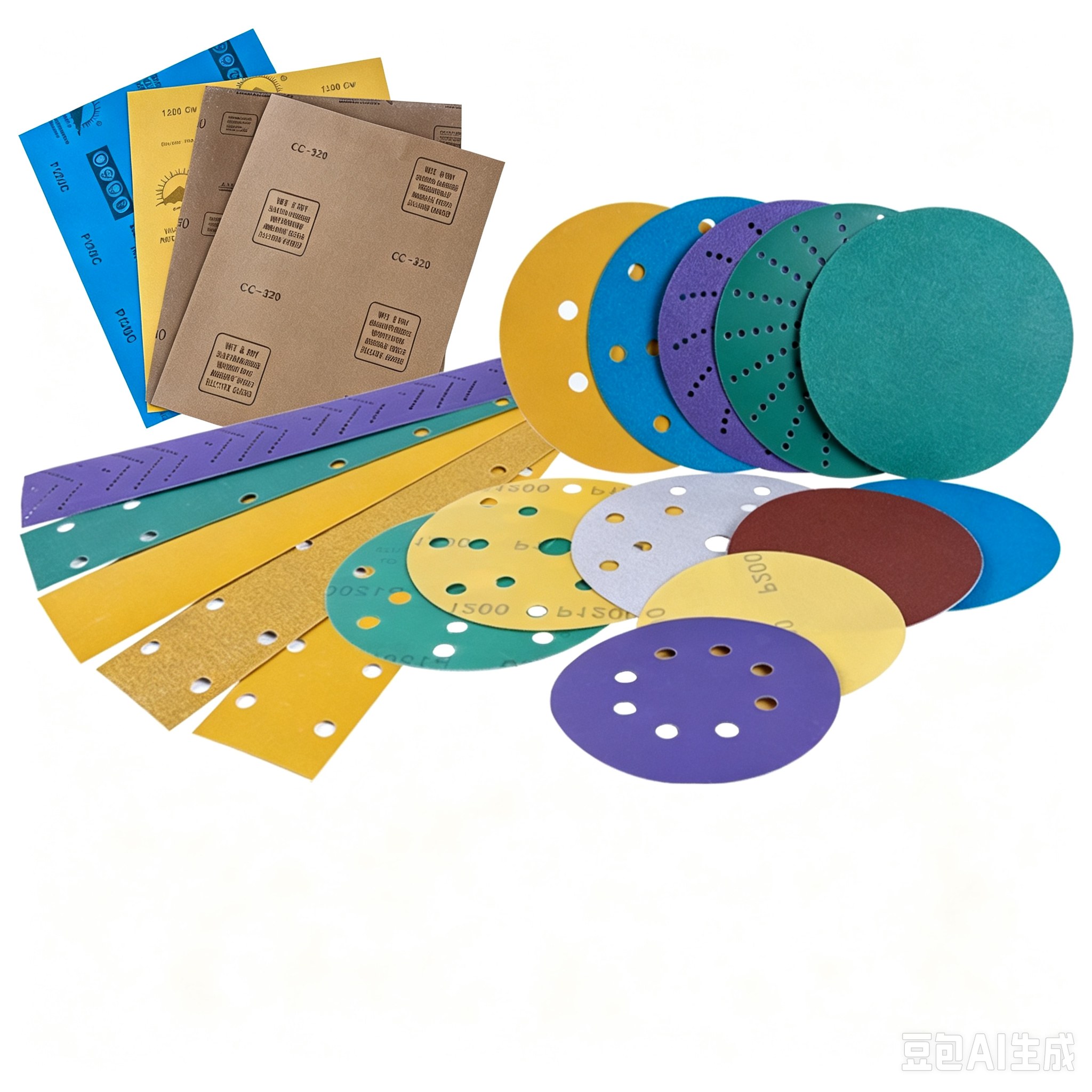
Humidity attacks backings from the edges first, where moisture wicks in faster than the center can release it. If you're comparing materials, skip anything with an open-fiber core—felt, jute, or untreated paperboard—unless the edges are sealed with a hydrophobic coating. Closed-cell polyethylene and dense rubber backings resist this uneven absorption naturally because they don't let water vapor move through the structure in the first place.
Look at the way layers are bonded. A backing with a moisture-stable film on one side and a thirsty fabric on the other will almost always bow when the air gets damp. Better options use symmetric construction or a stiff enough core that minor expansion can't overcome the panel's own weight. If you can get a small sample, place it flat in a bathroom after a hot shower and check it again in an hour—real-world tests expose problems that spec sheets won't mention.
Installation habits matter just as much. Before laying or hanging anything in a humid room, let the material acclimate for 48 hours in the same space. Use a vapor barrier underneath when the subfloor or wall is cool to the touch, and leave a small expansion gap at the perimeter rather than forcing edges tight against the wall. These simple steps keep even moderately stable backings flat long after the first muggy week.
The Resin Story Behind Discs That Die Young
Polycarbonate resin forms the clear plastic core of every CD, DVD, and Blu-ray. During the 1980s and early 1990s, manufacturers rushed to meet demand and sometimes cut corners with resin batches that contained impurities or were not fully dried. These early discs often look fine on the shelf, but their resin starts to break down within a decade. The result is what collectors call disc rot: cloudy patches, pinprick holes, or a bronze discoloration creeping across the reflective layer.
The failure usually begins at the microscopic boundary where the resin meets the metal. Moisture and oxygen slip through the resin over time, especially if the lacquer edge seal is thin. Once the aluminum reflective coating oxidizes, it loses reflectivity and the laser can no longer read the data reliably. In some cases, the polycarbonate itself undergoes hydrolysis, releasing acetic acid that further corrodes the metal. Heat and humidity accelerate this, but the root cause is the chemical instability of the resin formula used in that production run.
Not all discs die young. Later manufacturing adopted purer polycarbonate, better edge sealing, and gold or silver alloy reflectors that resist corrosion far longer. But for thousands of titles pressed during the laserdisc and early CD era, the clock was already ticking from the day they left the factory. Archivists now keep such discs in cool, dry storage, though no environment can reverse the resin's slow self-destruction.
Ocean Freight and the Packaging That Protects Abrasive Quality
Abrasive materials rarely travel alone. Whether it's a bulk shipment of aluminum oxide grit or palletized belts for surface finishing, the journey from manufacturing plant to end user often crosses oceans. Ocean freight subjects cargo to punishing conditions: salt-laden air, drastic temperature swings, constant vibration, and rough handling at multiple transfer points. For abrasives, these conditions aren't just inconvenient—they directly threaten performance. Moisture intrusion can cause clumping in powders or corrosion on bonded wheels, while vibration-induced settling can break down carefully graded particle distributions. The packager's task, then, is not simply containment but active preservation of abrasive quality through weeks of transit.
Effective packaging starts with material selection that fights humidity and contamination. Multi-layer barrier films with vapor-phase corrosion inhibitors shield metal-backed abrasives from rust, while heavy-gauge polyethylene liners with desiccant pouches keep coated abrasives dry. For bulk shipments, flexible intermediate bulk containers (FIBCs) are often lined with polyethylene and sealed against water ingress, but the real differentiator is how the abrasive is stabilized inside. Odd-shaped items like depressed-center grinding wheels get custom die-cut foam inserts or honeycomb dividers, preventing edge chipping and internal friction that could alter cutting performance. Even minor abrasive dust generated during transit must be contained—not only to protect surrounding cargo but to prevent the abrasive from re-depositing unevenly on itself.
Yet the most overlooked threat in ocean freight is time. Long dwell periods in humid ports mean packaging must maintain integrity not for days, but for months. Successful shippers often run accelerated aging tests that mimic stacked container loads under tropical humidity, then inspect the abrasive's breakdown rate before and after. Others switch from standard corrugated boxes to reusable plastic containers with gasketed lids, accepting higher initial cost because it eliminates fiber contamination and dimensional instability. The bottom line is that ocean freight packaging for abrasives is a quiet engineering discipline—one that ensures a grinding wheel arrives with the same grit distribution, hardness, and moisture content it had when it left the factory floor.
Real Certifications vs. Paperwork Theater
Earning a certification used to mean something tangible—proof that you had put in real hours, solved real problems, and walked away with skills you could actually use. But somewhere along the way, the landscape shifted. Now there's a growing divide between credentials that carry genuine weight and those that simply look good in a frame. The latter often involves little more than paying a fee, sitting through a few hours of pre-recorded videos, and ticking boxes on a multiple-choice quiz that anyone could pass after a quick skim of the glossary. Call it paperwork theater: the performance of achievement without the substance behind it.
Real certifications demand something from you. They force you to build a project, troubleshoot a broken system, or defend your decisions in front of someone who actually knows the field. There's a risk of failure, and that's exactly the point. You walk away with more than a badge—you have a story to tell, a portfolio to show, and a confidence that doesn't evaporate the moment someone asks a follow-up question. Paperwork theater, by contrast, leaves you with a PDF and a nagging sense that you haven't changed at all.
The difference becomes obvious in a real conversation. Ask someone with a genuine certification how they solved a specific problem, and they'll walk you through their reasoning, mistakes, and workarounds. Ask the same question to someone who merely completed a course-in-a-box, and you'll likely get vague generalities or a quick pivot to the certificate number. Employers aren't naive—they can spot the difference too. That's why the long-term value of a certification lies not in the logo you paste on your resume, but in the friction you had to overcome to earn it.
What Good Exporters Tell You Before You Ask
A seasoned exporter knows the questions you haven't thought to ask. They don't wait for you to stumble into a customs snag or discover your product specifications don't match the local voltage. Instead, they lay out the potential friction points upfront: the true lead time when a port is congested, the extra documentation your buyer might need for a specific tariff code, or the small packaging tweak that prevents damage in high humidity. It's not about overwhelming you with details; it's about showing they've handled this route enough times to know where the potholes are.
You can sense this proactiveness in how they talk about compliance and certifications. Rather than saying "we'll get it done," they'll mention the specific testing lab they use for your target market, the average retest cost if something fails, and which parts of the process they accelerate by having pre-approved samples. Good exporters volunteer the less flattering numbers too—like the percentage of shipments that face random inspection or how they handle a rejected batch without burning your relationship with the buyer. That honesty is a signal they're planning for the long haul, not just the next invoice.
Transparency before you ask also shows up in pricing. A trustworthy exporter will break down the cost drivers you didn't know existed: currency hedging on raw materials, inland trucking variability, or the surcharge for low-season container shortages. They won't bury these in fine print or wait for the invoice to reveal them. By volunteering the uncomfortable truths early, they're not trying to scare you off—they're giving you a realistic picture so you can plan your own margins and deadlines without nasty surprises. That's the difference between a vendor and a partner.
FAQ
Check the abrasive grain type first. Aluminum oxide is versatile and cost-effective, while zirconia and ceramic offer longer life for aggressive grinding. Ask for a sample batch and test edge wear under realistic pressure. A dependable exporter will also share the grain bonding method and backing weight instead of hiding behind generic claims.
The same grit number can mean different particle sizes under FEPA, JIS, or ANSI standards. A P80 from Europe won't match an 80 from Japan exactly. Always confirm which standard the exporter uses, and better yet, request a physical comparison chart or test strip to avoid finishing problems on the line.
For heavy stock removal, you want a stiff fiber or polyester backing that resists tearing, while fine finishing works best with flexible paper or film. Cotton and latex-treated paper sit in between. The exporter should be able to tell you the backing weight in grams per square meter and match it to your machine speed and contour needs.
Look for ISO 9001 for process consistency and REACH or RoHS if you sell into Europe. For woodworking or metal shops, ask about MRA or specific safety data sheets for the abrasive coating. Don't accept a photocopy without a batch number — reputable exporters tie their certifications to the actual production run.
One overlooked issue is humidity during transit. If the cartons aren't sealed with desiccant packs, paper-backed sandpaper can curl or lose grit adhesion. Also clarify incoterms before quoting: who pays for customs clearance and last-mile delivery changes the real cost. Ask for a small pre-production sample and keep it as the reference standard.
Uneven glue or resin coating causes premature loading and patchy finishes. A good exporter uses an electrostatic coating process that stands grains upright for a sharper cut, then a second resin layer to lock them. If you notice bare spots on the backing after a short test run, the adhesion process is below par.
Abrasive sheets are sensitive to moisture and crushing. Cartons should be double-walled with internal dividers to prevent edge damage, and each pack should be sealed with a vapor barrier. A thoughtful exporter also labels grit and backing type on the outside so warehouse staff don't mix up similar-looking products.
Yes, many exporters offer custom backing colors, printed brand names, or blended grit sequences for specialty sanding. The catch is minimum order quantity and production lead time. Expect to commit to at least a few thousand sheets per SKU, and ask for a pre-production proof before the full run to avoid color or logo mismatches.
Conclusion
In abrasive sourcing, the difference between a grit 100 from one factory and another often comes down to raw material selection and process control—factors that remain invisible on a spec sheet but surface quickly on the production line. Backing materials matter just as much: a paper or cloth that curls in humid conditions will ruin disc flatness long before the abrasive grain wears out. Similarly, resin systems determine whether a disc dies young under heat and pressure or holds up through demanding use. For exporters, this means quality cannot be judged by grain size alone; it demands a working knowledge of how substrate, bond, and manufacturing tolerances interact in real-world environments.
Packaging and logistics play an equally decisive role. Abrasive products shipped without moisture barriers or proper stacking protection often arrive with edge damage or compromised backing, no matter how well they left the factory. Ocean freight adds weeks of temperature and humidity swings that can degrade resin bonds and warp backings. Beyond physical handling, genuine certifications—backed by traceable test data and factory audits—separate reliable exporters from those offering paperwork theater. The best suppliers anticipate buyer concerns, sharing grain sources, bonding chemistry, and packaging test results before you ask. That proactive transparency is what turns a transaction into a dependable supply partnership.
Contact Us
Contact Person: Amanda Wang
Email: [email protected]
Tel/WhatsApp: +86-13602569854
Website: https://www.sunabrasives.com.cn