
Segment LCD Display Wholesaler: Quality Custom Display Solutions
2026-08-01
When it comes to sourcing segment LCD displays, finding a wholesaler that balances reliability with customization can feel like searching for a needle in a haystack. Yet, for businesses that depend on clear, durable readouts—whether for medical devices, industrial panels, or consumer electronics—the right partner makes all the difference. Enter Jingda-Display, a name that’s quietly powering countless innovations with tailored segment LCD solutions. In this post, we’ll peel back the curtain on what sets their approach apart and why their displays might just be the missing piece in your next project.
Tailored Segment LCDs for Niche Product Needs
Standard displays rarely fit when you're building something that occupies a unique corner of the market. Segment LCDs shine here precisely because they can be shaped around a product's identity rather than forcing the product to conform to a rectangular screen. Whether it's a curved panel for a wearable fitness tracker that wraps along a wristband or a small, irregularly outlined display for an industrial thermostat, the glass can be cut and the segments arranged to match the exact functional and aesthetic requirements. This level of physical customization lets designers embed icons, alphanumeric characters, and even bar graphs into a single cohesive surface that looks and feels purpose-built.
Power efficiency is another quiet advantage that keeps these displays relevant in devices where battery replacement is inconvenient or impossible. Unlike their more complex graphical counterparts, segment LCDs draw almost no current when static, making them ideal for remote sensors, medical monitors, or handheld tools that need to run for months on a coin cell. Pair that with high ambient-light readability and the ability to operate in extreme temperatures, and you have a solution that often outperforms newer technologies in the specific settings where reliability trumps pixel count.
Customization also extends to the intangible details that define a user's daily experience. By fine-tuning factors like viewing angle, contrast ratio, and even the shade of the polarizer, manufacturers can craft a display that feels natural to read in a dark warehouse or under direct sunlight. Some niche applications demand unique driving schemes to reduce pin count or a particular glass thickness for vibration resistance. These aren't off-the-shelf decisions; they're collaborative tweaks that grow from a close understanding of how the product will actually be used, and they're often what separates a generic device from one that earns long-term loyalty in its small but critical market.
Precision Engineering Behind Every Pixel
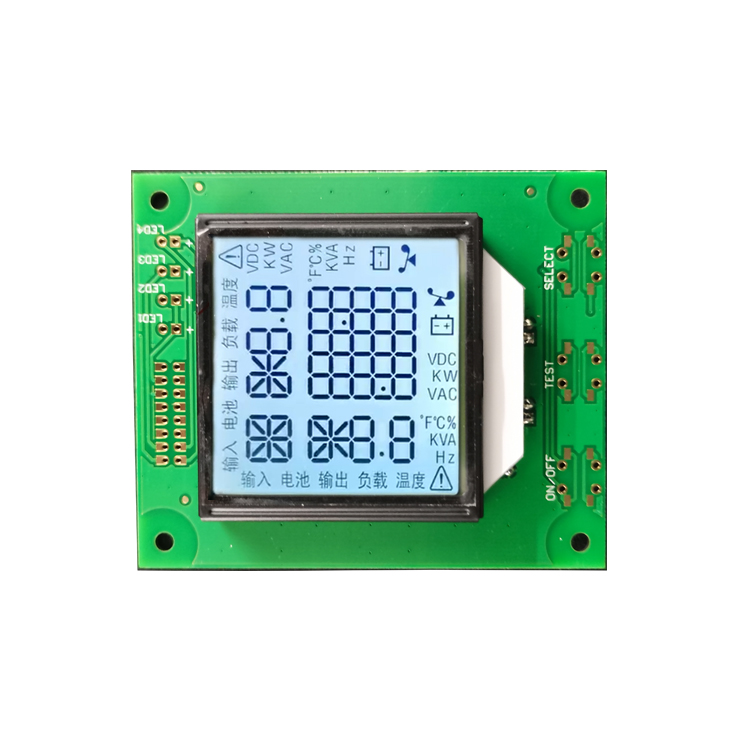
The term "pixel" gets thrown around so casually, but each one is where countless hours of obsessive calibration converge. We’re not talking about simply filling a grid with colored dots. It’s about engineering the sub-pixel structure itself—the geometry of the light-emitting elements, the microscopic lenses that steer photons toward your eye with minimal loss, and the nanosecond-level timing that prevents motion from smearing into a blur. That level of control only comes from iterating on physical prototypes, measuring with equipment normally reserved for optics labs, and refusing to settle for “close enough.”
Then there’s the quiet hero: factory calibration. A freshly assembled panel is a landmine of micro-variance—no two pixels respond identically to the same electrical signal. Our approach sidesteps software trickery and handles it at the hardware level. Every pixel gets characterized individually, mapped to a 3D lookup table built from spectral measurements, not synthetic profiles. The result is uniformity that holds across brightness levels, color temperatures, and viewing angles—without crushing shadow detail or blowing out highlights just to look punchy on a showroom floor.
What ties it all together is a feedback philosophy borrowed from precision instrumentation. The driving electronics monitor real-time conditions—temperature drift, aging characteristics, ambient light—and adjust the pixel drive currents on the fly, not with a heavy-handed curve but with corrections measured in microamperes. It’s the kind of engineering you don’t “see” in the traditional sense, because when it’s done right, the display simply gets out of the way. That absence of artifice is the real benchmark.
Bulk Orders Without Compromising Display Clarity
When ordering in large quantities, businesses often worry that quality might suffer. We designed our production process to eliminate that trade-off. Every unit, whether it's the first or the thousandth, undergoes the same rigorous calibration. This ensures that the display remains crisp and colors stay true, no matter the size of your order.
Our panels feature advanced pixel-level control and uniform backlighting, which maintain consistency across batches. Unlike some manufacturers that cut corners to meet volume demands, we use high-grade components that resist degradation over time. The result is a reliable visual experience that keeps your brand looking professional.
Whether you need a hundred units or several thousand, you can trust that each one will meet the same high standard. From retail signage to interactive kiosks, our displays deliver sharp, vibrant visuals that engage your audience without any drop in quality.
From Prototype to Production: Seamless Customization
Turning a rough concept into a polished, market-ready product often feels like navigating a maze—especially when unique client requirements demand constant adjustments. Our approach eliminates the friction between early prototypes and high-volume production, allowing for real-time modifications without derailing timelines or inflating costs.
Rather than relying on rigid, one-size-fits-all workflows, we embed customization directly into the development cycle. This means material choices, form factor tweaks, and even functional upgrades can be evaluated on working prototypes and then refined iteratively, so the final output genuinely reflects the original vision.
By the time we scale up, every detail has been validated in a live environment, minimizing last-minute surprises. The result is a seamless handoff where the manufacturing line produces exactly what was jointly envisioned—no patchy workarounds, just a clean transition from idea to delivery.
Durable Designs That Outlast the Ordinary
In a world where disposability often feels like the default, there's something quietly remarkable about objects made to endure. We focus on construction that doesn't just meet expectations but exceeds them, selecting materials prized for their resilience and aging gracefully over time. Every stitch, joint, and finish is chosen because it holds up under pressure—not because it photographs well or checks a box. The result? Pieces that become part of your daily rhythm, growing more personal with each use rather than wearing thin.
Our design philosophy strips away the unnecessary, leaving only what truly matters. Instead of chasing fleeting trends, we invest in proportions that feel right years later and details that solve real problems. A zipper that won't snag, a seam that lies flat, a surface that develops a beautiful patina—these are the kind of features you don't notice until you realize they've never let you down. It's this understated reliability that transforms an ordinary purchase into a lasting companion.
When you choose gear built this way, you're opting out of the cycle of constant replacement. It's a small but meaningful rebellion against the cheap and temporary. Beyond the practical benefits of saving money and resources, there's a deeper satisfaction in owning things that reflect a commitment to quality. These aren't just items you use; they're items you keep, mend if necessary, and maybe hand down when the time comes. Durability, after all, isn't just about physical survival—it's about creating a legacy of thoughtful living.
Specialized Displays for Industrial and Consumer Devices
From ruggedized panels enduring extreme factory conditions to high-resolution screens delivering vivid visuals in handheld gadgets, specialized displays bridge the gap between functionality and user experience. Their design accounts for factors beyond standard brightness and contrast, integrating features like sunlight readability, wide operating temperatures, and touch responsiveness tailored to gloved hands or wet environments. This ensures reliability whether embedded in a medical monitor, a vehicle dashboard, or a point-of-sale terminal.
Customization drives the adoption of these displays, as off-the-shelf solutions rarely meet the unique demands of niche applications. Engineers work closely with manufacturers to specify display size, aspect ratio, optical bonding, and even the integration of anti-glare or anti-fingerprint coatings. In consumer electronics, this might mean a curved AMOLED screen that wraps around a wearable device, while in industrial settings, it could involve a transflective LCD that conserves power yet remains legible in direct sunlight.
Longevity and compatibility also define the sector, with many industrial displays requiring extended product lifecycles and backward compatibility to avoid costly system redesigns. This contrasts with the rapid refresh rates of consumer markets, prompting suppliers to maintain legacy lines alongside cutting-edge innovations. By balancing durability, precision, and design freedom, specialized displays empower devices to perform reliably in their intended environments without compromising on aesthetics or usability.
FAQ
A segment LCD is a type of liquid crystal display that uses predefined shapes or segments to show characters, numbers, or simple icons. Unlike full-graphic displays, these are ideal for straightforward readouts like digital clocks, thermostats, or appliance panels.
You start by sharing your design idea with us, including size, segment layout, and any special features. Our team then works closely with you to finalize the tooling and produce a sample that matches your exact vision before moving to full production.
Working directly with a wholesaler gives you better pricing per unit, consistent supply, and the ability to tailor the product to your needs. You avoid middlemen and get dedicated support for large-volume projects.
We use durable materials and precise manufacturing to ensure sharp contrast, wide viewing angles, and a long lifespan. Every batch goes through rigorous inspection to meet industry standards, so you get reliable performance every time.
Absolutely. Our factory is built for scale, and we maintain flexible production lines to accommodate high-volume orders without compromising on lead times. We'll work with your schedule to keep your project on track.
You'll find them in household appliances, medical devices, automotive dashboards, industrial meters, and portable electronics. Basically, any device that needs a clear, low-power readout benefits from a segment LCD.
Simply reach out with your requirements, and we'll provide a detailed quote. If you need a physical sample to evaluate, we can produce a prototype for your approval before any mass production starts.
Conclusion
Finding a reliable segment LCD display wholesaler means looking beyond standard catalogs—it’s about securing a partner who can deliver highly customized solutions without sacrificing performance or durability. Tailored segment LCDs for niche product needs emerge from a process where every icon, digit, and symbol is mapped to the exact requirements of industrial gauges, medical meters, or consumer wearables. The precision engineering behind every pixel ensures that even the most intricate low-power designs maintain rock-solid contrast and viewing angles, whether the display is destined for a handheld scanner or a smart thermostat. From initial prototype to full-scale production, the customization workflow stays seamless, allowing design tweaks without derailing timelines or inflating costs.
Bulk orders never become an excuse for degraded clarity—each panel undergoes rigorous inspection so that mass-produced units perform identically to the approved samples. This consistency is paired with durable designs that outlast the ordinary, built to withstand extended operational cycles, vibration, humidity, and wide temperature swings common in both factory-floor equipment and everyday gadgets. Specialized displays for industrial and consumer devices combine functional readability with a rugged backbone, giving product developers the confidence to embed segment LCDs into mission-critical applications where failure isn’t an option. By merging customizable aesthetics, pin-to-pin compatibility, and long lifecycle support, this wholesale approach transforms a simple component into a long-term asset for brands aiming to differentiate their devices in demanding markets.
Contact Us
Contact Person: Vincent
Email: [email protected]
Tel/WhatsApp: 86 135 5485 1379
Website: https://www.jda-display.com/