
Tesla Seat Covers Manufacturer Guide to Choosing Custom Fit Interiors
2026-11-25
When your Tesla left the factory, its interior was flawless—but daily commutes, weekend road trips, and the occasional coffee spill have a way of changing that. The right seat covers do more than hide the wear; they sharpen the cabin’s character and protect your investment mile after mile. Instead of settling for generic options that bunch and slide, discerning owners turn to Red Rain for custom fit interiors designed around the exact contours of Tesla seats. This guide walks you through what to look for, what to avoid, and how a precise fit changes everything from comfort to resale value.
Where Factory Upholstery Stops and a Custom Pattern Takes Over
There's always a line you can spot if you look close enough. On a factory seat, the fabric runs tight and predictable, every stitch placed by a machine that never second-guesses itself. The foam underneath is uniform, the grain matched, the corners folded the same way on every vehicle that rolls off the line. It's fine. It does the job. But then you reach the point where the original material ends, maybe at a worn bolster, a torn seam, or just a spot where the stock cloth never quite fit the shape of the driver. That's where the conversation changes. The custom pattern doesn't start from a spec sheet. It starts from what's actually in front of you: the way the seat has aged, the angle of the backrest, the small tear that becomes an excuse to stop pretending the factory version was ever enough.
Once you cross that line, the rules loosen. A custom pattern isn't just a replacement cover pulled from a catalog. It's measured against the old panel, sure, but then it's adjusted. Maybe the center insert gets a wider stripe to hide the wear mark. Maybe the side bolsters get a heavier thread because that's where your elbow digs in on long drives. The pattern takes over where the factory's idea of one-size-fits-all quietly gave up. You notice the difference in the curves of the piping, the way a seam follows your leg instead of fighting it, the slight shift in pattern alignment that lines up with the seat belt instead of ignoring it. It's not about making it look modified. It's about making it look like the original never understood the job in the first place.
The real shift happens when you stop seeing upholstery as a surface and start reading it as a map of how the vehicle gets used. The custom pattern picks up the slack left by mass production: the flattened foam on the left side, the sun-faded top panel, the crease behind the passenger seat that no one at the plant ever had to account for. Each piece is cut with that history in mind. So the pattern doesn't scream for attention. It simply works where the factory version stopped working, and after a while you forget there was ever a factory version at all.
What Tesla Seat Sensors and Airbags Demand from a Cover
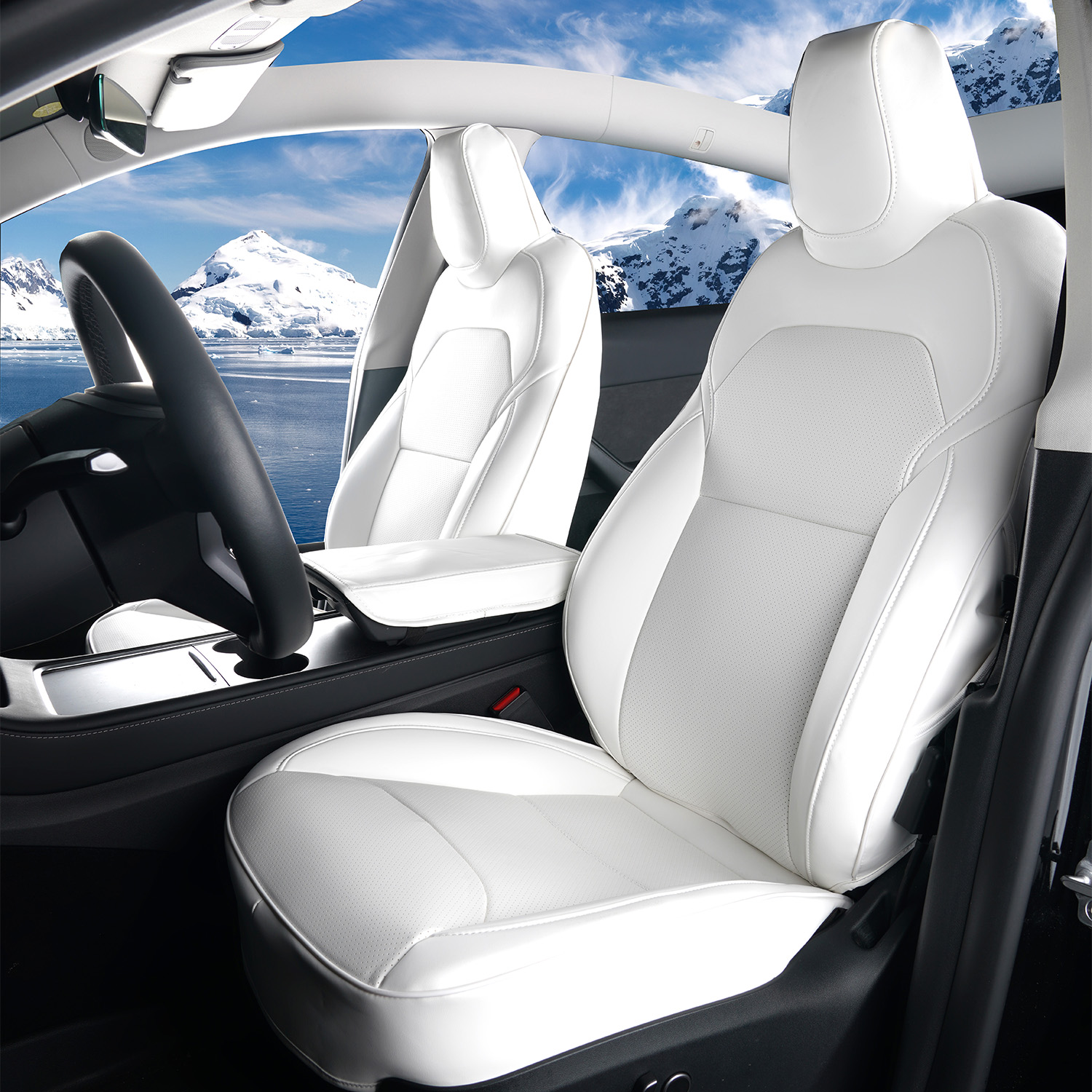
A cover that interferes with the seat's occupant detection system isn't just a minor inconvenience—it can disable the very airbags meant to protect you. Tesla's seats rely on a network of pressure sensors and capacitive mats that read weight distribution and body position in real time, feeding data to the restraint control module. If a cover adds too much padding, shifts under you, or traps moisture against these sensors, the system may misread an empty seat as occupied, or worse, fail to register a passenger entirely. This leads to persistent seatbelt warnings, disabled passenger airbags, or unintended airbag deployment in a low-speed impact.
The airbag itself needs an unobstructed path through the seat bolster. Many aftermarket covers wrap tightly around the side seams where the side airbag is housed, and even a seam that looks flexible at rest can become a rigid barrier when the airbag inflates at over 200 mph. Tesla designs its seat upholstery with a tear seam that splits in a controlled way; a generic cover with double stitching or thick leather piping can redirect that burst of pressure backward into the occupant's ribs or upward toward the headrest. Fitment matters more than material here—a cover that's slightly loose around the bolster may still allow the airbag to deploy, but only if it doesn't bridge the seam with a continuous band of non-stretch fabric.
Moisture and heat are the quiet killers of seat electronics. A cover that traps perspiration or spills against the sensor mat can cause erratic readings over time, especially in humid climates where condensation forms inside the seat foam. Tesla's sensors are calibrated for the original upholstery's breathability and thermal profile, so swapping in a thick neoprene or vinyl cover changes how quickly heat dissipates and how the sensor array settles after you shift in your seat. The best covers for Tesla seats are thin, dimensionally stable, and leave the airbag deployment zone and the center seating area as unobstructed as the factory design intended.
Fabric Choices That Hold Up After Months of Sun and Daily Use
Most fabrics look great on day one, but the real test happens after a full season of direct sun, spilled drinks, and the constant slide in and out of a chair. If a fabric can't handle UV exposure, the color starts to wash out unevenly and the fibers lose their snap. That's why the first thing worth checking is whether the material is solution-dyed rather than printed or piece-dyed. Solution-dyed acrylic and olefin carry pigment through the entire fiber, so fading happens much more slowly and small scuffs don't reveal a pale white core underneath.
Beyond fiber type, the weave and weight matter more than most people expect. A tight basketweave or canvas construction with a slightly textured hand tends to resist abrasion from daily sitting and pets far better than a thin, slick weave. Look for fabrics in the 8 to 12 ounce per square yard range if the furniture will sit in full sun all afternoon. Heavier isn't always softer, but it usually holds its shape around cushions and doesn't develop that saggy, tired look after repeated use.
The easiest way to avoid a bad pick is to feel the back side and check how the yarns are packed together. If the reverse looks almost as vivid as the front, the color isn't just sitting on the surface. Also pay attention to whether the fabric has a breathable, open structure that lets moisture escape instead of staying trapped against the foam. That combination of UV-stable pigment, dense construction, and quick drying is what separates fabrics that still look intentional in late September from the ones that need replacing by July.
The Split Fold and Headrest Details Most Buyers Overlook
A split folding rear seat looks useful on paper, but the spec sheet rarely tells you how flat the floor actually gets. In some cars the folded backrest sits a few inches higher than the cargo floor, leaving a ridge that catches boxes and grocery bags. Others fold nearly level but force you to slide the front seats forward first because the headrests hit the seatbacks. The release mechanism matters too: a strap buried behind the seatbelt buckle or a lever you can only reach from one side turns a quick load into a wrestling match.
Headrest details are just as easy to miss. Check whether the rear outboard headrests tilt fore-and-aft or only move up and down, and whether the center headrest can be removed or dropped out of the way when nobody is sitting there. If the center headrest is fixed, it can block a large part of the rearview mirror. It is also worth testing how the headrests come out. Some have a small release button on one post, while the second post has a hidden catch that needs a key or paperclip, which is annoying when you are trying to fold the seat flat or install a child seat.
The smaller side of the split matters more than people expect. A 60/40 split is not very helpful if the 40 side is on the traffic side and you regularly load long items from the curb. Also pay attention to what happens behind the folded section: exposed hinge hardware, a slick plastic trim panel, or a fabric flap can mean the difference between cargo sliding around and staying put. These details do not show up in a quick walkaround, but they shape every trip to the hardware store or airport.
Questions Worth Asking a Manufacturer Before You Order
Before you commit to a purchase order, ask how the manufacturer handles deviations from approved samples. A factory that can explain its tolerance range for stitching, color, and material weight is usually one that actually inspects production instead of fixing problems after the cartons are sealed. If the answer is vague, request a written quality control checklist and find out whether a third-party inspection is allowed before shipment.
Also dig into less obvious costs that show up later. Ask who owns the tooling or molds if you ever stop ordering, what the lead time looks like during peak season, and how they handle a short shipment or defective unit discovered after delivery. The way they answer tells you whether they see the relationship as a one-time transaction or an ongoing supply partnership.
Finally, get specific about packaging, labeling, and documentation. Ask if they have experience with your target market's compliance requirements, whether they can provide batch-level traceability, and how they protect your design from being shown to other buyers. Clear answers on these points reduce the chance of surprises that cost more than the product itself.
Fit Complaints That Start With the Pattern, Not the Installer
When a finished floor looks wrong, the first instinct is often to point at the person who put it down. More often than people expect, the real culprit is in the pattern itself. A dye lot shift between boxes, a stretched repeat, or a slightly off-register print can create visual breaks that no amount of careful installation would hide.
Start by pulling material from two or three unopened cartons and laying the pieces side by side in the same light. If the pattern drifts, changes tone, or repeats unevenly across the lot, that tells you the installer was working against the product rather than making mistakes. In many cases, the seams were placed exactly where they had to go, but the manufacturer's tolerances were looser than the eye would accept.
This shift in focus changes the complaint from blame to diagnosis. It also saves time and keeps the right party accountable. If the pattern is inconsistent at the source, the replacement or adjustment should come from the supplier, not from repeated callbacks to the installation crew.
FAQ
Rarely. Tesla seats have pronounced side bolsters and an integrated headrest shape on some models. A universal cover usually stretches over these surfaces, which leaves the center panel loose and causes the cover to shift every time you slide in or out.
Look at how the rear bench and split folding sections are handled. A true custom set will have separate backrest pieces, a relief for the seat belt latch, and fabric panels cut to follow the seat cushions, not just one big sock with straps.
Vegan leather with a UV resistant topcoat tends to work well because the glass roof lets in a lot of heat. Nappa style leather feels softer but needs more care. If you want maximum breathability, a dense woven fabric with a thin foam backing will not block the seat cooling as much.
Ask the manufacturer whether the side seams are designed to burst or use a tear away panel, and whether they tested the cover on your exact seat frame. Avoid covers that rely only on an open slit, because the opening can fold over during a crash.
A thin, single layer cover will usually have little effect. The problem comes with quilted pads or thick foam backs. If you want heat to reach you quickly, pick a cover with perforated panels or minimal backing rather than a padded winter style.
Headrest covers should be separate, the base should wrap under the front edge without blocking the power controls, and the rear seat should have full split folding access. Also check whether the lower bench cover uses buckles or Velcro hooks because plastic tabs can break against the seat frame.
Not if the surface has a good stain barrier. Most spills will sit on top of a coated vegan leather long enough to wipe off. Denim transfer is a bigger issue, so pick a darker piping or a textured finish if you wear raw jeans often.
Ask for photos of the exact color installed on the same trim level, including the back seat and the side of the front seat where the controls are. A real manufacturer will have fitment samples or videos that show how the seams align over the bolsters.
Conclusion
A factory seat cover is built around a generic shell, but once you start measuring the shoulder bolsters, the rear map pocket, and the way the bottom cushion dips toward the console, the limits of that original pattern become obvious. A worthwhile custom interior starts where stock upholstery gives up. The cut is drafted from the actual Tesla seat profile rather than stretched to fit it, and that matters even more because the seat is not just foam and fabric. The side airbag needs a seam that opens cleanly, the occupant sensor must not be blocked by stiff backing or dense foam, and the cover has to stay clear of the tracks without bunching under the plastic trim.
Fabric choice is where daily life shows up. High sun exposure, wet swimsuits, dog claws, and repeated sliding in and out will punish a soft weave long before the seams fail. Ask how the material handles UV fading, abrasion, and spills, then look past the swatch to the details that are easy to miss, such as split fold access, headrest shape, zipper placement, and whether the rear bench allows the armrest to drop without forcing the cover off. Most fit complaints are not installer error. They begin with a pattern that ignored a crease, a sensor pocket, or the exact angle of a headrest post. Before ordering, press the manufacturer on how the pattern was developed, how many vehicle variants were measured, and what they will do if the cover pulls away at the thigh bolster after a month.
Contact Us
Contact Person: Ms. Zhu
Email: [email protected]
Tel/WhatsApp: 86-15906860931
Website: https://www.redrainseatcovers.com