Top 10 Horizontal Machining Center Solutions to Boost Your Production Efficiency
2026-05-10
In today’s competitive manufacturing landscape, maximizing production efficiency is no longer optional—it’s a necessity. Horizontal machining centers (HMCs) have emerged as game-changers, offering precision, speed, and versatility that vertical setups often can’t match. But with so many options on the market, how do you identify the solutions that will truly transform your workflow? In this post, we’ll explore ten outstanding HMC solutions designed to supercharge your productivity. And when you’re ready to invest in top-tier technology, WINNRUI CNC delivers machines built to exceed expectations.
Rethinking Your Workflow Around a Horizontal Machining Center
Horizontal machining centers aren’t just a different spindle orientation—they fundamentally change how you think about part flow, fixturing, and unattended production. By letting gravity pull chips down and away from the cutting zone, you eliminate the re-cutting that plagues many vertical setups, extending tool life and improving surface finishes. More importantly, the integrated pallet systems and tombstone workholding open up opportunities to run multiple part faces in a single cycle, slashing setup time and reducing the chance for operator error.
Adopting a horizontal-centric workflow means re-evaluating everything from raw stock staging to finished part offload. Rather than treating each machine as an isolated cell, you can link multiple horizontal machines or use a pallet pool to create a flexible, high-mix production line. Pallets can be pre-staged with vises or custom fixtures off-line, so the machine spends its time cutting instead of sitting idle. This shift often reveals hidden capacity: with the right pallet management, a single horizontal can outperform two or three stand-alone verticals by keeping the spindle turning during breaks, lunch, and lights-out hours.
Successfully rethinking your workflow also means training your team to think in terms of pallet schedules and cutting strategies instead of single-part setups. Programmers must leverage tilted workplanes and toolpath transformations to minimize touch-offs, while operators focus on maintaining a buffer of ready-to-run pallets. The transition can be disruptive at first, but shops that embrace the horizontal mindset typically see a drop in work-in-process inventory and a sharp rise in overall equipment effectiveness—because the machine is finally dictating the pace, not the manual constraints of loading and clamping.
Reducing Idle Time with Multi-Pallet Systems
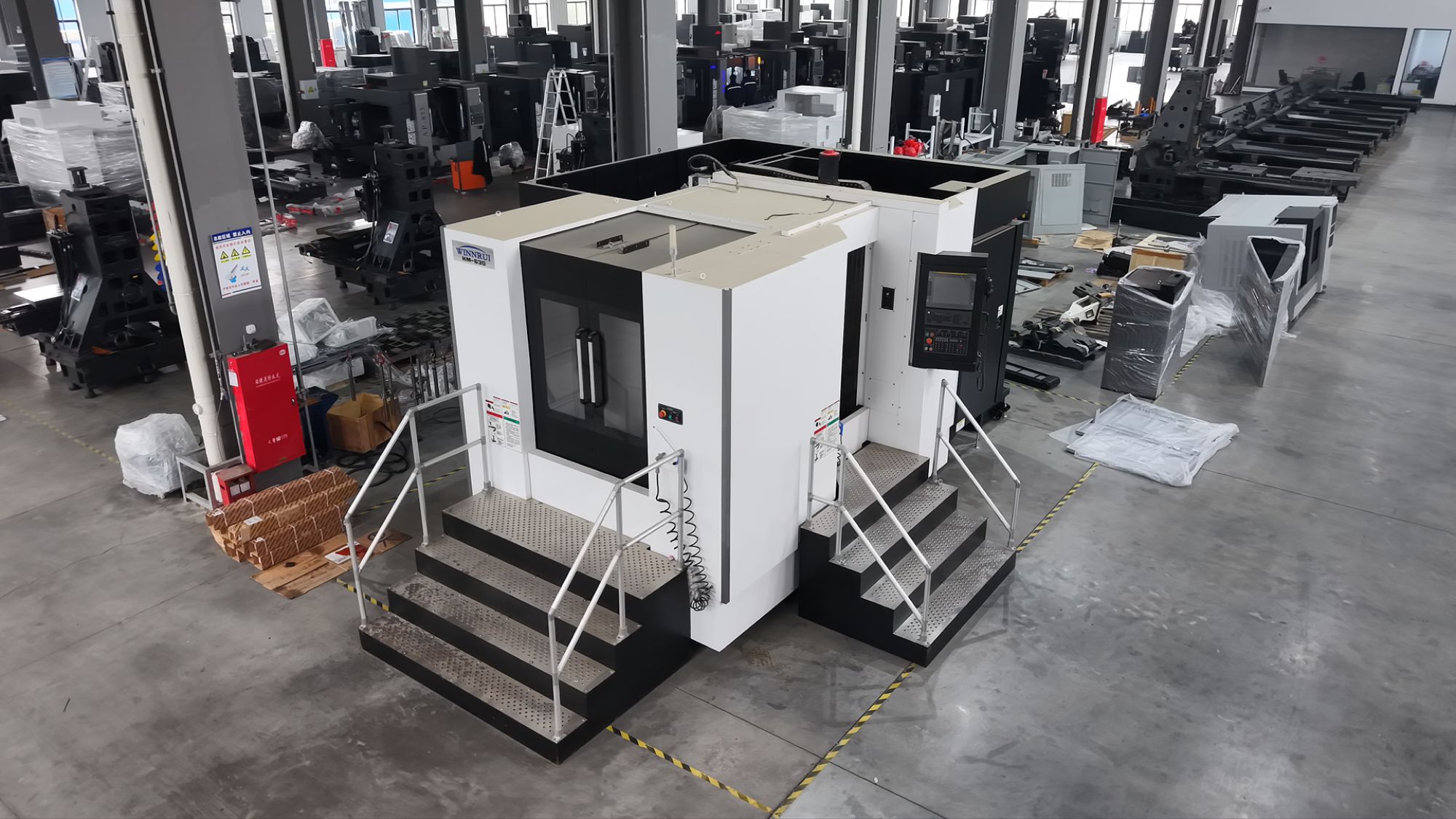
Multi-pallet systems practically eliminate the wait between machining cycles. Instead of pausing production to load a single workpiece, operators or robots can stage multiple pallets in a queue, ensuring the spindle never stops turning. This continuous handoff slashes idle time and keeps throughput high, even when dealing with complex part geometries that require longer setup times. The real advantage becomes clear on short-run jobs where changeovers typically eat into productive hours—with pallet pooling, you swap one job while the next is already in motion.
But the impact goes beyond just keeping machines busy. When you reduce idle time, you also create breathing room for smarter scheduling. Operators aren’t racing to load the next part; they’re managing a steady workflow. This shift often reveals unexpected capacity gains, letting shops take on more work without adding equipment. It’s a simple concept, but once implemented correctly, the production rhythm tightens up noticeably.
Another angle: multi-pallet systems allow offline setup, so the machine doesn't wait for fixturing or tool changes. Combine that with automation like robots for pallet changing, and you get a system that runs lights-out efficiently. That's the kind of setup that makes a real difference in competitiveness.
Through-Spindle Coolant's Overlooked Impact on Speed
Ask any machinist about speeding up a job and you'll hear about feeds, speeds, and depth of cut. Rarely does through-spindle coolant come up. Yet it quietly reshapes the limits of those three parameters. By blasting fluid directly through the tool tip, it flushes chips away fast and keeps the cutting edge steadily cool. That means you can push a cutter harder without the usual heat buildup or chip re‑cutting that kills inserts and ruins finishes.
On a recent titanium run, a shop doubled their surface footage just by switching on the high‑pressure spindle coolant. The tool life barely flinched, and the cycle time dropped from 90 minutes to under an hour. They weren't using a fancier machine or super-rigid tooling — they simply let coolant reach the zone where it matters most. For many materials that tend to work‑harden or smear, that’s the difference between a cautious creep and a confident sprint.
The Case for Rigidity Over Raw Speed
In motorsport, the conversation often revolves around horsepower figures and zero-to-sixty times. Yet ask any chassis engineer, and they'll tell you the real secret lies in torsional rigidity. A stiffer frame doesn't just improve crash safety—it allows the suspension to do its job with precision, turning raw power into usable grip. Without it, even the most potent engine is wasted, spinning its energy into chassis flex rather than forward motion. This principle extends well beyond the track.
Software teams chase velocity, measuring success by features shipped per sprint. But codebases that grow without architectural discipline quickly become brittle. Imposing rigid interfaces and strict testing practices may feel slow at first, but they prevent the exponential slowdown that technical debt imposes later. Rigidity here means consistency—a refusal to cut corners that ultimately keeps the system responsive under future demands.
Whether in physical structures or organizational ones, favoring rigidity over raw speed is a long-game strategy. It's the difference between a watch that gains five minutes a day and one that keeps time for decades. Speed without a solid foundation is just chaos moving quickly.
Smart Automation That Goes Beyond Robotic Arms
Real progress in manufacturing isn’t measured by how many robotic arms you deploy, but by how seamlessly data, sensors, and decision-making algorithms work together. Smart automation reaches well beyond repetitive pick-and-place tasks—it thrives in quality inspection cells that adapt to new product variants without reprogramming, in self-optimizing conveyor systems that adjust speeds based on real-time order backlogs, and in digital twins that simulate entire production lines before physical changeovers. The focus shifts from replacing human muscle to augmenting human judgment, making operations not just faster, but fundamentally more resilient.
Consider the quiet intelligence of a packaging line that predicts maintenance needs by analyzing vibration patterns, or a chemical dosing system that recalibrates itself between batches without operator intervention. These are not far-off concepts; they’re built on lightweight edge computing and modular software that retrofit into existing machinery. The real value lies in creating a fabric of interconnected decisions—where a sensor reading in one station instantly informs inventory adjustments three steps downstream, without a central controller. This kind of fluid, context-aware automation blurs the line between operation and strategy, enabling plants to respond to supply chain disruptions with a speed that no warehouse full of automated arms could ever match.
Streamlining the Journey from Setup to Chip
The initial machine configuration often feels like a bottleneck, but it doesn't have to be that way. By integrating smart defaults and intuitive guidance directly into the hardware, teams can move from unboxing to first samples in a fraction of the usual time. This isn't about dumbing down the process; it's about removing repetitive guesswork so engineers can focus on what actually matters—optimizing the chip's performance rather than wrestling with setup routines.
Once the physical layer is established, the real streamlining happens through seamless handoffs between design and fabrication. Automated checks against design rules and real-time feedback loops eliminate the back-and-forth that typically drags out pilot runs. The result is a workflow where adjustments happen on the fly, and the path from layout to verified silicon becomes a natural continuation of the setup phase, not a disjointed second act.
Ultimately, the goal is to make the transition from setup to chip feel almost invisible—a quiet engine that simply works. When toolchains anticipate user intent and adapt to project quirks without manual intervention, the entire development timeline compresses. It's this kind of practical integration that turns a complex fabrication journey into something refreshingly direct.
FAQ
A horizontal machining center, or HMC, positions the spindle horizontally, so tools extend out from the side. This orientation lets gravity pull chips away naturally, which keeps the work area cleaner and reduces recutting—a big plus for deep cavities or tough materials. In contrast, a vertical machining center has the spindle pointing down, so chips can pile up on the workpiece or fixture. HMCs also often come with a pallet changer, allowing you to set up one job while another is running, dramatically cutting idle time.
You'll see HMCs heavily used in automotive for engine blocks and transmission cases, aerospace for structural components, and heavy equipment for large housings. Any industry that needs high metal removal rates, tight tolerances on multiple sides of a part, or lights-out production tends to lean on horizontals. They shine when you're churning out complex parts in medium to high volumes and can't afford constant operator intervention.
Start by mapping out your typical workpiece size, material, and the number of setups you're trying to reduce. Pallet size and travel range are obvious, but also look at the spindle's torque curve—high torque at low RPM matters for tough alloys, while high RPM with quick acceleration suits aluminum. Think about the control interface too: a shop full of experienced machinists might want a familiar controller, whereas a shop adopting new automation might need seamless robotic integration. Don't overlook the machine's thermal stability features if you're holding microns across long runs.
Beyond chip control, the real game-changer is the pallet pool or multi-pallet system. You can schedule dozens of different part numbers without manual loading, letting the machine run overnight or over weekends. The horizontal layout also typically gives better access to four sides of a part in a single setup, so you can ditch multiple fixturing steps. And because the tool magazine is often larger, you can keep many tools at the ready, minimizing changeover time between batches.
Absolutely, and that's one of their superpowers. With a rotary B-axis table, you can tilt the part to any angle, and combined with proper fixturing, you can machine five faces of a cube in one shot—only the clamping side is left untouched. This dramatically reduces stack-up tolerances you'd get from moving the part between machines. Modern HMCs even have through-spindle coolant that targets the insert from multiple directions, keeping heat and chips under control when you're buried deep in a pocket.
Chip management is top of the list: make sure the chip conveyor and coolant filtration are cleaned daily—wet chip piles can hide damage to way covers. Check pallet locating pins and clamping pressure every week; a sloppy pallet seat throws off your entire coordinate system. Keep an eye on the spindle's vibration signature if you have monitoring; a change often catches bearing wear before it becomes a crash. And don't treat the way lube like a suggestion—dirty or low lube oil leads to axis stick-slip that subtle algorithms can't fully compensate for.
Conclusion
To truly unlock the potential of a horizontal machining center, it's not enough to simply upgrade hardware. Manufacturers must fundamentally rethink their workflow, orienting every process step around the machine's inherent strengths. This often means prioritizing rigidity over the temptation to chase raw spindle speeds, as a stable platform reduces vibration and extends tool life, allowing deeper cuts at sustainable rates. Meanwhile, integrating multi-pallet systems can dramatically slash idle time, enabling seamless job changeovers and unattended operation. These foundational changes create a rhythm where the machine stays in cut longer, transforming sporadic output into a continuous flow.
Beyond the basics, subtle factors like through-spindle coolant can have an outsized influence on speed, yet they remain underappreciated. Delivering coolant precisely to the cutting edge evacuates chips more effectively and dissipates heat, permitting higher feed rates without risking tool damage. Smart automation also goes far beyond bolting on a robotic arm; it encompasses sensor-driven adjustments, predictive maintenance, and real-time data feedback that optimize performance without human intervention. Lastly, streamlining the journey from setup to chip—through standardized fixturing, offline programming, and quick-change tooling—eliminates the hidden delays that erode efficiency. When these elements converge, a horizontal machining center becomes not just a machine, but a self-regulating hub of production.
Contact Us
Contact Person: Tim
Email: [email protected]
Tel/WhatsApp: +86 15522553731
Website: https://www.winnrui-cnc.com/