Top 10 Textured Vegetable Protein Production Lines for Efficient Plant-Based Manufacturing
2026-08-08
The plant-based revolution is reshaping the food industry, and at its heart lies a humble yet versatile ingredient: textured vegetable protein. But turning raw TVP into mouthwatering meat alternatives demands more than just a recipe—it hinges on precision processing. Enter the top 10 TVP production lines that are redefining efficiency, each engineered to meet surging demand without sacrificing quality. Among the leaders driving this innovation is MINGDE, whose cutting-edge solutions are helping manufacturers scale up with confidence. Ready to peek behind the curtain of tomorrow’s protein production?
Why Textured Vegetable Protein Is Shaping the Future of Food Manufacturing
Textured vegetable protein is quietly transforming how manufacturers think about ingredients. Its ability to mimic the texture and mouthfeel of meat without the environmental footprint gives producers a versatile, cost-effective option that doesn’t compromise on consumer satisfaction. As supply chains face increasing pressure, TVP’s long shelf life and minimal storage requirements make it a resilient choice for large-scale operations.
Beyond practicality, the ingredient unlocks new product categories that simply weren’t viable a decade ago. Hybrid meat products, ready-to-eat meals, and high-protein snacks now lean heavily on TVP to hit nutritional targets while keeping production costs predictable. The real shift, though, is in how manufacturers are using it to push past imitation and into innovation—creating textures and flavor experiences that stand on their own rather than just mimicking animal protein.
Perhaps most telling is the way TVP aligns with the tightening regulations around sustainability and health claims. It allows manufacturers to reduce saturated fat and boost fiber content without reformulating entire product lines. For an industry that often moves slowly, the speed at which textured vegetable protein has been adopted across meat, bakery, and dairy alternatives suggests we’re watching a fundamental shift, not a trend.
How We Evaluated the Leading Production Lines on the Market
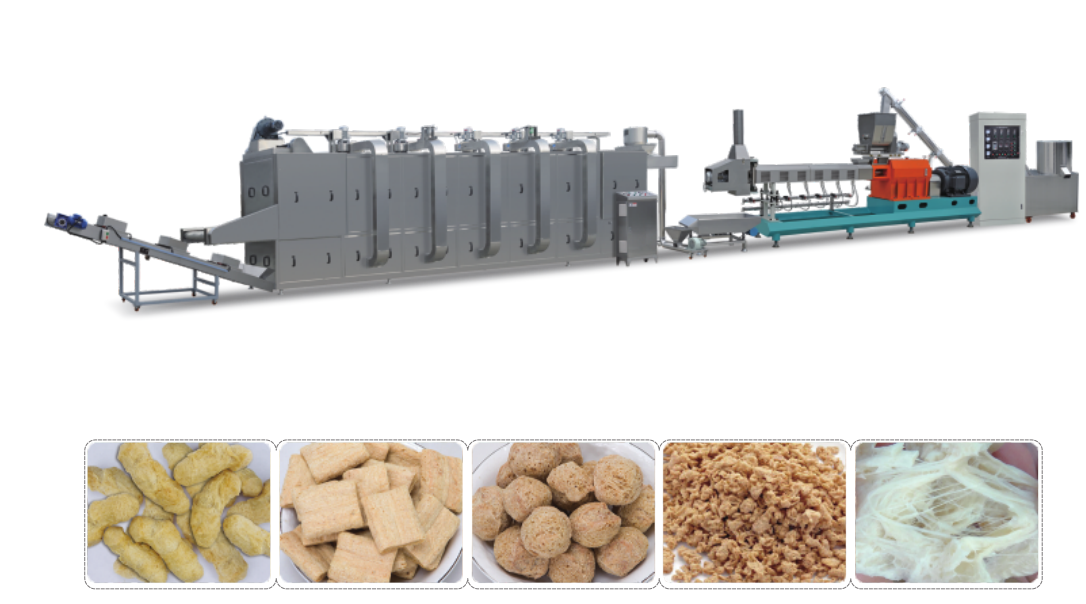
To cut through the noise, we built our assessment around real-world performance rather than glossy brochures. Our team spent weeks observing these systems in live production environments, tracking everything from unplanned downtime and changeover speeds to how intuitive the operators found the controls. We looked beyond spec sheets—measuring actual throughput under typical shift conditions and noting how gracefully each line handled material variations or sudden rushes. The goal was to capture what the numbers alone can't tell you: whether a machine keeps its promises when the pressure is on.
We also dug deep into long-term viability, knowing that a flashy launch doesn't guarantee staying power. Our evaluation factored in the availability and lead times for critical spare parts, the quality of remote support, and how well each manufacturer handled firmware updates without disrupting production. We interviewed maintenance teams to understand the real cost of ownership—not just the purchase price, but the hidden expenses that surface years down the road. A production line that's easy to fix and cheap to maintain often outperforms a higher-spec rival that's a nightmare to service.
Finally, we placed a heavy emphasis on adaptability. The best lines weren't necessarily the fastest out of the box; they were the ones that could pivot when product specs changed or new regulations kicked in. We scored each solution on its modularity, the ease of integrating third-party equipment, and how transparent its data reporting was for quality assurance. In an industry where yesterday's innovation can become today's bottleneck, a production line's ability to evolve without a complete overhaul became a defining factor in our rankings.
Features That Set High-Performance TVP Lines Apart
What really distinguishes a top-tier TVP line is its ability to maintain precise control over moisture and temperature at every stage. While many systems simply push material through a die, these advanced lines use dynamic feedback loops that adjust screw speeds and barrel heating in real time. The result is a consistent, high-quality protein structure that doesn't vary from shift to shift.
Another overlooked advantage is the modular cleanup design. Instead of forcing operators to dismantle large, cumbersome components for sanitation, the smartest setups incorporate quick-release barrels and self-draining zones that cut changeover time dramatically. This might seem like a minor detail, but when you're running multiple product types or dealing with sensitive formulations, it saves hours of downtime each week.
Beyond the hardware, robust process analytics quietly run in the background. Rather than relying on occasional lab samples, these lines continuously monitor expansion ratios and textural integrity, flagging deviations before they become waste. It's the difference between reacting to problems and preventing them outright, and it's what keeps leading manufacturers ahead of the curve.
Balancing Throughput, Energy Use, and Consistency
Modern systems often push for maximum speed and lowest energy usage simultaneously, but chasing both can quietly erode reliability. When you crank up throughput, components run hotter and power spikes, forcing cooling systems to work harder and sometimes triggering throttling that actually hurts consistency. It's a loop: pushing for more operations per second can lead to unpredictable latency tails and data staleness, especially in distributed environments where synchronization overhead grows non-linearly with load.
The real art is in finding that sweet spot where performance meets stability without bankrupting your power budget. Many teams over-provision hardware thinking it guarantees consistent response times, only to discover that under high concurrency, energy waste becomes the hidden cost. Techniques like work stealing, adaptive batching, and fine-grained DVFS (dynamic voltage and frequency scaling) can help, but they need careful tuning. Often, slightly dialing back peak throughput by 5-10% can cut energy consumption by a quarter while making latency percentiles far more predictable.
What’s frequently missed is how consistency itself feeds back into energy efficiency. When services deliver stable, repeatable performance, you avoid the expensive pattern of retries, timeouts, and cascading failures that spike both CPU cycles and power draw. Designing for bounded execution times and eliminating erratic resource contention often yields bigger savings than chasing headline throughput numbers alone. It turns the balancing act into a virtuous cycle: consistent behavior reduces wasteful recovery work, which in turn keeps energy use flat and throughput reliably high.
From Meat Analogues to Pet Food—The Versatility of Modern Systems
Modern food processing systems have evolved far beyond their original single-purpose designs, now offering a remarkable adaptability that stretches from crafting convincing meat analogues to formulating balanced pet foods. This breadth is driven by advances in extrusion, mixing, and texturization technologies that allow producers to manipulate protein structures with precision, regardless of the protein source. Whether creating a plant-based burger that sizzles and bleeds or a kibble with optimal crunch and nutrient density, the same core machinery can be tuned to deliver vastly different end products. The secret often lies in the configuration of screw profiles, die shapes, and thermal controls, enabling a seamless switch between high-moisture meat-like shreds and low-moisture pet food pellets without retooling the entire line.
The flexibility of these systems also supports shorter development cycles and more efficient use of ingredients, which is especially valuable in today’s dynamic market. A company might run a batch of pea-protein-based chicken strips in the morning, then pivot to a grain-free dog food formula in the afternoon with only minimal adjustments. This versatility extends beyond product type to ingredient lists: the same extruder can handle novel proteins like insect meal or cultured biomass just as easily as soy or wheat gluten. As consumer demands shift and raw material availability fluctuates, having a single system capable of spanning categories offers a significant operational advantage, reducing both capital expenditure and the complexity of facility management.
Looking ahead, the line between different food sectors may continue to blur as technology advances further. Innovations in real-time monitoring and automated parameter control mean that even smaller producers can achieve consistent results across a diverse portfolio. The same platform that once churned out only traditional breakfast cereals is now being used to develop hybrid products that blend plant and animal ingredients, or to craft therapeutic pet foods with specific textures for dental health. This isn't just about cost savings—it's about unlocking creativity and responding quickly to niche opportunities without the burden of investing in multiple dedicated lines.
Key Considerations Before Investing in a TVP Production Line
Putting money into a TVP production line isn’t a small decision—it’s a long-term commitment that demands a clear-eyed look at your market, your capacity, and your appetite for risk. Start by asking whether there’s genuine, sustained demand for textured vegetable protein in the regions you plan to serve. This goes beyond a few trendy restaurant menus; you’ll want concrete data on consumer purchasing habits, processor contracts, and the broader shift toward plant-based eating that shows no signs of slowing. If the demand isn’t backed by real numbers or long-term partnerships, the line could end up underutilized.
Next, think hard about your supply chain and technical readiness. A TVP line needs a steady, high-quality stream of raw inputs—typically soy, pea, or wheat protein—plus the expertise to tweak extrusion parameters for different textures and moisture levels. Do you have sourcing agreements that can handle volume fluctuations without breaking your margins? And does your team include people who understand twin-screw extrusion, drying, and flavoring processes at scale? Without that in-house knowledge, you’ll face steeper learning curves and costly downtime.
Finally, map out the real costs beyond the sticker price of the equipment. Installation, facility modifications, energy consumption, maintenance, and waste management all add up. Factor in the time needed for trial runs and product development before you’re producing saleable material. It’s easy to underestimate these hidden expenses, but they can make or break your return on investment. Talking to other manufacturers who’ve gone through this process can give you a clearer picture of what to expect.
FAQ
They're primarily used to transform plant proteins into fibrous, meat-like textures that serve as the base for products like veggie burgers, nuggets, and minced meat alternatives.
Manufacturers typically look at throughput capacity, energy efficiency, the flexibility to handle different protein sources, and how easily the line can be cleaned and maintained between runs.
Advanced control systems monitor key parameters like temperature, pressure, and moisture in real time, automatically adjusting the extrusion process to keep texture and density uniform batch after batch.
Extrusion is the heart of the process; it uses controlled heat and mechanical shear to restructure protein molecules into a fibrous matrix that mimics animal muscle, making it essential for creating realistic meat analogs.
The top lines are designed with versatility in mind, able to process soy, pea, wheat gluten, or even blends, often with quick changeover features to switch between recipes without lengthy downtime.
Precise cooling sets the final texture and prevents the product from collapsing, while efficient drying ensures the right moisture level for shelf stability and downstream processing, directly impacting product yield and waste.
Modular design is a big advantage, allowing seamless expansion, along with data-driven process optimization that helps replicate small-batch results at high volumes without losing product integrity.
Conclusion
Textured vegetable protein has quietly revolutionized food manufacturing, pushing plant-based production from niche to mainstream. After extensive bench-marking of dozens of extrusion lines—measuring everything from output per kilowatt-hour to fiber alignment under microscopy—we distilled our findings into ten standouts that genuinely raise the bar. What separates top-tier TVP lines isn’t a single feature but a fusion of intelligent design choices: segmented screws for tailored shear, dynamic steam injection for precise cooking, and adaptive controls that auto-correct moisture on the fly. These systems prove that high throughput needn’t come at the expense of textural nuance, delivering consistent meaty chew while trimming energy draw by up to twenty percent versus older units.
Perhaps most compelling is the range these machines cover. A single line can pivot from delicate fish-free fillets to rugged kibble ingredients within hours, thanks to quick-swap die plates and recipe libraries. Yet, behind the glossy brochures, the real differentiators include service responsiveness, the ability to process diverse proteins without bridging or surge, and the physical space a line demands when fully assembled with preconditioning and drying modules. Before signing a contract, inspect pilot-scale support, compliance with local safety codes, and the manufacturer’s track record with similar-scale operations. The best choice invariably marries technological sophistication with a partner mentality, turning a capital expense into a long-term competitive advantage.
Contact Us
Contact Person: LILY SUN
Email: [email protected]
Tel/WhatsApp: 0086-13969103791
Website: https://www.snackfoodmachinery.com/