Top Flour Processing Machinery: Innovations Transforming Modern Mills
2026-07-26
Flour milling is evolving faster than ever, with cutting-edge machinery redefining efficiency, precision, and product quality. As mills strive to meet growing demands, innovations like advanced cleaning systems, high-capacity roller mills, and smart automation are becoming the new standard. At the heart of this transformation is PINGLE, a trailblazer in flour processing solutions. In this post, we’ll explore the top machinery breakthroughs that are shaping modern mills—and why PINGLE is a name you’ll want to remember.
Smart Automation: Robotics and AI in Flour Milling
Modern flour mills are shedding their dusty, labor-intensive image by embracing smart automation. Robotic arms now handle repetitive tasks like stacking bags and palletizing finished products with a speed and consistency that human crews can't match. These systems don’t tire or make errors from fatigue, which keeps production lines humming around the clock. Meanwhile, AI-driven vision systems inspect grain as it arrives, instantly flagging impurities or quality inconsistencies that older optical sorters might miss. The result is a cleaner, safer milling environment where people step back from grunt work and focus on overseeing the technology.
Artificial intelligence has moved beyond simple monitoring; it’s now predicting problems before they happen. Sensors embedded throughout the mill feed data into machine learning models that learn the subtle signatures of equipment wear, bearing temperature shifts, or unusual vibration patterns. When the system spots a deviation, it can trigger maintenance alerts or even self-adjust roller gaps on the fly to keep flour particle size within spec. This slashes unplanned downtime and helps millers avoid the frantic scramble of reactive repairs. Plus, AI-based process optimization adjusts moisture, grinding pressure, and blending ratios in real time, squeezing more flour from every bushel and trimming energy bills without a human touching a dial.
What sets the smartest mills apart isn’t just the tech stack but how seamlessly it integrates into daily workflows. Operators monitor entire plants from a single control room, with augmented-reality overlays guiding them through troubleshooting if something unusual pops up. Cobots—collaborative robots—work side by side with sanitation crews, using UV light or precision sprayers to deep-clean equipment without chemicals. The data loop even extends to farmers: grain traceability systems track quality back to the field, letting mills reward growers for consistency. It’s a quiet revolution that turns a centuries-old craft into a data-rich, agile operation where every moving part, from intake to outbound logistics, hums with purpose.
Energy-Saving Innovations in Modern Roller Mills
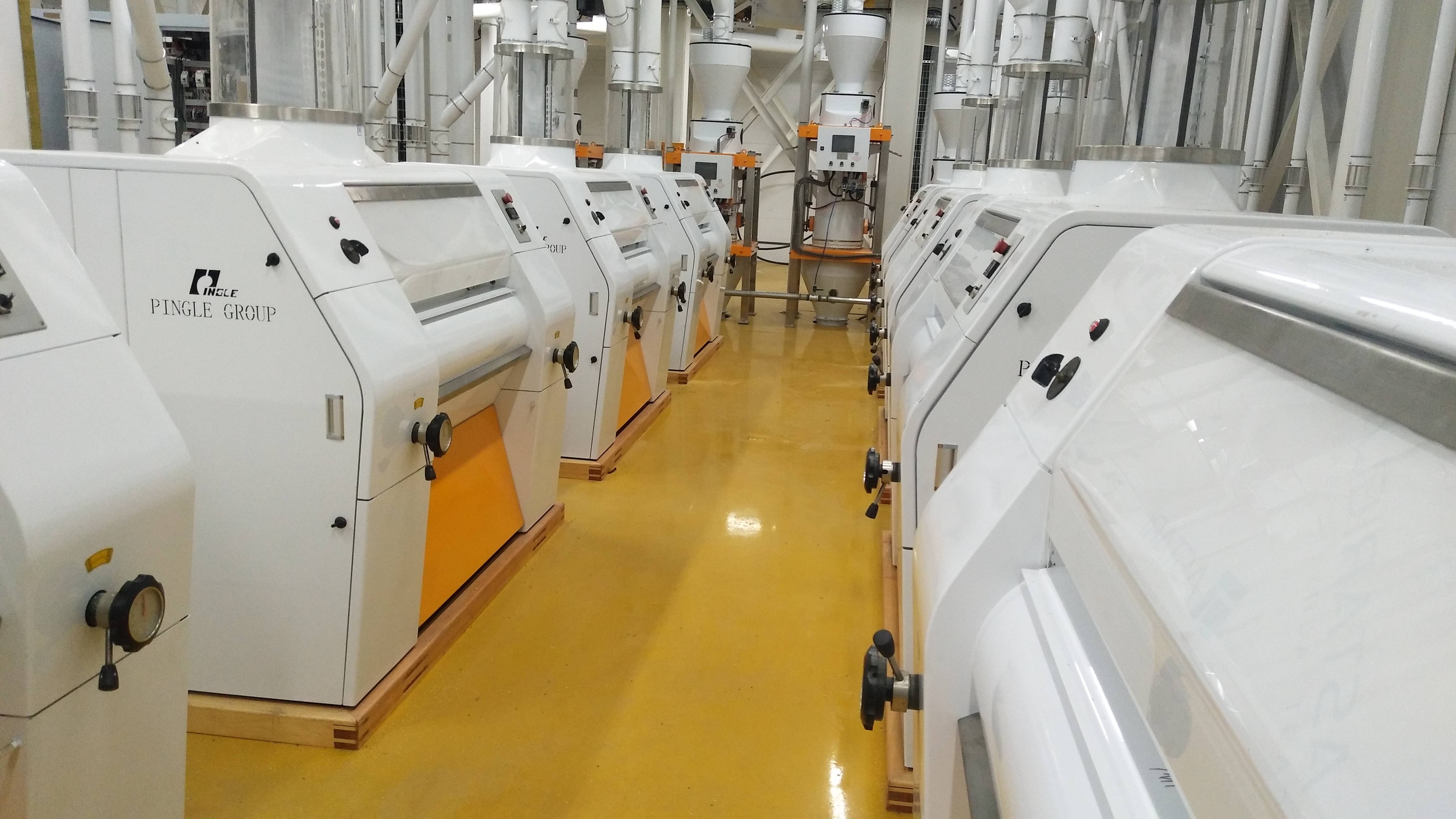
The drive for efficiency in grain processing has led roller mill manufacturers to rethink every stage of energy consumption. Advanced motor technologies now allow mills to operate with variable frequency drives that adjust rotor speed in real time based on the material load and desired particle size. This alone can cut electricity usage by up to 30% compared to fixed-speed systems, while also reducing mechanical strain on belts and bearings.
Another often-overlooked area is the aerodynamic design of the grinding chamber. By using computational fluid dynamics, engineers have reshaped roller profiles and internal baffles to minimize air turbulence. Less wasted kinetic energy means the mill does more work with less power, and it also dampens noise—a benefit for plant working conditions. Some designs even capture the heat generated during grinding and recirculate it for pre-warming incoming grain, lowering the overall thermal energy demand of the facility.
Machine learning has quietly entered the mill floor as well. Sensors measuring roller gap, vibration, and product moisture feed algorithms that optimize operating parameters moment by moment. Instead of running at peak power “just in case,” the mill dynamically finds the lowest energy input needed to maintain consistent output quality. These smart adjustments not only trim energy bills but extend roller life, reducing the embedded energy footprint tied to equipment replacement.
Hygienic Design Advances for Safer Flour Production
The evolution of hygienic design in flour milling has shifted from simple stainless steel surfaces to integrated solutions that actively prevent contamination. Modern equipment now features smooth, crevice-free welds, sloped surfaces that eliminate standing water, and fully sealed bearing housings that keep lubricants away from product zones. These advances reduce the risk of pathogen harborage and make cleaning protocols far more effective, even in hard-to-reach areas that once required extensive disassembly.
A less obvious but equally important breakthrough is the use of antimicrobial copper alloys in high-touch components like sifter sieves and conveyor paddles. Unlike traditional stainless steel, these alloys continuously reduce microbial load on contact surfaces, offering a passive line of defense between sanitation cycles. Coupled with smart sensor arrays that monitor humidity and temperature in real time, mills can now adjust environmental conditions on the fly to inhibit mold growth before it starts—turning a reactive cleaning schedule into a proactive hygiene strategy.
Beyond materials, the adoption of modular equipment architecture has transformed maintenance workflows. Components designed for rapid, tool-free removal mean that sanitation teams can deep clean a milling line in hours rather than days, minimizing production downtime. This design philosophy also supports the segregation of dry and wet processing zones, preventing cross-contamination at the architectural level. As standards tighten, these hygienic design principles are becoming the baseline expectation for any mill serious about food safety.
Real-Time Process Control with IoT and Sensors
The fusion of IoT and sensors reshapes how industries monitor and adjust critical operations on the fly. By weaving together a web of interconnected devices, facilities gain the ability to capture data from every corner of a process—temperature shifts, pressure fluctuations, vibration patterns—and feed it directly into control systems without human delay. This constant stream of real-time information lets algorithms detect subtle deviations before they become costly faults, triggering instant tweaks that keep production within tight specifications.
What makes this approach stand out is its capacity for adaptive decision-making. Unlike rigid, pre-programmed controllers, IoT-enabled setups learn from historical trends and live sensor feeds to fine-tune parameters dynamically. A chemical reactor, for instance, might automatically adjust cooling rates when ambient temperatures spike, or a packaging line could slow down if a sensor flags a misalignment—each action taken in milliseconds. This agility not only stabilizes output quality but also slashes downtime by catching issues that manual oversight would miss.
Moving beyond simple automation, these systems thrive on edge computing and low-power wireless protocols that trim latency to near-zero. Sensors placed in harsh or remote environments relay data reliably, while localized processing ensures that even if the cloud connection drops, control loops remain intact. The result is a resilient architecture where every piece of equipment, from pumps to conveyor belts, contributes to a self-optimizing ecosystem that continuously refines its own performance.
Novel Grinding Technologies for Superior Flour Quality
In the pursuit of exceptional flour quality, novel grinding technologies are reshaping the milling industry. Traditional methods often generate excessive heat, degrading nutrients and flavor. Advanced techniques now prioritize gentle processing, preserving the grain's intrinsic goodness.
One groundbreaking approach is cryogenic grinding, which uses liquid nitrogen to freeze grains before milling. This maintains volatile compounds and prevents oxidation, resulting in flour with a fresher taste and longer shelf life. Similarly, low-temperature impact mills reduce starch damage, enabling bakers to achieve better dough consistency.
Beyond temperature control, air classification systems offer precise particle size distribution, enhancing flour’s functional properties. These innovations not only boost nutritional retention but also meet the rising demand for clean-label products. Millers can now deliver flours that perform consistently, whether for artisan breads or delicate pastries.
Sustainable Milling: Circular Economy and Waste Valorization
Milling operations traditionally generate substantial waste streams, from spent grain and husks to byproducts like bran and germ. A circular economy approach reimagines these outputs as valuable resources. Rather than discarding them, mills can channel these materials into new supply chains—whether as ingredients for functional foods, feedstocks for bioenergy, or substrates for biodegradable packaging. This shift not only reduces disposal costs but also uncovers fresh revenue opportunities, aligning economic incentives with environmental stewardship.
The valorization of milling waste hinges on innovative processing techniques. For instance, micronization and enzymatic treatments can extract high-value compounds such as proteins, fibers, and antioxidants from bran layers. These components find applications in nutraceuticals and clean-label food products. Meanwhile, starch-rich residues serve as excellent carbon sources for fermentation, yielding biofuels or organic acids. By integrating such cascading use of materials, mills transform their operational model from linear consumption to regenerative cycles that mimic natural systems.
At the heart of this transition lies a strategic redesign of milling systems. Advanced separation technologies, coupled with real-time monitoring, allow precision recovery of fractions that were once overlooked. Collaborations across sectors—with food scientists, biotech firms, and packaging specialists—accelerate the development of viable products from what was previously waste. Sustainability is woven directly into process design, turning challenges like energy consumption and water usage into opportunities for closed-loop operations, where every output becomes a building block for something new.
FAQ
Modern mills are embracing sensor-based sorting, real-time monitoring systems, and automated cleaning processes that drastically reduce waste and downtime. These technologies allow operators to adjust parameters instantly, resulting in higher extraction rates and consistent product quality.
Automation has integrated entire production lines—from grain intake to packaging. With programmable logic controllers and centralized dashboards, mills now run with minimal manual intervention. This not only speeds up operations but also enhances safety by reducing human error in hazardous areas.
AI algorithms analyze data from optical sorters and moisture sensors to predict optimal grinding settings. They detect impurities and grain anomalies that human eyes might miss, ensuring only premium wheat enters the milling process while maintaining uniformity across batches.
Energy-efficient motors, waste heat recovery systems, and dust extraction units are becoming standard. Some designs also incorporate closed-loop water systems and biomass boilers, cutting carbon footprints significantly without compromising throughput.
Advanced roller mills feature corrugated rollers with precision profiles, self-adjusting gaps, and vibration damping. These enhancements allow for better control over fragment size and a higher yield of fine flour, while traditional mills rely on fixed settings that can produce inconsistent results.
Digital twins create virtual replicas of physical equipment, enabling predictive maintenance by simulating wear and tear. Mill managers can run 'what-if' scenarios to optimize settings, foresee breakdowns, and schedule repairs during planned downtimes, avoiding costly unexpected stops.
Yes, multi-deck sifters with ultrasonic vibration and color sorters using near-infrared spectroscopy are now mainstream. They remove foreign materials like stones, ergot, and discolored kernels with remarkable accuracy, often achieving purity levels above 99.5%.
IoT sensors collect real-time data on temperature, humidity, and equipment status, transmitting it to cloud platforms. This connectivity enables remote monitoring and analytics, helping millers make data-driven decisions that boost efficiency and reduce energy consumption.
Conclusion
The landscape of flour milling is undergoing a radical shift as cutting-edge machinery redefines efficiency, quality, and sustainability. At the heart of this transformation is the fusion of smart automation with artificial intelligence and robotics, which now orchestrates everything from grain intake to packaging with minimal human intervention. These systems learn from historical data to optimize roller gaps and grinding pressures in real time, ensuring consistent flour while dynamically adapting to variations in wheat hardness or moisture. Parallel to this, modern roller mills have embraced energy-saving innovations such as direct-drive motors and regenerative braking, slashing power consumption without compromising throughput. The result is a quieter, cooler-running plant that operates with a fraction of the carbon footprint of traditional setups. Meanwhile, hygienic design has leaped forward through crevice-free surfaces, self-draining frames, and automated clean-in-place systems, which eliminate pathogen harborage points and make allergen cross-contact nearly impossible. This not only meets the strictest food safety standards but also drastically reduces cleaning downtime.
Equally groundbreaking is the surge of real-time process control powered by the Internet of Things and advanced sensor arrays. Vibrational sensors on roller mills detect bearing wear before failure, while near-infrared analyzers continuously monitor protein and ash content, allowing automatic adjustments that keep extraction rates and flour specifications rock steady. This data-rich environment turns the mill into a transparent, self-correcting ecosystem where operators focus on strategic decisions rather than firefighting. Novel grinding technologies, such as ultrasonic-assisted comminution and cryogenic milling, are pushing flour quality boundaries, preserving starch granules and enhancing dough rheology for artisan bakers and industrial users alike. Sustainability is no longer an afterthought but a core design principle: mills now valorize bran and germ into high-value oils and proteins, while waste heat recovery and closed-loop water systems shrink the environmental footprint. Even the building materials and fugitive dust are managed with circular economy rigor, turning wheat byproducts into bio-packaging or energy pellets. Collectively, these innovations are not just upgrading machinery—they are rewriting the blueprint for what a truly modern, resilient flour mill can be.
Contact Us
Contact Person: Jiakuo Wu
Email: [email protected]
Tel/WhatsApp: +86-13011566087
Website: https://www.pinglemachine.com