Top Food Bikes Transforming Urban Dining
2026-11-25
City dining used to mean a reservation and a fixed address. Now the most exciting kitchens are rolling on two wheels, folding flavor into every curb and alley they stop at. From wood-fired pizza rigs to cold-brew trikes, these food bikes aren't just following the street-food trend—they're steering it. In this guide, we look at the builds changing how urbanites eat, and why modular setups like TUNE are becoming the backbone of this movement.
Why a bike frame is becoming the smallest viable restaurant
On a narrow street in Copenhagen, a stripped-down cargo bike rolls to the curb with an induction burner, a folding steel counter, and exactly eleven portions of smoked mackerel kept cold in a slim drawer. Two hours later the bike is gone, leaving no grease trap, no lease, and no stack of unsold salads. That disappearing act is not a novelty; it is the smallest viable restaurant a cook can actually run without borrowing against a dining room that may never fill.
The economics are unforgiving and therefore clarifying. There is no rent, no front-of-house staff, and no room for a menu with twelve ambitions. Every extra kilo of equipment has to earn its place against the range of the battery and the width of the bike lane. A chef might carry one sauce, one starch, and one protein, then build three dishes from those parts. The result is less a food truck than a mobile mise en place, scaled down until the only costs left are ingredients, labor, and the price of a charged battery.
What makes the format stick is not just cheap entry but a new kind of permission. Several cities have begun treating these rigs as a distinct category, somewhere between pushcart and restaurant, with their own rules for handwashing, waste water, and overnight storage. For a young cook, that small legal box can be more valuable than a large kitchen, because it allows a menu to be tested daily, thrown away, and rewritten by the next morning without losing the deposit on a brick-and-mortar space.
What a chef can cook on a cargo rack at a crosswalk
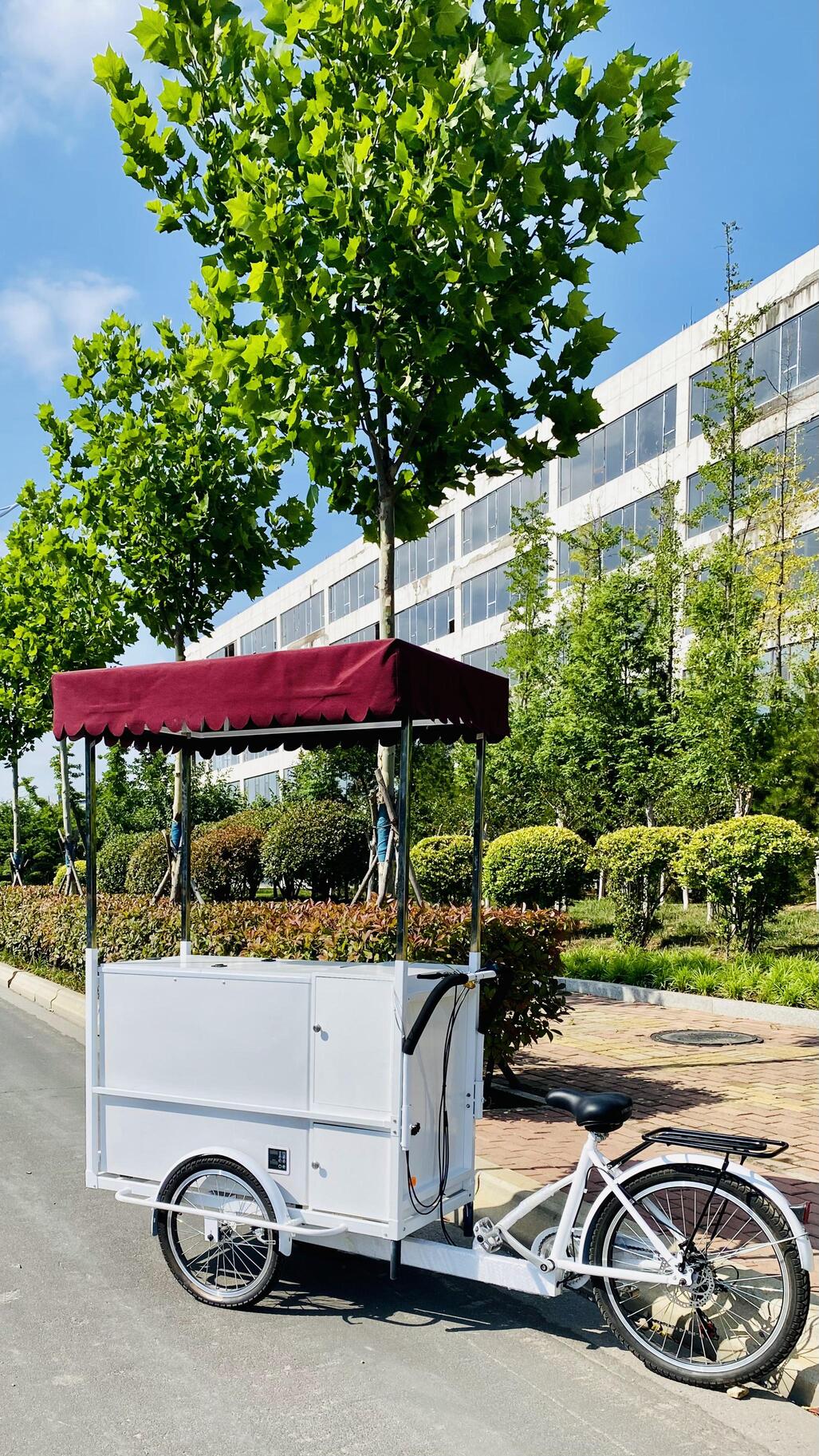
The cargo rack starts as a bare steel platform, but after a few bungee cords and a folded towel it becomes a station. A single cast-iron pan sits over a small butane burner strapped to the frame, while a thin cutting board balances across the handlebars. There is no prep kitchen, no pass, no hood vent. There is just the sound of oil hitting hot metal mixed with bus brakes and the countdown ticking at the crosswalk.
What works here is fast and compact. Chicken thighs sliced thin and marinated in chile, cumin, and lime ride in a zip-top bag under the rack. They hit the pan hard, char at the edges, and land inside warm tortillas with raw onion and cilantro. Sausage with blistered peppers and smashed potatoes holds up just as well. Every dish has to be eaten with one hand while standing, so the menu leans toward folds, skewers, and crispy things wrapped in paper.
The limits shape the cooking more than the recipes do. There is no sink, so a spray bottle of vinegar water cleans hands and the spatula between orders. Ingredients are portioned at home into deli containers, sauces go into squeeze bottles, and fresh herbs stay in a damp cloth. The heat stays high, the cuts stay thin, and the finishing salt gets added only when someone is already stepping off the curb. For a few minutes between signals, the rack is not part of the street furniture.
The city blocks where dinner rides in on two wheels
On certain corners after sunset, the curb becomes an informal depot. Riders balance insulated boxes on rear racks, then fan out into crosswalks with the kind of timing that only comes from knowing which elevator banks are slow and which doorbells actually work. Dinner doesn't wait in a dining room; it moves through traffic, strapped down and steaming.
The blocks themselves set the rhythm. Narrow lanes near the old market fill with two-wheeled couriers slipping past idling cars, their brake lights blinking in short, confident pulses. A hand reaches out to pass a plastic bag through a ground-floor window; another rider checks a phone against a gate number while a dog barks from the third floor. The meal arrives not with a waiter's formality but with the hum of a motor winding down and footsteps taking stairs two at a time.
Restaurants have learned to build side shelves for grab-and-go orders, and riders memorize which back doors unlock after eight. It turns the neighborhood into a kitchen without walls, where the distance between wok and doorstep is measured in minutes and the last mile smells like soy, garlic, and wet pavement.
A propane tank, a cool box, and a license to feed the street
The first thing you learn is that a propane tank and a cool box do not make you a cook. They make you a promise. The tank sits heavy by the cart wheel, the cool box sweats in the back of the car, and the license stays in a plastic sleeve because the health department said so. It feels less like paperwork and more like a backstage pass for a city that usually walks past too fast.
Mornings start with checking seals and temperatures, not recipes. You fire the burner under the griddle, listen for that low blue hiss, and wait for the first customer who only wants coffee but stays for whatever is already sizzling. The street has its own rhythm; the propane tank does not care about it, but you learn to. The cool box becomes a small vault of butter, chopped onions, and the one sauce nobody can name.
By noon the license is creased at the corner. Someone asks if you are allowed to be there, and you point to it without looking up. It is not a trophy. It is the reason you get to keep feeding people who never sit down, holding paper plates with one hand and shielding the wind with the other. The tank runs low around two, the cool box is half-empty, and the street finally feels like it gave you a spot.
Why food bikes beat food trucks in crowded old districts
In the tangled alleyways of historic quarters, a food truck often meets its match before the first order is taken. Narrow stone lanes never designed for motorized vehicles turn a simple parking maneuver into a twenty-minute negotiation with bollards, wandering tourists, and a fruit seller who has claimed the corner for thirty years. Food bikes slip through the same gaps without drama. They lean against a wall, fold down a tiny counter, and start serving while the truck is still reversing into a dead end.
The difference comes down to weight and width, but also to a quieter kind of logic. Old districts tend to be built around courtyards, stairways, and pedestrian shortcuts that make efficient delivery routes impossible for anything with four wheels. A bike can be lifted over a doorstep or parked in a spot no one else wants, and that flexibility means lower fines, fewer complaints from residents, and far less diesel exhaust seeping into stone facades. Vendors who adopt bikes often describe the move as swapping a blunt instrument for a sewing needle.
There is also the matter of relationship. A truck arrives with its engine running, creates a barrier between the cook and the street, and leaves a patch of warm asphalt behind. A bike feels provisional, almost neighborly. People stop to ask what is cooking without having to shout over an idling motor. In places where the built environment was never meant to accommodate modern commerce, the lighter and more adaptable the kitchen, the longer it tends to stay welcome.
After the bars close, bike kitchens take over the curb
By the time the last neon signs flicker off and the sidewalks thin out, a different kind of nightlife starts near the curb. Folding tables come out of van trunks, work lights clip to parking meters, and dented toolboxes open on the pavement. It looks improvised because it is. The bike kitchen doesn't need a lease, just enough streetlight and a stretch of concrete where someone can true a wheel without blocking the crosswalk.
The crowd here is quieter than the one leaving the bars. A delivery rider rolls up with a skipping chain, a bartender locks a wobbly brake, someone else borrows a hex key to lower a saddle. Nobody asks for much beyond the use of a pump or a spare tube. Conversations drift between gear ratios, rent, and the fastest route home on empty roads. It's not a workshop with a schedule; it's more like a loose ritual that happens after the official city shuts down.
What keeps the curb alive is the exchange of small skills. A regular shows a first-timer how to patch a tube while someone across the tarp explains why a wheel keeps rubbing. The tools get passed hand to hand, and a repair that would cost a week's tips at a shop gets finished for free. By dawn, the boxes close, the table folds, and the curb looks anonymous again until the bars let out next weekend.
FAQ
They let chefs dodge high rents and long permit waits while parking a compact kitchen right where foot traffic peaks, often with a menu built around a single standout dish.
Instead of walking to a fixed food hall, office workers follow rotating bikes that show up near parks, plazas, and transit exits, so the lunch map shifts daily without apps or ads.
Dishes that can be finished fast and eaten with one hand tend to win: folded flatbreads, noodle boxes, grilled skewers, rice bowls, and pressed sandwiches that tolerate a bit of movement.
Storage is tighter, weather hits harder, and prep space is tiny, so many rely on a shared commissary kitchen and design menus that use a few components in multiple ways.
Mostly they're filling gaps restaurants leave open: late-night corners, park edges, event crowds, and neighborhoods where a full buildout would be too slow or costly.
Watch how the cook handles the grill and how fast the queue moves; a short menu, clean tools, and a vendor who knows regulars by name usually signal a solid first meal.
Some have created small-scale vending permits and designated curbside zones, while others still lump bikes in with trucks, leaving vendors to work around rules that weren't written for them.
Early prep at a shared kitchen, loading insulated boxes, riding to a morning coffee crowd, restocking for lunch, then moving to a bar district or event before cleaning down after dark.
Conclusion
The tightest kitchen in the city no longer sits behind a brick wall; it balances on two wheels and a kickstand. A cargo rack that once carried packages now holds a flat-top griddle, a cutting board clipped to the handlebars, and a cook who has learned to plate with one hand while traffic inches past. In old districts where alleys are too narrow for a truck and rent would crush a fixed storefront, the food bike slips into a gap no larger than a parking meter. The setup sounds almost improvised—a propane tank strapped low for balance, a cool box packed tight enough to keep sauces cold through a lunch rush, and a permit that turns a curb into a legal dining room for forty minutes at a time. What matters is not square footage but timing and heat. A chef can sear, chop, and hand a box over the crosswalk before the light changes twice, and the menu shrinks to what can be executed cleanly in that small moving space.
After dark the rhythm shifts. When bars empty and delivery apps surge, bike kitchens take over the curb with portable burners and headlamps, serving late crowds that a full-sized truck could never reach through blocked side streets. Food bikes beat food trucks here less because of cost and more because of friction: they park, cook, fold down a shelf, and disappear before the street sweeper arrives. Different blocks develop their own two-wheel specials—one corner known for smoking skewers, another for cold noodles ladled from a chilled pot. The city becomes a scattered dining room where dinner rides in on two wheels, and the smallest viable restaurant turns out to be not a place at all, but a route, a flame, and a person who knows exactly when to be at the curb.
Contact Us
Contact Person: Yucui Yan
Email: [email protected]
Tel/WhatsApp: +86-15265226900
Website: https://www.tunevan.com/