
Top Industrial Air Conditioning Systems for Maximum Cooling Efficiency
2026-10-19
In the relentless push for operational uptime, industrial cooling often becomes an afterthought until equipment overheats or energy bills spike. But the right air conditioning system can transform efficiency across factories, warehouses, and server rooms. This article cuts through the noise to highlight the top industrial AC systems engineered for maximum cooling output with minimal energy waste. Whether retrofitting an aging facility or planning a new build, understanding these systems is critical. We also spotlight Tongbaote, a brand delivering robust cooling solutions for heavy-duty environments. Let’s dive into the options that keep your operations cool and costs under control.
Chillers That Earn Their Keep
Most chillers just sit there, humming along and burning energy whether you need full capacity or not. The ones worth having adapt to the actual load. Instead of running flat-out because that's what the spec sheet says, they dial back compressors, tweak condenser fans, and match output to what the building really demands at 2 p.m. on a Tuesday. That kind of intelligence isn't just clever engineering; it's the difference between a machine that costs money and one that quietly pays for itself.
Look closer at the operating logs and you'll see the pattern. A good chiller doesn't chase setpoints with wild swings. It holds a steady line, recovering from sudden loads without burning through extra kilowatts. Maintenance teams notice the difference too: fewer hot gas bypass cycles, less wear on the oil, longer stretches between filter changes. Over a decade, that translates into tens of thousands saved—not from a flashy feature, but from the simple discipline of doing only what's needed.
Of course, earning its keep also means being easy to live with. If a chiller needs a specialist on speed dial for every minor hiccup, it's not earning anything. The best ones give you clear diagnostics on a plain screen, parts that don't require a treasure hunt, and a footprint that doesn't force you to redesign the mechanical room. When the utility bill arrives and the numbers stay flat while outside temperatures spike, that's when you know the chiller isn't just installed—it's working for you.
Rooftop Units Without the Usual Tradeoffs
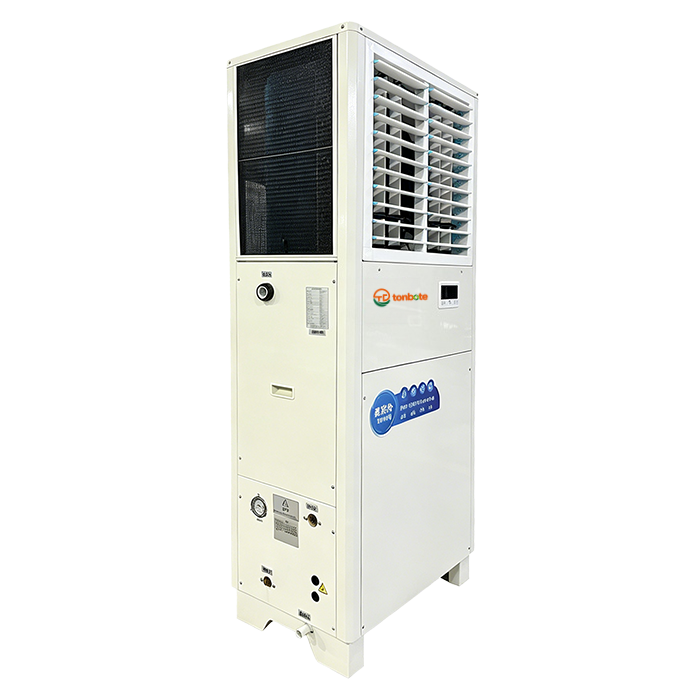
Rooftop units have long forced building owners into a corner: chase high efficiency and pay a premium upfront, or settle for lower first cost and watch energy bills climb. The usual compromise doesn't end there—footprint constraints, refrigerant leaks, and intrusive noise often tag along. What's refreshing now is a new generation of packaged systems that sidestep these old bargains. They pair variable-speed compressors with heat exchanger designs that squeeze more capacity out of a smaller cabinet, so you get part-load efficiency without sacrificing rooftop real estate or your maintenance crew's patience.
Noise has always been the unspoken tradeoff in rooftop equipment, especially when units sit near occupied spaces or property lines. The latest designs tackle this with fan blade geometries and compressor jackets that cut sound levels dramatically, not just on paper but in real operating conditions. Meanwhile, serviceability gets a rethink—hinged access panels, modular electrical layouts, and diagnostic ports that don't require a laptop and a specialist. That means a technician can swap a filter or run a system check in minutes, not hours, reducing downtime without a steep learning curve.
Perhaps the most welcome change is how these units handle refrigerant containment. Older rooftops were notorious for slow leaks that went unnoticed until efficiency tanked. Newer models integrate leak detection and low-charge designs that lower the total refrigerant footprint while keeping performance stable. Combined with smart controls that adjust to actual load instead of guessing, the result is a rooftop unit that finally delivers on both comfort and cost—no hidden asterisks, no usual tradeoffs.
Variable Refrigerant Flow for Shifting Loads
Variable refrigerant flow systems have long been praised for their part-load efficiency, but their real untapped value lies in how smoothly they can move heating and cooling demand away from expensive peak periods. By pairing VRF with smart controls and a modest amount of thermal mass, a building can pre-cool or pre-heat zones during off-peak hours, then let the refrigerant loop coast while electricity prices spike. The compressor does not need to run hard at the worst possible moment; instead, the indoor units release stored comfort gradually, flattening the overall load profile.
The key is treating each zone as a flexible resource rather than a fixed setpoint. A VRF system with individual branch controllers can shift load room by room, pre-treating conference areas in the early morning, backing off in unoccupied offices, and focusing capacity where occupancy will soon peak. This granularity means the building operator can shed several hundred kilowatts for a few critical hours without anyone noticing a temperature drift of more than a degree or two. Over a cooling season, those small strategic adjustments turn into meaningful demand charge savings.
What makes VRF particularly well-suited to load shifting is the wide modulation range of its inverter-driven compressors. Instead of cycling abruptly, the system can ramp down to a quarter of full capacity and hold there quietly, allowing the building to ride through a demand response event without sacrificing comfort. When combined with time-of-use rates or utility incentives, this approach turns a standard comfort system into an active grid participant, one that rewards owners with lower bills without requiring a single change in occupant behavior.
Evaporative Cooling’s Dry Climate Sweet Spot
Evaporative cooling leans hard on a simple fact: dry air has room to soak up moisture. When relative humidity sits below about 40%, water evaporates fast enough to knock 20 to 30 degrees off incoming air, which is why places like Albuquerque or Tucson feel naturally suited to swamp coolers. The mechanism isn't magic—it's just latent heat exchange, but the payoff only materializes where the wet-bulb temperature stays low enough to matter.
That dry-climate sweet spot has a practical edge beyond comfort. A direct evaporative unit might draw 75% less electricity than a compressor-driven air conditioner for the same air volume, simply because the hard work is done by evaporation, not a refrigerant cycle. But the moment humidity creeps past 50 or 55 percent, the temperature drop shrinks and the output starts to feel muggy rather than crisp. That's why the technology remains a regional tool—brilliant in arid zones, nearly useless along the Gulf Coast.
Design details also shift inside the sweet spot. Airflow rates, pad thickness, and water bleed-off get tuned to the local dryness, not to a generic spec. In places like Denver or El Paso, a well-maintained evaporative cooler can hold indoor air below 78°F on days when outdoor dry-bulb temperatures exceed 100°F, as long as the humidity stays low. That kind of performance isn't a compromise; it's the whole reason the approach survives in an age of refrigerants.
Precision Cooling Where Every Degree Counts
In spaces where thermal drift can ruin a batch or shorten hardware life, precision cooling is less about comfort and more about control. The real challenge is not just hitting a target temperature, but holding it inside a tight band that your equipment actually needs. Even small swings can introduce measurement noise, alter chemical reactions, or stress solder joints over time.
Every degree of fluctuation forces materials to expand and contract, accelerating wear and creating subtle shifts in performance. A well-tuned cooling system responds ahead of the heat load, not after the room has already warmed. That means monitoring airflow, humidity, and heat density together, rather than relying on a single wall thermostat that only sees part of the picture.
In labs, cleanrooms, and server halls, a half-degree drift can make the difference between reliable data and a failed validation run. Precision cooling treats temperature as a dynamic variable, adjusting continuously to keep the environment stable without wasting energy on overcorrection. It is the quiet discipline that protects sensitive processes when every fraction of a degree carries real weight.
Retrofit or Replace? Reading the Warning Signs
A worn impeller or cracked volute doesn’t always mean the end of the line. Many pumps can be brought back to full duty with a targeted retrofit—new wear rings, upgraded seals, or a more efficient motor. The decision hinges on the condition of the pressure boundary and the cost of downtime versus the capital outlay for a new unit.
Replacement becomes the smarter move when the casing shows deep corrosion, the bearing frame is out of tolerance, or the energy penalty of an old hydraulic design eats into operating budgets. A pump that has already been rebuilt twice and still underperforms is telling you something. Look for cracks near flanges, excessive vibration after alignment, or a curve that no longer matches the original documentation.
Sometimes the warning signs are economic rather than mechanical. If repair quotes exceed sixty percent of a new pump’s price, or if the existing model is no longer supported by the manufacturer, replacement clears the path to better reliability. Weigh the remaining life of the pipework and baseplate too—new pumps often need adapter plates or piping changes, which can tip the scale back toward a well-executed retrofit.
FAQ
Real-world performance hinges on how well the system matches the actual heat load profile of the facility. Oversized units cycle too often and waste energy; undersized ones struggle and wear out faster. A proper audit of heat sources, occupancy swings, and process loads makes the difference.
They let the system dial output to match demand instead of running at full blast or shutting off. That reduces energy spikes, keeps temperature swings tight, and extends equipment life—especially in plants with uneven production schedules.
Units with epoxy-coated coils, sealed electrical compartments, and robust filtration tend to survive longer. For highly corrosive settings, consider indirect evaporative coolers or closed-loop chilled water systems that keep sensitive components out of the harsh air stream.
It's often overlooked, but directing cool air exactly where heat is generated—through ducting, containment aisles, or spot coolers—can boost effective capacity by 20% or more without touching the compressor. Poor airflow is like running a marathon breathing through a straw.
Those numbers help, but they reflect lab conditions. Real installations need to account for piping losses, altitude, voltage fluctuations, and maintenance access. A unit with a slightly lower rating but better part-load performance may actually cost less to run.
At least twice a year for filters, coils, and refrigerant checks. Facilities with heavy dust or continuous operation may need quarterly attention. Neglecting a clogged condenser coil can raise energy consumption by 15-30% before anyone notices a comfort issue.
In dry climates, yes—they use up to 80% less electricity and provide fresh air. But they add humidity, which rules them out for electronics, food processing, or any process sensitive to moisture. Hybrid systems that switch between evaporative and mechanical cooling offer a balanced approach.
Wireless temperature sensors tied to a building management system can map hot spots in real time. Adding variable frequency drives to existing fans and pumps often pays for itself within two years by matching airflow to actual demand instead of running full speed.
Conclusion
Industrial cooling rarely rewards a one-size-fits-all approach. A plant floor with uneven heat loads, a server room demanding tight humidity control, and a warehouse in an arid region each pull a facility manager toward different equipment choices. Water-cooled chillers still anchor many large operations, but the ones that earn their keep are not simply oversized units running at partial load—they are selected for part-load efficiency and paired with variable-speed drives. Rooftop packages, often dismissed as compromise solutions, can perform surprisingly well when the ductwork, economizers, and controls are commissioned as a system rather than bolted on as an afterthought. For buildings with shifting occupancy or process loads, variable refrigerant flow offers a way to match output to demand without the constant cycling that wastes energy and wears down compressors.
In dry climates, evaporative cooling remains a low-energy workhorse, but its sweet spot narrows quickly once humidity climbs, making hybrid designs worth a close look. Precision cooling is another matter entirely: when a single degree of drift can ruin product batches or crash server racks, the extra redundancy and tight deadbands are not luxuries. That level of control often tips the retrofit-versus-replace decision. Rising energy bills, more frequent refrigerant leaks, and parts that are no longer stocked are warning signs that a patchwork approach has hit its limits. A thoughtful replacement—sized correctly and paired with modern controls—frequently pays back faster than another round of emergency repairs. The most efficient system is the one that matches the load profile, not the one with the highest nominal SEER or EER on a brochure.
Contact Us
Contact Person: Wanshu Chen
Email: [email protected]
Tel/WhatsApp: +86-13662871206
Website: https://www.mbcee.com