Top Recloser Technologies for Reliable Power Distribution
2026-09-03
Reliable power distribution is no longer a luxury—it’s the backbone of modern life. Yet, every utility engineer knows the silent enemy: momentary faults that cascade into hours-long outages. Enter the new generation of reclosers, where smart algorithms and arc-quenching speed are rewriting the rules. In this post, we cut through the hype and spotlight practical technologies that truly minimize downtime. Along the way, you’ll see how Deepwill is turning these innovations into field-proven solutions—without the usual complexity.
Vacuum Interruption: The Quiet Workhorse Behind Fault Clearing
When a short circuit strikes, most people picture dramatic arcs and loud explosions. Yet the device that actually clears the fault often does its job in complete silence. Vacuum interrupters sit inside circuit breakers, ready to separate contacts within a vacuum chamber where there's almost no gas to ionize. This lets them extinguish an arc in milliseconds without the bulk or environmental concerns of older oil or SF6 designs.
The secret lies in the vacuum's dielectric strength. As contacts part, the arc vaporizes a tiny amount of contact material, but the moment current crosses zero, the vapor condenses back onto the contacts. Because vacuum offers no medium for reignition, the arc simply cannot sustain itself. That means faster interruption, minimal contact wear, and no need for arc chutes or gas handling. A typical vacuum interrupter can handle tens of thousands of operations at full load before requiring any attention.
Utilities and industrial plants have quietly made vacuum interruption the default choice for medium-voltage applications. Its compact size, lack of greenhouse gases, and near-silent operation fit modern demands for maintenance-free switchgear. While rarely noticed, vacuum interrupters are the reason fault clearing happens so smoothly that the lights barely flicker.
Solid Dielectric Design Eliminates Oil and SF6 Handling
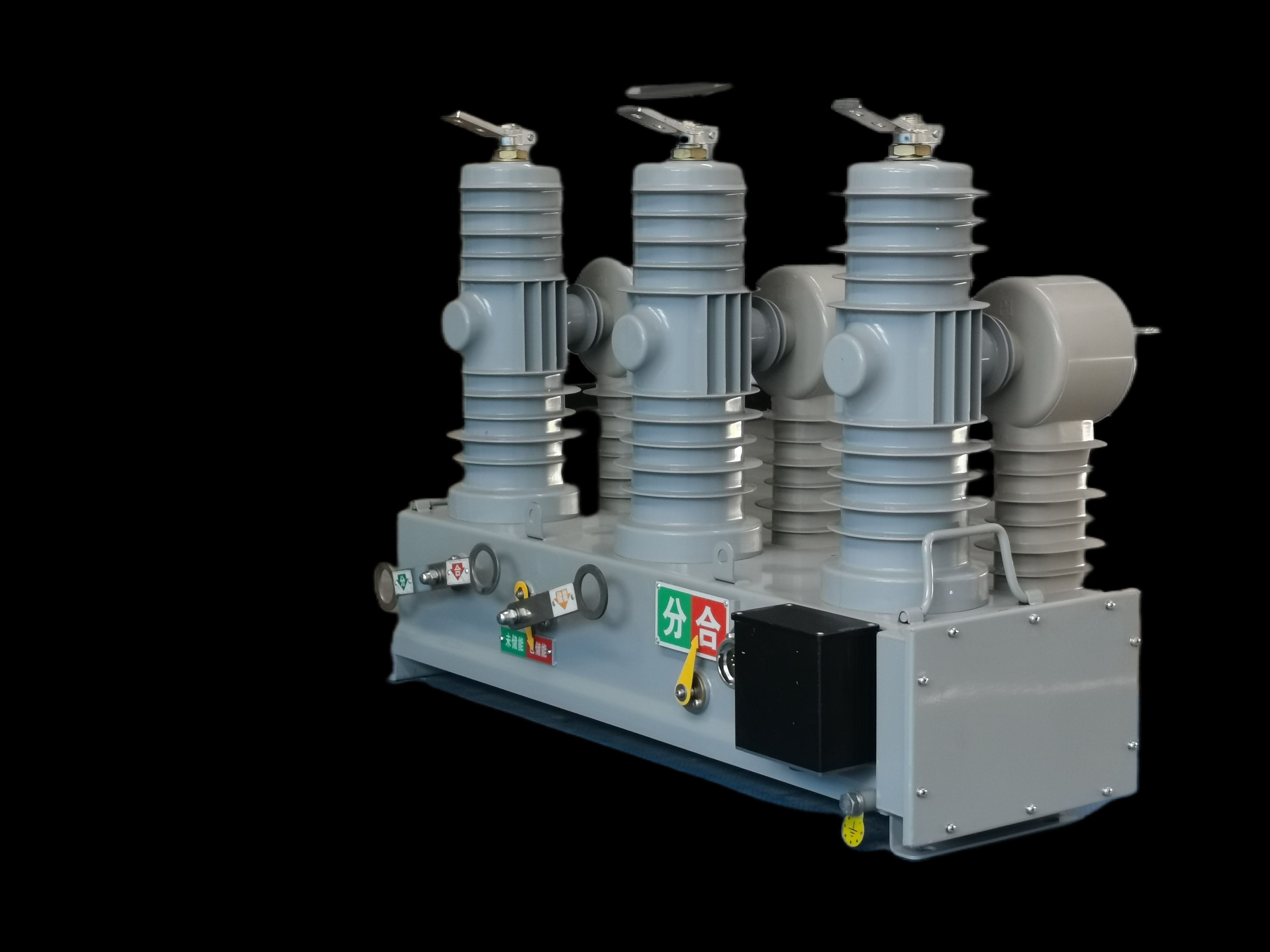
Traditional switchgear relies on oil or SF6 gas for insulation and arc quenching, which brings a host of logistical headaches: storage, leakage checks, gas recycling, and strict disposal rules. Solid dielectric design swaps these fluids for epoxy-encapsulated components, so the insulation is built directly into the parts. There is no tank to fill, no pressure to monitor, and no special handling equipment on site.
This approach cuts out the routine maintenance tied to liquid and gas systems. No oil sampling, no SF6 leak detectors, no need to recover gas before opening a compartment. The solid materials are inherently stable and don't degrade into harmful byproducts, which also removes the risk of contamination during emergency repairs or end-of-life teardown.
By eliminating oil and SF6 altogether, the design sidesteps environmental compliance costs and site safety concerns. Crews can work around the equipment without worrying about toxic arc byproducts or greenhouse gas emissions. It's a cleaner, simpler way to achieve the same dielectric performance without the hidden burdens of legacy insulation media.
Adaptive Protection Settings That Learn From Grid Conditions
Static protection settings age poorly because they are tuned to a snapshot of grid behavior that may no longer exist. Load shifts, new distributed generation, or a line out of service all change the fault-current landscape, yet most relays keep operating on assumptions from the last study. Adaptive protection settings take a different route, learning from live measurements and recent grid events, then adjusting pickup thresholds, time-current curves, or zone reaches accordingly. This keeps the protection logic aligned with actual conditions rather than a stale model.
The learning process is most visible during abnormal operating states. After a major topology change, fault levels and current directions may shift enough to break coordination margins. Instead of waiting for an engineer to run a new study, the adaptive scheme re-evaluates its settings using patterns from the past few hours or days, then applies changes that preserve both speed and selectivity. Each actual fault adds another data point, letting the system refine its decision rules over time and reduce nuisance trips or delayed clearing in edge cases that fixed settings routinely miss.
Peer-to-Peer Communication for Faster Fault Isolation
In distributed systems, waiting for a central coordinator to detect and report failures slows everything down. Peer-to-peer communication flips that model: each node talks directly to its neighbors, exchanging heartbeat signals and status summaries. When one node stops responding or behaves abnormally, the peers detect the anomaly locally and immediately mark that node as suspect. This removes the single point of delay and lets the system react within a few hundred milliseconds instead of waiting for a full round-trip to a master node.
The real advantage shows up during cascade failures. Instead of every node hammering a central monitoring service and creating a bottleneck, each node shares only with the handful of peers it trusts. If a switch or a storage path starts degrading, the affected nodes rapidly exchange limited, focused updates. That way, the blast radius stays small—only the neighbors of the failing component need to reroute or isolate traffic. It is a practical way to keep fault isolation fast without flooding the entire network with diagnostic chatter.
Building this on top of existing gossip or epidemic protocols keeps the overhead low. A node does not need a global view; it only needs to know a few peers. When it sees two consecutive missed heartbeats from a neighbor, it can locally fence that neighbor and start rebalancing work. The speed comes from pushing decisions to the edge, where the failure actually happens, rather than hauling every signal back to a central brain.
Built-In Condition Monitoring Flags Wear Before Outages
Instead of waiting for a machine to break down mid-shift, built-in condition monitoring keeps a constant watch on the subtle signals that precede failure. Sensors embedded in motors, pumps, and drives track vibration, temperature, and current draw at a rate far beyond what periodic manual checks can catch. This continuous stream of data means the system can spot the first signs of bearing wear or insulation stress long before they become visible or audible to a maintenance team.
The real value lies in how the system interprets those raw measurements. A slight uptick in high-frequency vibration, a gradual shift in operating temperature, or an unexpected change in load current each tells a different story about what is degrading inside the asset. The built-in algorithms compare these patterns against known baseline profiles, so a developing fault gets flagged as a specific type of wear rather than a generic alarm. That distinction helps technicians know exactly where to look and what to replace instead of spending hours on guesswork.
Because the warning comes early, maintenance can be scheduled during planned downtime rather than in the middle of a critical run. This turns potential outages into routine part swaps, extends the working life of expensive equipment, and avoids the cascading costs of emergency repairs. Operators get a clear, actionable heads-up that something is wearing out, and they can act on it on their own terms.
Cybersecurity Measures Tailored for Pole-Mounted Reclosers
Reclosers sit on poles for years, often overlooked in cyber planning because they were never designed to be networked. The shift to remote monitoring and control changes that. Security starts with knowing every device on the feeder and locking down the communication paths—serial radios, cellular modems, or fiber converters—so a compromised laptop can't simply send an open command. Default vendor passwords are still common; replacing them and disabling unused ports is cheap but often skipped.
Patching these devices is rarely as simple as pushing an update from a central server. Recloser controllers may need a truck roll, and an outage window is not always acceptable. That means compensating controls: segmenting the distribution automation network from corporate IT, filtering traffic at the substation router, and watching for abnormal DNP3 or Modbus function codes that indicate someone is probing the device. Some utilities are adding protocol-level authentication or bump-in-the-wire encryption for legacy links.
Physical tamper events matter too. If a controller cabinet is opened at 2 a.m., the cyber team should know before the next scheduled poll. Modern recloser controls can send SNMP traps or syslog for door alarms, failed login attempts, and configuration changes. Feeding those into a SIEM or OT monitoring platform helps separate routine maintenance from a targeted attack. The goal isn't perfect security; it's making the recloser a harder target than the next feeder.
FAQ
A smart recloser integrates two-way communication, remote monitoring, and programmable logic so it can share real-time status, event logs, and load data with utility control centers. It typically supports protocols like DNP3 or IEC 61850, enabling coordinated protection schemes and faster outage response without sending a crew to the field.
Vacuum interrupters contain the arc inside a sealed bottle, which prevents contact erosion and eliminates the need for oil or gas handling. This design allows tens of thousands of operations with minimal maintenance, making it ideal for feeders with frequent temporary faults or high switching duty.
Single-phase tripping isolates only the faulted phase while keeping the other two phases energized. This dramatically reduces the number of customers affected by a fault and improves reliability indices like SAIDI and SAIFI, especially on long rural feeders or networks with sensitive single-phase loads.
Microprocessor-based controls replace old electromechanical relays with programmable protection curves, directional elements, and event recording. They let utilities customize trip and reclose sequences, monitor harmonics and fault currents, and integrate with distribution automation systems for adaptive protection.
Yes, solid-state reclosers use power semiconductor switches to interrupt current without mechanical contacts. They respond in microseconds, limit let-through current, and eliminate arcing, but they require careful thermal management and can be more expensive upfront compared to vacuum or SF6 designs.
Pulse-closing technology closes the recloser for only a few milliseconds to test if a fault is still present. If the fault remains, the circuit opens before high current can develop, which protects downstream equipment, reduces voltage sags, and minimizes stress on transformers and cables.
Sealed-for-life reclosers use a fully enclosed tank or housing filled with an inert gas or solid dielectric, preventing moisture ingress and contamination. They eliminate routine oil testing, contact inspection, and gas refilling, which lowers lifecycle costs and is attractive for remote or hard-to-access installations.
Built-in fault-location algorithms use impedance calculations or traveling wave analysis to estimate the distance to a fault. This lets crews drive directly to the damaged section instead of patrolling the entire feeder, cutting restoration time by hours and reducing operational expenses after storm events.
Conclusion
Reclosers have moved well beyond their electromechanical roots. Vacuum interruption now serves as the quiet workhorse behind fault clearing, quenching arcs quickly inside sealed bottles and doing away with oil or gas maintenance. Solid dielectric insulation builds on that by eliminating SF6 handling altogether, so line crews no longer juggle gas cylinders or worry about environmental reporting. The practical payoff is a compact, weatherproof unit that fits on crowded poles and tolerates years of exposure without internal degradation. Utilities can install these reclosers in remote sites and largely forget them until a scheduled inspection rolls around.
On the intelligence and networking front, adaptive protection settings learn from real grid conditions instead of staying locked to a nameplate curve. As distributed generation shifts load patterns, the relay retunes itself to avoid nuisance trips while still clearing true faults. Peer-to-peer communication cuts coordination time dramatically, letting neighboring reclosers exchange status messages and isolate the smallest possible line section without waiting for a master station. Built-in condition monitoring tracks contact wear, mechanism timing, and thermal stress, flagging equipment that is drifting toward failure before an outage occurs. Rounding out the package, pole-mounted cybersecurity controls harden local radios and access ports against tampering, keeping these smarter devices from becoming new points of attack.
Contact Us
Contact Person: Julion
Email: [email protected]
Tel/WhatsApp: 8617351370631
Website: https://www.deyunelectric.com