
Vacuum Loader Solution: Efficient Material Handling for Modern Manufacturing
2026-08-28
In modern manufacturing, the way you move raw materials can quietly make or break your line's efficiency. Vacuum loader solutions have emerged as a smarter, cleaner alternative to manual or conveyor-based feeding—pulling powders, granules, and regrind directly to the hopper without dust, waste, or bottlenecks. But not every vacuum loader is built for the real-world demands of high-speed production. That's where Fanchang Machinery comes in. In this post, we'll break down how the right vacuum loading setup reduces downtime, protects material quality, and scales with your operation—so you can stop fighting material flow and start optimizing it.
How Vacuum Loaders Keep Powders and Granules Moving Without a Hitch
The real challenge with powders isn't just moving them—it's getting them to flow consistently from a drum, bag, or silo without packing into stubborn bridges or choking the line. Vacuum loaders sidestep that problem by creating negative pressure inside a sealed convey line, which pulls material through at a steady velocity. Because the particles are carried in a continuous stream rather than pushed by mechanical force, there's less crushing, less dust escaping, and no stagnant corners where fine powder can cake. The result is a transfer process that feels almost uneventful, which is exactly what you want when a production schedule depends on repeatable batch weights.
A less obvious reason these systems run without a hitch is the way they handle the air-material separation step. The vacuum pulls the solid stream into a receiver, where a filter blocks the powder from entering the pump. On a fixed cycle, a reverse pulse of air knocks the accumulated dust off that filter and back into the batch. If that cleaning step is tuned correctly, the loader keeps its suction strength over hours of continuous use instead of tapering off as the filter blinds. Many operators notice that after installing a vacuum loader, the feed line stays cleaner and the downstream mixer or hopper receives material at a more predictable rate, which cuts down on the small interruptions that used to eat up shift time.
It also helps that vacuum loading is inherently modular. You can place the pickup wand in one container, run a flexible hose across a walkway, and drop the powder into a hopper twenty feet away without rearranging the room. When a batch changes, the same loader can transfer a different powder or granule simply by moving the wand and purging the line. That flexibility, combined with the absence of rotating seals or augers that wear out against abrasive media, keeps the whole path from pickup to discharge free of the jams and leaks that often plague mechanical conveyors.
Why Traditional Conveying Falls Short in High-Volume Production
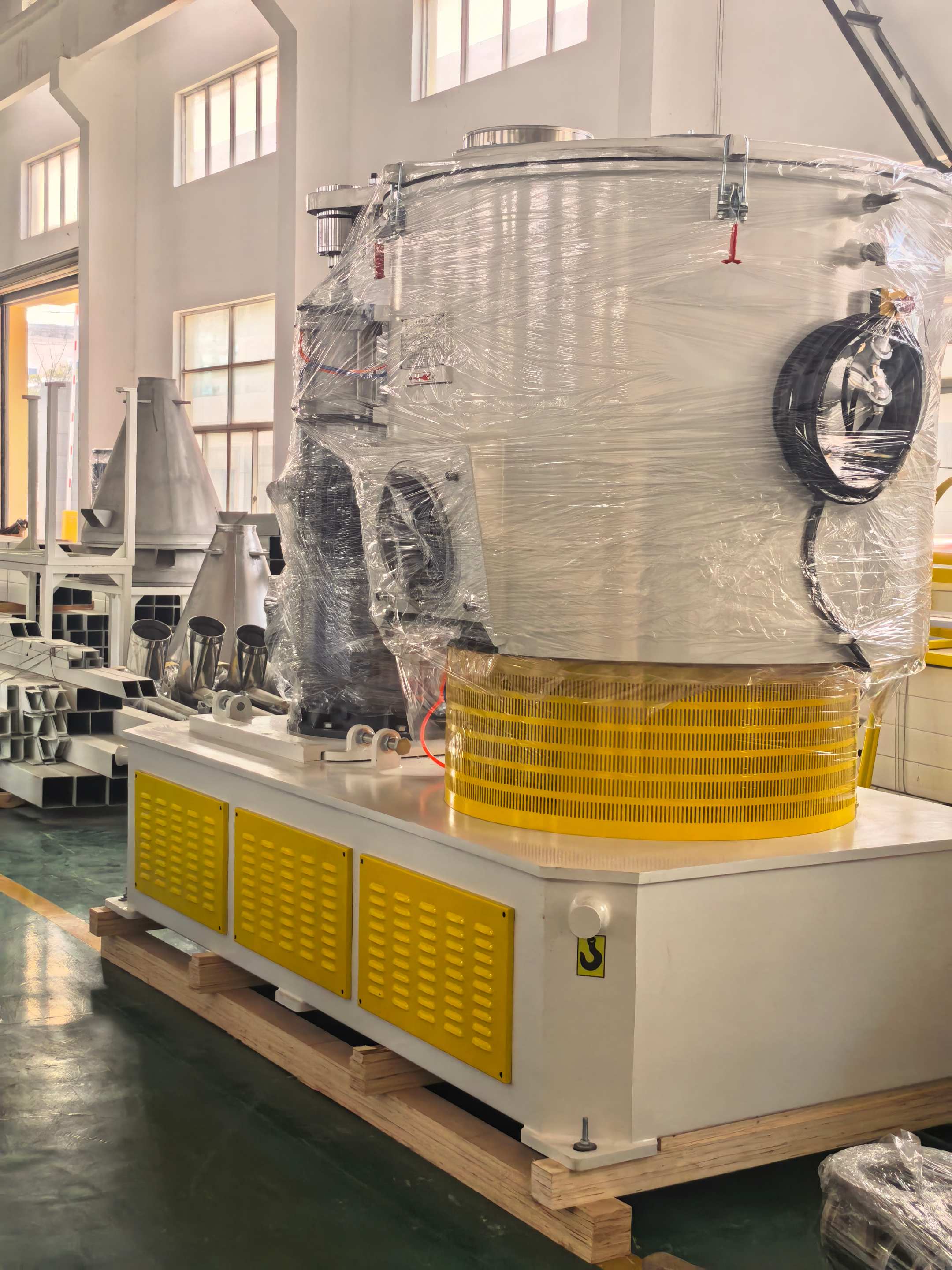
Traditional conveying systems often rely on fixed-speed belts, rigid chutes, or mechanical diverters that were designed for steady, predictable flows. But when production volumes surge, these setups expose their limits: bottlenecks form at transfer points, small jams cascade into full line stoppages, and the only way to adjust throughput is to manually retune motors or rebuild sections of the line. The result is a system that works fine at moderate pace but buckles under the stress of continuous, high-rate operation.
Another shortfall lies in how traditional systems handle product variety and changeovers. In high-volume environments, even minor variations in package size, weight, or orientation can derail a conveyor that was tuned for a single SKU. Operators end up spending hours on mechanical adjustments or accepting lower efficiency just to keep things moving. That trade-off — sacrificing speed for stability — is exactly what modern high-volume production cannot afford.
Finally, the lack of real-time feedback in conventional conveying means problems are often discovered only after they have already slowed the line. Without integrated sensing or adaptive control, a misaligned box or a worn roller can quietly reduce throughput for an entire shift. For facilities pushing thousands of units per hour, those silent losses add up quickly, making traditional conveying a costly bottleneck rather than a reliable backbone.
Core Components That Separate Reliable Systems from the Rest
Reliability rarely comes from a single breakthrough. It emerges from a handful of deliberately chosen mechanisms working together. Strong systems isolate failures inside narrow boundaries so a local problem doesn't cascade into a full outage. Circuit breakers, timeouts, and bulkheads are mundane-sounding components, but they prevent a slow dependency from taking down every service that calls it.
Observability is another component that often gets reduced to collecting logs. What actually separates reliable systems is the ability to interrogate internal state on demand. Teams that run dependable services log structured events, trace request paths, and keep enough context to answer why a particular request was slow without trying to reproduce production. Metrics, traces, and logs work as a triangle of evidence, turning failures from mysteries into solvable puzzles.
Recovery paths also deserve first-class treatment. Reliable systems don't just assume components will fail; they rehearse degradation, rollback, and self-healing on a regular basis. Feature flags, canary releases, and idempotent operations let a system keep serving its core functions even when parts are broken, while keeping manual intervention to a minimum.
Matching Vacuum Loader Capacity to Your Throughput Demands
Published throughput numbers on a vacuum loader assume a clean filter, a short straight conveying line, and free-flowing pellets. Your actual peak draw will rarely match those conditions, so begin by recording material consumption at the hopper inlet during the fastest sustained production stretch, not the daily average. That number, plus the longest distance and number of bends in your planned piping, gives a far more honest baseline than the brochure figure.
Every vertical lift, flexible hose section, and worn radius elbow adds resistance that quietly eats capacity. Regrind blends, powders with poor air retention, or fillers that pack tightly can derate a loader by fifteen to twenty-five percent before the filter even begins to load. If one vacuum pump feeds several receivers, size the pump for the worst case where two or more stations call for material at the same time—otherwise the station farthest from the pump will lose vacuum and short-fill.
A simple field test is to run your real material blend at roughly eighty percent of rated capacity for a full shift and watch how the unit behaves after the filter seasons. If convey times creep upward or the pump starts short-cycling near the end of the run, you have almost no safety margin left. Adding ten to fifteen percent extra capacity now is cheaper than re-piping later, and it keeps a temporary spike in demand from turning into an unplanned downtime event.
Simple Maintenance Habits That Extend Equipment Lifespan
Most equipment failures trace back to overlooked basics, and cleaning sits at the top of that list. Dust, grime, and tiny debris work their way into vents, seals, and moving parts, forcing motors to run hotter and bearings to grind down faster. A quick weekly pass with compressed air around intake grilles, followed by a soft, dry cloth on exterior surfaces, can prevent the slow buildup that shortens a machine's working life. For tight spots, a cheap toothbrush does a better job than most specialty tools, and it costs almost nothing to keep one in your maintenance kit.
Lubrication is another habit that rewards consistency but punishes guesswork. Too little grease leads to metal-on-metal wear, while too much attracts dirt and creates a messy sludge that accelerates damage. The trick is to follow the manufacturer's intervals rather than your intuition, and to use the exact lubricant type listed in the manual, not whatever can is closest. While you're at it, check for loose bolts, frayed belts, or cracked hoses during the same routine. A five-minute walk-around with a wrench and a flashlight catches small issues before they turn into expensive rebuilds.
Storage and operating habits matter just as much as hands-on servicing. Let equipment cool down for a few minutes after heavy use before you put it away, especially if it's going into a shed or toolbox. Moisture from rapid temperature changes condenses inside housings and promotes rust on exposed metal. If possible, keep gear off damp concrete floors and away from direct sunlight or heating vents. Finally, resist the urge to push a machine beyond its rated capacity just to save time. Overloading strains every component at once, and the damage often shows up weeks later as a sudden, mysterious failure.
Integrating Vacuum Loading into Automated Workflows Without Downtime
Integrating vacuum loading into an automated workflow usually means planning around a shutdown window, but that's often avoidable. The trick is to treat the vacuum receiver and its controls as a parallel module rather than a serial step in the production line. For example, mounting the loader on a wheeled frame with quick-connect pneumatic and electrical couplings lets you wheel it into position, hook up to an existing hopper, and test the vacuum cycle while the current feeding system is still running. You can then switch over at a natural pause or run both systems briefly to compare dosing accuracy.
The control side matters just as much as the hardware. Modern vacuum loaders can accept remote I/O signals, so tying them into a PLC or a plant-wide automation network doesn't require a full line stop. A common approach is to add a small local controller first, run it in shadow mode to log demand signals from the process, and then cut over the vacuum pump and valves during a low-throughput period. This gives you a true no-downtime integration because the physical installation and the logic validation happen before the old feeder is removed. For extra safety, keep the old system on standby for a week and use a check valve or diverter to prevent backflow, then decommission it once the vacuum loader has proven stable over several shifts.
FAQ
It automates the transfer of powders, granules, and small parts, eliminating manual scooping and reducing transfer time. Closed-system conveying prevents spillage and keeps production lines moving without interruptions.
Most dry bulk solids, including fine powders, plastic pellets, food ingredients, pharmaceutical compounds, and metal shavings. The key is matching the filter and hose design to the material's particle size and flowability.
A vacuum pump, a collection hopper with a filter, a conveying hose, and a control unit. Some models add a level sensor and a discharge valve for continuous automated loading.
Because the material travels through a sealed pipeline, it never touches ambient air or operator hands. This closed loop minimizes dust release and prevents cross-contamination between batches, especially important in food and pharmaceutical settings.
Yes, they typically mount directly onto hoppers, mixers, or molding machines. Most units use simple voltage controls or dry-contact signals, so retrofitting onto older lines is usually straightforward without major rework.
Regular filter cleaning or replacement, checking hose connections for leaks, and inspecting the vacuum pump's seals. Many modern loaders have filter-shaking mechanisms that reduce manual cleaning, but periodic inspection of the discharge valve is still wise.
By removing the need for workers to climb ladders and pour heavy bags into elevated hoppers, it cuts fall and strain injuries. It also controls dust at the source, reducing respiratory hazards and keeping floors free of slippery spills.
Conclusion
In modern manufacturing, moving powders and granules consistently is one of those challenges that only becomes visible when something goes wrong. Vacuum loaders address this by using negative pressure to pull material through enclosed lines, which keeps dust contained and prevents the bridging or rat-holing that often stalls mechanical systems. Traditional conveying methods—augers, bucket elevators, open belts—tend to struggle once throughput climbs, creating spillage, contamination risks, and uneven feed rates. What makes a vacuum loader reliable is less about any single feature and more about how the receiver, filter, vacuum pump, and controls work together as a closed loop. A well-matched system sized to the actual material characteristics and required pounds per hour will outperform a larger unit that simply runs harder.
Beyond initial sizing, two habits determine long-term performance: routine filter cleaning and seal inspection. Filters that are allowed to clog force the pump to work harder, which shortens motor life and causes fluctuating conveying rates. Seals and gaskets, often overlooked, are the reason many systems gradually lose suction. From an automation standpoint, vacuum loading fits into existing workflows because it can be triggered by level sensors, hopper load cells, or batch counters without stopping production. The key is to treat the loader as part of a sequence—demand signal, convey, discharge, repeat—rather than as a standalone device. When capacity, maintenance, and controls are aligned, vacuum conveying becomes a quiet, low-dust backbone for high-volume material handling.
Contact Us
Contact Person: Darye WANG
Email: [email protected]
Tel/WhatsApp: 86-13501017897
Website: https://www.fcntd.com/