
Walk-in Freezer Manufacturer Tips for Choosing Energy-Efficient Cold Storage Units
2026-11-27
Cold storage is one of those purchases where an early efficiency mistake quietly turns into a monthly bill. Walk-in freezer options don’t have to feel like guesswork, though. From insulation density to door seals and defrost cycles, small design choices shape long-term energy use. At ART, we’ve seen which specs actually pay off in the field—and which ones only look good on paper. Here’s what to focus on before you commit.
Look Beyond Panel R-Value to Seams and Thermal Bridges
A panel’s labeled R-value is measured across its center, which is also the most forgiving spot. Once you factor in seams, fasteners, and interruptions in the insulation layer, the effective thermal performance can drop by a noticeable margin. If the joints are not tightly fitted or sealed, air movement through those gaps quietly undercuts the rated numbers.
Thermal bridges tend to form wherever framing, clips, or metal edges create a path that bypasses the insulation. These paths allow heat to leave or enter much faster than the panel’s core would suggest. Choosing thicker panels or higher R-values won’t fix the problem if the connections between panels remain unaddressed.
A more useful way to compare systems is to ask how the whole assembly performs after seams, transitions, and attachment points are included. Small improvements to joint design, sealant placement, and edge detailing often deliver bigger real-world gains than trading one panel’s lab R-value for another.
Size the Freezer Around Daily Throughput, Not Worst-Case Storage
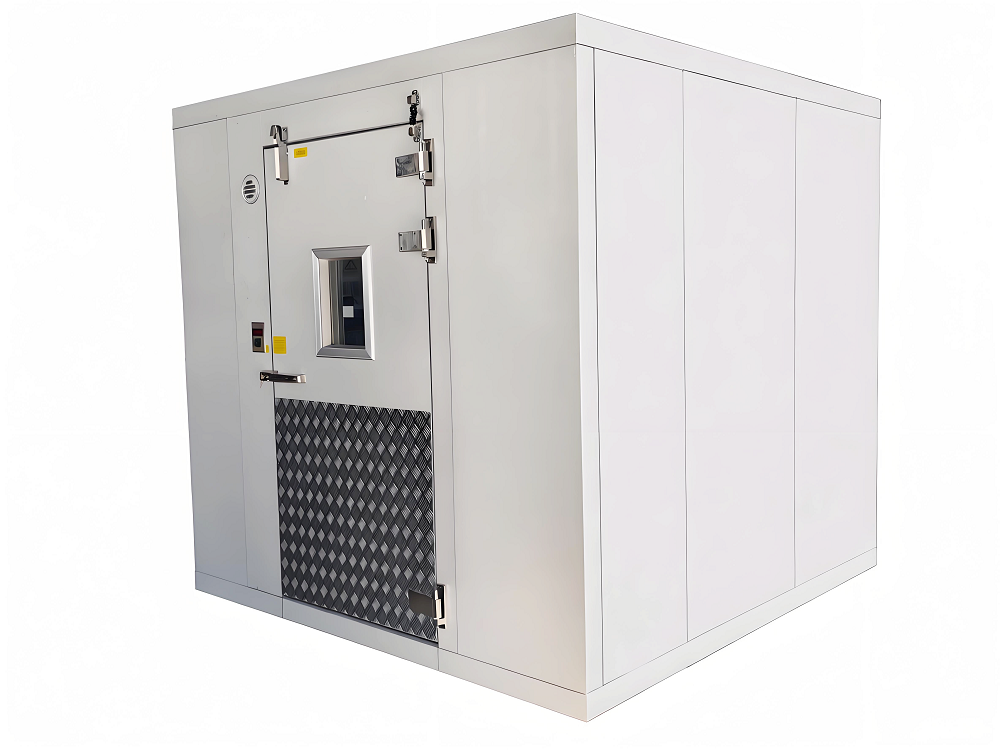
People tend to size walk-in freezers by imagining every shelf full at once. That approach pushes you toward a box that costs too much to run and rarely earns back the space. A better starting point is to watch what moves through the freezer on a normal day, not what could theoretically sit there during a once-a-year surge.
Daily throughput tells you how much product enters and leaves within a fixed window. Count inbound cases, outgoing meal kits, thawed batches, or whatever your operation handles, then multiply by the number of days you actually need to keep inventory on hand. If a busy day means 30 cases in and 28 cases out, the freezer only needs to absorb the difference, plus a little breathing room for staging and handling.
This approach also keeps layout realistic. You are not just chasing a cubic-foot number; you are designing for the rhythm of the kitchen or lab. Watch peak periods for a week, note how often racks get restocked, and let those patterns set the footprint. The result is usually a smaller, faster, cheaper freezer that still never runs short on a normal schedule.
Door Gaskets and Strip Curtains Are the Cheapest Energy Fix Most Sites Overlook
Most warehouses and cold storage facilities chase big-ticket upgrades like insulated dock levelers or high-speed doors, yet the real money quietly leaks through gaps nobody bothers to inspect. A worn door gasket or a missing strip curtain panel lets conditioned air escape around the clock, forcing HVAC and refrigeration systems to work harder for the same set point. Replacing these simple barriers often costs less than a single service call but can trim a noticeable slice from monthly energy bills within days.
Strip curtains tend to get ignored because they look old-fashioned and unremarkable, but their value shows up in busy loading zones where doors stay open for long stretches. Clear PVC strips slow air exchange dramatically while still allowing forklifts and staff to pass through without touching anything. The trick is keeping the overlaps correct and replacing any strips that have turned cloudy, cracked, or curled at the edges—small defects that quietly destroy the seal.
Door gaskets fail even faster in facilities that power-wash docks or run frequent temperature swings between zones. The rubber loses its rebound, permanent kinks form, and then the door never quite seats against the frame again. A quick flashlight test at night or a hand check for drafts on a windy day will usually reveal the problem in under ten minutes. For the cost of a few gasket kits and an afternoon of labor, most sites can recover far more than they would from a fancier efficiency project with a longer payback.
Question Timed Electric Defrost Before It Adds Heat You Do Not Need
A timed electric defrost cycle may look like a handy set-and-forget feature, but it frequently works against the cold environment you are trying to maintain. Most units are programmed to switch on a heater at fixed intervals, whether or not any meaningful frost has formed on the coil. That decision injects warmth into a space that should stay stable, forcing the compressor to spend extra energy just to pull the temperature back down.
The extra heat is not harmless background noise. When the heater runs without real frost to melt, it warms the air, the interior surfaces, and the stored contents slightly. The cooling system then has to compensate, which adds runtime and mechanical wear. After repeated cycles, those small temperature swings become visible in higher energy use and unnecessary strain on the equipment.
A more sensible route is to question the factory default and match defrost activity to actual conditions. Lightly used cabinets, infrequent door openings, or steady humidity levels rarely need the same timed blast as a busy kitchen display case. Switching to demand-based defrost or simply extending the interval keeps the cold air where it belongs, avoids wasting power, and stops paying for heat that was never needed.
Part-Load Efficiency Tells You More Than the Brochure Number
Catalog performance figures usually reflect a machine running flat out under ideal conditions. Real HVAC and industrial equipment rarely works that way. Compressors, chillers, and circulators spend most of their hours at 30 to 70 percent of rated capacity, where internal losses, cycling behavior, and control logic shape actual energy use. If you ignore part-load behavior, you can select a unit that looks efficient on paper but wastes power every ordinary day.
Part-load efficiency captures how gracefully a system throttles down. Some equipment holds efficiency well as load drops, while others fall off sharply once they leave their design sweet spot. Measured metrics such as integrated part-load value or seasonal efficiency show the difference, but even simple operational details matter: how often a unit stops and starts, whether it modulates smoothly, and how auxiliary components respond. These are the numbers that show up on utility bills, not the single-point rating printed in a brochure.
Comparing products only by full-load specifications can lead to the wrong equipment choice for applications with widely varying demand. A slightly lower peak-efficiency model with strong part-load characteristics may consume far less energy across a year. When evaluating quotes, ask for performance curves, minimum turndown, and part-load test data rather than a single headline figure. The number that matters most is the one that reflects the way the machine will actually run.
Raise Setpoints With Data, Not Guesses
Facility teams often hold setpoints lower than necessary because a past complaint made caution feel like policy. Pulling a few weeks of trend data usually shows a different picture: zone temperatures stay flat while cooling valves hover at 40% or below, leaving room to ease the setpoint without disturbing the space.
Instead of relying on someone's memory of a hot afternoon, compare outdoor conditions, chiller load, and return air temperatures side by side. When the data shows repeated slack in the system, a small upward adjustment becomes a measured move rather than a gamble.
After each change, watch the next few operating cycles before adjusting further. That loop of evidence and verification turns energy savings into a repeatable process, not a one-time guess.
FAQ
Panel thickness and foam density matter more than the outer finish. Urethane panels around four inches thick, with tightly sealed joints and no gaps at corners, prevent the compressor from working against outside heat. Also check for thermal breaks in metal skins.
A surprising amount. Worn gaskets, misaligned hinges, or a door that doesn't close fully let warm, humid air in, which forces longer compressor run times and adds frost. Replacing seals and adjusting closers costs little compared to the extra energy a leaky door can waste over a year.
It can be, if paired with a properly sized evaporator and a realistic load calculation. Oversized units short-cycle, cool too quickly, and leave moisture in the air. A unit that matches the actual product load and door traffic often runs steadier and uses less total power.
Electric defrost is simple but adds direct heat to the box and usually creates a spike in consumption. Off-cycle or hot-gas defrost, when designed correctly, removes frost without dumping as much heat into the space, so the system doesn't have to recover as hard afterward.
Yes. Raising the setpoint a few degrees if product safety allows, reducing door heater runtime in low-humidity areas, and checking the defrost termination setting can all lower consumption. But changes should follow food safety limits, not just energy targets.
Absolutely. A condensing unit stuck in a hot, poorly ventilated corner works against a higher temperature difference. Placing it in cooler ambient air, with clearance around the coil and regular cleaning, improves heat rejection and lowers head pressure.
They help most in boxes with frequent door openings or varying loads. Instead of running at full speed all the time, the fans adjust to cooling demand, which reduces both fan energy and the load on the compressor, especially during low-activity periods.
Conclusion
When a walk-in freezer arrives with an impressive panel R-value on the spec sheet, it is easy to assume the box will hold temperature cheaply. In practice, the places that quietly drain energy are the joints, door openings, and penetrations. A well-built freezer pays attention to how panels lock together, whether seams are sealed against air movement, and whether thermal bridges at floors, corners, and door frames are broken. Buying a unit sized for realistic daily throughput rather than a rare worst-case storage week usually yields a tighter, more efficient box because the refrigeration system runs closer to its intended load. Door gaskets and strip curtains may look like afterthoughts, but they are often the cheapest fix that prevents warm, humid air from pouring in every time staff step inside.
Controls deserve just as much scrutiny as hardware. Timed electric defrost is convenient, yet it frequently adds heat the freezer never needed, forcing the compressor to remove that heat again. Demand-based defrost or longer intervals can cut that cycle short. Similarly, part-load efficiency tells a more honest story than a single brochure number taken at full load, because most freezers spend their lives well below peak capacity. Finally, raising the setpoint should be driven by stored-product data, not habit. A modest upward adjustment, verified by temperature logs, can lower energy use without risking product quality. These choices rarely show up in a quote, but they determine whether a cold storage unit stays affordable to run over its entire service life.
Contact Us
Contact Person: Ellen
Email: [email protected]
Tel/WhatsApp: +86-535-2229725
Website: https://www.artrefrigeration.com/