
Wholesale Sanding Sheets: A Complete Buyer's Guide for Quality and Value
2026-11-03
Sourcing wholesale sanding sheets that actually hold up can feel like a gamble. You want grit that lasts, a fair price per sheet, and a supplier who won’t disappear after the first order. That’s exactly what this guide unpacks—how to judge backing, bond, and grain quality without falling for marketing fluff. And if you’re tired of trial and error, SHENZHEN SUN ABRASIVES has built a reputation for delivering consistent value at wholesale volumes. Let’s get into what separates a smart buy from a costly mistake.
The Real Cost of Cheap Sanding Sheets (And When to Pay More)
Cheap sanding sheets look tempting on the shelf, but the price tag rarely tells the whole story. Most bargain packs use weak backing paper and poorly bonded abrasive grains, so the grit sheds almost immediately or the sheet tears after a few passes. You end up swapping sheets every couple of minutes, which slows the job down and leaves inconsistent scratch patterns that show up under finish. Factor in the wasted time and rework, and that "savings" disappears fast.
There are times when paying more genuinely makes sense. If you are working on hardwood, metal, or any surface where a deep, even scratch is critical, a mid-range or premium sheet with a stearate coating and stronger resin bond will cut longer and clog far less. For fine finishing between coats of paint or varnish, the consistency of a better abrasive prevents random deep scratches that force you to start over. Spend the extra few dollars when the material is expensive or the surface will be highly visible—otherwise the cheap stuff is fine for rough shaping or disposable tasks.
Decoding Grain Types and Backing Materials for Wholesale Orders
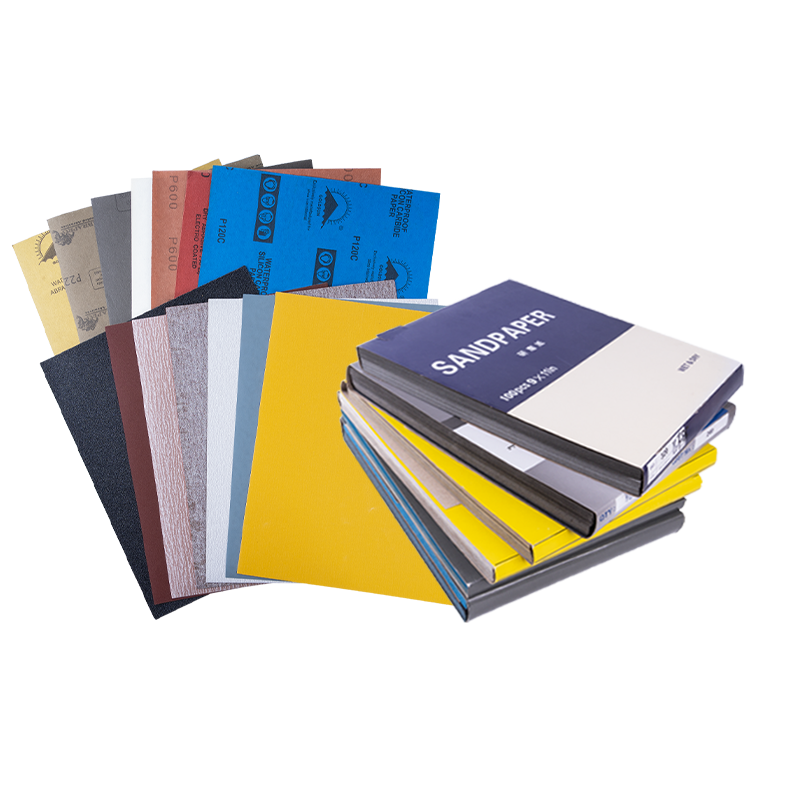
When placing wholesale orders, understanding the distinction between grain types is not just a matter of terminology—it directly affects durability, cutting performance, and end-user satisfaction. The most common categories include aluminum oxide, zirconia alumina, and ceramic alumina. Aluminum oxide is the workhorse for general-purpose grinding on wood and metal, offering a balanced cost-to-longevity ratio. Zirconia alumina steps up for aggressive stock removal on stainless steel and alloys, with a self-sharpening behavior that keeps cutting edges fresh longer. Ceramic alumina, though pricier, excels in high-pressure applications where heat buildup would degrade lesser grains, making it the go-to for automated production lines.
Backing materials are equally decisive, as they determine how the abrasive withstands flexing, tearing, and moisture. Paper backings, available in weights from A to F, suit fine finishing and light sanding where conformability matters more than brute strength. Cloth backings—cotton, polyester, or blended—offer greater tear resistance and are preferred for belt sanding and heavy-duty discs. For wet or oily environments, waterproof polyester or film backings prevent delamination and maintain grain adhesion. Wholesale buyers should match backing thickness to the tool type: thin, flexible backings for orbital sanders, thick and stiff backings for wide-belt machines.
Pairing the right grain with the right backing is not guesswork; it is a calculation of workpiece material, pressure, speed, and finish requirements. For example, a cabinet shop ordering bulk sanding belts for hardwood would benefit from a zirconia grain on a heavy cotton backing, while an auto body supplier might choose aluminum oxide on a film backing for fine feather-edging. Asking suppliers for grain-to-backing compatibility charts or requesting sample packs for a trial run can prevent costly mismatches in large-volume orders. In the wholesale landscape, clarity on these two variables separates an average inventory from a high-performance one.
Simple Tests to Verify Quality Before You Commit to a Pallet
Start by looking past the obvious stamps and heat-treatment marks. A quick visual once-over can reveal a lot: check for protruding nails, splintered deck boards, or cracked stringers that suggest the pallet has already been through rough handling. Lift one corner slightly and give it a firm shake — if you hear rattling or felt movement between the boards, the fasteners may be loosening, and the pallet won't hold up under repeated forklift cycles.
Weight distribution tells you more than total capacity claims. Place the pallet on a flat surface and stand on the center of the top deck. Rock your weight from side to side and front to back. A solid pallet should flex only slightly and return to shape without creaking or staying bowed. If the boards dip noticeably under your own body weight, imagine what a half-ton stack will do — that’s a recipe for load shift or a collapsed bottom deck when the forks slide in.
Finally, check the pallet’s reaction to edge pressure. Slide a lever bar or a sturdy plank under one edge and pry upward gently. The bottom deck boards shouldn’t peel away from the stringers or blocks easily. Then run a gloved hand along the bottom side to feel for hidden cracks or rot in wood pallets, or brittle spots in plastic ones. If any section crumbles, flakes, or bends more than a few degrees without resistance, walk away — a pallet that fails a hand test today won’t survive the warehouse floor next week.
Bulk Buying Without the Guesswork: Matching Grit to Surface
Stocking up on abrasives only saves money when each sheet or disc actually gets used. Start by noting the materials you work with most often: soft woods cut faster with 80 to 120 grit, while metals benefit from 60 to 100 grit for initial shaping before stepping up to 180 or 220. If you regularly switch between paint removal on siding and polishing resin, a mixed bulk pack can look appealing but often leaves you with a pile of unused fine grits. The safer approach is to buy large quantities of two or three proven grits per surface type and keep smaller packs for occasional tasks.
Grit type matters as much as the number. Aluminum oxide works well on wood and painted surfaces, lasts longer on belts and discs, and costs less in bulk. Silicon carbide is sharper but more brittle, making it a better match for glass, stone, and wet sanding metal. Ceramic blends excel for heavy stock removal on hardwood or stainless steel. Before reordering, check how many discs you actually went through in a month. That simple count beats guesswork and prevents a bargain bulk buy from becoming shelf clutter.
How Top Shops Negotiate Better Rates on Abrasives
Top shops don’t walk into abrasive negotiations hoping for a discount—they come prepared with usage data, order history, and a clear picture of what their grinding and finishing operations actually consume. By tracking consumption per work center and tying abrasive spend to part output, they shift the conversation from unit price to total cost per finished component. This lets them ask for volume breaks or consolidated pricing that reflects real demand, not just a vague promise of future orders.
Another lever is standardizing on fewer abrasive specs across shifts and machines. When a shop commits to a tighter abrasive lineup, suppliers can offer better rates because inventory risk drops and forecasting becomes simpler. Savvy buyers also time negotiations around supplier fiscal calendars or slow seasons, and they aren’t shy about benchmarking competing quotes with sample testing before locking in a contract. The goal isn’t always the lowest sticker price—it’s the best combination of wheel life, cut rate, and technical support for the actual materials being ground.
Finally, long-term partnerships matter more than one-off wins. Top shops often work with abrasive vendors to co-engineer trial programs, sharing performance data on edge rounding, heat buildup, and wheel dressing intervals. In return, they secure locked pricing, consignment stock, or rebates tied to annual volume targets. This turns a simple purchase into a collaborative cost-reduction effort that keeps both sides invested in consistent, measurable results.
Storing Your Stock So It Doesn't Degrade Before Use
Many stock items quietly lose their quality long before you ever pull them from the shelf. Heat, moisture, and even subtle changes in airflow can speed up breakdown, especially for adhesives, lubricants, or coated materials. A quick audit of your storage area often reveals pockets of stale air near walls or direct sunlight hitting the wrong shelves. Shifting those items to a cooler, drier spot with stable temperature can add months to their usable life.
Beyond the environment, rotation matters just as much. Put the newest arrivals behind older stock so nothing sits forgotten at the back. For sensitive components, sealed bins or desiccant packs are worth the small extra cost. And make a habit of checking containers for cracks, rust, or softening seals every few weeks—catching those early saves you from discovering a ruined batch right when you need it most.
FAQ
Focus on abrasive type (aluminum oxide, zirconia, ceramic), backing material (paper, cloth, film), and grit range. Check whether the sheets are resin-bonded for heat resistance and whether the backing is flexible enough for your sanding tools. Bulk pricing often depends on these specs, so match them to the surfaces you work with most.
Think about your typical jobs. If you handle wood, metal, and drywall, a mix of coarse (40-80), medium (120-180), and fine (220-400) keeps you covered. Avoid loading up on one grit unless you know you'll burn through it. Many suppliers let you customize cases, so ask for a sample pack before committing.
Not always. Low-cost sheets often use thinner backings and less consistent grit, which leads to tearing and uneven finishes. That can cost more in labor and rework than you save. Compare the cost per usable sheet, not just the sticker price, and test a batch on real projects first.
Paper is economical and fine for hand sanding or light orbital use. Cloth resists tearing and holds up on metal or contoured surfaces. Film offers a very consistent finish and lasts longer in wet or dry conditions. For bulk orders, pick the backing based on your most frequent applications to avoid stocking the wrong type.
Ask for a spec sheet showing abrasive type, backing weight, and grit certification. Reputable suppliers will send free samples or a trial box. Check whether the sheets are made with uniform grain distribution—run your fingers over the surface; it should feel even, not patchy. Also see if they'll replace defective product without hassle.
Buying too much of one grit, ignoring backing material, and not confirming dimensions. Another mistake is storing them in damp or hot areas, which ruins the adhesive and curl. Also, some buyers assume all 'P' grade grits are identical across brands, but there's real variation in particle sharpness and lifespan.
Open-coat has gaps between abrasive grains, so it doesn't clog as fast on soft or oily woods, paint, or fiberglass. Closed-coat cuts faster and leaves a finer finish on hard materials but loads up quickly. If your work includes soft or resinous materials, prioritize open-coat; otherwise closed-coat can be more efficient.
With proper storage in a cool, dry place (ideally 60-75°F, low humidity), most quality sheets stay usable for 2-5 years. Humidity is the main enemy—it can weaken the bond and cause curling. Rotate stock and keep them flat or hanging, not stacked under heavy weight.
Conclusion
Anyone who has burned through a stack of bargain sanding discs on a single cabinet knows the hidden arithmetic of cheap abrasives. The real cost isn't the price per sleeve or sheet; it's the extra labor, rework, and the slow creep of fatigue in your hands. Sometimes paying more makes sense, especially for open-coat aluminum oxide on a sturdy fiber backing that resists tearing. Before you commit to a pallet, learn to read the shorthand on the box: grain type, bond, and backing weight tell you more than the brand name ever will. A quick thumbnail test on the edge, a fold test on the backing, and a rub against a scrap of steel will separate paper-thin junk from stock that will hold up on the line.
The real trick to bulk buying is never treating grit as a one-size-fits-all number. Match 40 to 80 for heavy stock removal on raw wood or weld spatter, step up to 120–180 for finish prep, and save the ultra-fine stuff for between-coat scuffing. At that point, you can push a supplier for better rates without sounding like a tire kicker if you bring your yearly usage numbers, lead times, and a willingness to take mixed pallets. Once the truck leaves, storage decides whether your abrasive stock ages like wine or turns to cardboard. Keep boxes flat, off concrete, and away from humidity swings; a simple rack with silica packs beats an expensive climate-controlled room. Shops that dial in these details rarely run short or throw money away on degraded rolls.
Contact Us
Contact Person: Amanda Wang
Email: [email protected]
Tel/WhatsApp: +86-13602569854
Website: https://www.sunabrasives.com.cn