
Why Is a Diesel Roots Blower Becoming the Go-To Choice for Off-Grid and Heavy-Duty Air Applications?
2026-02-27
In recent years, I have seen more industrial users shifting their focus toward independent, fuel-powered air systems, especially as remote projects and mobile operations expand. That shift is also reflected in how Shandong Yinchi Environmental Protection Equipment Co., Ltd. has gradually introduced and refined its Diesel Roots Blower solutions to meet growing demand for stable airflow without reliance on grid electricity. For industries operating in construction zones, mining sites, wastewater plants, or agricultural fields, the Diesel Roots Blower is no longer a backup option. It is a strategic asset that solves real operational bottlenecks.
When I evaluate air supply equipment for demanding environments, I always look beyond airflow numbers. I focus on mobility, reliability, fuel efficiency, and long-term maintenance costs. In many of these areas, a well-designed Diesel Roots Blower offers advantages that electric systems simply cannot match in certain scenarios.
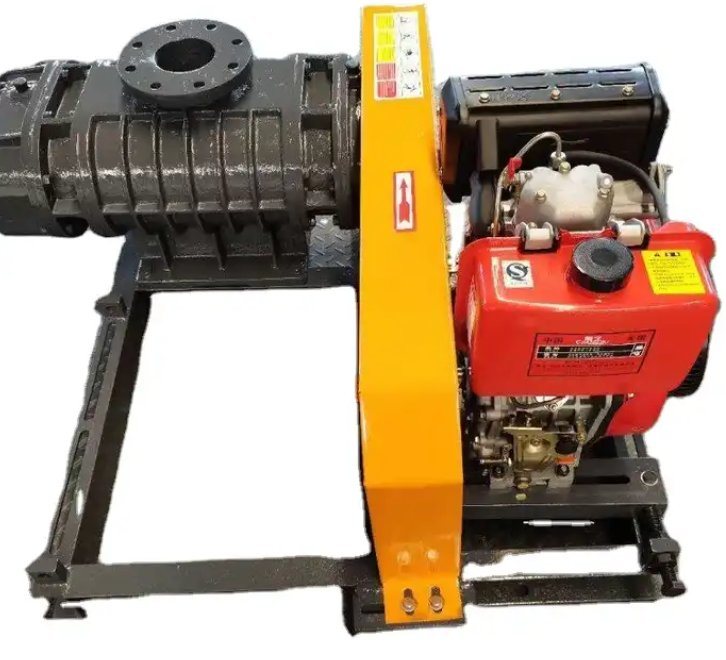
What Practical Problems Does a Diesel Roots Blower Actually Solve?
From my experience working with industrial clients, the most common pain points include unstable power supply, limited infrastructure, and downtime caused by electrical faults. These issues are especially serious in:
- Remote construction and tunneling sites
- Rural wastewater treatment facilities
- Aquaculture farms without reliable grid access
- Temporary environmental remediation projects
- Emergency aeration or disaster response operations
In these situations, depending on fixed electrical systems increases risk. A Diesel Roots Blower operates independently of the grid, allowing operators to maintain consistent airflow regardless of external power conditions. That independence alone often justifies the investment.
Another key challenge is mobility. Many industrial projects require equipment relocation as phases change. Diesel-driven systems are typically mounted on skids or trailers, which allows quick deployment without complex wiring or infrastructure modification.
How Does a Diesel Roots Blower Deliver Stable and High-Volume Airflow?
The mechanical structure behind a Diesel Roots Blower is based on positive displacement technology. Two synchronized rotors move air in a controlled and continuous manner. Unlike centrifugal systems that rely heavily on speed variation, Roots blowers maintain relatively stable airflow across a wide pressure range.
I always explain the working logic to clients in simple terms: the diesel engine provides torque, the blower head handles air displacement, and the coupling system ensures synchronized transmission. When engineered properly, this configuration offers predictable performance even under fluctuating load conditions.
| Performance Aspect | Diesel Roots Blower | Electric Blower |
|---|---|---|
| Power Source | Independent diesel engine | Grid electricity required |
| Mobility | High, suitable for field deployment | Limited by wiring and infrastructure |
| Operation in Remote Areas | Fully functional | Restricted without power supply |
| Initial Installation Complexity | Moderate mechanical setup | Electrical wiring and protection needed |
| Application Flexibility | High for temporary or mobile use | Better for fixed long-term installations |
Why Is Fuel Efficiency and Durability Critical for Long-Term Projects?
Fuel cost and maintenance intervals directly influence operational budgets. When selecting a Diesel Roots Blower, I always assess engine efficiency curves and airflow requirements together. Oversized equipment leads to unnecessary fuel consumption, while undersized units create performance instability.
Modern diesel engines used in industrial blowers are engineered for continuous duty cycles. Combined with robust cast iron blower casings, precision-machined rotors, and effective cooling systems, the equipment can operate reliably for extended periods.
Key durability factors I consider include:
- High-strength rotor materials and precise dynamic balancing
- Stable lubrication systems for gear and bearing protection
- Effective vibration isolation design
- Integrated silencing solutions for noise reduction
- Accessible maintenance points for simplified servicing
These features reduce unplanned downtime and extend service life, which ultimately lowers the total cost of ownership.
How Does a Diesel Roots Blower Support Wastewater and Environmental Applications?
In wastewater treatment, aeration stability directly impacts biological efficiency. I have seen how inconsistent airflow can disrupt microbial activity, resulting in compliance issues. A properly configured Diesel Roots Blower ensures continuous oxygen supply even during grid outages.
This reliability is especially valuable for decentralized treatment plants, sludge handling systems, and emergency bypass aeration. In environmental remediation projects, where timelines are tight and locations are unpredictable, diesel-driven blowers provide operational certainty.
Can a Diesel Roots Blower Be Customized for Different Industrial Needs?
Customization is another major advantage. Depending on the project, I can recommend variations in airflow capacity, pressure rating, engine brand, enclosure type, and control configuration.
| Customization Option | Practical Benefit |
|---|---|
| Trailer-Mounted Design | Easy relocation between job sites |
| Weatherproof Acoustic Enclosure | Reduced noise and outdoor protection |
| Variable Speed Control | Improved fuel optimization |
| Integrated Fuel Tank | Extended continuous operation |
| Remote Monitoring Interface | Operational data visibility and preventive maintenance |
By aligning configuration with real operating conditions, the Diesel Roots Blower becomes more than equipment. It becomes a solution tailored to workflow efficiency.
Is a Diesel Roots Blower the Right Investment for Your Project?
If your project depends on stable airflow in environments where electrical infrastructure is unreliable or unavailable, I strongly recommend evaluating a Diesel Roots Blower as a primary solution rather than a secondary backup. Its independence, durability, and mobility often outweigh the additional fuel management considerations.
Every project has unique airflow and pressure requirements. I believe the best results come from selecting equipment based on real operating data rather than generic specifications. If you are planning a new installation or upgrading an existing system, now is the right time to discuss your operational goals in detail.
If you would like tailored recommendations or technical consultation regarding the Diesel Roots Blower, I encourage you to contact us directly. Share your application scenario, required airflow, and working conditions, and our team will respond with a customized proposal designed to support your long-term performance and cost efficiency.